A father reflects on conscious fatherhood, sharing his intentional approach to staying connected with his teenage daughter and discussing how to navigate commitments like her volleyball participation through open communication and shared decision-making.
This is week two of the month in the khadrusphere. For me, we're talking about conscious fatherhood. My daughter's not a stranger. We connect all the time. I think when our kids become alienated and separated from us, it's not them. It's our style of parenting.
My daughter plays volleyball. What is her commitment? And then how do we communicate around that? How do we talk to each other about that? The idea of conscious fatherhood is like, I get this energy.
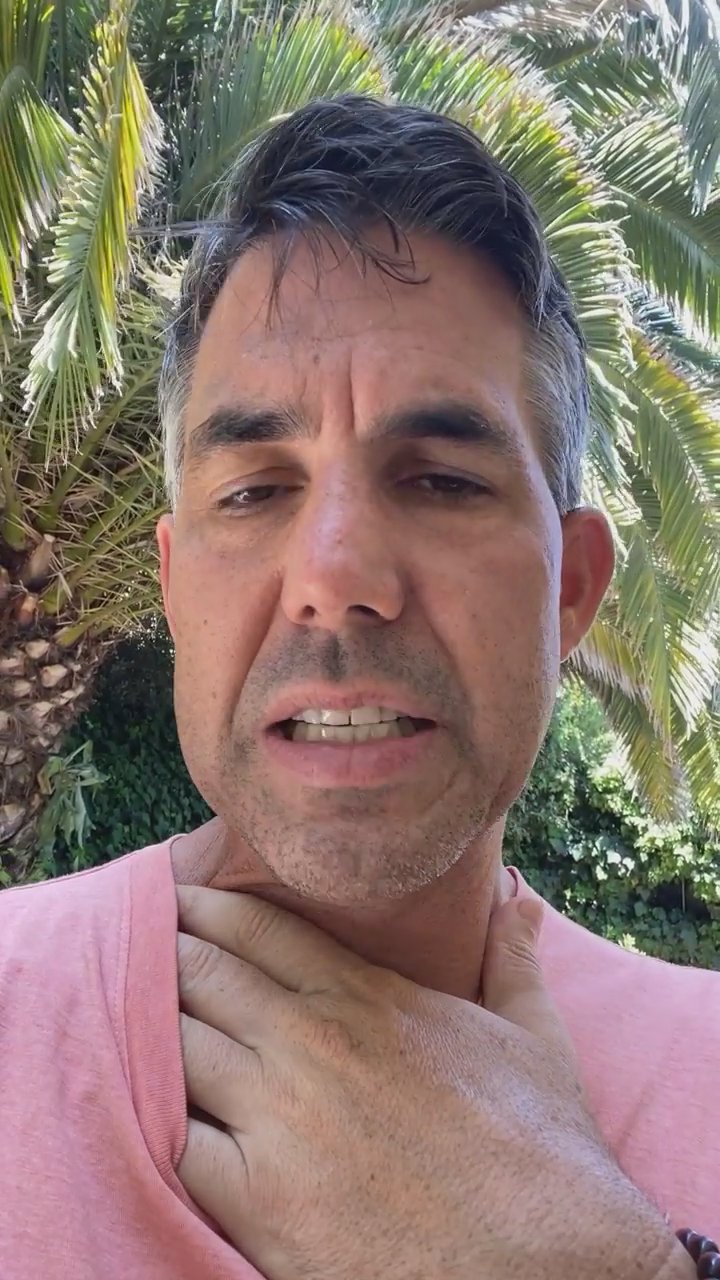
Well, you know, I do have to say it's pretty cool living in Los Angeles. You got, like, palm trees behind you in your own backyard and, you know, welcome, everybody. Happy Saturday. This is week two of the month, right? Second Saturday of the month in the khadrusphere. Do you know what that means? That means for me, we're talking about conscious fatherhood. Last week was conscious masculinity. Next week, conscious coupling. And then the last Saturday, usually last Saturday of the month, is just conscious living, right?
So conscious parenting. What exactly is conscious fatherhood? Right. Well, I'll tell you what it is. I got, I've got a daughter. She's amazing. She's 15. Now. First off, I just want to confront the B's in our society that says, don't expect to have a good relationship with your teenagers because they have to do this and that and separate and all that sort of stuff. Now, maybe it's because I have an only child. I don't know. But I know what, I created an intention that it wasn't going to happen, that my daughter was not going to suddenly have us become the enemy of her life when she was a teenager.
So for one, I created that intention, and I've worked hard to have a relationship with her. That's not the case. But I can also say unequivocally, it's not the case. And I know a lot of parents for whom that's not the case. And frankly, I think when our kids become alienated and separated from us, it's not them. I think it's us. I think it's our style of parenting and thinking what's going on with them, et cetera. I don't know. Look, I'm not trying to tell people they're parenting right or parenting wrong.
I'm simply going to challenge that really unfortunate and dysfunctional narrative in our society that says when kids become our teenager, when kids become teenagers, they become strangers to us. My daughter's not a stranger. We connect all the time. We laugh all the time. We can laugh at the moodiness. We can laugh at the kind of developing emotional intelligence. And in fact, that's part of what I want to talk about today, because my daughter plays volleyball. She plays fairly serious, not super serious.
She's not going to the Olympics anytime soon. And that's okay. But it's kind of like, you know, what is her commitment? And then how do we communicate around that? And how do we talk to each other about that? And, you know, what's the line between her getting to decide what she wants to do and where we, as the parents, get to say, hey, I hear that that's what you want to do. I understand that. And we're making a huge investment into your volleyball career and into this club. So if that's the case, it has to be a mutual decision and there has to be collective conversation.
If you want to pay for it yourself and you want to keep doing it, go ahead and try for one, but two, then that would be a different conversation. But I think the idea of conscious fatherhood is like, I get this energy. I get this energy that's like, I immediately want to control. I immediately want to lay down the law, right? And I've never been successful with that. Now, most of the time, I catch myself. I mean, the vast majority of the time, I catch myself. I maybe get a little short, and then I'm like, oh, okay, time to step back, you know, take a pause, take a deep breath.
How do I want to communicate this? Where's empathy in this situation? What do I want her to hear? And what do I want to hear from her? You know, what is she. What is she trying to tell me? And then there's this element of like, okay, well, let's talk about this. And for instance, just the other day, we were talking, and she was like, I don't want to do that. And I said, grace, when we signed up for volleyball this last time, I told you it was going to be different. I told you another level of commitment and discipline was going to be asked of you.
And before we signed on, you agreed. So your agreement only has value, and your word only has value if you follow it up with action and behavior that aligns with it. And right now, you're not doing that. Right now you're sending me a message that says, I made a commitment to it, but I'm not willing to do it. And she's like, well, I do this and I do this and I do this, and I'm like, you're right. I don't know. Let's contact your coach and find out. What's the recommended exercises? What's the recommended frequency, and then what's the recommended duration of the exercise?
Pretty simple, right? Now, some parents would write that email to the coach for their kids. We, however, do not. That's her responsibility. And like that to me, right? That's like the beautiful, beautiful balance between being kind of the father of old kind of father that a lot of us grew up with, because that was the tool. Those were the tools that those dads had, and that's what they were modeled, and that's what they believed a father was supposed to be. You know, they'll wait till your father gets home, and he's gonna kind of have the last word b's.
So there's a balance. There's a beautiful space between that and then this crap that's going on with some parents today where they're like, oh, my daughter's my best friend, and, oh, you know, I don't want to hurt her feelings or, oh, I don't want to confront her, or, oh, I'm just happy to do all these things for her because it enables me to be of service to my daughter, and it's like, eh, I don't think so. Actually. You're doing it, I think. I'm not sure why you're doing it, but I'm just a big believer that for our kids, we teach them how to fish rather than giving them fish.
Now, it can be really sweet to make them breakfast. It can be really sweet to make them their lunch, and it can be really sweet to do some of the things that my wife and I sometimes do. But the balance is really, like, I want you to be an independent person. I want you to have confidence in yourself. I want you to know that I'm always with you and always going to support you, and I'm going to challenge you, and I'm going to push you, and I'm going to keep you to your word so that you don't just say yes to things because you want them or you want to just quickly resolve potential conflict without there being any consequences down the road.
And so, for me, like, that's, like, a huge lesson for me, right? How do I do that calmly? How do I do that with empathy? How do I do that with a lower, you know, with, like, just no intensity? How do I do that in a way so she feels like I truly am on her team. I am, you know, coming from a place of love and support, and. And I've learned, like, that it's really possible. And I just had all this energy in my life and my body, right? The old wounds, the wounds from my own growing up. I had all that energy, that thought, like, that's how you're supposed to be a father.
That's how you're supposed to parent. And there's a beautiful, beautiful balance, and there's a beautiful, beautiful place in the middle that I'm finding and have found trying to stay at as often as possible, where I think my daughter really respects it. She respects me. She loves me. We laugh together. We're getting ready to go see the Deadpool movie. We take my, took my dog for a walk this morning. We had open conversations. You know, she's sharing with me about her latest guy in her life and, you know, some of the insecurity around that and nervousness and all of that.
And it's like, unless I'm completely delusional, which is always possible, I think we have an amazing relationship that we've worked hard to have with her. And that to me, that's conscious fatherhood every day asking myself, what kind of father do I want to be? What kind of father narrative? What kind of old father tapes do I want to let go of? So that's the gift of the work, and that's the gift of having other men in my life who can guide me in that. So that's what I'm thinking about for today.
And Rachel, thank you for joining. And I wish you all a wonderful Saturday on this beautiful, beautiful day, at least here in Los Angeles. And you all take care in the contrasphere.
Reactions and comments are for members. Joining is free and takes a minute.