Seth Perry, a pastor in recovery, explores spirituality through the metaphor of breads from around the world, listing varieties and reflecting on an interfaith sharing experience that inspired communal work.
Seth Perry: I have bipolar disorder, type one, and I live in recovery from that. He speaks openly about his journey with bipolar recovery. Perry talks about the different paths that people see spirituality through. He had an experience this week that opened his eyes to the work that we can do together.
Jules: Here are the breads of the world that I've listed. If you have a particular type of bread that you like from around the world, let me know in the chat. Here's why I'm talking about bread so much.
Sitting down at the table together, sharing bread. What does that mean to you? So here I was sitting down with someone from the islamic tradition. I am from the christian tradition. It will take time to build a tradition, but it will work.
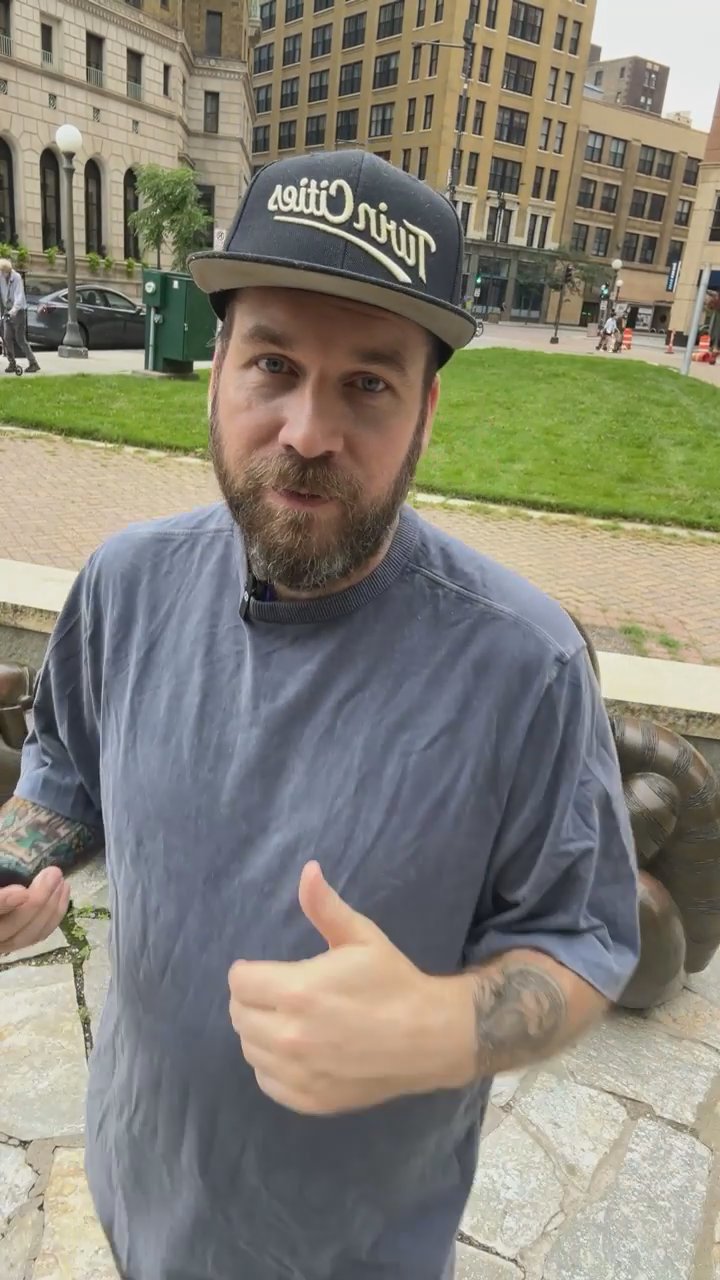
Good morning, everyone. My name is Seth Perry, and I'm going live here in St. Paul. And I'm happy to be here on the Cadre sphere on a Sunday morning. A Sunday morning where I have the day off. Normally, I'm working right now at church, and this week is one of my weeks off. And it's also a week where I was moving, and so I've moved to St. Paul. So I am going live from a park near my house, and I'm happy to be here. And I have some friends with me. Look at that. Excellent. I'm very happy to have some peanuts.
Lucy and Linus are here with me, and I'm going to be talking about something really, really interesting from this week today in the live stream. But I do want to just sort of talk about the perspective that I see the world from. So I have bipolar disorder, type one, and I live in recovery from that. I'm grateful that I'm able to speak openly about that because I'm also a pastor. I speak openly about my journey with bipolar recovery. The over 14 years that I have relapse free, and I've stayed out of the psych ward for that long, and I stay on the path of recovery.
I'm grateful for that, absolutely. I'm also in recovery from addiction. I'm open with everybody in my work sphere about that as well. So that's the lens I see the world through. And I'm a pastor, but I am incredibly conscious about the different paths that people see spirituality through, the different lenses that people have when I say a word like spirituality, religion, or even the term God. And so that's something I'm going to be talking about today. And the way that I want to do that is I want to talk about the breads of the world.
And I had an experience this week that I'm going to talk about at the end of this video that opened my eyes to the work that we can do together. And I think it maybe will inspire you all to think about how that works here, virtually on the Cadre sphere. So here's the breads of the world that I've listed, and think about it for yourself. Am I missing anything? So I've got naan from India, and that was a popular bread in the neighborhood that I grew up in. And then later on, I found out there's a type of flatbread called idli from India as well, which is a south indian flatbread.
It's very spongy, and it's made actually from lentils, and it's steamed. I love idli. If you haven't had idli, google it when you're done this. Watching this today, of course, there's dosa. That is another south indian flatbread. And technically not bread, but it works like bread. It's crispy. And, Jules, thank you for joining. Joining. If you have anything that you want to add about breads of the world, what's your favorite bread? That's what I'm talking about. I'm just working my way through India right now.
So, Jules, if you have a particular type of bread that you like from around the world or a bread that you eat, let me know in the chat right now, and I'll mention it as I go through my list. Another type of bread from India that I like is chapati. Very nice flat bread. It goes well with, you know, all the delicious curries. And one of my favorite dishes is dal, that you can take the very flat chapati and dip it in and eat it with your hands. I absolutely love that. But now let's switch then to pita.
Pita bread is everywhere. Another flat bread. I like making pita myself, and Jules says croissants. And, you know, I never even thought of France, so another delicious type of bread would be croissants. Thank you so much for that input. That's great. I love making bread so much that this list is making me really excited, too. So if you. And also, Jules, if you have anything else that's popped into your head, throw it in there as well. Of course, I have to go with focaccia. I make focaccia at home sometimes, but let's switch to one of my favorite things to make pizza.
And yesterday I just moved, and all my friends that helped me move, I said, of course, I'm taking you all out for pizza. We had a massive pizza feast to feed an army of people who helped me move. Here's something you may not know. In Germany, there's a flatbread called flamkuchen. Look that up. It's a flat and crispy bread that you can dress up all different ways. And then in Ethiopia, there's a spongy flatbread that you use instead of utensils, called injira. And, of course, roti, which has made its way around the trade routes of the world.
And indigenous folks from North America. Indigenous folks from North America. There may have been a car accident behind me. I don't know if you heard the. The honking, but there's some really good bread that indigenous folks from North America make, of course, a very popular fry bread that a lot of people know about is Bannock. But also there's scow bread, which is the baked version of bannock. And then here's something from Taiwan, green onion cakes. That was a very popular dish when I lived in Edmonton, Alberta.
And then what did I grow up eating? Well, you know, my grandfather immigrated from Sweden, and my mother pretty much took up all the food that he ate. So a type of cracker that we ate was kanekabrot, and we would eat that. So here's why I'm talking about bread so much. I'm glad I went through my bread list this week. I had the opportunity as, you know, someone who's a pastor, someone who, you know, is seen as a leader of a christian community. And I'll just stop for one moment because, Jules, that's a great piece of input.
A local favorite is the cranberry wild rice bread, and I'm going to have to look out for that. That sounds like delicious. Delicious. Absolutely. So I myself, I lead a christian community, but I want to reach outside the doorste of the christian community to other folks. And I had the opportunity this week to sit down with someone from a completely different faith tradition. I was able to sit down with someone from the muslim tradition. And so it was a great experience. I didn't know how we would be celebrating and observing our time together as we met for about an hour and we talked about recovery and spirituality, specifically from two different traditions.
And we were meeting and speaking for about 20 minutes. And we were at a restaurant. And then the friend that I was sitting, my new friend that I was sitting down with ordered bread to the table. And it was a type of somali bread called BR and it was given to me. And so they said, let's share this bread together. So a Christian and a Muslim sitting down together and speaker wonder, welcome to the stream. We're talking about bread and sitting down at the table together. Sitting down at the table together, sharing bread.
What does that mean to you? So here I was sitting down with someone from the islamic tradition. I am from the christian tradition. And we were able to carry out a very deep and meaningful conversation about addiction and mental health, recovery and spirituality. And the symbol of our meeting was when this bread was ordered and brought to the table. And I said, what is the name of this bread? And they said, it is called bur b u r. So you can look up that type of bread. It was very fresh, and you could hear the crust crack and the steam come out of the bread.
And we first shared a whole piece together, so it was split into two, and we ate it as we continued to talk. And then again, as a guest in a. In a somali restaurant, more bread was ordered to the table. And I said, I was instructed, this is your own piece of bread. You can eat this. And looking back on it, it's an emotional experience to see two people from two different areas of the world. You know, I was raised in a completely different area of the world as this individual across the table from me.
And we were able to sit down in a world where there are divisions and differences and see what we had in common and celebrate what we had that was distinct from each other. And this is a message of hope to you all today that we need to do this more. And maybe you can consider that you are doing this on Cadre, that we aren't necessarily sharing bread, but we're getting fed by these interactions and by the community that everybody is working piece by piece to build together here, you know? And. That's right.
Speaker Wonder says, this is a powerful description of fellowship. Yeah, I think that what Luke has done is taken a vision and a concept that takes time to build, just like all relationships take time to build as we gather around the table and just have bread together. And you can do it virtually. We can do it piece by piece. You know, if you think about where Cadre will be in a year, two years, three years, four years, you know, it will take time to build a tradition, but it will work. If piece by piece, we continue to have these virtual, quote unquote meals, and, you know, it may be listening to Evan, the counselor do a video or Rachel do a live stream, you know, or check in with JC in the morning to see what's going on with him.
And we might not see the growth happening immediately, but I have faith that everybody who's contributing here will continue to meet around the same table, share the bread that comes from this tradition, whatever that tradition is. Your tradition, my tradition, our perspective. And through that process, we will slowly build something great. So I'm going to enjoy my Sunday. I'm grateful that we all had this chance to connect, and, yeah, looking forward to seeing you again soon. Make sure to keep engaging and building community here and have a wonderful Sunday morning, because it is.
Reactions and comments are for members. Joining is free and takes a minute.