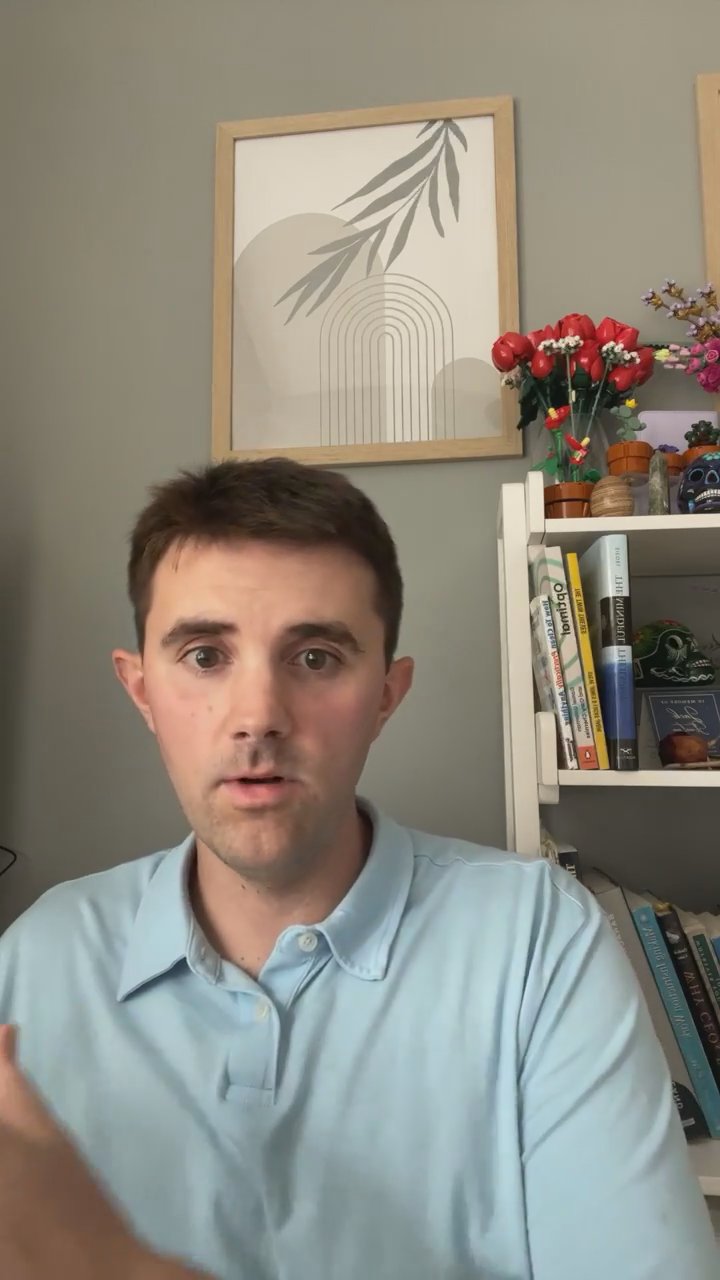
Matt Tappy explains self-awareness versus self-management, how noticing emotions shapes thoughts and behavior, and offers practical steps—personality assessments, values work—and advice on building confidence and perspective.
Matt Tappy is a graduate student specializing in industrial organizational psychology. His research focuses on emotion, emotion regulation and emotional labor in the workplace. Prepare your leadership reflects the idea of equipping yourself for upcoming challenges. By preparing ahead of time, you'll be more prepared.
Self awareness is the ongoing sense of what we're feeling. Self management is regulating those emotions and behaviors and thoughts. Self awareness involves just acknowledging it, knowing that it's there.
If I could go back to teens, I'd give myself a lot more grace. Build that self awareness and that confidence in who you are and who you want to be. Ignore the others, ignore the inner and the external critiques. Would you try to make friends with younger or older?
Take personality assessments, take values via strength finder. Can really get you in touch with who you are. Know how you show up to others. Don't take critics too seriously.
Stay on Cadre today. We got Nick Hansen at two in about 2 hours here and then daryl our glaze at five. I hope you have a great rest of your week and I'll see you next Monday. See you.
Happy Monday to you all. Hope you're having a great start to your week. I'll wait about a minute, see if some people join here. Okay. We're talking about self awareness today, and I'll first start by saying I'm Matt Tappy. I do weekly live streams here in Cadre at noon every Monday. I'm a graduate student specializing in industrial organizational psychology. Hello. Speak wonder. Welcome. I'm a graduate student specializing in industrial organizational psychology. If you don't know what that is, it's basically team and workplace psychology.
My research currently focuses on emotion, emotion regulation, everything that entails emotion, emotional labor in the workplace, and additional leadership as well. I've worked with teams from college baseball programs up to large healthcare organizations working on mental skills, leadership development, and I think it's everywhere from college baseball to executives. It's all the same type of language and the same skills that people need to learn. Prepare your leadership reflects the idea of equipping yourself for upcoming challenges and roles that you may be advanced in.
And by preparing ahead of time, you'll be more prepared and avoid that last minute scrambling where it's a maybe training on, you know, emotional intelligence once you're in a leadership position. But let's give you that training beforehand so once you're in that leadership, you're ready to excel. Think of it as learning to swim and knowing the current of the river before jumping. In. That way, you don't. That way, you can navigate smoothly without getting swept away. So, as you can see in the title, it's lit.
I I'm talking about self awareness today, and self awareness is different than self management. I think they often get tied together. Self awareness is the ongoing sense of what we're feeling. It's why we have emotional reactions. It's knowing why we have those emotional reactions, and it's knowing how they shape our thoughts, feeling, and behaviors, our urges to act. While self management is regulating that awareness, self management is regulating those emotions and behaviors and thoughts and everything.
Self awareness involves just acknowledging it, knowing that it's there. It's one of our greatest assets as a human being that we've evolved into using our prefrontal lobe to recognize. Our thoughts have this consciousness. A lot of other animals don't have this. Dolphins have this, and that's why they're advanced and they're similar to humans. We have this prefrontal cortex, which can tell us, hey, these emotions aren't helping us right now, so we can regulate it. It's that awareness piece, and this idea came to me I was working with some high school baseball players yesterday and one of them asked me if I was 16, 1718 years old, what would I do, what would I redo again, what would I want to do?
And the number one thing I said was, first, know who you are, build that self awareness, know your belief systems, know your thought patterns, know what emotions you commonly have and what situations drive that. Know who you want to be and then know how you show up. I'm curious, speak. Wonder if, um, well, if you could go back in time when you're 16, 1718 years old, what's one thing that you would change or you would start doing then that you do now or want to do differently? But these kids were high school baseball players looking to get recruited.
And I work with a college baseball program with the mental skills. And for me that was the biggest change in everything for me with baseball, knowing who I want, who know who I am, knowing that I was anxious playing baseball, that I was anxious outside of baseball, knowing who I want to be, knowing what my personality characteristics are, what are my strengths, what are my weaknesses, how can I overcome these weaknesses to improve my strengths and then also knowing how I show up, how do I show up to other people, not just what I think of myself, but what other people think of me, you know, and I'll get to that in a little bit.
If I could go back to teens, I'd give myself a lot more grace. Yes, everything seems like the end of the world when you're in high school. Everything does. And with these kids, what I thought was, if I don't play college baseball, I'm never gonna have a life, I'm never gonna succeed, everybody's gonna think I'm a failure. And, you know, you can tell with kids nowadays in baseball it's the same things, but it's even amplified with social media for them. But yes, a lot more grace, you know, and that awareness of who you are and you know, what your strengths and weaknesses are and really accepting those weaknesses, contorting myself into who I thought others saw me.
Yes, yes. And I think knowing how people perceive you is a good thing, but not letting that control you. One thing I also said to these guys was ignore the others, ignore the inner and the external critiques. Take them with a grain of salt. So, you know, other people might give you feedback on things or high school gossip might be giving you feedback, particularly with a grain of salt. Don't internalize it. If somebody says your clothes look bad, you know, think, well, do I dress the way that I want to dress.
And if it's a yes, then you don't really need to change anything. But if it's something where it might be distracting or, you know, limiting you in some way, you can make changes, but don't internalize that and change who you are and really build that self awareness and that confidence in who you are and who you want to be. And then that way, you know how you show up won't be as deterred by other people or that inner critic, that anxiety. I like the way they depicted anxiety and inside out, too.
That inner critic of anxiety is not going to derail you from who you really are if you really have a strong sense of self. So ignore the others, other external critics, and the internal critics that aren't really helping you. I like, I think in high schoolers often give harsh criticism to peers because of their own. For sure. For sure. And I think knowing that is a big part of the puzzle, too. I think especially with these baseball players, they talk about it and they criticize other kids for not making the team or playing well, but that's largely because they're worried about how they're showing up, too.
And I think it takes a while. I probably didn't get good at realizing that other people's criticism is just a reflection of themselves until I was 23 years old. And that's kind of when I started getting into psychology. I was a business major beforehand, and I worked a marketing job for two months, and I was awful at it. And I just did that because that's what I thought I needed to do. But once I was built that awareness, I know I need to do something else. Make friends with people of all ages, not just my peers.
Yeah. Yeah. I'm curious. Would you go younger or older? Would you try to make friends with if you could do it again? I think for me, I think I would have been more okay with talking to the younger group of kids more instead of always trying to hang out with the older kids. I think having an older brother made me want to appear older and hang out with older kids and do that, but, yeah, all ages. Yeah. So what can we do to kind of start building our self awareness? Get to know who we are, get to know how to be comfortable being ourselves, building that confidence.
So first thing we can start doing is building a mindfulness practice. Now, in business speak, it's more about building that awareness and intention setting. You can't say mindfulness in business. We can't talk about that because they don't like that. Oh, midlife. Yes. JC, for me, was a game changer, someone who went through all the trials and tribulations and in the career that I'm headed towards, and he kind of took me under his wing. You can watch JC on here as well, on Cadre, but making friends with midlife people, and it's that networking piece is a huge difference, because first it can give you the.
They can help you find the steps that you need to take to be who you want to be, do what you want to do, but they can also give you that grace. I think a lot of times I see meeting people in midlife, they seem to give people out of grace. Older people seem to be my, in my experience, like my grandparents and my parents seemed to kind of push you a little bit more, want you to work harder, strive. And then your peers were kind of competitors, you know, were gonna be those, the mean, kind of mean to each other subtly.
But then the people in midlife were kind of like, well, you know, you're doing pretty good. You're way better than I was. You know, they're going to give it to you straight and be nice. They're going to give you that grace. I think that's a great thing. Great mentors. Yes. So we can be mindful, check in on our self talk journal. I have a journaling practice I do every morning where I talk about how I feel, kind of do my power words, what I want to feel. How can we make that happen? And then what I'm grateful for.
So, journal to get to know the thoughts that are constantly going through your head. Once you get them on paper, they become, you know, you see them actually for what they are. So, journaling meditation practice can help you focus on the present moment. You know, if you catch yourself when your mind's wandering and bring yourself back to the present moment or the task at hand that you're doing, it's great for anything in life to help you focus and relieve anxiety over time and then also think with more than just your thoughts.
So it's kind of a new concept I've came in touch with, kind of read about, listened to a couple things, couple researchers talk about it, but it's the idea of not just letting your brain do the thinking, but really feeling how your body feels. And you can get in tune with this through body scans during meditation. And it's really trusting your gut, as they like to say that there's science now proving that there's. It's more than just a saying, but it actually can help you make decisions and that, you know, if you're tense in your arms or shoulders or feet or something, that can help you make decisions as well.
So I'll leave you with the three things I told these high schoolers that if I could change, I would do it back in high school is know who you are, become more self aware. And one thing I suggest is take personality assessments, take values via strength finder. It's a great values assessment. I think it's 99 personalities or principles. 99 principles or nine principles, don't quote me on that. But nine principles is a great personality assessment. Can really get you in touch with who you are. And it's very researched and scientific, backed with researchers from the University of Michigan and Adam Grant.
If you know him, he's an organizational psychologist. Pretty popular online. He was one of the researchers behind that. So take personality values assessments. Get to know who you are and don't take those literally. If you read it and say, that's not who I am, well, that's building your self awareness. You can check with that and that's kind of your check and balance and see if it's going through. And so take assessments, know who you are and then know who you want to be. You know, if you come up introverted, but you want to have a career in public speaking, learn how to become a public speaker, but then also learn to, you know, when the tanks getting a little low, so you need to back off a little bit because you are introverted.
So it's going to be a little bit more on you to public speak. So learn how to use your strengths and, you know, overcome those weaknesses. And then also know how you show up. You know, know how you actually show up and kind of what your reputation is. You can't control what other people's say and think about you, but you can control how you show up to other people. So know how you show up. And don't take those critics, the external and the internal critic, too seriously. Take it with a grain of salt.
And adjust where you, you know, where you feel okay adjusting and don't let them control you. Stay on Cadre today. We got Nick Hansen at two in about 2 hours here and then daryl our glaze at five. I hope you have a great rest of your week and I'll see you next Monday. Bye. See you. Speak wonder. Thanks for joining.
Reactions and comments are for members. Joining is free and takes a minute.