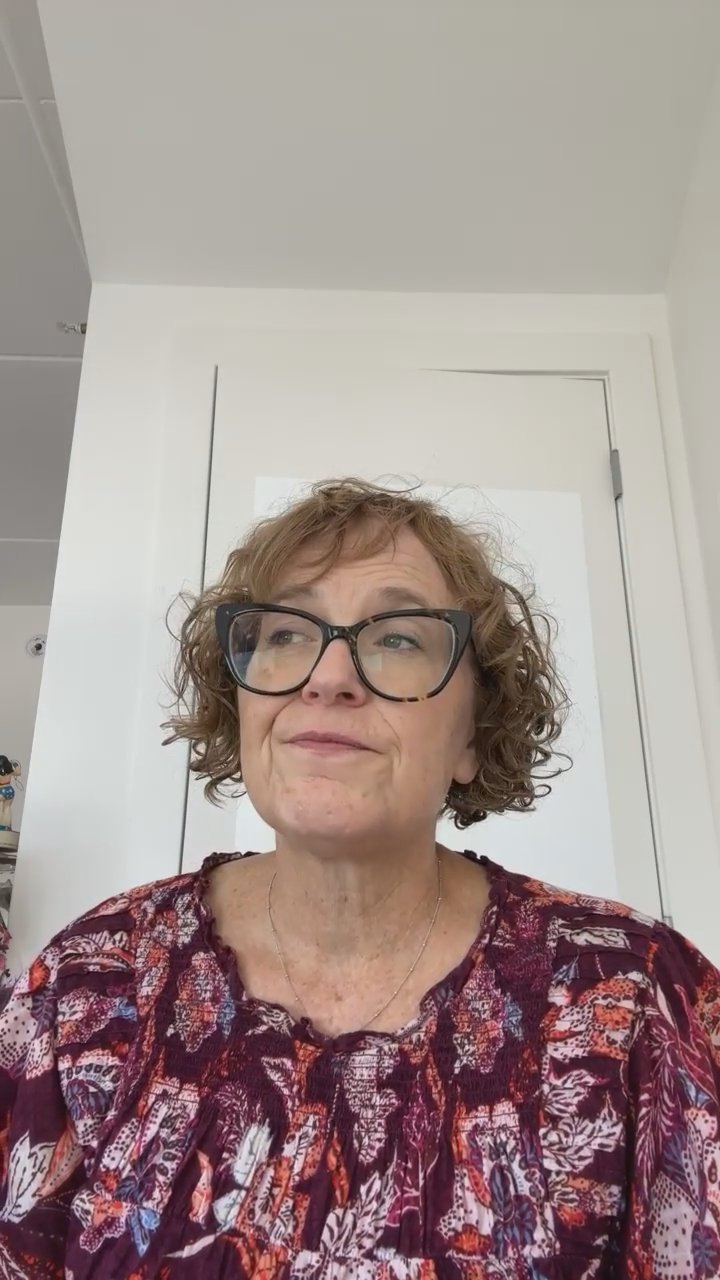
Betsy explores Rule of Engagement 17, arguing that spending time with people and seeking advice from trusted others is a valuable use of time, and encourages civic participation including running for local office and community involvement.
Betsy: How is everybody doing? I have a cold. It is time to talk about rules of engagement once again.
So rule of engagement number 17, people are a good use of time. Getting advice from people whose advice we would seek. Run for office. It can feel like a risk to efficiency, but you get better outcomes.
We are social creatures. We are designed to work with and for and on behalf of one another. The antidote for loneliness is actual connection with other people. We still have a challenge connecting in a healthy way with others, even other people we disagree with.
Hello, Cadre. It is Betsy. It is 11:00 on a Tuesday and it is time to talk about rules of engagement once again. How is everybody doing? I have a cold. I have been under the weather, so excuse me, you have. For quite a public thing. Sorry about that. I had to shut a door and leave because it's bad if people walk in. So rule of engagement number 17, people are a good use of time. People are a good use of time. That seems like an exceedingly self evident thing to say to human beings who are flea wired to connection.
But I think it's telling that it needs to be said, because I know that sometimes when people thought about that, or that is obvious, it's like, well, okay, if it's obvious, are we living our lives that way? If you get interrupted by your kid when they come home from school and you're in the middle of something, are you able to be present? I say that I'm not a parent, so that's not a great example. If you're spouse comes home from work and you're in the middle of something. I do have a spouse. Do I look up?
Do I say hello? Am I as warm as I would want to be greeted, you know, warmly greeted? No, not all the time. A micro example, right? Just this small example. But spending time with people is a good use of time. Getting advice from people whose advice we would seek. Not just random strangers, certainly not random people on the Internet, but getting advice from experts or people whose opinion we value, or we want to find out if we value by the, you know, ask them a question and see what the quality of response that we get is.
Spending time with people, giving attention to people. Those are the examples I was giving, like giving my time and attention to the people around me that I love. Community relevant to today's theme, you know, giving volunteer time, making sure I know what's going on in my community, making sure I do the research I need to do before I vote. Even for, you know, for school board, for city council. If you live in Minneapolis, the board of estimate and taxation, you don't think it matters. But as someone who served on the board of estimate and taxation for eight years and had to deal with it for twelve, please, people in Minneapolis, vote and do your homework on the board of estimate and taxation, because it turns out it matters.
And that's one of the things you could ask advice for. Everybody has in their life somebody who they go to for advice or thinking about things like local elections or state legislative races. I, at one point in my life decided I wanted to be that person, which was great. And then, of course, I was the one asking for people's vote, which was hilarious to me. It's always hilarious. Running for office is a great use of time. That is a way. People are a good use of time. People are a great use of time.
Run for office. I'm gonna ask especially all the women and people of color on here, please consider running for office. Not every office is senate. Not every office combs through your, I don't know, your trash or whatever, to find all your dirty laundry, for crying out loud. Lots of people can serve at lots of levels. Anyway, people are a good use of time. Rule of engagement number 17. Now it can feel like a risk. It can feel like a risk. It can feel like a risk to efficiency. If, for example, you're at work and you're doing a project and you really want it to go well, it is a great use of your time to ask an array of people what they think and to get input from a host of people with different backgrounds, thinking and ideas, because that gets you a better outcome.
Data shows this. This isn't just me feeling touchy feely about things. Data shows that diversity brings better outcome and better problem solving and quicker and more creative problem solving. Even though it feels slower in the moment overall, you get to your solution set more effectively. If you have an array of people that you ask about things. People are a great use of time, but it feels like a risk to efficiency, but you get better outcomes. It also feels like a risk to vulnerability. Right.
Because if I say, oh, people are a good use of time, and you say, yeah, but then I have to connect with people. Well, right. That's the point. So then the question becomes, why aren't we connecting with people? And some of it is, it feels risky. Okay, risky to what? Risk to efficiency, but risky emotionally. It can feel very risky to open up to someone else enough just to ask to see if they want to have coffee or just to ask to see if they want to go to lunch or just to see if they want to go, I don't know, get library cards at the congressional library, which is something that's on my list to do.
That's on my fun list, which I've talked about here before at the Library of Congress. We feel vulnerable, like we're exposing something about ourselves. And the more we do it, the less vulnerable it seems to start doing it, if that makes sense. What do I mean by that? If you're just putting yourself out there, you pretty quickly learn. Most of the time, people are pretty great and pretty receptive, and sometimes they're nothing. But even when they're not, we learn judgment about who to approach and who not to approach.
Or at the very least, we get information about that person, like maybe they're having a bad day or some such, right? That the cost of a little bit of vulnerability. I'm not saying it's not vulnerable to put yourself out there, but the payoff is so big, right? There's the risk and then there's the reward. And it's a little bit of a vulnerability risk, but it's a huge reward in terms of, it's a huge reward in terms of personal growth, personal satisfaction, well being, this feeling of well being in the world and building an environment of growth for yourself.
Gretchen Rubin talks about that, that happiness is feeling good and feeling right in an environment of growth. It creates an environment of growth if you know you're doing the right thing for yourself, for that matter. But as I said at the beginning, connection is innate for human beings. This is something that's inside all of us. We are social creatures. We are designed to work with and for and on behalf of one another, to be connected to one another, to understand that my health and happiness is reliant on the health and happiness of other people.
Now, I don't mean that in some weird, codependent way. I can already see in comments people being like, oh, but da da da. I'm not talking about being codependent. I'm not talking about pouring resources into people who want to suck those resources up without giving any back and then blame you for it. That's not, that's not what I'm talking about. But we are designed to be connected to other human beings. And part of the, what is so great about those connections is we learn boundaries, right? We learn something about ourselves and other people by learning where we need to place boundaries, what boundaries look like.
Boundaries are just, here's what I will accept. Here's what I won't accept. If you are giving me something I won't accept, here's what I'm going to do in response to that. It's not trying to control other people. Boundaries aren't, you have to stop, you know, behaving this way. That's not a boundary. That's an, for the most part, unenforceable command. Or if you try and enforce it, that's not what you're trying to do. A boundary is, look, you can yell at me, but when you yell at me, I'm gonna leave, and then I'm not gonna come back, period.
And then, of course, do that. That's the boundary, is telling somebody else what I will do in response to their behavior. It is not trying to govern their behavior in some way. That is a losing proposition. It's a very losing proposition. So connection is innate for human, and it may feel risky in terms of efficiency or vulnerability or anything else, to connect with other people. It is more risky not to. We have a loneliness epidemic in this country, right? And the lockdown, while so necessary to keep people alive enough to notice they were lonely, did lead to a lot more loneliness, because there were a lot of people alone in their homes or in very small groups inside our homes, and that led to a lot more loneliness.
And, you know, the antidote for loneliness is actual connection with other people. Now, I have to be in good enough shape to connect with other people. That's part of the deal. I have to be in good enough shape to connect with you in a real human way. And the places where I'm not now, I learn very quickly through trying to connect with you. The places that I may need to get myself in better condition, clean up my side of the street Cadre, is a really great place to talk to people and get support around.
Oh, I notice that when I get too close to people, I freak out and pull away, or I get mad at people, or I treat them badly because I don't know how to handle being close to them. Is a great place to come to deal with any of those sorts of attachment or closeness issues and work through them and make sure you're in good enough shape for yourself, not for other people, but for yourself to be able to really connect truly and fully and deeply with other people. But we're not. You know, we innately need each other as human beings.
It's better to do than not do. It's more risky not to do it than to do it. But we still have a loneliness epidemic, and we still have a challenge connecting in a healthy way with other people, even other people we disagree with. And you can see that by turning on your tv or turning on a podcast or going on social media for ten minutes. Excuse me. We can see where we don't consider each other as part of our circle of human concern. John Powell at the othering and belonging Institute at UC California, Berkeley, talks about this.
UC Berkeley talks about this a lot. The othering and belonging institute, that belonging is who do we consider inside our circle of human concern, and who do we feel connected to inside that circle othering is you are not inside my circle of human concern. I am going to push you away and I'll probably talk about othering and belonging in other live streams because that seems like a very good topic to talk about around community as well as anything else. But give thought and concern today. Who's inside your circle of human concern?
And how can you expand that a little bit more today? By remembering that we're all fully human and we all fully deserve our seat at the table of humanity. I do my best to have no exceptions to that belief. That could be a talk for another day too, because I can. Because when I said that maybe for you, certainly for me, people came into my head and I was like, even so and so. And it's like, well, my growth is when I ask the question is so and so inside my circle of human concern? If I even have a doubt about it, that's the horizon of the work I get to do to expand myself and my conception of community.
So rule of engagement number 17, people are a good use of time. That is my topic for today and I hope you all have really great weeks and I'll see you here again next week. Bye bye.
Reactions and comments are for members. Joining is free and takes a minute.