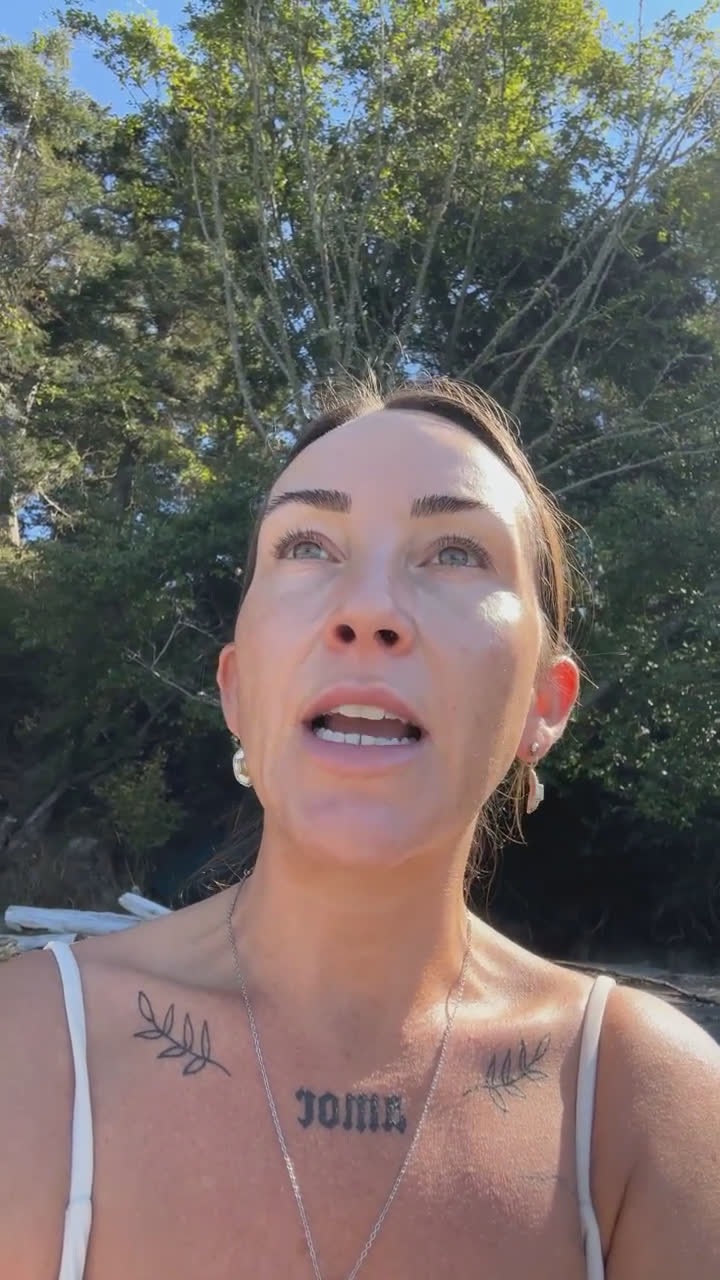
Host reflects on how calm, low-stimulus natural settings like beaches and hikes support nervous-system regulation and shares personal experiences of shifting from city life to restorative time outdoors.
Catriona, I often forget how restorative and healing it can be to simply be outside in nature. Finding environments that are calm, quiet, where there's not a lot of stimuli, gives our nervous systems a chance to calm down.
Happy Wednesday, Cadre crew. I am coming live to you today from Lopez island. I'm visiting my mom right now, so I am on the beach looking at the ocean. There's nobody around. And I thought I would take this opportunity to talk to you about connecting with nature, because I think it's something that has helped me tremendously with my mental health and my well being. And. And I. You know, it's. I think it's one of those things. It's like, you know, the same is true with doing somatic types of therapies.
Hi, Catriona. Or nervous system regulation, discovering what we have that's accessible to us no matter where we are. So the outdoors, our own physical bodies, these are things that are always available to us. And. And I oftentimes forget how restorative and healing it can be to simply be outside in nature. So I just wanted to talk about that a little bit and share sort of like, how that has impacted me in my recovery, in my well being, and offer it to you as an invitation if it's something that you are interested in.
So I grew up in a big city. I grew up in Seattle and went to school. I went to college in New York City. So I kind of went from, like, big city to big city. And I didn't really, at the time, like, understand the impact that living in cities was having on my mental health until I started to travel more and I went places that were more remote or more immersed in nature. And I started to kind of see some stark differences between my mental health when I was in big cities versus out in nature. And I started to understand how being, you know, how.
How much our environment impacts our internal world, our external absolutely impacts our internal. And being somewhere that is busy, loud, crowded with people, where there's a lot of stimulation, can be really difficult for our nervous systems. It can create sort of a sense of there's a lot going on around me, so I need to be hyper alert, I need to be hyper aware. And when our brains are in that brain weight and that framework, that's a survival mode, to be that hyper vigilant and that aware of everything going around us.
Wow, sorry, I'm not. My words aren't great today. I've been having some insomnia, so please forgive me. My brain's not firing in all cylinders, so I'm in the perfect place for that. Lots of quiet. When our senses are, like, overloaded, then our brains are thinking, there's things I have to pay attention to, and I might be in danger. And so that just puts our entire systems in a state of anxiety, in a state of something is wrong. And so, you know, finding environments that are calm, quiet, where there's not a lot of stimuli, that gives our nervous systems a chance to calm down.
So that's oftentimes, like if you go for a hike or go to a quiet beach or a secluded park or a lake, and there's not a lot of people, and it's quiet, oftentimes, two things might happen. One, we experience a lot of panic all of a sudden. Maybe we weren't anxious until we got into this quiet space, because maybe for the first time, we're actually sitting alone with ourselves and our thoughts. And this can be really overwhelming for some folks. Another thing that might happen is we experience a deep sense of calm, a deep sense of peace.
And that's because our nervous systems are finally relaxed, because there's not so much around us that we feel like we have to be alert and on edge. So I think getting out in nature can offer us both of those experiences. It can give us a chance to sit with our thoughts, to sit with our big feelings that maybe we haven't had the chance to check in with. One of my favorite things to do is go on a hike or go out to a quiet space in the middle of the forest or in the middle of nowhere and scream and yell and cry and, like, let out a lot of, like, physical, big emotions.
I don't have the space to do in my apartment or in my, you know, in my day to day life. It's a great. It's a great way to go really connect with yourself and actually feel something. And the second is to create an environment that is calming for my nervous system, to create a sense of there's nothing to do here, there's nothing I have to get done. There are no jobs. There's nothing I have to pay for. I don't have to dress a certain way, like, I just get to be with the earth. And that can provide a deep sense of relaxation, a deep sense of safety, a deep sense of serenity.
And anytime we can offer that to ourselves, we're giving ourselves such a big gift. We're giving ourselves something that oftentimes we don't get in our day to day lives. So those are kind of two big things for me that nature provides. And I know we don't all have the ability to go get out into super serene or quiet nature, but even doing things like a mindfulness walk, if you can get outside, even if you can do something, like maybe drive somewhere and, like, seeing from your car, seeing a peaceful place, oftentimes can still bring about out that same experience.
So I know that not everyone has the chance to, like or the ability to go on a long hike or get out to a lake, et cetera, et cetera. And so finding ways to kind of cultivate that as you can. Rachel says yesterday it got down in the seventies. Here. It's an over 100. Ooh, that's so hot. Okay, so you get to go outside soon. Yay. Yeah, it's tough, too. When it's weather dependent, like here in the Pacific Northwest, it's gonna start getting rainy soon, which means it's gonna be harder to get outside.
And so now that means how do I learn to embrace the rain or start doing long car rides instead and trying to just get creative? So. Okay, dears, I hope this was helpful, and I will see you same time, same place next week. Have a good day. Bye.
Reactions and comments are for members. Joining is free and takes a minute.