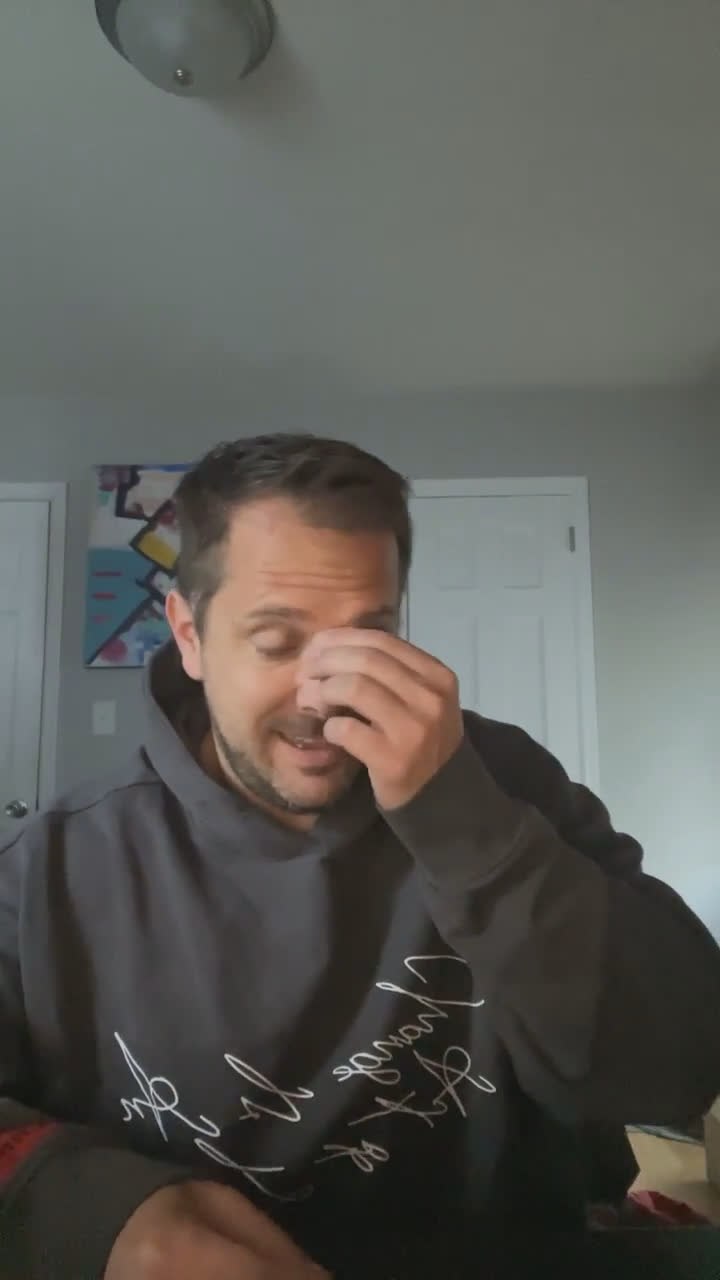
JC explores 'enoughness' as a calibration tool against cultural messages that we are lacking, and guides listeners to notice when less effort or presence can still be enough to act, create, or be present without perfection.
This is a space where you can show up to learn to connect, to go ahead and say, oh, my gosh, there's beezobits and jewels and Kristen. Whether Saturday is a work day or a busy day, a beginning day, an end day, no matter what's going on for you, I hope you're okay.
JC: Enoughness is a calibration tool in a world that attempts to sell us on the idea that we aren't enough. How would the world operate differently if you said, okay, right now I am enough in order to accomplish something?
The key performance indicator is not winning or losing or being the best, but enjoyment or you feeling alive when you do it. What if you focus on the times rather than the not enoughness times?
Well, hey there, Cadre. Good morning. Good morning, wherever you are, or good afternoon or good evening. Whether this is a weekend day of different schedule of rest for you, or whether Saturday is a work day or a busy day, a beginning day, an end day, no matter what's going on for you, I hope you're okay. And even if you're not, that is okay, too. This is a space where you can show up. It's a full sentence right there. This is a space where you can show up to learn to connect, to go ahead and say, oh, my gosh, there's beezobits and jewels and Kristen.
This is a space where you can be laying in bed and simply open up the app and listen when you don't have the energy to move. This could be a space where, when you're going for a walk around the lake or next to the ocean or up the mountain, you can go ahead and have someone be with you, have some energy, some fuel coming from connection, from resource, from learning, from challenging, from supporting all the things. Well, hey, my name is JC, and thanks for signing in for a little enoughness 101. Enoughness is a concept that.
That I came up with. Now, again, we can thank the Barbie movie for I am Knuff. We can thank positive culture for the idea of saying, I am enough. Enoughness is in that sphere, but also, it's a little bit different. Hey, Lynch. Lynch, how are you? Nice to see you. Happy Saturday. Enoughness is a calibration tool in a world that attempts to sell us on the idea that we aren't enough. Therefore, if you buy x or buy Z, or if you decide to take a different path to find yourself or to find your answer, or to find your truth, that's how a lot of our world is set up.
You are not enough. Therefore, do this and then you will be enough. How would the world operate differently if you said, okay? Actually, no, right now I am enough in order to accomplish something. Let's say you're on the. Let's say you're running the race, let's say you're running the mile on the treadmill, and all of a sudden you can't maintain your top speed anymore. We've been trained to go, if you can't give everything, then we give nothing. As opposed to going, no, I'm going to give less because my less is enough.
We've been trained to say that if we don't have an idea that's fully fleshed out, if we don't have the complete answer, that what we do have to give is not worthy of being heard. So all of a sudden, people don't trust their hunches. They don't listen to their little voice in their head, they don't play, they don't risk. Does any of this sound like you? Sometimes? My guess, as I've talked to lots and lots of people about this and I've never met someone who goes, oh, yeah, I don't do that. We all do it because we've been trained to go, ah, my words are not enough.
So we have to minimize our words. Our feelings are not enough. So we don't listen to our intuition, our thoughts are not enough, so we don't play with our curiosity and our presence is not enough. So we don't often think that who we are and what we have in the moment, in the present moment is enough. It's kind of goofy. Everything comes back to this idea. So what I want you to consider today, rather than the moments of not enoughness, can you focus today on the moments when you go, ah, I am actually living in a state of enoughness right now.
I am tired, but I am doing x and it feels really good because number one, I can do it. Number two, it helps me feel like I'm accomplishing something. Number three, doing the thing feels right, feels good. How about the activity that you engage in purely because you love doing it? The KPI, the key performance indicator, is not winning or losing or being the best, but enjoyment or you feeling alive when you do it. What about the thought, the thing that you love thinking about that makes you feel like you're going somewhere, like there's some anticipation.
What's the idea you've always had that you come back to what is the thing? This is one of my favorite ones. When you quote yourself, or if someone was going to quote you, what would they say? You being quotable is an indicator of you saying, ah, I am enough. The interesting thing about enoughness, this practice of being enough, is that it's a lot of you going, hmm, I am looking for the moments when I am not enough, when I'm acting like I'm not enough. But also it's really fun when you go, ooh, here is me being enough.
Here is me loving exactly who I am again. That sounds like self acceptance. It sounds like, you know, like all of these self things kind of what we talk about here on Sundays, how do we care about self? But when you start going, ooh, I see myself actually being on my own side in this moment. I see myself standing up proudly in this moment, because I know I can x and Y and Z. You know, I caught myself this morning when I was preparing this call. Because even in the world of enoughness, which I live in, like day in, day out, I'm the enoughness guy.
I always focus on the look for the moments when you are being not enough. So then you can calibrate those things. You can tweak them. You can go, oh, you notice how you just said, oh, I'm just going to do this today, right? Using the word just as a minimizer, you are saying it is not enough. What if you focus on the times rather than the not enoughness times? You focus on the enoughness times. Jules, from the dock watching the boats go out, says, I tell my kids when they start getting upset over losing or dying in a video game that if it's not fun anymore, stop playing it.
Yeah, right. The opportunity for video game, maybe enjoyment, right? If someone is playing a video game, it may be that they're playing for it to be something that brings joy. So if they're getting upset, that's not bringing joy. And all of a sudden, that game is no longer being what it should be like being good at the video game. It's like, well, I need to be good at this video game in order to be enough. Like, do you? Now, I will say this. Let's say you are a professional video game player, right?
There are people who play video games professionally. And for them to get upset in the moment of not performing to the way that they have trained themselves to play, that may be different, but in the moment of playing the video game, because I'll say this, Jules, now I will date myself. I was the kid who, when I would play video games, I would play the levels that I was capable of beating again and again and again and again and again. I would not spend a lot of time playing the levels that I would lose on.
So rather than getting deeper into a game, I played Mario level one, like a million times. Number one. It was kind of therapeutic. It was kind of meditative for me because I could get into the routine of, like, I knew when I had to jump and hit the brick with my head or when I had to, you know, jump on the turtle or whatever. And it made me go, huh. Cause I didn't care about being good at the video game. I cared about the video game being something that I could do and be in. Like, I wanted to do the thing again and again.
Whenever people were like, well, you just keep playing the same thing over and over again, I'd be like, yeah, because that's enough for me. Now, again, it may not be enough for somebody else. So, Jules, I would go one step further in the conversation with your kids. It's like, is enough for them to play what they can play. And then when they lose or die in the game, is that enough, or is what's gonna be enough for them winning the game? And if it is that, then guess what. Them getting worked up over the thing.
Like, sometimes we go, it's like, wow, why does that person care so much about x? Because that may be what fills their cup. Them getting upset over that thing. Maybe the thing that allows them to go, ah, here's my special thing. Here is who I am. Everybody has something that brings them to the state of enoughness that makes them incredibly who they are. Unique and beautiful and rich. And what if that's what you focus on today, learning more about you in that moment that makes you, ooh, here is what I'm craving.
Here is what I care about. That's the name of the game for today, y'all. Coming up in a little bit, you're gonna see Kristen Grimes talking all things nourishment, all things how we take care of ourselves with what we put into our body. Later on today, you'll see Evan Lieberman jumping on in from Sydney. Astronauts, you'll see Dan Griffin jumping in from California. Earlier this morning, doctor Christina Cohen kicked off the day. Y'all, the lineup is always rich right here. Jump on in. Share your enoughness and also share all of your not enoughness, because when you do that, that in turn is saying, I see me, and I am on my pathway to being better, being well, being happy, being connected in a very unique way, just like everybody else is doing here.
We'll talk to you later. Have a good one, everybody.
Reactions and comments are for members. Joining is free and takes a minute.