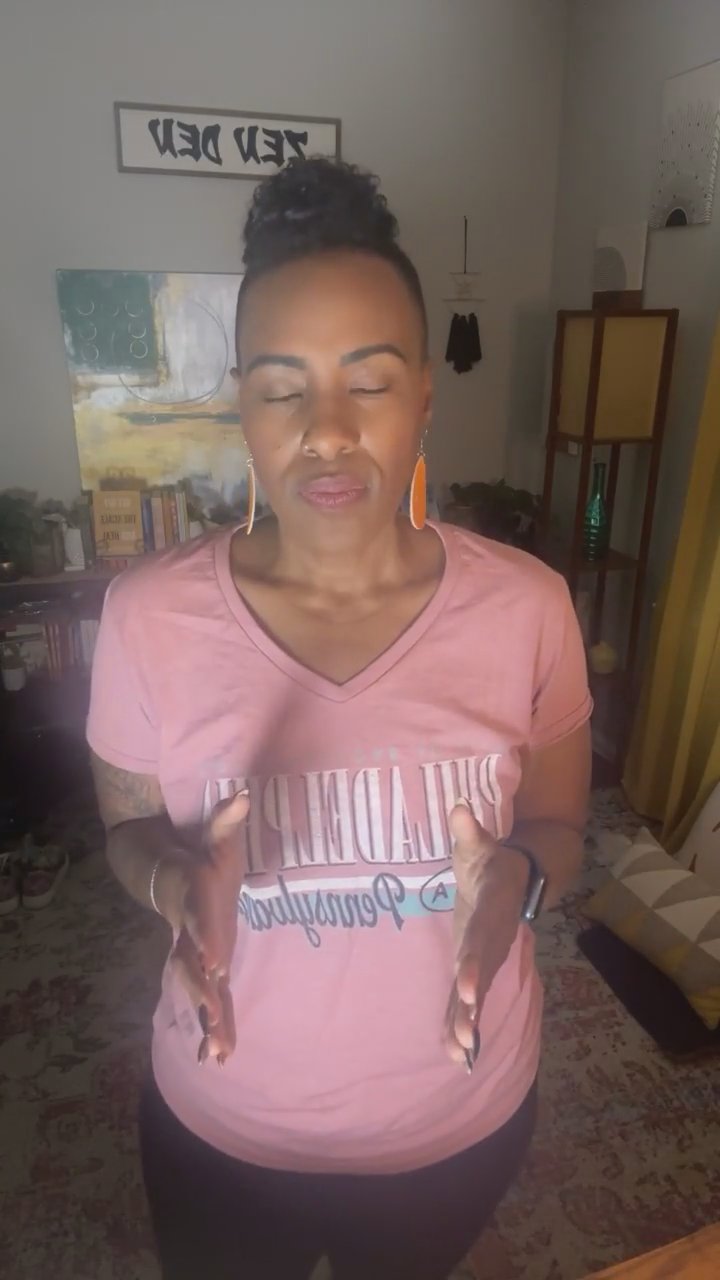
Dr. Charisse Johnson, a licensed clinical mental health therapist, explores the illusion of control and what people can choose—habits, responses, boundaries and present-moment focus—offering reflection questions to try.
Dr. Charisse Johnson is a licensed clinical mental health therapist, mindfulness practitioner and author. Her whole premise is that balance is a really unique concept, but harmony is something that we can have. It means that everything that we're doing is all playing together in a particular way.
What I want you to do is rate your week. While you're rating your week, I'm going to check on one simple thing, tech thing, just to make sure we're okay. We had some little tech issues last week. At the moment I can't see your comments, which breaks my heart.
So for the focus of today, I want to focus on the illusion of control. We all have the ability to choose how we respond, where we place our focus or redirect our focus. What you can control choose is your habits, your routines and your patterns.
You cannot choose or control how other people control their lives. When you focus more on how others are dictating their lives, your own habits and patterns suffer. You always want to look and find the balance between how much energy can you give to the people that you care about.
How are my boundaries and limits currently working for me? What do I need to change, to shift, or to tighten up so that I'm in a good place? You cannot control other people's emotions. The response of others is their responsibility.
When we spend too much time mentally in the past, it creates anxiety. What you can't control is the past or the future. Choose the present moment. This is the only moment that you have.
Last thing what you can control, slash choose, is showing up authentically. How could I show up with even more authenticity in life? I gave you several reflection questions that you can utilize for your own time or discussion along the way and throughout the week.
Kaija Sphere, it is always wonderful to be with you if you are joining for the first time. Welcome. I'm so glad that you're here. My name is Dr. Charisse Johnson. I'm a licensed clinical mental health therapist, mindfulness practitioner and author. And I come into this space typically twice a week to engage with you around all things life, mental health and everything that falls in between. My whole premise is that balance is a really unique concept, but harmony is something that we can have. It means that everything that we're doing is all playing together in a particular way.
So as you come in, please welcome someone who is here and then let me know how your week is going. So what I want you to do is rate your week. Typically, I'll ask you to do that once or twice a week depending upon how much you listen to me. One, meaning it's been a really difficult week and you haven't felt very engaged or connected to your week. And then 10 meaning it has been phenomenal and you have thoroughly enjoyed the week so far and you feel like you've shown up as well as you possibly can based on the context of your life.
And so while you're rating your week, I'm going to check on one simple thing, tech thing, just to make sure we're okay. We had some little tech issues last week, so I want to make sure that things are coming live and at the moment I can't see your comments, which breaks my heart. But we're going to work on it. I'm waiting for verification that I can be seen and then once I get that, we will go ahead and get going. Let's give it a moment. I think I'm going to go ahead and keep moving even while we're here.
That way if we are going live, then it's working out just fine. So for the focus of today, I want to focus on the illusion of control. You know, control is something that we often seek or desire. It is something that our mind desires. And our mind doesn't so much want to always feel like it's in control, but it's looking for a pattern of stability. It's looking for predictability. That's why our brain runs us down a path that is the same. It's why we find ourselves doing things that we say we don't want to do because that's a well worn path in our brain.
And as a result of that we are frustrated when we try to do something different and our brain is like, no, go the way that I told you. But from A mental health and well being standpoint, seeking control, specifically seeking control in ways that are beyond our ability to choose is going to be challenging. One control is an illusion. As much as we don't want to acknowledge it, we actually don't have control over most of the things in our life. What we do have, one of my favorite words and principles and theoretical models is we have choice.
We all have the ability to choose how we respond, where we place our focus or redirect our focus. Now let me say here as a caveat, you might think, no, I try not to focus on this and it comes up to my mind. You can't control the subconscious things that come to the conscious and come on your mind, but you can choose how you will respond when those things come up. You can choose how you will direct your energy and your thought and your patterns based on what comes up. And you can do what we call thought stop, which means in the middle of a really negative or harmful comment you can pause and go, now is not the time for that.
I'm going to put a pin in that later, I'll come back to it. But I'm going to redirect my energy here. So that's kind of what I mean by directing your thoughts and your responses and how you choose. So if you're a person who takes notes, I would say put a line down the middle of the paper and you're going to have two columns. One is what I can control choose and then the other side is what I can't control. So I find that this can be a really valuable way of you considering your own kind of control patterns, what you notice yourself trying to control and then also keeping in mind what are the areas that you know this is outside of my control and because I'm placing my energy here, it's a waste of your time.
Thank you for those hearts. That was the first thing that helped me to know that people are actually here. So that is your form of engagement for today, is to use all the emojis and the reactions. So that's great. It always feels a little better knowing that you're not completely talking to yourself and I miss your comments. So we're going to get that fixed because I need to be able to engage with you and talk to you. I don't know if you can comment and I can't see them, but either way it goes. I appreciate the hearts and we'll take them as support.
So what you can control choose, you can control your habits, your routines and your patterns and if we think about that neurobiologically, remember, those are the things that helps your nervous system, that helps your emotion regulation, that helps your mental health really feel steady. Your habits wire the fire. That means your brain will fire off in the direction of the habits you choose. So if you have no habits, there's not going to be a lot happening in your brain and you'll actually find that you're low or depressed.
But if you have a good routine of habits, of patterns, you're going to find that it helps motivate you, it helps encourage you, and it will help lift your mood. So that's important. Here's what you can't control. You can't control how other people choose to live their lives. If I had coffee, I would take a little sip right here. You cannot choose or control how other people control their lives. Here's what that means for some of you. You may have somebody in your life and you want so much for them.
You want them to be healthy, you want them to take care of themselves, you want them to get organized, you want them to be motivated. All of that is wonderful, but they have full authority over their life. So when you take your mental energy and you focus more on how other people are dictating their lives instead of your own habits and patterns, you're going to find typically that your own habits and patterns suffer. So you always want to look and find the balance between how much energy can you give to the people that you care about, that you want to support, but not at the expense of your own?
What's the next thing, something else that you can control? Choose your boundaries and your limits. I'm always team boundaries. I am always team limits because they're important for us to maintain or establish in order to make sure that we have the capacity to do the things that we need to do. Tell me this, even without telling me. You can tell me through emojis. Have you ever had a situation where you had boundaries in place and you let someone convince you to loosen those boundaries or get rid of those boundaries?
And if you did, what was the result of that? And so you could use this as a side reflection question and be able to ask yourself, how are my boundaries and limits currently working for me? That's the application piece that I want you to take on. Then from there, what do I need to change, to shift, or to tighten up so that I'm in a good place? How are my boundaries and my limits currently working for me, and what do I need to do? Something tangible to change to shift or to implement or tighten up your boundaries and your limits so that you protect your peace, that you protect your own mental health and well being.
Things that you cannot control other people's emotions. I want to like put that on a neon blinking sign. It is not your responsibility, nor do you have the ability to control other people's emotional response. There are people who will respond the way they're going to respond no matter what you do. So it is important for you to break up with the part of you that feels like, well, if I'm this way, if I'm perfect, if I move this boundary, if I take these limits off of this relationship or partnership, then maybe they'll respond the way I need them to.
There are no promises there. The response of others is their responsibility. And that's the hardest thing for us to understand. And it doesn't make you mean. Let me add that it is not mean or wrong for you to say your emotional response is not my problem. It might be a problem, but it's not your problem to solve. It is theirs to work through. Your work is to work through the part of you that is constantly on eggshells, constantly changing and shape shifting in order to create the magical emotional response that you may never get.
Other things that you can control, your reaction, your responses, you're responsible for how you react and how you respond to all the situations in your life. But what you can't control is how other people choose to behave. This is a hard one. I'm not, I will even say this to myself, I'm an empath. As an empath, I feel everything. So if I'm connected to a loved one, anybody, but we'll just use a loved one, for example, and they behave in a certain way. I feel it. I in the past have wanted to control it.
So I step in and I might say something or I might do something, or I try to mediate and I try to smooth it over and I try to do all the things and then what happens is I get caught in the line of fire because I actually stepped into a situation that wasn't mine to step into. Then you have this chain reaction of something happened, this person behaved in a way that you didn't feel comfortable with. You stepped in to try to fix it, to solve it, to do something. And as a result, all of the energy towards that situation came towards you.
Then you're hurt. I was just trying to help. I'm so mistreated. It happens. But we have to recognize that everyone's behavior is not our assignment. Even those of you that have children, we teach them, they're going to do what they want, and we cannot control their behaviors. Other things. Two other things that you can control. Slash, choose the present moment. This is the only moment that you have. You're not promised the next moment, and we don't get back any of the other ones. When we spend too much time mentally in the past, it creates anxiety.
And then we take that anxiety into the present and future. If we spend too much time, typically in the future. Oh, I said that. Reverse. Too much time in the future is anxiety. Too much time in the past. Depression. So when we spend too much time looking back over what was and what happened and what didn't happen the way we want, it makes us depressed, it makes us full of regret, it makes us sad. When we spend too much time in the future, we end up falling into what we call anticipatory anxiety.
And as a result of that, then we're trying to control the future based on the past. None of that works. This is your moment. I want you to consider this. How can you today just focus on what is happening in my life in the present moment? How can I be mindful of the here and now? How can I not push myself into situations that aren't mine? I'm not saying don't give thought to things that are happening in the future, but don't get caught in future tripping. Don't get caught in ruminating where you're obsessively overthinking about the future.
Stay in the moment because this is where you can choose your response and your behavior and your boundaries and your limits. And this is where you're going to find the most sense of peace. A lot of times, if you've been with me and we do any type of mindfulness activity, it's. We're anchoring in the moment. And most people will go, oh, my gosh, that felt amazing. That felt so good to just be here right now. Absolutely, it does. I encourage you to try it as many times as possible. What you can't control is the past or the future.
No matter how much you think about it. Today's hard truth. No matter how much you think about it, no matter how much you try to predict it, no matter how much you try to get ahead of it, you can't control the future, and you can't go backwards and fix the past. Stay here and move forward one step at a time. Last thing what you can control, slash choose, is showing up authentically. I want you to really ask yourself that, am I showing up authentically in life right now? How could I show up with even more authenticity in life?
Right? Are you showing up authentically? And how can you show up with even more authenticity in life? Because it is a beautiful part of making us feel comfortable, feeling grounded. There is something so powerful when you feel like, oh my gosh, this is the space, this is the time, this is the season that I get to be myself. And let me say this as a caveat. If you have people in your life that allow you the room and the freedom and the latitude to show up with authenticity without judgment, keep those people in your life.
I'm grateful for the people in my life who allow me to be my authentic self. Some of them I know, even without seeing who's here or on right now, you're who I'm talking to. And I appreciate you. I appreciate that you see me and I appreciate that you allow me to fully be myself, which is very colorful because it's so helpful to my own mental health and well being to be able to have that without judgment. Find those people and when you find them, hold on to them and make sure that you also extend the same thing.
There's nothing worse than being around people who don't allow you to be authentic. You've been there. There's nothing worse than being around people who have conditions to how you're supposed to show up and what you're supposed to say and what you're supposed to wear and how you're supposed to look and how you're supposed to eat that you feel like no matter what you do, it's not enough. Because here's the last thing that you cannot control. You can't control what others think of you. I cannot control what other people think of me.
I'm grateful that that is a part of my nature that has always been there. People are going to think what they think about me. No matter what I do, no matter what I say, people are going to think what they think about you, no matter what you do, no matter how good you are, no matter what you say. And here's why. Our thoughts towards other people is often seen through the lens of our own pain. So an unhealed person is always going to see me in a distorted point of view. So I can't worry about what they think.
All that matters is what you think of yourself. And that's where authenticity and honesty and integrity comes to mind and comes in place when you can sit down at the end of the day. And go, hey, I like me. I am good with me. I am good with the me that I am becoming. I am good with the me that is evolving and changing and showing up in the world. It is powerful. So how do you use this? I gave you several reflection questions that you can utilize for your own time or discussion along the way and throughout the week.
The other thing that I would have you to consider is maybe you add to this list over the next week you will add to Here are the things that I can control. Here are the things that I can choose for myself as you see things come up in your life. And then I definitely encourage you to add to the side of the list, here's what I can't control. But maybe you notice yourself trying to control and it's a great visual to sit down with and constantly ask yourself, what am I feeling today? And based on what I'm feeling, which column I am?
Am I in? Am I in the here's what I can control, here's what I can choose column and that's how I'm moving through life? Or do I notice that a lot of my anxiety and my fear and my tension and my stress is because I am constantly trying to control things that don't have to do with me and that are completely out of my control? As always, I'm so glad that you chose to come and to show up today. I hope you found at least one thing that you can use to walk on, to reflect on and to engage in as you move from thought to action.
I look forward to connecting with you on Friday and hope that you have a fabulous rest of the day. Talk to you soon.
Reactions and comments are for members. Joining is free and takes a minute.