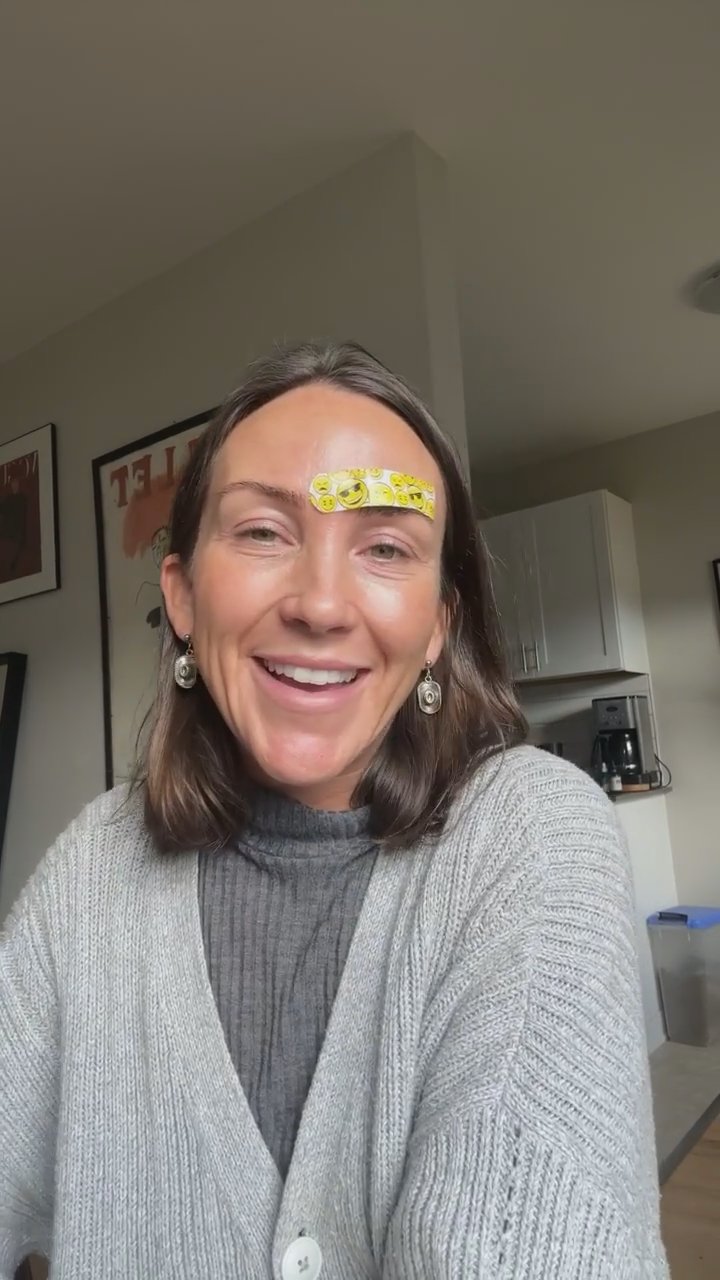
Host shares a personal story about a head injury and leads a conversation about recognizing and coping with burnout, especially during the holidays, offering practical reflections on boundary-setting and managing heavy workloads.
Cadre crew visits Rachel to talk about a head injury. Rachel: I was changing a spare tire when a car fell and hit my head. Luke: They were very concerned with the scarring. Jewel: Hope your head is healing nicely.
As we approach the holiday season, a lot of folks underestimate how much the holidays can impact burnout. Burnout can feel really confusing because it can present itself in ways that feel almost like mild symptoms of other mental health disorders. What are some things that we can do to navigate it if we can't prevent it?
I'll probably try and talk a little bit more about not just burnout, but the holidays in general. The holidays typically are a time when we might experience a lot more family. If there's anything in specific you'd like me to talk about around the holidays, please let me know in the comments.
Happy Wednesday, Cadre crew. Hello. Hello. I'm gonna get folks who trickle in per usual. Please don't mind my band aid. I have chin in my forehead right now. A okay. A okay. I'm getting the removed on Sunday and then hopefully they'll just go right up so they give me this cute little, like, smiley face Band Aid, so. Hi, Anna. Hi, Rachel. Hello, hello. Happy Wednesday. I'm very happy to see you all today. Rachel asked what happened? This is such a silly story. I was changing a spare tire on my car and I was leaning into my.
I was standing outside the car with the car door open, the driver's side open and turning on the car so I could turn the steering wheel so the spare was facing straight before taking the jack out. And the jack fell out while I was doing that. So the weight of the car fell and hit my head and it was just like a super clean cut. So luckily I get to the urgent care and they were able to see me right away. Popped in some stitches that I'll have for five days. I'll still remove them on Sunday and then it's just a matter of scar healing.
So I will be okay if not, if they did a concussion test. There's no concussion, so it's totally fine. They were funny. They were very concerned with the scarring. Like, the doctor kept referring me to a plastic surgeon, which I was like, I don't think my insurance covers that. But also, like, I'm okay with those scar on my face. Like, that could be cool. I don't know. Like I have lots of cars all over and I figured it was like right under my eyebrow anyway, so it probably will get hidden, so. But I'm okay.
This is quite the experience yesterday, changing my flat tires, thinking like that was gonna be like the most annoying part of my day, when in fact the most annoying thing that I had to go into. But I'm okay. I'm in good spirits. Luckily, I had a friend with me which made it so much better. So Luke says hello. So good to see you, Rachel. Agree, Luke, you're the best. And not agree. I mean, right back at you. You're the best. Jewel says good afternoon. Hope your head is healing nicely. Thank you so much.
Rachel says not silly. I got a nice gash in my head a couple weeks ago, but not so ooh, I hope you're okay. A gash sounds gnarly. We will be scar. We'll be scar twins. Right in time for Halloween. So. Alright, so I want to talk about burnout today because I am very familiar with burnout. As someone who a. Is sort of like a chronic overworker, overachiever, perfectionist. I have gotten so much better with setting boundaries in my adult life than I have in the past, which has really, really helped me to avoid burnout.
And sometimes there are just things I cannot do. Like, there are things I cannot take off my plate. There are work tasks that I can't postpone or deadlines that I can't change. There are still times in my life where, regardless of how good I am at setting boundaries, I burn out because there's too much on my plate. So I want to talk about that. And I especially want to talk about it because as we approach the holiday season, I think a lot of folks underestimate how much the holidays can impact burnout.
I think we relate burnout to work most often, but we can get burned out socially as well. It's so. It's a very real thing. And when we are constantly in preparation mode, planning mode, socializing, traveling, you know, spending more money than we might normally be spending around this time of year, it is very, very common for folks to burn out this time of year. So I thought it would be a good topic to kind of get going ahead of time to kind of just navigate. Like, what? What are some things that we can do to navigate it if we can't prevent having a lot on our plate?
So I've done. I've done lives before about, like, how to take things off of our plates so that we can prevent some potential burnout. So feel free to, like, peruse my past lives, that kind of talk about that. I think they're more framed under coping with depression, because one of the skills I use to cope with my depression is take stuff off my plate, which is also a great skill for preventing burnout. But let's say we can't prevent the burnout, right? Or let's say it happens anyway, or we don't realize that we have too much on our plate and suddenly we're exhausted.
So oftentimes, signs of burnout are gonna feel. They're gonna feel a lot like stress or chronic stress. So there's gonna be things like, if you notice that you start to get more irritable or agitated towards things that maybe you don't normally get agitated around, if you start to notice yourself feeling higher levels of anxiety around doing tasks or feeling almost like a physical sense of panic when it comes to doing things that are not necessarily life threatening or stressful or scary, like, simple things like answering emails or going to the grocery store, which I understand are really stressful and anxiety provoking for a lot of folks.
And if it's not something that normally creates that level of physical anxiety, noticing if our body is having a higher level of. Of anxiety, reaction to day to day things can often be a sign that we're burned out because we're at the end of our rope. Burnout is essentially, you know, we've overexerted the amount of energy we have, and that creates, that puts stress on our physical body and our nervous system. And so that manifests as things like feeling hyper vigilant or feeling on edge or feeling anxious or not sleeping as well, not being able to focus as much.
And oftentimes it can be. Burnout can feel really confusing because it can present itself in ways that feel almost like mild symptoms of other mental health disorders, like depression or anxiety. But it can almost sort of feel like it doesn't get quite to the level where it maybe is similar to when we've had those experiences. So sometimes we aren't able to recognize in ourselves that what's happening is that we're burned out. So I think the first thing that's really helpful is to recognize, like, oh, I'm burned out.
Like, I'm at the end of my rope. And I think that that analogy is helpful for me because it's like, it's literally like everything feels like the end of my rope. Everything feels like the last straw, or like I have no more tolerance for this or no more bandwidth for this. Or if someone asks me for a favor, I'm like, how? Why do you think that I could do that right now? Even though my normal reaction would be, either, sure, I would love to help you, or, you know what? Right now, I can't. I don't have room on my plate.
Like, we start to feel like everything feels upsetting and irritating, um, and unbearable and overwhelming. So when that happens, um, you know what I find to be really, really helpful is really focusing on nervous system stuff. So ways that we can physically regulate our body to remind ourselves that we are, in fact, safe, that we're not in danger. I've talked a lot about this on other videos as well, but things like breathing exercises. So one of my favorite breathing exercises to bring my parasympathetic back into a state of calm is simply focusing on my exhales being longer than my inhales.
And what that does is that communicates to my nervous system that I am safe. So if I notice myself start to feel like ramped up or like I'm doing things really quickly, or I'm multitasking and I just feel like I'm in a heightened, frantic state. That's an invitation for me to take five deep breaths and focus on exhaling longer than I inhale. And that will tell my body I'm safe. And in that moment, it might not immediately regulate me, but by repeating that pattern, by noticing moments where I'm feeling frantic or overwhelmed, or like everything is needed to be done really quickly, trying to remind myself to take those breaths, and that doing those breaths will take me 1 minute and I'll still be able to get done all the things I need to do.
But in the long run, doing those breaths is going to start to bring my nervous system back to a state of regulation. Another really helpful thing that you can do for your nervous system just on a day to day basis is what I like to call single tasking. Oftentimes we are reinforced socially and culturally for multitasking. People will ask us on resumes or interviews like, are you good at multitasking? It's seen as a skill, but the reality is multitasking a yemenite is really not good for us, it's not good for our brains.
And B, it's actually not. It's not actually a real thing. Like, what we think is multitasking is actually our brains rapidly going back and forth between two tasks. So we're never actually multitasking. We're just rapidly going back and forth between two tasks. And all that does is communicate to our brains that we're not focused on either one, but both are really important, and that can create a sense of panic or threat or I hyper vigilance. So that just kind of keeps us in this space of being super on edge.
So in times when we feel like we have a lot on our plate, as much as it might feel like multitasking is going to help us get that done faster and relieve us of the stress or the overwhelm, it's actually going to exacerbate that overwhelm. So we can do ourselves a favor by doing what I call single tasking. So by focusing on one task at a time, we're actually giving our brain the opportunity to focus fully on the one thing that we're doing, which, a, keeps us in a calmer state, but b, actually allows us to complete that task in a more timely manner and in a higher quality because we're not rapidly moving back and forth between that task and another task.
And in doing so, we keep ourselves regulated and calm while we're managing all of these things on our plate. So I know it can feel really overwhelming and scary to slow down when we feel like we have a lot going on. And the reality is that by slowing down, we actually increase how much time we have. So single tasking is really, really helpful. The other thing that I find really helpful, if I experience burnout, is to try as much as I can to surround myself with people that I know are going to be understanding of where I'm at.
So whether it's the holidays or whether it's work, I give myself the chance to be in the presence of people who I know are not going to need a lot from me energetically, but still allow me to be with other people. So I have a certain. I have certain friends who I can say like, hey, I have a lot of work I need to do. I really want to see you because you matter to me, but I just have all these crazy deadlines. Would you want to go to a coffee shop and work together? What that does is it allows me to feel like I'm maintaining these connections and relationships.
It's also making me feel like I'm not alone, which is really regulating for our nervous system. And it brings my friends in to be a support system at a time when I might be feeling extra stressed. So oftentimes, burnout can lead me to isolate more. It can lead me to push people away. It can lead me to feel guilty for not being able to do things that are social or maybe not be able to do. You know, if I'm doing a lot of social things and that's getting in the way of work or whatever it might be, finding ways to still maintain connection while being really honest and upfront with people in our lives about what's going on, to give ourselves a little bit of grace.
So those are just a few things I do. I think as we approach the holidays, I'll probably try and talk a little bit more about not just burnout, but the holidays in general, because the holidays can bring up a lot. The holidays typically are a time when we might experience a lot more family. Family triggers relational dynamics. You know, there's a lot around food and body around the holidays, so that can bring up a lot for folks. And there's also, you know, just the monetary stress that comes in with holidays around, traveling around, buying gifts around, buying food, it can be a very overwhelming time.
It's also winter, and for a lot of folks, that means it's darker and it's colder. So we're not outside as much. So it's a, it's a time where we deserve a, a lot of extra TLC. So I'll try and, you know, be speaking on a lot of those things as we move into the next months. And if there's anything in specific you'd like me to talk about around the holidays, please let me know in the comments. I'm happy to try and cater some specific lives to those things because you don't have to do this alone. We're in this together.
And I will be right there with you every Wednesday as we move through the holidays. So I will see you next week, hopefully without this and without my stitches and hopefully I won't have too much of a scar. But if I do, such is life. So, so happy to see you all here today. And I will see you next week, same time, same place. Happy Wednesday. Coming.
Reactions and comments are for members. Joining is free and takes a minute.