Jane Chills leads a conversation about communication and leading with authenticity, inviting listeners to share how they connect with family, friends and colleagues and reflect on in-person versus other modes.
Jane Chills is happy to be back on DTM13. She is in Minneapolis, Minnesota, but not always from there. Hope your Monday is going well.
Today on this amazing Monday, when we talk about leading with authenticity, I wanted to focus in on the have a conversation around communication. If you're listening live, hello. Speak Wonder. How do you feel today on this Monday?
Today what I want to focus on is communication. What are all the ways you communicate with your family, with your friends, with colleagues at work? I would simply love for you to go into the chat and type out what that is for you.
The way that I didn't list is in person, in person communication. We have all these ways to chat, but the conversations, the communications get lost along the way. What do you think is the most effective way that you communicate?
We're so busy and we're so focused on I that we forget about the we. Let's pay attention a little more to the conversations that we have. What type of communications are appropriate for what type of conversations? Plan your week.
Hello, everyone. Happy Monday. My name is Jane Chills. Excited to be here. Always excited to be here. I think I started the same way all the time. Just holding some space as everybody starts to call in. Good morning, good morning. Possibly good afternoon depending on where you're at. DTM13, where are you from today? Hope your Monday is going well. Hi Jules, Welcome. Taking a quick check to see who's dialing in and where everybody's from. I am in Minneapolis, Minnesota today. That's where I live, but I'm not always calling in from there, so it's nice to clarify that.
I also feel like we've transitioned into the type of weather where stocking caps become actual hat. Lifestyle hats. I swapped mine out fast before this morning's conversation. Today on this amazing Monday, when we talk about leading with authenticity, I wanted to focus in on the have a conversation around communication. Now, if you're listening live, hello. Speak Wonder. Welcome. Welcome. If you're listening live as you pop on in, or if you're listening on replay, my first ask or invitation is to type in the chat where you're calling in from.
And I might also ask that you add in. How do you feel today on this Monday, how are you feeling? Climber New York. Amazing. Thank you. Speak Wonder. I got the town. I do like your version of spelling. I thought maybe it would be poetic somehow. So as I mentioned, I'm in Minneapolis, Minnesota and today I feel hopeful. Yesterday or this weekend, if you saw my stream yesterday, I talked about being a little over anxious for all kinds of reasons, picking up on that energy and it just kind of carried throughout the day.
I had a lot of issues with technology yesterday and I laughed because I am a technology person. So when things go wrong for me on technology, I do giggle a little because I like to recover quick and figure that out. Long Point Resort in northern Minnesota. I do need to make it up there one day. Jules, it sounds quite lovely actually. So today what I want to focus on is communication. And what I'd like to ask as we start the conversation for feel, energy. Speak Wonder. Because today you're rehearsing with the string band.
Oh, you play the fiddle. Ooh, that's really cool. I have my crystal sound bowls and I'm learning how to play a hand pan. So I don't know if you've ever heard of one of those. I'll put a picture of one out here someday soon. Now, when I think about communication, there's all different paths that we can go down. But if I narrow down the focus of if we're leading authentically and we are leading from our best self, best foot forward. Assuming positive intent is a phrase that I use quite often, what I'd love to hear from all of you is whether you're replay or live, what are all the ways in which you communicate with your family, with your friends, with colleagues at work?
Oh, I'll have to. I'll show it to you. Maybe in a hot second at the end I'll pop out and pop back. So what are all the ways in which you communicate? I would simply love for you to go into the chat and type out what that is for you. You don't have to do one at a time. You can make it a long list and hit send. But how do you communicate today? Now offer in some suggestions in a hot second here. But if you look at some of the different apps and tools that are coming out on our iPhones or efforts that are going into different chatting tools at work to make them bigger, make them more technology advanced.
Thanks, Jules. I feel that one foot in front of the other. So speak winner puts in here body language, tone of voice, sometimes silently. So when I think about communication in all the forms that we have, we have what we're doing right now. We have video, we have text messaging. We can pick up the phone and make a call. We can use FaceTime if you're on Apple and you can FaceTime call. That's what this would be similar to if you work in an office. Maybe you have Zoom or teams or maybe you use a chat on teams and you're typing and having conversations that way.
We can have email. If you look at tools Speak. Wonder says text and email. If you look at different tools or apps, there's WhatsApp so you can communicate with people privately and securely. Snapchat. Yeah. Instagram, Facebook. There is another app called Signal. There's something called Voxer, like the opportunity to communicate with people is expansive. But I forgot one. Do you know what I forgot? Gonna give you five seconds to type in the chat. The way in which we can communicate that I didn't listen.
Silence is hard threads. Yep. The way that I didn't list is in person, in person communication. Why? Because it appears as if so much of our world has. Thank you Jules for typing that in person. So much of our world, so much of our day to day has become so fast that the simple idea of an in person meeting or going to lunch with a friend, even if we're there, sometimes we're on our phone taking photos of our meals or the restaurants, so we can post it on Snapchat and threads and all these other things, right?
But that element of communicating can be really fast. Now, if I look at it simply from work lens, so I'm going to put on the hat that we're at work and we're communicating that way. Oftentimes we try to solve things quickly. Email. Whatever instant message you use, whether it's teams or slack or something else, will pop things out there really fast. Now, if you think about your own communication style, some of you might be really direct in how you communicate, which means you write the least amount, amount of words possible to get the question or the answer out there.
If you're someone high in relationship building, you might start it off with hi, how are you doing today? And then you blast them with whatever the question is. So we have all these forums to keep us connected. But what I hear over and over, and I hear often, is how disconnected people feel. It's funny, right? We have all these ways to chat, but the conversations, the communications get lost along the way. We lose that when we don't have what Speak Wonder mentioned already. Watching body language, interpersonal communication, silence, voice tone.
That's why it's nice when you can be on a video or a conference call or zoom where you can see people's faces. At the very least, you may not feel their energy or that connection, but you can see how they're responding. Are they leaning in? Are they leaning back? Are they puzzled? Do they like questioning? Now, I'm going to ask a different question. What do you think is the most effective way that you communicate with other people? What is the most effective way, least amount of understanding? What is the most effective way that you communicate?
Type it in the chat. Now, I do have a little bit of a delay when you type, so as it comes in, I'll read it off as I see it. And if you do this on replay, I will come back and I will look at all of them. Some of us might say our most effective way of communicating is in an email because we have time to ponder and think and choose our words cautiously and considerately to get the best message out there. You might be right. If that's how you feel, I can never take that away from you. Speak Wonder. Of course, you do bend words into poetry.
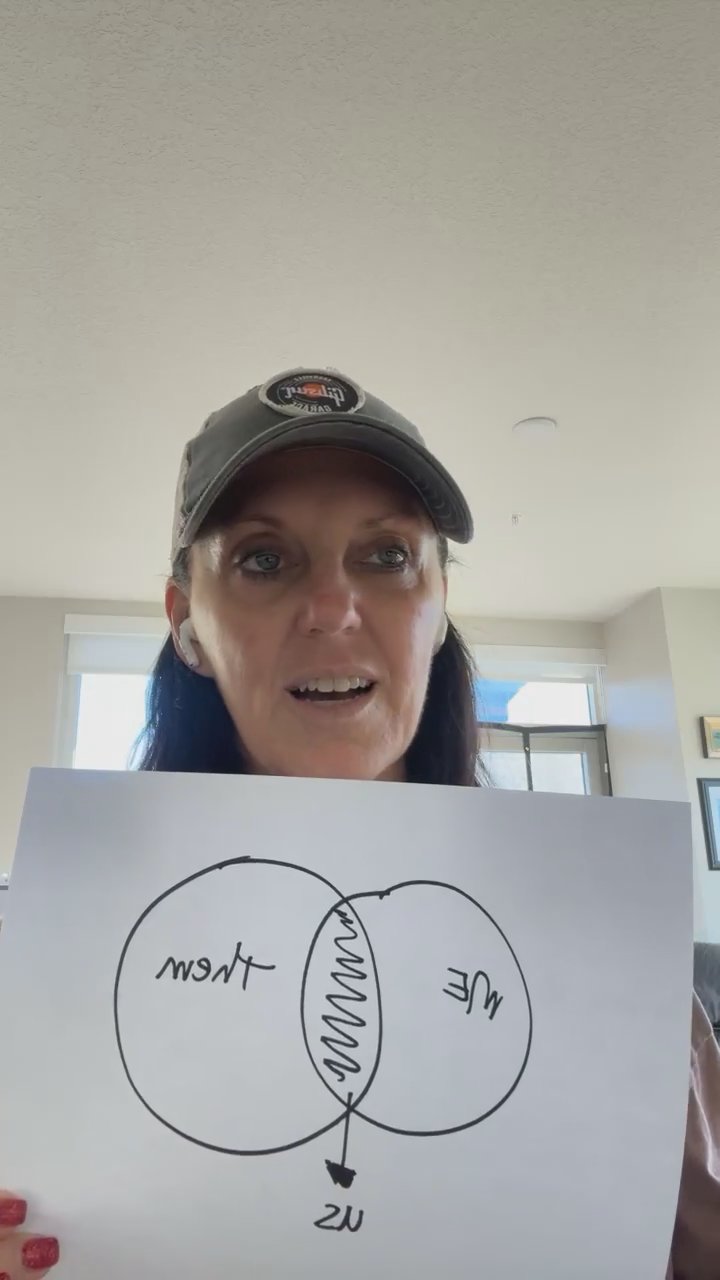
Can't imagine anything else. Now, when we're looking to really work through a problem or a complication or a challenge, the most effective way for us to do that is in person. But here's what happens And I drew a little chart today. In any conversation, whether it's written, whether it's on Slack or on a text, chain of a video message, whatever that is, insert all of them. You have you as the person, so me, Jean as one communicator and we have them everybody else, whether it's a large audience or if Speak Wonder and I, we're having a one on one conversation.
And if we're coming together to solve a problem or solve a challenge, there's going to be the part in the middle here where we align. So here are all the things that I need, here are all the things that you might need, and here's what we can align on together. But you'll see there's still a whole lot of white space up there. In a conflict resolution, this is a diagram that's used quite often. What's your conflict? What's their conflict? What's our resolution? So this diagram works in almost any scenario where communication happens because no matter what happens, you will come in with a need, they will come in with a need.
And at the end of the need, at the end of the conversation, this space can be really big or really small, depending on the conversation goes. But inevitably, what will happen in any conversation is you'll start the dialogue, but how actively are you listening? Two ears, one mouth for a reason. Take in more than we say. What will happen in any conversation is you might be sitting on the other side thinking about how you're going to respond. If we're thinking about how we're going to respond, are we actively listening so that we're really hearing the message?
Maybe. Maybe we're really good at multitasking in that way. It is one thing that's nice about doing something via text, but the problem with that is is words matter. So if you are somebody that's super direct, you might use the least amount of words possible to get the message or answer across. On the receiving end, I lose one of the elements that Speak Wonder already talked about. I can't see your body language, I can't see your face, your eyes, I can't hear the tone of your words. So I don't know if your response short and cutting me off or if your spots is short and you're really excited about what the solution is.
We can't tell. So I took a vulnerable moment this morning with one of the people on my team because we had a difference of opinion and I know they were multitasking based on how they were responding. I know I was multitasking. And how I was responding. And so I called them and I picked up the phone. Now we were in Portston, but I could hear their tone and we could actually have the conversation that said, here's the information that I gave you. But I feel like it might have come off a little bit more tert or short than what was intended.
How did you receive it? Do we have anything else we need to clear up? Are we in a good place? Literally how my conversation went. And I also went on to say, you know, when I'm saying certain things because I happen to be the boss, it's because I'm creating a boundary so that you get seen in the same light as everybody else and not seen as if maybe you get special treatment. So if I'm asking you, even though you have the power to do a certain task that other people don't, to post what you're doing so that people on the team know that we're working together and we're collaborating.
So I find lately that I keep using the language of conversation and communication with my teams because we are going so fast all the time. And what I'm missing is exactly what Jules typed in. Listening to understand. We're so busy and we're so focused on I that we forget about the we. The I isn't less important. Sometimes we need to get out what is inside to start the conversation, to relieve that emotion, that tension that build up of what's in our head. But when we look at it from the collective of we, where do I still stay in the story and where do we solve the story together, having those conversations and really getting clear on even.
And I work, I do this work with my clients. What type of communications are appropriate for what type of conversations? Are we trying to solve a problem? If you go back and forth with somebody three times and you're not getting anywhere, get on a call, maybe we need to have a meeting. Can we do in person versus not in person. And maybe we do in person once a month because at least once a month we can come together and continue to foster that relationship. Because relationships aren't really formed virtually or over text message.
That's work. The human side of that conversation is minimized because we don't see each other, we don't feel each other, we don't hear each other. So my invitation is to take today and really focus in how are you communicating with everybody around you and what might be the impact if you changed it slightly? Would we be able to expand this middle space here so it's bigger. So it becomes more we. We have more understanding. And maybe the understanding isn't about the problem itself. Maybe the understanding is how each of us approach it so differently because we listened and we had the conversation.
So today, that's my invitation. Let's pay attention a little more to the conversations that we have. How much time do we spend listening? How much time do we actually spend absorbing the information we're hearing and receiving, using our senses, our eyes, our ears, our bodies, to feel what energy is getting sent to us, seeking to understand, so that when we answer back, it comes from a place of understanding or curiosity. Because if you don't understand, the best next step isn't to voice your opinion over theirs.
It's to ask a clarifying question, to see really where they're coming from so that you truly understand. So the answer you give back to them has just a little more meaning and a little more thoughtfulness. Because at the end of the day, we work with people. Whether you're a manager, an employee, whether you're a volunteer, a family member, all of this comes into play as just general humanness. But today, we focus it on our work because it's one lens we can focus in on to simplify the dialogue. If you have questions or comments or any additional insights, if you're listening on replay or you're here live with me, type it in the comments, let me know what you think, and I promise that I'll always respond and bring it back to us.
Have a great rest of your Monday. Check out the chats that are coming up next, the conversations that are coming up the rest of today. Plan your week. Add them to your calendar. I look forward to seeing you soon.
Reactions and comments are for members. Joining is free and takes a minute.