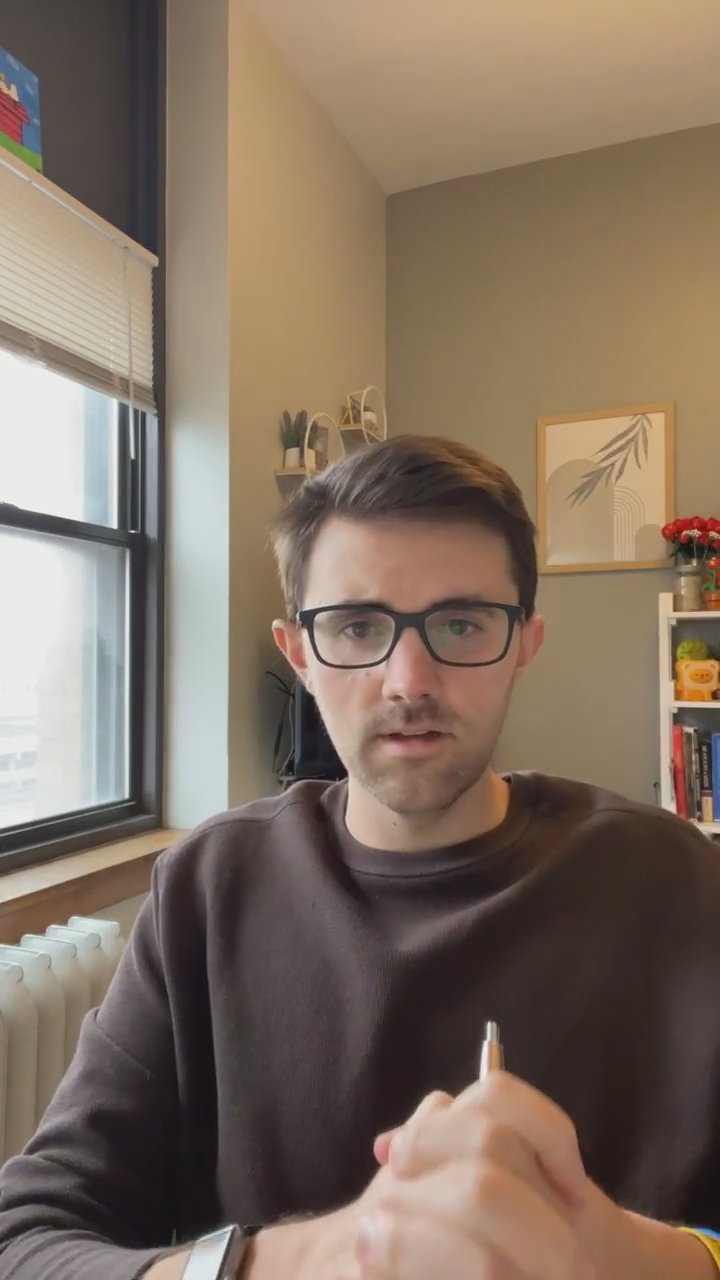
A leadership coach introduces George Kelly’s person-as-scientist idea, guiding listeners through a three-lists practice—feelings, intentions, gratitude—and explains how leaders can form, test, and revise hypotheses to understand people and situations.
Hello, happy Monday cadre's fear last week of November, crazy first snowstorm here in Duluth, Minnesota, which is also kind of crazy seems to come to come quick. Happy happy Monday. Give it about one more minute here and see if anybody joins us here live. Okay. Well, welcome to prepare your leadership where on the title comes from we don't want to be put in a leadership position or want to become a leader and not have the skills to do it. So, prepare your leadership is all about preparing leadership as before you're put into the leadership position that way when you are you can take up from there.
Hello, Jules, welcome, happy Monday. Thank you for joining. Let's start today how I've been starting in my other lives with the three lists of three. So, what are three things that we're feeling? J ules might be warm. Well, I might be cold because I'm stuck here in Duluth where our first few inches of snow already. So, what are three things that you're feeling? This, you know, putting in a label on emotions is one of the first key steps to emotional intelligence and emotion regulation and doesn't need to be, you know, the exact definition of an emotion but it could just be, you know , today when I wrote down my three things, I was just kind of checked out for the holiday break.
So, it can just be kind of any way that you can label how your feeling could be sensations as well. Physical or internal like cold, hot, warm, just labeling three things that you're feeling three sensations. Then, what are three intentions that you have for the day as well? How are you gonna make? How do you, how do you want to feel for us today? Maybe that's focused, have some energy, whatever it may be, how are three intentions that you want to have? And the last thing is gratitude. What are three things you are grateful for?
You know, coming up on Thanksgiving, the day of thanks. What are, what are three things that are you grateful for? Grateful for today, right now. Maybe could be from the weekend or earlier today or even right now what you're feeling. You know, three things you're grateful for. And this, these three lists of things will kind of play into what I have want to talk about today. And what I want to talk about is the idea of the person as the scientist. So, we are all scientists. This is an idea and kind of philosophy and theory developed by George Kelly.
He was a well known psychologist from the 1930s and 40s era right after Freud and right when Skinner was testing, testing rats and he was coming at a different angle going purely from the mind and perspectives. So, here's an idea where each person is their own scientists. You know, we, you know, individuals, we form, test and then revise these hypotheses that we have as a person, you know, to make sense of the world, around us and predict what's going to happen in the future. So, when we look at it through, you know, a workplace leadership lens, leaders are like scientists where they develop and test hypotheses about their teams, maybe strategies or organizational goals.
So, a leader might observe that the team improves their performance with flexible deadlines, so that's their hypotheses and then they test it by implementing changes and then getting feedback and evaluating how people meet in deadlines better now. You know, and then also as an employee, they might be a scientist where an employee might see , you know, if I start raising my hand more, asking questions, this might, you know, improve my engagement and make it look like I'm, you know, a better employee and help my professional development.
You know, I ask their hypotheses, they start testing it, they start asking more questions and then they get some feedback. Well, they might perceive others are getting annoyed with the amount of questions, so they have to adjust how many questions and when they're asking the questions. So, we can use this idea of us as scientists to, to reinforce how we operate in our daily lives and it's important when we look at it and how I look at emotional regulation through the acronym AIM where it's awareness, intention and make it happen.
Awareness might be, you know, perceiving, I'm better in my professional development by asking questions. It looks like I'm taking initiative. It's going to help me and so awareness. So, we start intention, we start asking more questions and we're making it happen. So, yeah, but then our awareness picks up that we might be annoying people with the amount of questions that we're asking. So, awareness picks that up. So, our intention is, well, we don't want to, to be annoying. We want to, to ask better questions less.
So, then to make that happen, we need to ask less questions and be better at it. So , it's important during that phase to take that information and not fully detach the emotion from it, but take the emotion, take the information from awareness, apply it to our intention of how we want to, to change what do we want to be and then use that emotion as a driver. So, if we feel that we're annoying people, we're probably going to feel upset. Well, that emotion is going to be a motivator to change our behaviors.
So, use that, that motivation, that energy created from the emotion to you, to use on our intentions to make it happen to ask, you know, less questions to learn from it. It's the same idea when I talked to got, talked to athletes, like a pitcher who gives up the home run. Take the information away from, you know, the bad pitch you had and apply it to the next situation and use that emotion that you're feeling to, to motivate you to play better. So, it's, it's a, in theory, it sounds like awesome.
Yeah, this is, take the information, be a scientist and change, but it takes a lot of practice and skill. So, I just suggest today, just look at the world a little bit from a scientist. You don't need to change your behaviors, change a lot, but just think about forming hypotheses and testing it. And it's normal things that you're doing in your daily life, but just adding a little bit more language and intention behind what you're doing. So, that's all I have here for prepare your leadership. It's about today's about being the scientist yourself and forming hypotheses and then adjusting once it gets the results back.
So, that's all I have. Thank you, Jules, for joining live here. You can check out all the live streams here on Convey by checking out the calendar app. I hope we have a great thanks giving everyone. I'll see you next Monday. Goodbye.
Reactions and comments are for members. Joining is free and takes a minute.