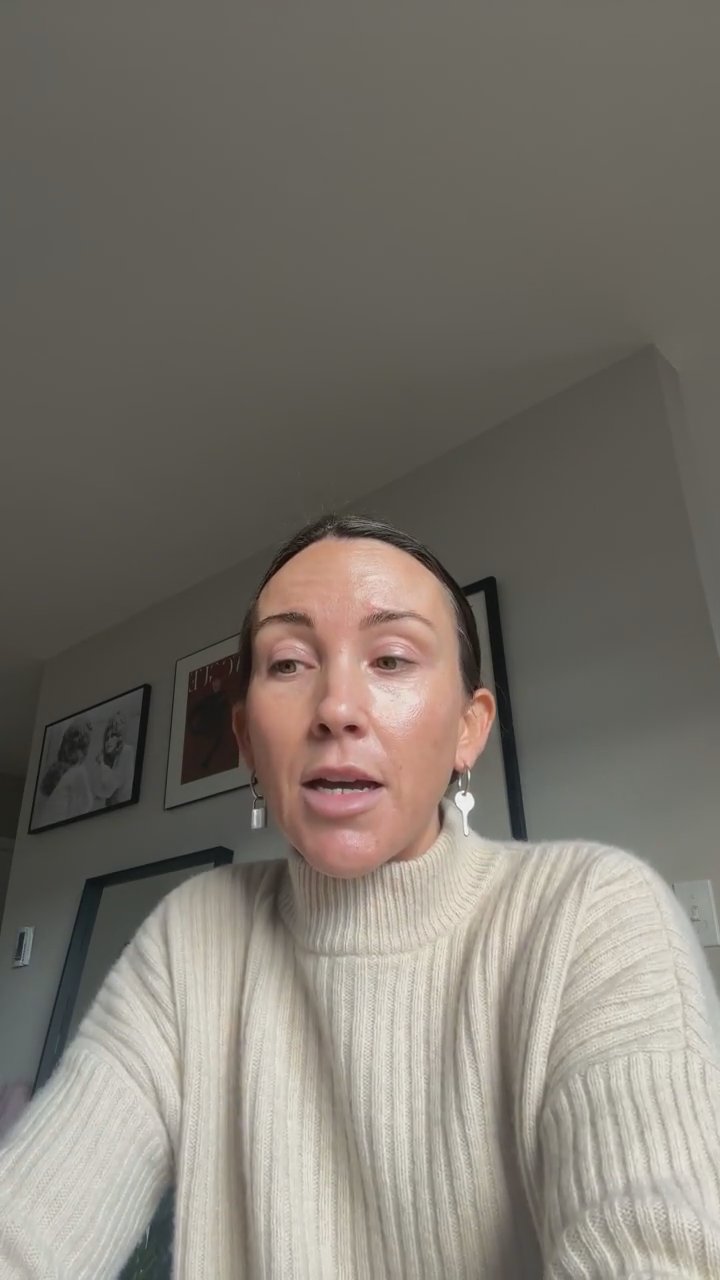
Shannon explains the DBT cope-ahead skill and demonstrates using a notebook to list expectations and reframes, identify supports and tools, and plan how to handle potentially stressful Thanksgiving gatherings.
There are some exciting changes happening on the Cadre app. There's a possibility that lives won't work today. Let's cross our fingers that this does.
Shannon: I wanted to share with you a skill that I learned in treatment called cope ahead. It's essentially a skill for when we know there's going to be a stressful event. Shannon: I write out a full list of expectations and then on the other side, I write a reframe.
The other thing that I like to do with coping ahead is think about my tools. What can I bring with me or what kind of support can I create beforehand to make sure that I feel as supported as possible. I'm also going to be posting some videos today specifically about navigating the holidays.
Happy Wednesday, Cadre Crew. Hello. Hello. I'm hoping this works. I got a notification today that because there are some exciting changes happening on the app, there's a possibility that lives won't work today. But let's cross our fingers that this does. So I wanted to share with you today a skill that I learned in treatment called cope ahead. You've, if you've been here before, you've heard me talk a lot about dbt. That stands for Dialectical Behavior Therapy. And it is a modality of therapy that I really like because it embodies a lot of sort of skill building around emotion regulation, distress tolerance, effective communication, and there's all these sort of specific skills that are different, that are used for different parts of life.
So one skill that I learned that has been very, very helpful for the holidays is cope ahead. And it's basically what it sounds like. It's essentially a skill for when we know there's going to be a stressful event. Hi, Shannon. When we know there's going to be a stressful event or an event or an experience that may be potentially triggering or stressful, we can cope ahead for that situation using this skill to kind of set ourselves up for as much success as possible. So I really like to use this skill heading into Thanksgiving because times when there is a lot of food, a lot of meals that are out of my control, a lot of talk about food, I'm around family members who I'm not around all the time who might make comments that are not recovery oriented that I might need to prepare for.
I'm not in my own home, which means that I don't have the comfort and safety of maybe taking time for myself. This is a time that I really, I always cope ahead. And so I'm going to kind of teach you and walk you through how I do it so that you can do it yourself if that feels helpful. And again, you can use this for anything. Like, you can use this for a first date, you can use this for a test. You can use this for, you know, meeting up with someone that you might have to have a hard conversation with, any experience or event that might feel overwhelming, stressful, or potentially triggering.
So I always like to use a notebook when I do this. I find writing things down really solidifies the activity more so than just thinking, thinking about it or talking out loud. So it's very. I also am very like visual. So I love that there's like a chart graph element to it. But essentially what I do is I take out a notebook and I write out first, on one side, expectations. And so on one side it'll just say, and this is going to be backwards because it's camera. It'll say expectations. When I talk about expectations, these are not necessarily exclusively positive expectations.
These are just things that I think might happen, good or bad, no morality attached to it. So, for example, things that might happen include things that I want to happen, includes things that I don't want to happen, includes things that typically have happened in the past in these events. And I write a full list. So for me, for Thanksgiving, I might write a list that looks like my mom is inevitably going to bring up a political conversation that maybe I don't want to talk about. Or my brother might make comments about drinking that I don't want to engage with, or family members will drink more than I want to drink, or there will be a lot more food than I normally have access to.
Or I might feel really full after the meal, or I'm gonna be in charge of cooking X, Y, and Z. Or a certain person might be there that sometimes I have hard times having conversations with. I write out a full list of all of these expectations or things that I think are gonna happen, positive or negative. And then on the other side, I write a reframe. So a reframe, if you haven't heard of a reframe, it's a common sort of therapeutic term, is a way for us to take something that. A statement or an idea or a belief.
Belief. And reframe, rewrite or restate it in a way that is more flexible, maybe more accepting, perhaps provides us with opportunity to maybe not get so attached to this particular idea. So an example of like, of going through my expectation list and then writing a reframe could be. It's going to be really like, if I. If I have this expectation, I'm going to be uncomfortably full after dinner and it's going to make me want to restrict the next day. Maybe that's my expectation. The reframe could be.
It's very common and normal for most people to feel uncomfortably full after Thanksgiving. And it doesn't mean I have to change the meals I eat the next day. So in that way, I can still honor what could happen and might be true, while offering a different way to think about it so that if and when it does happen, I'm equipped to already sort of reframe or be prepared for that experience. The other thing that I like to do with coping ahead is think about my tools. What can I bring with me or what kind of support can I create beforehand to make sure that I feel as supported as possible, navigating what could feel like a stressful or overwhelming experience.
So for me, that means, you know, like, oftentimes when I have to go, I have to travel, or if I'm staying overnight somewhere at someone else's home. I used to kind of, like, do this thing where I'd be like, oh, I'll just. I'll be fine. Like, I don't need to bring. You know, I don't need to bring anything that will make me more comfortable. Like, I can. I can handle whatever it is for one night. And that's not true. Like, I get anxious when I'm not home. If anything, I have heightened anxiety or I feel like more like things are out of my control.
So to provide a sense of security for myself or stability and safety, I make sure to bring things that make me feel safe and secure. So I make sure I bring an extra pair of comfy, cozy clothes so that if I need to change into something comfortable, I have that available. I bring all of my vitamins and any medications I bring, even though it's just one night. Like, doesn't mean I don't take my probiotics till before dinner. It doesn't mean I don't take my vitamin B or whatever. I make a little pack of my vitamins, and I stick to the routine I do at home, and I bring that with me.
I might bring something like a craft or a project that I can carve out some alone time. So right now I'm working on a knitting project. So I'm gonna bring my knitting with me. So if I need to take take a break from all the social time, I can sit in the living room and knit for 10 minutes. So making sure that I prepare myself in that ways, in that way that could also look like checking with a friend before I go to this event and saying, hey, you know, I usually get pretty triggered at Thanksgiving because of X, Y, and Z.
Is it okay if I text you or call you at some point tomorrow just to check in and set that up for myself? That way, in the moment, if I do feel triggered, that voice that says, you're a burden, don't reach out, is kind of diminished because my friend has already said, yes, it's okay for you to reach out to me. And they're also then prepared to receive whatever it is I'm going through. So I'm also. I'm also giving them the opportunity, if they aren't available, to do that emotionally to say no in advance, that they don't feel like they're in a position where they have to support me if they don't have the bandwidth.
Excuse me. So that's one of my favorite skills to use. You can also just Google DBT cope ahead and there's worksheets you can use. There's more descriptions about it and you can kind of make it your own. I've developed sort of my own way of coping ahead over the years for what works for me. But everyone's different so you can find what works for you. I'm also going to be posting some videos today specifically about navigating the holidays. Navigating being single over the holidays, managing eating disorder symptoms over the holidays, managing burnout and, you know, just different ways for us to cope during this season because it's a.
It is traditionally a harder time of year for a lot of folks. So make sure to check my profile in the next couple days. If you need a little extra support, there will be videos there for you to look at. I am sending you lots and lots of love. I hope you have a very peaceful, joyful few days over this long weekend if you are celebrating the holiday. If not, I hope you still have a peaceful, restful few days and I will see you next week, same time, same place.
Reactions and comments are for members. Joining is free and takes a minute.