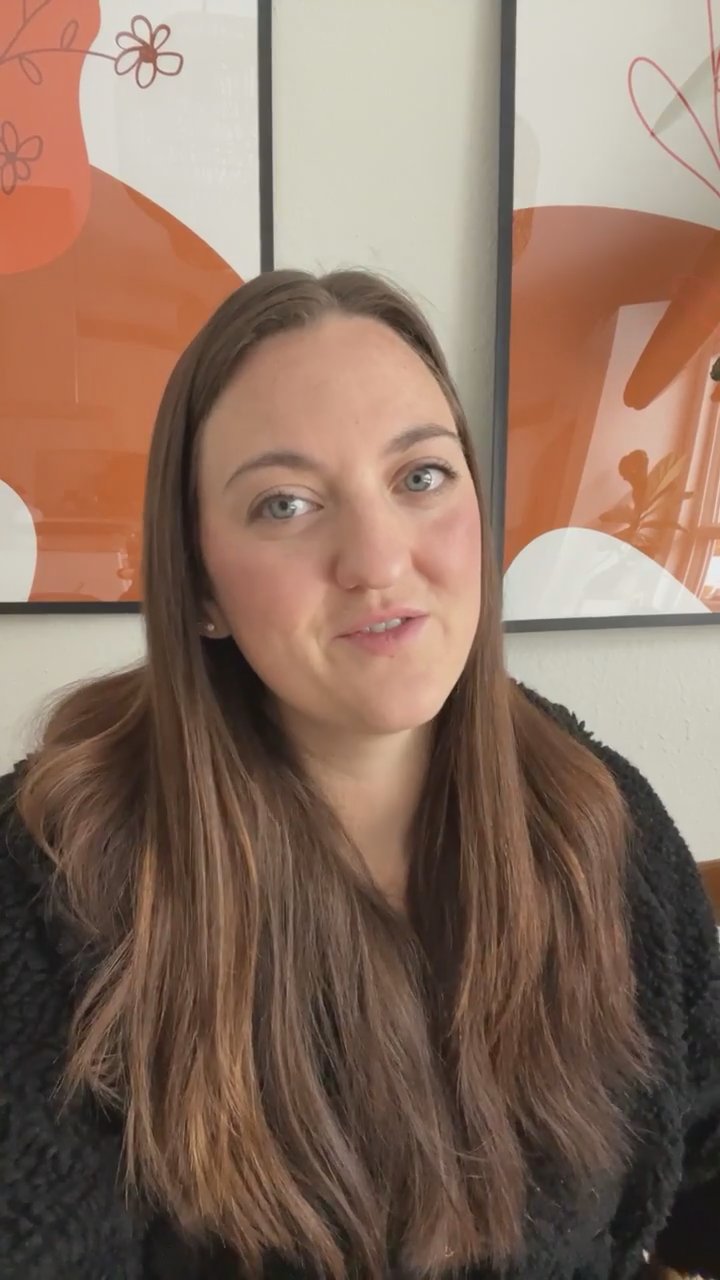
Kristen, a registered dietitian, explains rejecting the diet mentality as the first principle of intuitive eating, defines diet culture using a Christie Harrison quote, and reframes how to think about health.
Kristen is a registered dietitian in the Denver area. She specializes in eating disorders, disordered eating, and intuitive eating. Today we'll talk about principle one of intuitive eating, which is rejecting the diet mentality.
Diet culture is a system of beliefs that equate thinness, muscularity and particular body shapes with health and moral virtue. Rejecting the diet mentality does require you to reevaluate what health means to you.
I really like this quote from. Barbie. You can never say you want to be thin. You have to say you wants to be healthy. We have had snow for the last, like, four or five days, so it's quite cold and snowy here. I'm gonna try to get out and enjoy it anyway.
Good morning. Happy Saturday. I hope everyone is taking some deep breaths this morning. Taking care of yourself. Welcome, welcome. If you haven't been here before, my name is Kristen. I'm a registered dietitian in the Denver area and I specialize in eating disorders, disordered eating, and intuitive eating. And today I'm continuing my series on walking through the steps of intuitive eating. Good morning, Jules. And today we're going to talk about principle one of intuitive eating, which is rejecting the diet mentality.
Good morning, Jules. It's good to have you here. My apologies if anyone was looking for me last weekend. I had a minor surgery that I was recovering from, so didn't make it here for my life. But happy to be back spending time with you all. Let's dive right in. Good morning, Luke. So intuitive eating, if you were here, I think, I don't know, two or three weeks ago, I gave kind of a brief introduction of what intuitive eating is, the health benefits of intuitive eating, and ways to kind of reframe how we look at health and wellness through that lens.
And so today I just wanted to give you a little bit of a rundown of how do we actually reject the diet mentality and what benefits might that have? So I do have my notes over here. If you have me, you catch me looking. I don't want to miss anything. And I have a couple quotes. So first and foremost, it helps to define what diet culture is. And there is a dietitian. Her name is Christie Harrison. She wrote a book called Anti Diet, which is a wonderful read if you haven't read it and you're interested in learning more about this.
And this is a quote from her book. Diet culture is a system of beliefs that equate thinness, muscularity and particular body shapes with health and moral virtue, promotes weight loss and body reshaping as a means of attaining higher status, demonizing certain foods and food groups while elevating others and oppresses people who don't match its supposed picture of health. And I think that that is really powerful and really points out the issue that we're seeing a lot with diet culture, different diets, and I think just like society as a whole, and that is putting in the entire basis of someone's moral value in what they look like or what foods they do or do not eat, when in reality there's so many factors that go into those choices that someone makes, and that is not a reflection of who they are as a human being and their worth the world.
So I think that's a really big Piece of the diet mentality that gets missed. A lot of criticisms that I will hear around intuitive eating is that, well, you just don't care about health. That's not the point. The point is we're not telling someone that they are a good or bad human based on what they look like or what they eat. And that's kind of the basis. And something else I think that's worth pointing out is that diet culture is definitely sneakier these days than it was 20, 30, 40 years ago.
And diet culture has kind of shifted to be health and wellness culture, you know, selling expensive programs and supplements. And if you just do this one thing, then all of your problems in life will be solved because, well, at least she'll be thin. I even see things like, and less so now. But there was a really big trend for a while on gut health and oh, let's improve your gut health. And what they really meant was, let's eliminate any and all bloating, which is a normal process. It happens if it's painful or never going away.
Something to be talking to your practitioners about. But some bloating is normal. We eat food. Where does that food go? And what I was seeing a lot was people promoting this idea of getting rid of any sort of bloating because of this fear that it might make your body look bigger, despite it being just your body kind of doing its thing most of the time. And so really separating the fact that rejecting diet mentality does not mean that you're not engaging in health promoting behaviors like moving your body, eating your fruits and vegetables.
We all know those things are really great for our bodies to function. Giving it what it needs is important. But rejecting the diet mentality does require you to reevaluate what health means to you because it does look a little bit different for everybody. And I will often ask the question to my clients, how do you define health? And 95% of the time, the answer that I get is solely based on the physical. And so then we dive deeper into, well, what does that mean for mental health or emotional health, social health, spiritual health?
Because all of those things are a part of your whole person. Well, being so reevaluating is this message of health that I'm being sold through diet culture, diet mentality ads on the tv, guilt free foods. The nice cream trend kind of sticks out to me, which I do eat, I love it, but it's just bananas that are mixed together. It's not ice cream. You know, is that idea of health that's being sold to me. Really something that aligns with my values or is there more to it for me and most people? I would guess there's more to it for you.
How does this actually show up in practice? The probably the last year and a half I've been working one on one with clients in outpatient and prior to that I was in an inpatient facility. The two most prominent behaviors that I see in the people that I work with and it's almost everyone that I work with. In our first session, we figure out the two things that they're really doing that are having the biggest impact on binging or overeating or generally just things that are negatively impacting emotional and mental health are skipping meals or pushing off eating.
So even things like intermittent fasting and restricting specific foods. And those are not ideas that we're born with. Those are ideas that are learned through diet culture, through friend or family, magazine, tv, social media. And what I work to do with people is incorporate regular eating times and try to get rid of those restrictive thoughts around food saying, I can't have this, I can't have that because it's bad, because it will cause me poor health, because it will lead to xyz. And what I see happen almost every single time binging and overeating reduces those desires almost.
That compulsive desire to eat a food that you are telling yourself is bad decreases. And that is this concept of habituation, which is this psychology term that just means repeated exposure to a stimulus decreases the response so things get less exciting the more that you are eating them. If I were to eat chipotle every single day, I would probably get pretty sick of chipotle. And I love Chipotle, so that's saying a lot. And yeah, I think my point with, with that was just a lot of these things that we are doing that have negative impacts on our physical health and mental and emotional well being are things that we've learned.
So all that to say why is this important? Why do I care? Why am I passionate about helping people learn how to shift some of that diet culture disrupts self trust and intuition and piggybacking off of JC's enoughness this morning. If you were here for it. I know, Jules, you were. I think Luke, you were too. You are enough. Your thoughts are enough. Trusting yourself is almost an act of rebellion a lot of the time. And relearning how to trust yourself and your own intuition goes a long way. Not even just in the food nutrition category, but overall.
So that's my little spiel for you on rejecting the diet mentality. And that really kind of opens the door to the rest of the principles of intuitive eating that I'll keep coming on here and talking about. And I kind of leave you. I really like this quote from. I don't know if anyone's seen Barbie. I watched it just recently, actually. A little late to the train. But in, I think it was America Ferreira's monologue in that movie, she had one point that said you have to be thin, but not too thin. And you can never say you want to be thin.
You have to say you want to be healthy. And that really just stuck out to me as it relates to this principle. So, so glad to have you here with me this morning. I hope. I don't know how where everyone else is. I can't remember. I think Minnesota. We have had snow for the last, like, four or five days, so it's quite cold and snowy here. I'm gonna try to get out and enjoy it anyway, get some fresh air, move my body. I hope you all do the same. And I will see you back here next week, same time for principle two of intuitive eating.
Good to see you all.
Reactions and comments are for members. Joining is free and takes a minute.