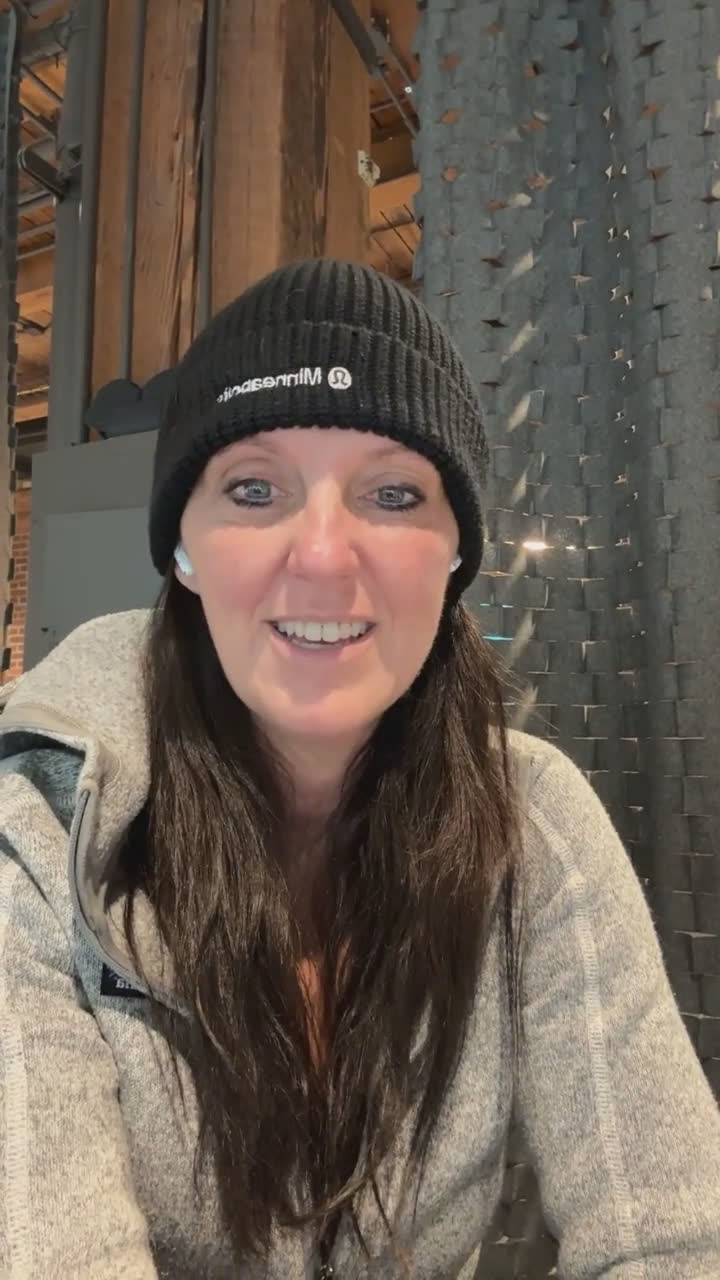
Jane Mitchells explores leading through organizational change and showing up with authenticity, observing colleagues who step into leadership without formal titles and sharing questions and practices to process and navigate change.
Jane Mitchells: Happy Monday. Always excited to be here on Mondays. The hat that I'm wearing for today's call is focused on leadership and living with authenticity.
Last week, one of my clients went through one of the largest changes in the history of the company. How do we lead through change and how do we show up as leaders? And it can be confusing for all of us.
Ashley Greene: When you go through change, what are your first steps? How do you process change? Greene: As humans, we are perfectly unique. What I might do first may not be the same as the people that I report to. She asks questions that need to get answered first for people to feel comfortable.
I've been through a lot of transformations. Recognizing that you need to go through the change first and then tapping into what is authentic for you will help you build up your teams. My Monday message is all around change and how we go through it as individuals. What questions do you have?
Once again, my name is Jean and I will be here every Monday and every Sunday and the rest of today. I hope you have a great one. I get to finish finish mine with the sound bath tonight. Have a great day.
Hello, everybody. How are we doing today? Happy Monday. Hope everybody is having a great day. Giving a little space and time to dial in today. Also realizing how bright it is where I'm sitting today. It's pretty light. Hello, Ashley, how are you today? Where are you calling in from? Always, always excited to be here on Mondays. I feel like I get the best of both. I get to end the weekend Sundays and I get to be here on Mondays to kickstart the week. So if you haven't been with me before, my name is Jane Mitchells and I many things.
I wear many hats. Queer employment. Oh, nice. I love that. Nice and local. I wear many hats. The hat that I'm wearing for today's call is focused on leadership and living with authenticity. And there are a couple of things that I wanted to bring into our conversation for today. The first is change and how do we lead through change? And then the second is how do we, how might we show up as change leaders, even through the hard stuff? So how do we lead through change and how do we show up as leaders?
Sounds similar. Sounds the same. So I'm going to clarify what I mean as I go. But today, when I think about it, last week, one of my clients, I'm a consultant. I am a coach. I'm a consultant. I teach spin classes. I do sound baths. We wear a lot of hats. Right? And last week, one of my clients went through one of the largest changes in the history of the company, and they let go of a number of people. And I've worked for this company for many years now, and I've been through very various changes with transformations.
So I, as a consultant and coach, and I do change work for transformations. I do change management, communications work for technology implementations or business strategy adjustments. And in this particular case, a lot of the ways in which this change occurred went against a lot of the principles of what I've put in place or established, as many change practitioners have established over time with this particular organization. And I would say a lot of organizations. And so it's really interesting going through last week, being a bystander, watching all of this go down.
This wasn't a change that I led. It wasn't a change that I designed. And just listening and observing and watching and. And here's what I saw. I saw a lot of people who didn't have titles of leaders. So they weren't managers or supervisors, directors, VPs, name any of the titles that would go along with being a perceived leader. But what I saw was people showing up and leading through this process, they were doing the things, they were checking in with themselves. They were trying to process what was going on against the values of the company and questioning.
But they weren't challenging questioning. They were questioning so they could right size the information to themselves. They set up meetings to check in on their peers. They set up meetings to celebrate the peers that were getting let go, so that they could process emotion and feel loved and celebrated for all of the work that they had done. And again, this wasn't driven by managers of teams. This was led by team members. So when I say, first, how might we lead through change? I'm not talking about a title, literally figure.
I'm literally talking about us as human beings. How do we show up when things around us start to shift and adjust? And it can be confusing for all of us. So, Ashley, I see you on the call, and for anybody that is dialing in on replay, I'm going to ask you, when you go through change, what are your first steps? How do you process change? Change could be anything from, I'm moving to a new city, a new house, a new apartment. Change could be, I just got a new puppy change. Change could be, I got let go from my job, I am taking on a new job.
Change can just be defined by each of us individually. So when you think about your approach to change, what do you do first? Do you try to get as much information as possible? Do you reach out to your teams? Do you get angry? Do you get frustrated? All of those things are normal, natural, and perfect. And I say that they're perfect because they're unique to each of us. And all of us, as we go through varying changes in life, can show up very differently based on our strengths lines. And I use the language strengths lines very specifically.
I'm a strengths coach. I'm an executive coach. But what I mean by that is every single one of us has a few questions that we will always ask first when we're presented with something new. Some of us might ask questions about people. Some of us might ask questions about outcomes. Some of us might ask questions about why we're doing what we're doing. All of the questions are very important and very relevant. But I find as a coach that there are certain questions that need to get answered first for people to start to feel comfortable.
And when those questions aren't being met, it creates more discomfort. The difference is that as humans, we are perfectly unique. So as a leader or someone leading a transformation, or a manager or director or supervisor, what I might do first, what Questions I might ask first may not be the same as the people that I report to or the people that report to me. So when we're going through change, however big or small that change is, we always have to start right. There's no going back. The change is inevitable most of the time, and we need to figure out how we make steps for.
So when I say how might we lead through change? I'm not talking about titles again. I'm simply inviting us to consider what might be a path forward as we're going through change, and how might we take other people with us, regardless of our position. The second question I asked is, if you are a manager of people or a leader of people, how do you navigate change? And I asked that one secondly specifically because it builds on the first. How we go through change as a human first is our foundation.
It is natural to us. It is imperative that we are able to process in our own unique ways. For me personally, when I go through change, a few things happen. I need to understand a little more about the why and where we're going so that my brain can start to comprehend what all the pieces are that might happen next. And then my next questions are, what are the impact to the people around me? I don't know how to think any different. It's how I've always been. I oftentimes will put myself last, but not because I'm being a martyr or anything like that.
It's mostly because I feel really comfortable in change, and I know that most people around me don't. And when I feel uncomfortable with change, that means I just have too much right now. And so I know myself well enough to know that. So typically, my big questions are, what's happening strategically? Why is it happening? What are the pieces that contributed to the information? Whatever the changes that I need to know, I like to connect the dots. And then I like to figure out who's impacted next and what that impact will look like.
Just how my brain works now, as a leader of change, if I know that those are the important things to me. What I've also come to realize is that not everybody who I manage, and I have a team of a number of people that are spin students, and not all of them approach change the same way that I do, and not all of my clients do either. So if I put my consulting hat on, or I put my leader hat on, my manager hat on, there are a whole lot of people that happen inside that equation. I need to pay attention to all of that.
So I first pay Attention to what do I need first? Because if I can't get there for myself first, how in the heck am I going to get there for anybody else? But what I have found is the more transparent I am about that, the more I can help people move through what comes next. So in my mind, transparency is one of the foundational pillars. And there might be times as a manager, a leader of an organization, an owner of a company, a CEO, whatever, where you can't be as transparent as you'd like to be for a lot of reasons.
But in the instances where you can have as much transparency as possible, when I can do that for people, it helps them to relax a little. It also helps to build trust. And at the end of the day, we're human. We're not always going to get it right. If I'm managing people, I can try to do my best, but I'm not going to be somebody's. I'm not going to be everybody's best manager they've ever worked for, and I'm not going to be everybody's worst manager they ever worked for. I'm going to be somebody's best.
I'm going to be somebody's worst. And somewhere in the middle, I just hope I can make an impact to everybody else. And that's just reality. But when we're going through big change, whether it's an organizational change, we're going through huge personal changes, the one thing that I know to be true is we get to control and we get to dictate how we show up in these moments. Now, I'm not always going to show up great. You're not always going to show up great. We might still feel angry, we might feel sadness, we might feel extreme joy when somebody around us is feeling extreme sadness.
It's the one thing that I find the hardest about this week, after last week's announcements with my clients, is the people that got let go because of the change. They're free to move forward. Now. It might suck. I'm not even taking that away. And I will help as many people as I can, look at resumes and connect to new positions if possible, through my network. But what I find is oftentimes the people that are left behind that are still going through the hardest part of change, one, because you don't know if they could be next.
Two, all this work didn't go away. And three, they made up just their best friend at work, and there's not a finality to that for them. So whatever the changes that we're going through, we first need to identify how are we going to process it? How will I lead through change for me? What will I do? The courage of one person who happened to be the youngest person on her team. She set up a meeting for all the people that worked on this whole team day in and day out, and just set up a call that was a celebratory call.
Let's just recognize each other. Let's say our goodbyes. I've been through a lot of transformations. It's the first time I've seen somebody step up that way. I'm not saying it hasn't happened anywhere else or at any other point in time. I'm just saying it was a first for me and it was really beautiful. I've seen managers and supervisors do that before. I haven't seen a team member do that before, and that was really cool. And the second thing, the second approach is if you are a leader of people, if you're a manager, supervisor, insert whatever job title that is for you.
Recognizing that you need to go through the change first and then tapping into what is authentic for you and what happens next will help you build up your teams. It will help you build trust, and it will help you just feel good about your approach to it. It doesn't make the change any easier, but it does make how you move through it a little more authentic to you. So whatever the change is, maybe you're getting a new job, maybe you're moving to a new company, moving to a new city, whatever that is.
Keeping the lens on of just a work change because change happens all day, every day. We just look through the lens of work change and how we can communicate to our teams, how we can bring them together, how we can help pull them through really is dependent on how fast we can go through that ourselves. And sometimes I found telling my teams I'm not in a good place with this change or telling our teams I haven't processed it myself yet. What questions do you have? I might not have the answer yet, but we'll get there together.
And saying something as simple as that can be as raw as you can possibly be, but lets them know that you're in it too. You're a human also, and that whatever happens next, you're going to find out the answers for yourself and for them. So I'd love to hear if you've been through a change. Type it in the chat. I'll come back to it later. I always do or post in the comments and start a conversation or discussion says I've been through a change and this is what I did. Or here was my approach or I've had to go through a change at work and it was really hard.
And here's why. Because I think the more that we can share our experiences with the change, the more we can learn from other people who might think like this or think exactly opposite of us. And that helps each of us to grow a little bit more because it's inevitable that we will interact with more people who think unlike us. And it will help us to change our perspectives, open our minds to be a little bit broader and how we think and work through it better together. So my Monday message is all around change and how we go through it as individuals.
How do we go through it as leaders in our titles or our experiences? Manager, doctors, and recognizing that all of us are going to go through it differently, but all of us can get through it together. Love to hear your questions, love to hear your thoughts. Feel free to type in the chat and I look forward to talking to you all soon. Once again, my name is Jean and I will be here every Monday and every Sunday and the rest of today. I hope you have a great one. I get to finish finish mine with the sound bath tonight.
Very excited for that and I'll see you soon, Ashley. Have a great day.
Reactions and comments are for members. Joining is free and takes a minute.