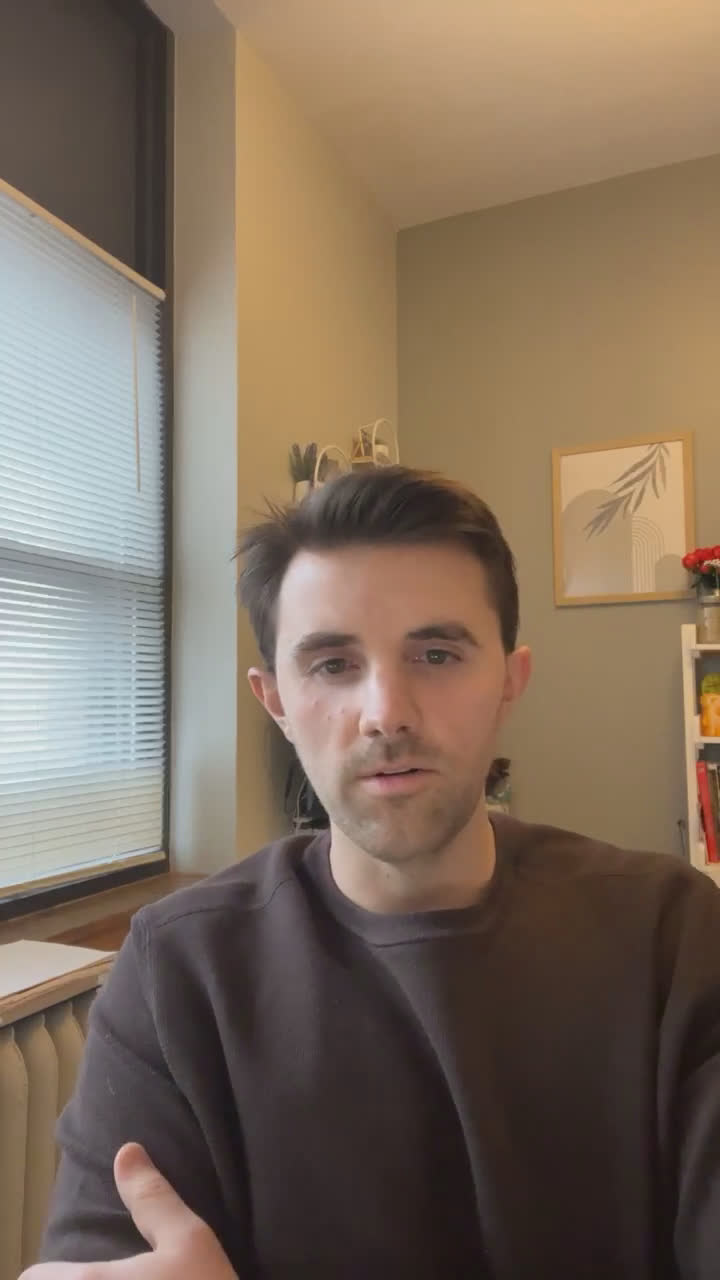
A leader-guided check-in and unpack of the Feedforward Interview research, showing a three-things practice for emotional clarity, intention setting before meetings, and focusing feedback on positive moments to support future performance.
Hello, cadres Fear. Happy Monday. Hope everybody had a good weekend. I'll give it a minute here for folks to join in. Hello, Colleen Welcome.
What are three things you're feeling right now? Cold, excited and mildly anxious. What are three intentions for how you want to show up for the rest of your day? And then what are three gratitudes that you have currently as well?
Use that excitedness to feed that ambition and then the calm to help you focus down great intentions. Research out of Columbia University was showing that leaders who set intentions before meeting are more likely to have more successful meetings. Grateful for supportive friends, smart colleagues and healthy kids.
Research shows that 90% of managers and employees are not happy with the way that they are getting their performance appraisals done. 38% of the time it's actually more negative then positive. The feedback future feedback interview is structured differently. It helps people identify strengths and figure out how to recreate peak performance.
Instead of focusing on the negative aspects, we focus on the positive aspects that have happened. By focusing on positive moments, we're more open to feedback. When people are more receptive to feedback, they can apply the feedback in a future focused idea.
So overall, that's the feedforward interview. If you have more questions and want to hash this out more, you can always hit me up on LinkedIn. Love to chat about this new kind of area of research. I hope you have a good rest of your Monday and a good week.
Hello, cadres Fear. Happy Monday. Hope everybody had a good weekend. I'll give it a minute here for folks to join in. Hello, Colleen. Welcome. Happy Monday. Thank you for joining. Okay, well, I'll get started with what I get started with every week, which is the three things of three. This offers a little some time to pause and reflect and get ready for the rest of your Monday here. So the first list of three is what are three things you're feeling right now? Could be emotion, physical sensation, anything that you're feeling right now.
Just naming what you're feeling is the first step and one of the most important steps of emotional intelligence, emotion regulation, being able to identify what you feel. So what are three things that you're feeling? Doesn't need to be specific at all. And with that, what are three intentions that you have for the rest of your day, for the rest of your afternoon? What are three things that you want to feel that you want to be doing, that you want to maybe have come across as if you're going into another meeting or a sales pitch?
What are three intentions for how you want to show up for the rest of your day? And then what are three gratitudes that you have currently as well? It could be from the weekend, could be something coming up or something that just happened. What are three things you're grateful for? Cold, excited and mildly anxious. I agree with the cold. It is. It's cold up here in Duluth, too. Excited and mildly anxious. Those emotions, excited and anxious are very close related, so it makes sense that you're feeling both at the same time.
So. And also I want to share today also an article that I came across called the Feed Forward Interview. It's by rector and colleagues. Calm, ambitious and focused. Yes. Yes. Yeah. Use that excitedness to feed that ambition and then the calm to help you focus down great intentions. And it's great to set intentions for how you want to show up. You know, research out of Columbia University was showing that leaders who set intentions before meeting are, I forget the exact senate, but more likely to show up that way and have more successful meetings and more effective leadership in that sense.
And then do you want to share your gratitudes as well, Colleen? I see your sharing here. Grateful for supportive friends, smart colleagues and healthy kids. Glad, Glad I'm good here. Hopefully. Hopefully that helps to support this excitedness and some mild anxiety with those supportive friends and colleagues. So getting to this research that I came across, and I think it's very relevant as the end of the year wraps up, there might be an increase in Some performance reviews, performance management meetings and performance appraisals, that kind of activity.
Now this research called the Feed Forward interview with by Rector and colleagues, it's actually a 2025 article article, so brand new, not even 2025 yet, not even technically published yet just came out. And this explores something called the Feed Forward interview. It's been found to be way more effective and aligns with a lot of different feedback mechanisms that I've been finding, which is popular now, which is kind of the more future focused language of giving feedback. So in this article they show that 90% of managers and employees are not happy with the way that they are getting their performance appraisals, performance reviews done.
And actually 38% of the time it's actually more negative then positive. The outcome of that. This can be done from ineffectiveness that just performance management systems don't actually work the way it's intended. Toxicity can actually damage the relationships between managers, employees during this performance review time. Feelings of judgment, discomfort during the process, then also the feedback risks. So the negative feedback can actually backfire decreasing motivation, performance and well being of the employee during this time.
So the feedback future feedback interview is structured differently, has five different stages which I'll get to in a second. It helps people identify strengths and figure out how to recreate their peak performance in those moments where they have peak performance. So the researchers show that it works, it creates more positive emotions, psychological safety as well, builds more better relationships between managers and the employees. You get to gain more insights on your strengths and what works for you instead of just focusing on what doesn't.
And it also allows more autonomy for the employee instead of the full autonomy on the manager during this process. So what are the five different stages here? The first is opening. So it's saying something like I can imagine that you must have had both negative and positive experiences at work recently. Today, if possible I wish to discuss your positive experiences. And the second is flourishing story. So could you please tell me a story or experience at work? What you felt your best, you know, full of life in flow and even before the outcomes became known to you.
So what is it? A positive experience and then the peak moment. So what was the peak moment of the experience? What did you think at that moment? What did you feel and what did you like to re. What do you like to re? Experience this moment and then four enabling conditions. What were the conditions that facilitated this? You know, was it the organization, the location, the timing, the people around you? Is there anything that kind of contributed to this, to these conditions. And then the feed forward question, this is kind of the fundamental question.
You say, what can you do to recreate these conditions in the future? What can you do to improve the presence of these, of these conditions right now? So instead of focusing on the negative aspects, we focus on the positive aspects that have happened. And then what were the conditions? Whether, you know, the manager helped the employee in a situation, or maybe the employee did something under their own autonomy to improve their work. So what was leading to that and how can we continue this in the future?
Instead of criticism and judgment, that is always a possibility in the performance review time, which also kind of closes our mind, instead of being open, these negative emotions will close and we become more hostile and less receptive to the feedback. But instead by focusing on positive moments, we brought in kind of experiences, we're more open to feedback. And then implying the manager can apply that feedback kind of during that stage five, which is when people are more receptive to feedback, they can apply the feedback in a future focused idea like saying, in the future we should do this together.
In the future we could collaborate on this to improve the process. So that's kind of the future focused language part of it as well. So overall, that's the feedforward interview. If you have more questions and want to hash this out more, you can always hit me up on LinkedIn. I'm free to talk to and always open. Love to chat about this new kind of area of research that I'm coming across, but that's kind of it for my Cadre live today. I hope you have a good rest of your Monday and a good rest of your week.
I'll see you next week. Check out all the live streams and the calendar. I know Take a walk with Nick is always at 2 right after me. So have a good rest of your Monday. Goodbye.
Reactions and comments are for members. Joining is free and takes a minute.