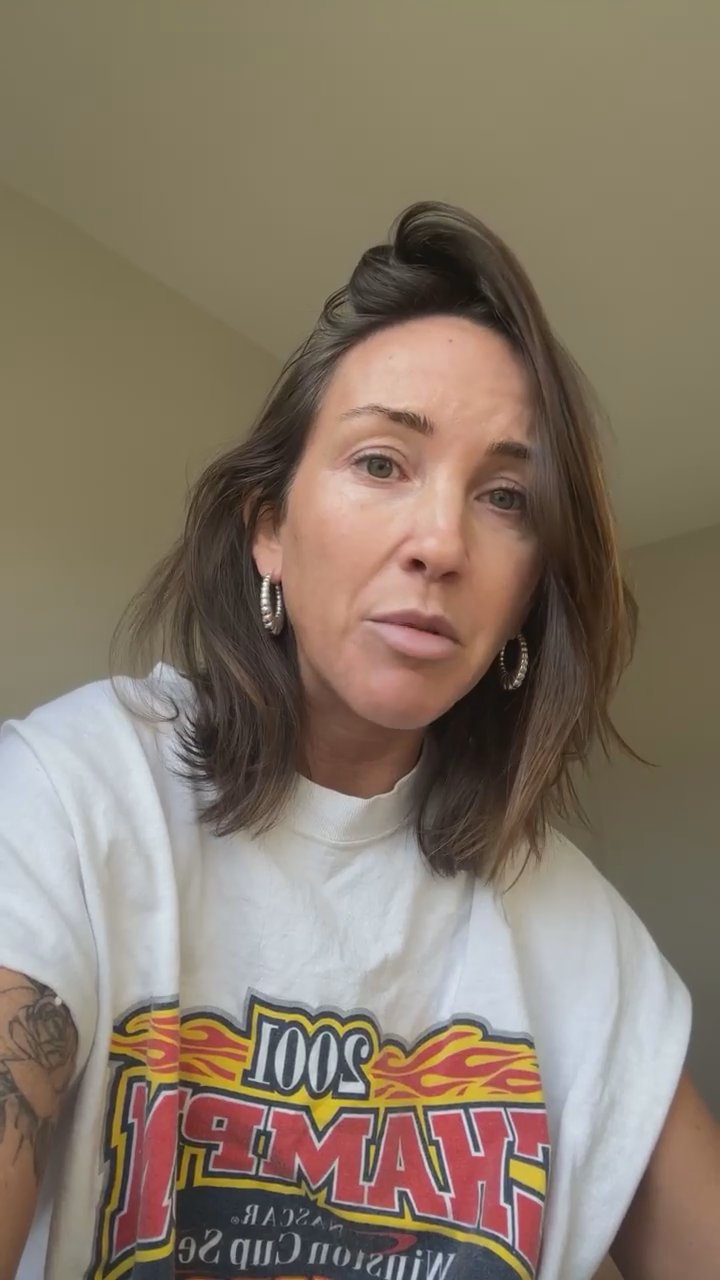
Rachel explores self-compassion, explains how it differs from empathy, shares personal struggles with shame, and offers reframes for mistakes while connecting self-compassion to self-love, respect, and trust.
Happy Wednesday. I am co working with a friend right now, so she's in my living room. When there's someone around me, I get very anxious, so I'm sequestered in my bedroom. I've been a little bit sick, so if I sound a little froggy, that's why.
Jules: Today I want to talk about the concept of self compassion. Compassion is where we sort of take empathy and we add in kindness, grace and softness. Self compassion is a really wonderful tool this time of year.
Rachel says she disagrees with the idea that you can't love others without loving yourself. Self love is a combination of self compassion, self respect, self trust. Finding ways to build that within ourselves is super, super important.
Wonder says mistakes are launching pads to move forward. I love reframing mistakes. If I'm making mistakes, that's a sign that I am living my life. Okay, my loves, thank you so much for joining me, as always.
Happy Wednesday. Cadre Crew. Hello. Hello. It is so nice to see all of you. I am in my room today. I am co working with a friend right now, so she's in my living room. And I cannot for the life of me go live. When there's someone around me, I get very anxious, so I'm sequestered in my bedroom. But it's very lovely to have someone here while I work. It helps me stay motivated and keep me accountable. So that's always good. I've been a little bit sick, so I apologize. My throat, it's just a little bit swollen, so if I sound a little froggy, that's why.
Hi, Rachel. So today I thought it'd be nice to talk about self compassion. I know I've been talking a lot about navigating the holidays and boundaries and coping with triggers and staying recovery oriented. Hi Jules. And I think something that's really important, you know, to kind of add in there, but something that's important year round is self compassion. You know, something that I really struggled with for a very, very long time was being kind to myself. So anytime I experienced, you know, a symptom, a relapse symptom, or if I made a mistake in my life or if I did something I felt guilty about, I would layer in a lot of shame.
Like on top of all of the, you know, the, the things I already felt, I layer in shame. And it was very hard for me to forgive myself. It was very hard for me to see how I was still a good person despite what had happened. And it wasn't until I learned about the concept of self compassion not by but there's a woman named Dr. Kristin Neff who talks a lot about self compassion. She's a lot of great resources and books and tools online about self compassion. I, I had heard a lot about self love, I'd heard a lot about self respect, but I literally had never in my life heard of self compassion.
And I think that that really shifted something in me. And in discovering that I had such a capacity to have compassion for others but not for myself, I gave myself very, very little compassion. So let's just talk about what compassion is in general. So compassion is different than empathy. So empathy is when we can really understand how someone else might be feeling. We can put ourselves in their shoes and sort of with, oh, I can see why somebody might be feeling this way. Compassion is where we sort of take empathy and we add in kindness, grace and softness.
So, you know, if I can understand, you know, like, for example, like if my friend, you know, didn't invite me somewhere and it's not because she didn't want me there, it was just like, it was just a different group. I initially could maybe think like, oh, like I'm really angry, or she did that on purpose, blah, blah, blah. But if I can put myself in her shoes and have empathy, I can see that, you know, that could happen to anyone. And she loves me and she's not malicious. And my ability to move forward for that or forgive her is coming from a place of compassion.
And so compassion is kind of like the action that stems from empathy. And oftentimes we don't extend that to ourselves. So if I'm feeling, you know, like angry with myself because I didn't follow through on a commitment or I self sabotaged rather than sort of understanding why I might have self sabotaged or maybe why I didn't follow through on that commitment or understanding that people make mistakes and allowing myself to be angry at myself and understand that I'm still a human, that self compassion is the ability to reflect back on myself.
Like, hey, I, I can see why you self sabotage. It's been a really stressful week. Or I can understand why you didn't follow through on that commitment. You know, in the future, like I would love it if, if we tried to follow through a little bit more. And like, I still love you, you're still a good person. So it kind of allows us to reduce shame and attach our worth to these actions that maybe we feel bad about. So self compassion is a really wonderful tool this time of year because everything is very chaotic, which means we're more likely to make mistakes, we're more likely to forget things, we're more likely to experience symptoms of rel, more likely to feel frustrated or have miscommunications with family members.
There's just a heightened possibility that we experience things within ourselves that, that are more difficult to navigate. So self compassion is really powerful. Rachel says, I've never agreed with the idea that you can't love others without loving yourself first for this reason. Oh, interesting. Wait. I've never agreed with the idea that you can't love others without, without loving yourself. I, I also disagree with that. I think you can love others without loving yourself. I think what's hard is to let other people love you if you don't love yourself.
I do feel that that is, is quite true. I don't think it's impossible. I've, I've allowed people to love me when I haven't loved myself. And when they stop loving me, it's like the only source of love is gone. So I think that we can absolutely love others without loving ourselves. I, I still think we, we should and can love ourselves. But I think it's interesting that, you know, I think is a component of self love. Right. So self love is sort of like a combination of self compassion, self respect, self trust and the ability, the ability to do for ourselves and feel for ourselves what we do for others who we love.
Right. Like I'm so compassionate with people I love, but I'm a lot less compassionate with myself. And so finding ways to build that within ourselves is super, super important. So again, Dr. Kristin Neff, phenomenal resource for self compassion. And I actually, I might have a guided journal on my website about self compassion that kind of helps like tap into some questions and ways to sort of like get more in tune with yourself and what, where you might need some self compassion. But you know, some easy ways to practice this are like just throughout the day, like just checking in with yourself and saying hey, I.
You're a really good person and if you make mistakes, that's okay. So sort of like these preemptive self compassion things like you're a human and I know you're gonna, I know you're gonna have an error and I still love you, you're still wonderful and really treating yourself with a lot of tenderness and gentleness. And oftentimes what helps me too is like thinking of myself as a young version of me. Like a four year old. Rachel can really awaken that ability to be super tender and compassionate.
So I invite you to have a lot of self compassion this season and all seasons and next week I just want to be. I'm not sure. So next week I'm supposed to go live on Christmas day. I'm going to be traveling that day so I'm not sure yet if I'm going to, if it's going to actually still be on that day or a different day. So it'll be based on my travel details. So I will post something in the community about that if it changes. Oh, you did a workshop with her a few years ago. Oh, that's amazing. I love that.
I would, that would be so incredible. I have to, I'd have to check and see if she's got any of those available. Okay, my loves. I'm gonna go back to my living room and my lips are looking blue which is telling me that I am cold. So I'm gonna go heat up. Like I said, I've been a little bit sick. So I'm trying to be, like, mindful of what's happening in my body. So I'm going to check in with my body and maybe make some hot tea as well. Wait, Speak. Wonder says mistakes are launching pads to move forward.
Yes. I love that so much. I love reframing mistakes. That is so such a wonderful thing for us to do. I also try and remind myself, if I'm not making mistakes, I'm not trying something new. And if I'm not trying something new, I'm not experiencing life. We are all beginners the first time we do anything, and mistakes are bound to happen. So if I'm making mistakes, that's a sign that I am living my life. So I love these reframes. Okay, my loves, thank you so much for joining me, as always, and I will see you.
Reactions and comments are for members. Joining is free and takes a minute.