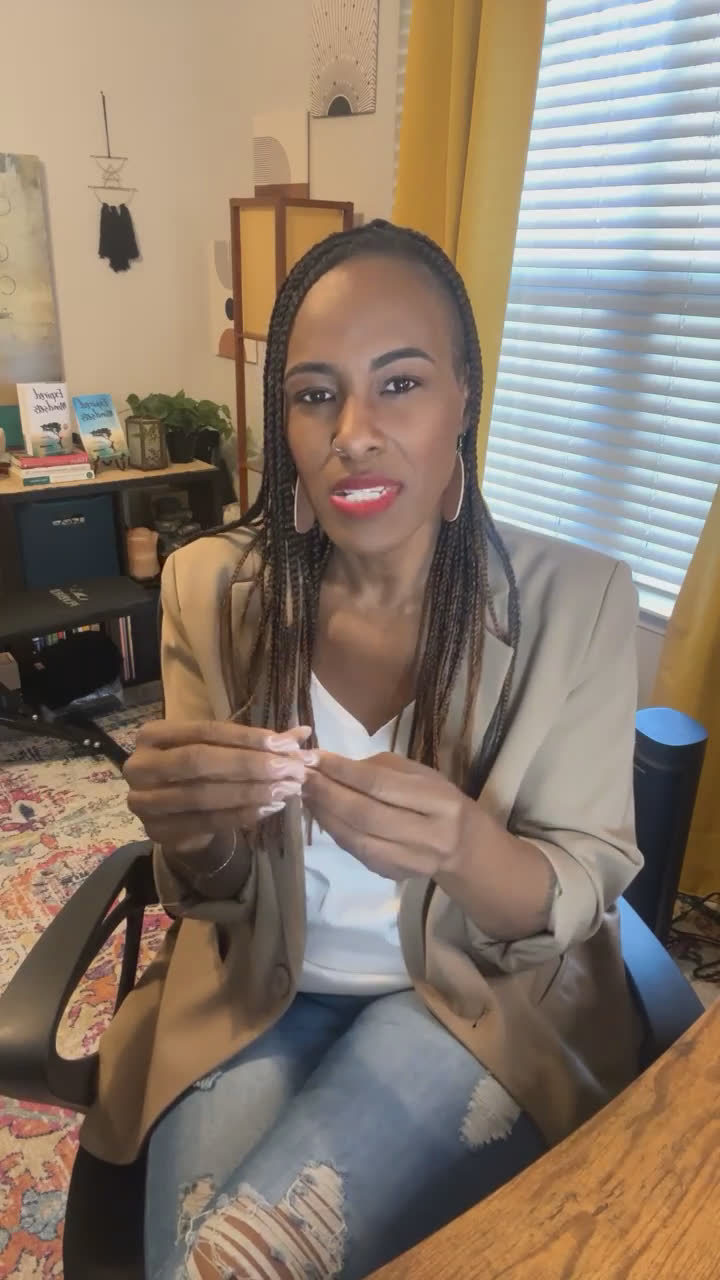
Dr. Charisse Johnson outlines how past patterns like overgeneralization, catastrophizing and personalization keep old habits alive and offers four mindful ways of thinking to shift from past-driven responses toward greater mental harmony.
Dr. Charisse Johnson is a licensed clinical mental health therapist, mindfulness practitioner and author. Wednesdays are typically an open time that we're really centered around mental health and well being. Her heart goes out to California and the Palisades area. Let's rate your week.
Hello from Sacramento today. And yes, it is freezing. We got frost in the windows. I would say that my week is like a nine, which is a really great week. But yeah, continue to write your week.
Your past does not define your future. Sometimes our personality, our temperament, our anxiety patterns, our response patterns, keep the past to present. When you allow that mindset to stay prominent, it can keep you in a spiral of negative thinking.
Dr. Shareese: Here are four ways of thinking that you may be acting on. Overgeneralization means you make broad conclusions based on a single event. Second, cognitive distortion can be catastrophizing. Third, personalization is assuming that past events are a reflection of your intrinsic worth.
Good morning, Cosmosphere. I hope you are doing well and that your week is off to a solid start. It's a little bit different of a time than I normally come, but this is what was necessary for today. And so whether you're here live or catching the replay, I'm glad that you came. I hope that you find this time helpful and beneficial in some small way. As always, remember, there's no such thing as alive. That is always going to be for you completely. But typically in anything that you're going to hear on Cadre, if it's not for you, it's going to be for someone that you know or be a way that you can support someone you know.
Hello Jules. Hello Steph Irwin and those that are popping in, if this is your first time with me, I'm Dr. Charisse Johnson, a licensed clinical mental health therapist, mindfulness practitioner and author. And I come into the Cadre space on both Wednesdays and now Sundays. Wednesdays are typically an open time that we're really centered around mental health and well being and the concept that harmony is something that we all deserve. And I say harmony instead of balance because balance isn't real.
There will always be moments where things require different amounts of who we are. But harmony can exist, which means everything's working well. It's being complemented well if we're paying attention to our needs and needs of others in balance. Let's start two ways. One, where are you located in the world right now? That's just a beautiful way that we really open our minds to the fact that we're all in different places and spaces joining together. And then let's rate your week. Good morning from the atl.
Hello, North Carolina. My heart goes out to California and the Palisades area. They are in the mist right now when this is live of some awful, awful wildfires. My daughter actually used to live there for a few years and if she was still there, she's only been home a few months, she would be in trouble and has had friends texting her this morning saying that their places are on fire and others are at risk. So let's keep them in our thoughts and if there's anyone who's joining from the west coast, our thoughts are with you.
I do know, let me acknowledge that there are really difficult things happening all around the world. That is always very relevant, very top of mind. But that was something that we were talking about just this morning, so I wanted to keep it there. All right, so from aside from that, I also want you to rate Your week. I see a few people that are starting that process. I would say that my week is like a nine, which is a really great week. It's Wednesday. I feel like I've already lived a full, full week and there's only been two days in.
But that being said, it's okay. Hello from Sacramento today. Hello, Statesboro. And yes, it is freezing. There's. I mean, this sounds really ridiculous, especially for those of you that might be in like Minnesota or somewhere where you're like, girl, we get inches and inches of snow. But for us, you know, little southeasterners, this is a lot for us. We got frost in the windows. I was like, I'm not going outside today. But yeah, continue to write your week. And then let's get into our focus of today.
We, towards the end of last year had been talking about some various truths. These are often truths that I try to instruct and teach others, whether it's in one on one therapy or whether or not it's in working with organizations and groups. And so focus of today. Your past does not define your future. Can we heart that? Because that is important. Your past does not define your future. Today's hard truth, it only defines your future if you allow it. Now, let's be honest. The way that our brain works, we are wired to seek safety, right?
That is one of the most primary goals of the brain, is to keep us safe. As a result of that, the brain in your limbic system, in your subconscious does hold memory. It does store memories that allow us to, you know, be in moments where we can recall. But sometimes we fuel negative recall. Sometimes our personality, our temperament, our anxiety patterns, our response patterns, keep the past to present. Does that resonate with anybody? Have you ever had a situation where you felt like you remember too much of the bad things that have happened?
Or do you notice that in certain situations you have a tendency to say, oh, this always happens to me, or you're always expecting that something is going to go wrong, or you have a high need to try to control situations or be the head of situations to ensure that things go the way that you need them to go in order for you to feel comfortable. Now, there's a million different reasons and kind of causes for the development of that thinking pattern. Some of it, like I said, can be temperament, some of it can be anxiety, some of it can be trauma.
If you've had a lot of bad experiences, then it makes it really difficult to believe that you're not going to have bad experiences, right? But when you allow that mindset to stay prominent. It can keep you just in a spiral of negative thinking. And if you are a person that you go, no, that's not something that I do, chances are you're in connection with someone who does similar. For example, people who have a pessimistic personality type will often have the I should have. This always happens. Why does this always happen to me?
Kind of a little bit of victim mentality. And I frequently see people that are very optimistic seem to connect themselves with people who are pessimistic. I don't believe that it's intentional, but it is that kind of element of opposites attracting. They love your optimism. You see their pessimism and it can be exhausting. But you also probably think, well, maybe I'll rub off on them and be a good role model for them in some different way. So when you're in a place or you're in a position where you are recognizing that your past is defining your future, here are four cognitive distortions.
We call them four ways of thinking that you may be acting on. Number one, overgeneralization. That means you make broad conclusions based on a single event or limited experience. Now here's the caveat to this. You might say to yourself, no, but Dr. Shareese, I've really had this happen to me multiple times. Understandable. But something happening to you three times in the whole scope of life still isn't necessarily enough to then over generalize that and say that every single situation is going to be the same way.
Usually we overgeneralize. When whatever that dynamic is, it is hurt us deeply, then it makes it really hard not to believe it will continue to happen again. If you're comfortable and you recognize this in yourself, what area, in what ways do you tend to over generalize? I will say an area that I realized along the way of growing up and learning myself that I overgeneralized was not trusting that people would stay in my life. I moved a lot. I was constantly in new places and new situations. But at the end of the day, there was this overgeneralization around, hey, why take the time to be in deep long term relationship with someone who you know isn't going to be around?
So my over generalization was people don't stay without me having the maturity at that time to look at the context of it's not so much that people don't stay. You move, you're transient. Some people don't need to stay in your life. Some people are only meant to be there for a season. There's a Number of reasons. But it's not always bad or it's not always intentional. But it took growth and maturity for me to be able to acknowledge that. But is there an area that you know for yourself? Yeah, I have a tendency to overgeneralize what will happen or even over generalize what you will and won't do.
Well, for example, one of my specialties as a therapist is disordered eating or the spectrum of eating. So I see a lot of people who are working towards their health and if they haven't done well in the past with continuing their healthy habits or working on moving towards their weight set point, then there's that part of them that is constantly thinking, oh, I know I'm not going to succeed, I never succeed, I always end up stopping or I always give up. That's also an overgeneralization. 2. Second, cognitive distortion can be catastrophizing.
So this is where you always expect the worst possible outcome. Can I tell on myself for a moment? I struggle with people who catastrophize. There's something about it in me that it just grates me now if you catastrophize, I care for you deeply and it's not personal. It comes from my own experiences of being around someone that used catastrophizing to keep themselves from trying. So it's an activation point for me. But again, it is not uncommon for us to easily be in a place where we are catastrophizing.
Is there anything in your life and you can keep this personal where you know right now you're catastrophizing? It could be something that's happening in the present, it could be something that's happening in the future. But there's this part of you that is really looking at worst case scenario. Third, personalization. This is assuming that past events are a reflection of your intrinsic worth. I see this a lot in individuals who lean towards anxiety. And so if you find that you're often taking on what other people have done and then your way of processing it is, it must be my fault, it must be my fault if this has happened to me.
I want to say loud and clear, it is never your fault that someone mistreats you, that someone overlooks you, that someone hurts you, that says more about their character and their unhealth, their lack, then you hurt people, hurt people. And the personalization usually comes from the fact that you care and you are working so hard to get their approval and you just want to make them happy and you don't know why you can't, because it's not your responsibility to fix them or to make them happy. People who are pessimistic or constantly catastrophize or overgeneralize and tend to have negative thinking will continue to respond that way until they do their work.
So really what you want to do is ask yourself, how can you detach from your worth from their behavior? That's a big piece. How can I detach my worth from their behavior? And understand that it is not your responsibility to do everything perfectly which doesn't exist, so that they will act the right way. They're going to act the way they're going to act regardless of what you do, because they have things in them that need healing and repair and they're not doing that work. And number four, discounting the positive.
That's another cognitive distortion that's often in place when we feel like we're being defined by our past. When you're discounting the positive, you're ignoring or you're minimizing a past success or positive experience. That's often why you'll hear me suggest and encourage you to pull up a success. What have you done well? What's going well for you this week that is improving your gratitude, that's impacting your neuroplasticity, but it's also helping reframe the part of your brain that may have a tendency.
The brain is wired towards the negative. It actually is. So we have to be intentional about how we work to bring it into balance. So what do you do with all this information? I want you, between now and next week or the next time that you come in connection with me, to just track. I want you to notice. Where do you see yourself being defined by your past? What are you saying to yourself? What are you saying out loud to other people? What are you thinking about other people and how they will treat you based on your past experiences.
So just notice. Self awareness is always the first key. Notice every given day how much that comes up for you. Number two, each day over the next week, I invite you to write down, reflect, bring to mind one thing positive that has happened in your life, whether it's something that you've done, something that you've experienced, something that someone has said for you, so that we are automatically looking for the positive instead of letting our mind focus on the negative. And then I will continue this conversation next session, next time we're together and we'll talk about how do you break cycles of negative thinking if you find that you're there or you're with somebody and you notice this is a tendency for them, I'll give you some tangible tools and skills that you can use to really work on that.
All that being said, I'm glad that you came and you spent some time here today. Give yourself grace. Be compassionate towards yourself. Remind yourself that you genuinely are doing the best that you can. Even when we think we aren't, we are. If we could be, we would be. And knowledge is not power without application. So try a few of the things that I encouraged and then connect with me on other social media and let me know how it goes. I will see you soon. Have a good rest of the week.
Reactions and comments are for members. Joining is free and takes a minute.