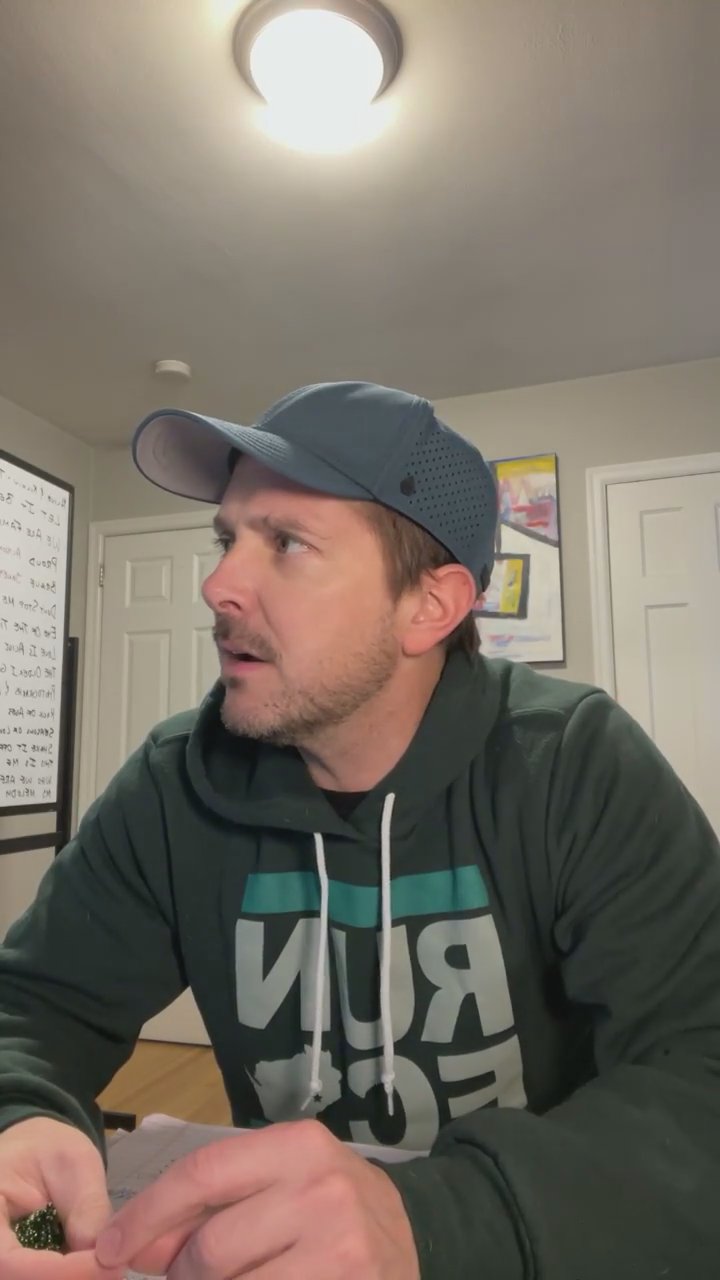
A Saturday Cadre session explores enoughness through four tenets—intuition, curiosity, honesty and presence—and how those qualities reveal what is possible now. The host explains why enoughness often doesn’t feel like enough.
Cadre believes that there are many ways to being well. Enoughness very rarely feels like enoughness. We're often sold the idea we need to get better in order to accomplish that's lost time. If we go, okay, cool, I'm doing it.
LZ: How do you know when enough is enough versus feeling you can do just a little more? LZ: I often accomplish more when I sometimes do less. Sometimes enoughness is a want. We can always do more, right?
In about an hour, you're gonna have the wonderful Kristin Grimes, registered dietitian, coming to you from just outside of Denver. And then you'll see our buddy Dan Griffin coming all the way from the west coast as we talk Men's health, mental health.
Hey there, Cadre. How are we doing? How are you? How are you? How are you? Ah, it is what it is. I love Spotify. Didn't know what that song was, but I'm like, it's kind of a. It is what it is. Morning. Hey, T. Brown. Hey, Luke. Hey. 1% better. Nice to see you all. How are we doing today? That was a song called It Is what It Is by Jenna Rain. Shannon. Nice to see you, my friend. Saturdays in maybe the more traditional work world, right? Saturday is the beginning of the weekend. If that applies to you.
I hope that you have a nice start to your weekend. I hope you're doing great. But even if you're not, know that you're still in exactly the right place. You may be beaten up, you may be tired, you may be feeling like that. The good thing is every single time the snaps of the brain or the, or the habit center or the pull of the heart makes you go, huh, I'm gonna go jump into Cadre for a little bit. You're going to feel better. You're going to feel better for some really non magical things. Non magical meaning easily accessible.
And you see them all the time. Like connection, community, like conversation, like ideas and perspectives that make you go, huh? Because guess what? Cadre believes that there are many ways to being well. So the thing you're not going to hear here is do this, don't do this. This is the right, this is the wrong. Here are the seven steps to being. Because it doesn't work that way. I think we would want it to. It's like, oh, if I do these things, then all of a sudden life will be X. But do not despair, my friends, because you have all of these things like intuition and curiosity and honesty and presence.
Those are the four tenets of enoughness. Exactly what we talk about on Saturday mornings. And those are the things that bring you to the place of going, hey, you know what? I don't need to be better than I am right now in order to accomplish all the things I can accomplish right now. You don't hear that very many places. We're often sold the idea we need to get better in order to accomplish that's lost time. If we have to wait until. In order to be bright, to be bold, to be playful, to be creative, to be curious and filled with excitement for doing the things that we're doing or the capacities that we have right now.
I don't get it. That's the heart of enoughness. Enoughness is this idea that you are already indeed Enough in this moment, capable of doing some pretty wonderfully radical things. But even though we have the four tenets we just spoke about those, there is a less sexy truth and headline in the enoughness world, and it is this enoughness very rarely feels like it. I'll say it again. Enoughness very rarely feels like enoughness. Right? If we go, okay, cool, I'm doing it. I'm being where I am with what I got and honoring it.
And often when we hear it's like, okay, once I do the thing, then everything's gonna be wah. No. Enoughness brings you into clarity of what is possible right now, which may be small, which may be routine, which may be one of those beautiful, simple moments of life or one of those really hard truths. I'll tie it into my life. So last night, I opened the musical don't let the pigeon drive the bus at Stages theater company. And this story, beloved children's book, now turned into a musical. It's all about this pigeon who goes, bus driver.
I want to drive the bus. Because the pigeon doesn't know what their thing is. Everybody else in this world knows what their thing is. And all of a sudden, the pigeon sees the bus driver. And the bus driver really loves being the bus driver. So the pigeon goes, ah, bus driver drives bus. Bus driver happy. Therefore, if pigeon drive bus, pigeon be happy. And the bus driver and the pigeon move through this journey of exploration to go pigeon. You can't drive the bus because your legs are too short.
Your little pigeon feet don't touch the pedals. Then all of a sudden, the bus breaks down. When the bus breaks down, the bus driver goes, pigeon, I need you to fly all over town and let everybody know that the bus is going to be five minutes late. And the pigeon goes, first of all, I can't, because I don't know how to fly, but then learns how to fly and then goes and does the thing. But in the moment when the pigeon realized that enoughness for the pigeon was that it was not going to be able to do the thing that it thought it was supposed to do, it's kind of a want moment.
Sometimes enoughness is a want. You may go, I want to do X. I'll say this. Back when I was coaching tennis and directing high school theater, I would start every parent meeting this way. Hey, parents, if you're teaching your kids that if they want something and they work hard enough for it, that one day you'll be able to get it, I would say, parents, I get it, but I'm going To be teaching your kids something else, and that is, hey, parents or hey, kids. If you want something and you work really hard for it, you're going to be able to get yourself to a place where you go, wow, I got myself here and that's my truth, and that's my capacity, and I can work from that place.
So all of a sudden, all these parents are looking at me being like, we've taught our kids that if they want something and they work hard, they're gonna get it. And I go, 95% of kids I know, 95% of adults I know set goals, set pathways, but then they use versatility and resilience and honesty and swallowing hard pills to go. So where do we go? Where do we go? Now? Let's see. 1% better asks, how do you know when enough is enough versus feeling you can do just a little more? That's a great question.
1% better. The idea is not what we are capable of accomplishing. We can always do more, right? We look at the world and the world's natural current is more, more, more, stronger, harder, faster, deeper, go, go, go. And when people live in that mindset, what ends up happening? They think that's the expectation. They think that's the bar line for. For being enough. I'll tell you, I often accomplish more when I sometimes do less. Sports Psychology 101. Who is the most successful athlete? Is it the one who's strongest?
The one who works the hardest? The one who goes the deepest? Not always. It's the one who gets to ready position. It's the one who goes, in this moment, this is what is possible. I have a photo of Michael Jordan, Game 7 against the Utah Jazz. Everyone in the photos is in black and white, but Michael Jordan's in color. And I augment the photo this way to have Michael pop in color to make the point. You look at Michael, he is ball, eyes, hoop. That's where he is. Everybody else, including all Star hall of Famer Karl Malone, All Star hall of Famer John Stockton, all of the 30,000 fans, everybody else is.
They're responding to the idea of what is more or how important is this moment? Or don't mess up. Michael Jordan's in ready position. Meaning he's saying, right now, this is the moment that I can be in. So, yeah, we can always do, I mean, 1% better even think of the words you just used just a little more. Just as a minimizing word, right? Just as a. Oh, just. Just do this thing. Just minimizes that moves into the Tenet of your words are enough. When we talk about how do we calibrate our honesty and our potency of language and enoughness, we minimize using words like just and also little.
Right. What if doing just a little is actually a lot more for person B than person A? And person C goes, I actually don't want to do a little bit more. Person D goes, I do want to do a little bit more. All of their placements of enoughness are different because at the end of the day, I look at it this way. If we expect life to look like this, just a little bit more. Just a little bit more. Just a little bit more. Just a little bit more. Just a little bit more. Just a little bit more. Just a little bit more.
Just a little bit more. I've never seen the baby who's been born and started here, and then by the time they're 100 years old, their life looked like this. Sometimes when we live in the just a little bit more mentality rather than the enoughness, here's where I am and here's what's possible in this moment, we lose the sensitivity that this is what life looks like. Right. Rather than attempting to win, we attempt to not lose. Those two things are very different. I've never known anyone who's attempting to not lose, who's actually won the whole thing.
Why? Because if you're trying to not lose, you're focusing on, I can't go back or I can't go down. You're focusing on winning. You go, hey, even when I'm losing, my focus is still on winning. All of these things come back to today's message. Enoughness very rarely feels like it. To be where you are with what you have and to honor that and to work from that place. That's when people get the best of you. Because the best of you exists right now, doesn't exist in the future, doesn't exist in the past.
Why? Because you don't exist in the future of the past. It's a fancy way of playing this mindfulness or this presence game 1% better says, love it. Sometimes a little less is a lot more. And vice versa. Exactly right. That's enoughness 101. If we go, I need to stronger, harder, faster, deeper. I need more and more. I need to finish one more thing off. I need to become more efficient. I need to become more effective. Even these ideas of biohack, like these ideas or concepts of once you do this, then you will be there most of the time.
When you hear things like that you have really heartfelt people who are attempting to sell you the thing that they're making their livelihood off of, or they're attempting to sell you the thing that they have found their truth in. That's why we say when there's many ways of being well, all of a sudden you go, yeah, the thing that worked for a probably isn't going to work for anybody else in that exact specific way because you're not living the life they're living. So that's why we float in this Cadre sphere and we go, hmm, so what do we do?
Where do we go? Keep coming back, y'all. In about an hour, you're gonna have the wonderful Kristin Grimes, registered dietitian, coming to you from just outside of Denver. Kristin and I did the Cadre Today interview last evening. Check it out. The conversation was divine. And then you'll see our buddy Dan Griffin coming all the way from the west coast as we talk Men's health, mental health, destigmatized mental health for all of our male identifying individuals in this wonderful world. Y'all have a great rest of the day.
Nice spending some time with you. We'll see you later. Back to this wonderful song I found on Spotify this morning. It is what it is what it is it is by y'all it is what it is what it is what it is.
Reactions and comments are for members. Joining is free and takes a minute.