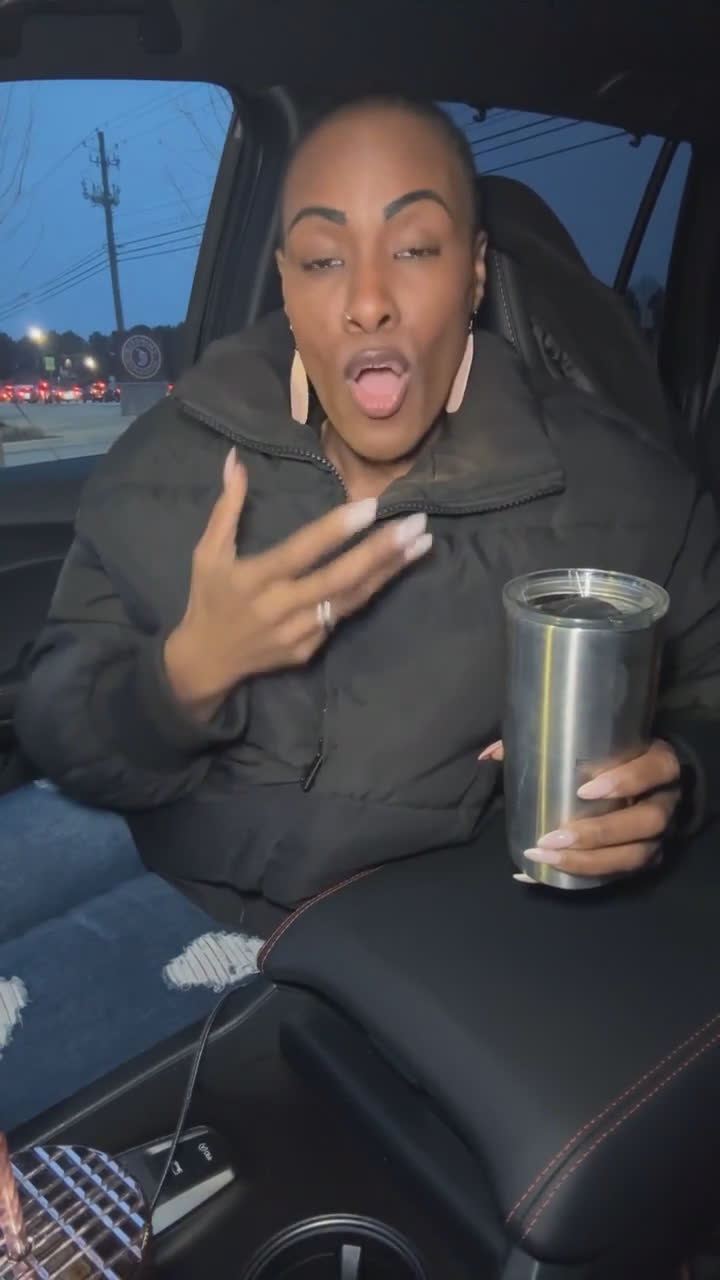
Dr. Charisse Johnson discusses the concept of opting out, guiding viewers to check their anxiety, rest and capacity while giving themselves permission to decline activities; includes mindfulness pointers and follow-up book recommendations.
Dr. Charisse Johnson is a licensed clinical mental health therapist, mindfulness practitioner and author. Rate your week right one to ten. Have those book recommendations as a follow up to what we discussed last week.
The dynamic of opting out allows you to give yourself permission to not do things that other people are doing. It is important for you to constantly be checking in on your anxiety, your level of rest, your current capacity. Opting out is a powerful tool that helps you to self regulate.
All right. Short, simple, but I think opt out is something that can be very helpful. I might actually come back in this week between now and Sunday, so stay posted and I'll let you know. Have a good one.
Cadresphere. What is up? As you can see, I am once again on the road, on the go. But it's a good thing and I wasn't going to miss this opportunity to be here with all of you. So good morning. It's great to see you. Give you a moment to come in and just check in with yourself. Right. How are you doing? Really? Good morning, Jules. Hello, Andrea. Let me know how your week is going so far. Hello, Rachel. Hello, Jen. Rate your week right one to ten. One. Ben Rough ten. Phenomenal. And where are you in the world right now?
And I love that question because it's not only about where are you in the world in terms of your physical location, but I think it's important to go, how am I, how am I doing in connection with all of the things that I am carrying? How am I doing in connection with all of the things that are happening around me? How are you talking to yourself? And if this is your first time here, welcome Dr. Charisse Johnson, a licensed clinical mental health therapist, mindfulness practitioner and author. Come into this space a few times a week to talk about all things life and how to have harmony if you are willing to do the work.
We've been having some really great conversations. I know there's one that I'm supposed to pick back up on. I'm going to pick back up on that next Wednesday because I'm on the road. I want to pivot our conversation today, but I do have those book recommendations as a follow up to what we discussed last week. One of the things that I do want us to talk about today, something that's just on my heart, is the dynamic of opting out. So often we are in situations where we're surrounded by people who are at a different pace in a different place in life.
People are doing things right and left based on their energy, their life, their passions, their purpose, and it can make you look around and think, oh my goodness, should I be doing more? Jules, I'm sorry that you're having trouble sleeping. I have had the same. And I don't know what it is like. I don't feel like there's anything major going on, but just trying to be settled. So I feel that. Thank you for that share. But where are you with that situation? Where are you with how much you're doing and how much you're looking at the people around you?
And is there any part of you that is kind of looking to the right or left and thinking, am I really doing enough right? Is that a question that you have asked yourself, or maybe you're on another side of the spectrum where you're like, I am doing too much and I feel like I can't stop what I'm doing. The dynamic and the concept of opting out means it is important for you to give yourself permission to not do things that other people are doing. To not do things just because you've been asked. It's important for you to decide.
I need to opt out at this point in my life because I don't have the emotional capacity, I don't have the physical capacity. Even if the opting out is centered towards something that is good. How? Well, answer this question for me in the chat. Do you do opting out Good morning, Luke. Of opportunities and situations and circumstances when you know that your plate is already full. So the concept of opting out isn't about I just don't care. It's about you recognizing that you already have so many fires going, you already have so many initiatives going that even if something amazing comes, it might not be the time.
Even if you think, oh my goodness, this is a once in a lifetime opportunity, should I give this up? The answer is maybe. And to determine, do I need to opt out of this opportunity? Do I need to opt out of this responsibility? You want to ask yourself questions like one, if I choose to opt in, am I doing it because this is something that is really important to me? Am I doing it because I think I should? Am I shooting myself, which is a unhealthy way of doing anything? Truly, am I opting into something because I am not feeling good about where I am right now and I'm looking to opt into something that's going to try to lift my mood?
Is my ego involved in opting into something? Because let me tell you, can we be real? There are moments where we opt into things that we have no business doing, but we do it because we want to prove somebody else wrong. Because we're like, oh, but I said I was gonna do X, Y and Z and I want to prove myself to these people and I think this will make me look a certain way. There's nothing wrong with wanting to be well esteemed and for people to respect who you are. But it is extremely important for you to constantly be checking in on your anxiety, your level of rest, your current capacity, the needs of your family, the needs of your business, your role in leadership and asking yourself and leading in any area of life.
If I opt in right now, what's the benefit? What's the cost benefit? Cost is the skill. It's something that we often think about when we're making a decision or when we're looking at the bottom line of something in business. But it' beautiful and powerful skill in our own life. If I choose to opt into this opportunity, this invitation, this responsibility, what is the benefit, the tangible and the intangibles? And what is the cost of you adding in? But what I really want you to understand is opting out is a powerful tool that allows you to continue to self regulate.
Well, it's a powerful tool that helps you maintain the time and the energy that you need to take care of yourself. Let me give you one more example. Let's say, what's something that you have in your morning routine? What are some kind of things that you have in your morning routine? My morning routine periodically includes coffee. I try to have it include movement. I love getting outside, usually a little bit of reading, ironically. And I'm not just saying this because he's on here. One of the things that I've also been including in my morning routine, I learned from Luke Wendland, the founder of Cadre is writing down my goals every single day.
Now, I'm gonna admit when I first heard about that, I started and I stopped and I started and stopped and then I was like, okay, I'm locking in and it's the real deal, so let me just plug that. It's a powerful thing. But as you think about the things that are in your morning routine, the things that help you feel grounded and settled and ready for the day, that's also a part of deciding where do you need to opt in and where do you need to opt out? Meaning if I'm opting in to so many things that I'm starting to negotiate my personal care that I'm starting to negotiate and lose the time that I have to take care of myself, or I'm in a situation or dynamic where I'm so exhausted that I'm deprioritizing my own needs.
That is a clear sign that you need to opt out. So as you move forward, throughout the rest of this week, maybe through the rest of the month, you carry it as long as you need to. I want you to kind of keep that in your mind. Hashtag opt out. Where do you need to give yourself permission to go? This is amazing. This is great. I love these people. What a phenomenal idea. And also when I look at the full picture of my life right now and what I want for myself, I need to opt out. Beautiful, simple way to assess where you are and what you need.
Because maintaining a level of harmony in your life is not about just waking up and hoping it's going to be an amazing day. Although that's helpful. It's about creating a life and putting things in place that are going to help you maintain the level of harmony that you desire. Because it's really not possible for us to give equal percentage to everything in our life. Harmony means all the notes, all the chords, all the responsibilities play well together, and that means that we have to have some level of balance.
All right. Short, simple, but I think opt out is something that can be very helpful, and I look forward to seeing all of you on Sunday. I might actually come back in this week between now and Sunday, so stay posted and I'll let you know. Have a good one. Bye.
Reactions and comments are for members. Joining is free and takes a minute.