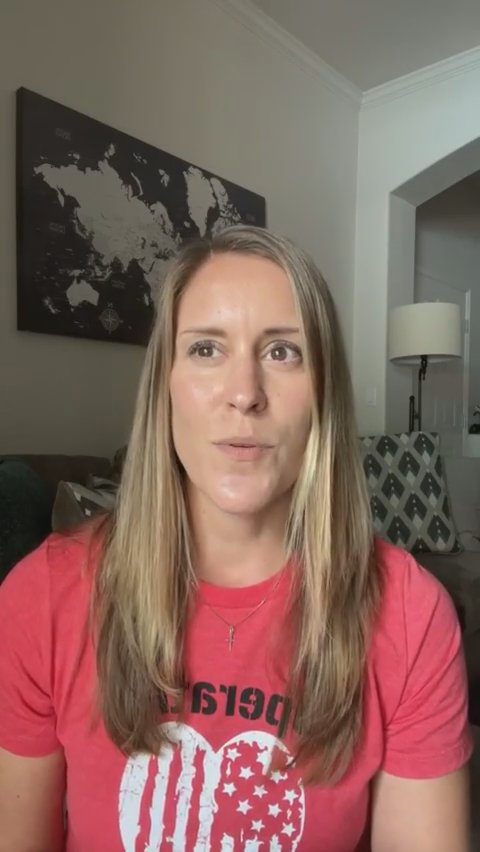
Dr. Carrie reflects on an intense mission trip to Mexico—witnessing poverty, language barriers, and offering basic health education—then processes fear after a nearby military plane crash and urges prioritizing community and loved ones.
Dr. Carrie recounts an intense mission trip to Mexico where she witnessed deep poverty, language barriers, and gaps in basic health knowledge. She reflects on how the experience made her realize how much she takes for granted and prompted questions about what really deserves her stress and attention.
She explains learning about a nearby military plane crash that could have involved her boyfriend and how that shock highlighted the everyday risks of certain jobs. The segment centers on processing fear, the need for community after trauma, and a reminder not to sweat trivial concerns.
In closing she urges viewers to prioritize community, church, family, and friends over jobs, titles, or social media metrics. The brief conclusion reinforces valuing loved ones who can provide support during hard times.
Hey Cadre family, Dr. Carrie here. I just wanted to process my week with you guys today. Doing this live, I have, this is totally unrehearsed off the cuff and just had kind of a lot of emotions come up this week. So just wanted to process with you guys today. And I'll start by sharing that last weekend, Mexico to do a mission trip and mission trips are like my joy in life. I love serving other people. And it was intense, just like other mission trips I've been on. It's very intense emotionally to see the hopelessness that people feel.
It is. It's not something you can describe just to see that kind of hopelessness in so many people's eyes. And it was challenging because there was a language barrier. I had to use a translator and I just really wished I had learned Spanish back in the day. But there was just there's so much despair in that country and even in our own country. I mean, this was like literally an hour drive from like the border. Like I live in San Diego and this was not that far, that it is such a different culture.
It is such a different life experience than what I experienced just on the other side of this line that marks our countries. And it just was crazy to me how much poverty is there and how much lack of education. Like I found myself doing a lot of health education for people, explaining to them that when you eat that much sugar and you consume those kinds of calories that you're gonna probably struggle with blood pressure or diabetes And it's just the common knowledge that we know in this country, in the US, it's just, it's not there.
And it's like, this is not that far from my house that people are struggling with these things. And I don't know, I felt a little bit like I didn't give enough care to them. Like I could have helped them more. I always feel that way. But it was really inspiring when the translator I was working with said, after I saw this kid, he was like 9. He was playing rough with some of his friends and he ended up like having a hurt arm. And so I did a little exam on him and I didn't have an x-ray machine or anything that I could use where like in the middle of this, and I basically said like, there's no serious injury here.
If there's, he's able to move his arm all over the place. Like I really am not concerned that you need to follow up and see the doctor, but obviously if it doesn't get better in a week, go ahead and go in. But from my limited, probably fine. And And so I was just like, my gosh, I haven't helped education. And my translator was like, Carrie, you didn't even see when you were talking to the mom and the boy, like you didn't see the face. No. And he said, you just gave them so much hope in life. Like that she doesn't, like she's really worried that like he might be losing his arm.
Like in her mind, he might lose his arm tomorrow. because there's just such a gap in knowledge of just general stuff. I mean, a lot of the health education we get in this country is from commercials on TV, right? So like the fact that like she didn't understand that the fact that he can move his arm and everything's fine is probably fine. Like she's really, really concerned. And so just by me conveying just the knowledge that I know about him And it just hit me like, wow, what do I take for granted in life?
Like there's so many things I take for granted and that's probably the biggest takeaway I have from it. I just take so many things for granted. I take just the general knowledge of stuff like that for granted. The fact that I can go to the drugstore and buy cold medicine and know what I'm buying or I can go up to the pharmacist and ask a question, but just like there's just a general it really makes me think whenever I come back from a mission trip do I really focus on what's important is really what it comes down to like how many things am I getting stressed about in life that I don't need to be stressed about and how much am I taking for granted the things that are truly important like the fact that I have a community of people that I'm struggling.
And that brings me to the next story I wanted to share this week when I found out that there was a plane crash, a military plane crash occurred a couple of days ago in the San Diego, like actually more in like Arizona area. And this one hit a little bit closer to home for me because my boyfriend is in the military and he could have been on that plane. He's been reassigned to another unit, so thankfully he wasn't. But it could have been him. And had he had to get in a plane the next day? No. And I don't know how okay he would be because we don't know what happened, but that's the thing.
Stuff can happen. Accidents can happen. And there's some sort of cause to it. But like the fact is we have dangerous things and we do dangerous jobs. And my significant other has a very dangerous job. And I actually used to have that. And I, you know, could have gotten shot at. We had active shooting. The day at work when I wasn't there. Hopefully I wasn't there that day, but we just, we lose perspective in life. As we go about our daily grind, we lose perspective on what's really important is not what we do for work.
It's not how much the gas prices are going up, even though it's annoying. It's not about those things. It's about the community and the people in our life. Because one of the, and he's still processing, it's a lot to process knowing that he knows. And so it's really hitting close to him for home for him. But like the first thing he wanted to do was just be around other and like these traumas in life and we have these moments of like, oh my gosh, life and loved ones. And there's so many people in the world that don't have a community that don't they can run to for support because at the end of the day that's all we want to do is be around somebody who's just going to comfort us and let us know that we're okay and I just I don't know what video was today just kind of wanted to process this emotion but just to remind you I guess to not take life for granted and sweat the small stuff because There's so many tragedies that happen in life and it sometimes takes a tragedy to shake you and remind you of what's really important in life.
And what's really important to me in my life is my community, my church community, my friends, my family, not my job, not my titles, not my the status I have, not my how many friends I have on Facebook or Instagram or how many followers I have. Like those are things are not important to me at the end of the day. At the end of the day, what is important to me is that I have loved ones that I can call up when I'm having a really rough day and that I have
Reactions and comments are for members. Joining is free and takes a minute.