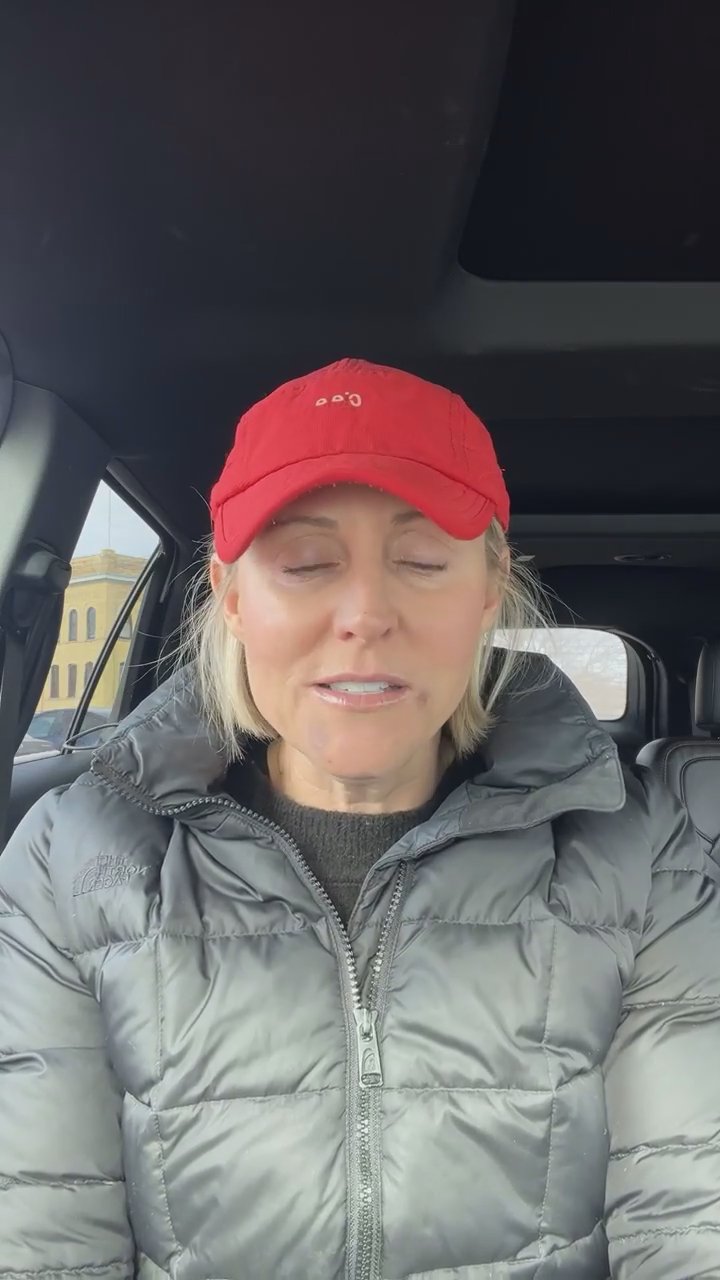
Shannon, a Cadre team member and caregiver, shares five therapy-derived steps she used over nine years to move out of survival mode, starting with recognizing misalignment and the labels people carry and offering reflection prompts to notice it.
It is 12:04 Central Standard Time here in Minneapolis. Happy Friday. This is Shannon from Cadre coming to you live from beautiful, beautiful Minneapolis.
Shannon is a CEO of Cadre and a caregiver to her 15-year-old son who has autism. She shares five steps she learned in therapy to stop living in survival mode. One of the things she learned is that we all have labels that we put on ourselves. When you enter the workplace, there are certain expectations.
The first step to stop living in survival mode is to know it's a thing. Next week, we will start to talk about saying it out loud. I'm so excited that you are seeking to be you, because you is awesome. Thanks for being part of Cadre.
Happy Friday, Cadre Sphere. This is Shannon from Cadre, coming to you live from beautiful, beautiful Minneapolis. It is 12:04 Central Standard Time here in Minneapolis. It's nice to see you all. Happy Friday. So welcome to how I learned to stop living in survival mode. For those of you who don't know me, I am Shannon. I am part of the Cadre team and I am also a human being. I am not a clinician. I am not a person with any clinical background. I am a human who lives with anxiety. I am a caregiver to my 15 year old son who has autism.
I'm also a person who lives with cptsd, although I'm slowly but surely getting that diagnosis, getting closer to getting that diagnosis off my chart. So I am here to share what I've learned in nine years of therapy as someone who's lived in a sort of hyper vigilant state for a long time. And so I have, I start, I share it in. I'm kind of a nerd. Good afternoon, Junk food junkie. I'm kind of a nerd and I love business and I love strategy. And so I took all the things I learned in therapy and I called them into like five steps.
And it's really, honestly, it's from the therapy I did was called Air Network Therapy. So I called them into five steps of things that I kind of looked at what I did in the nine years since I've been healing myself and said, okay, what were they? And so now I'm breaking them down for you guys to see if they're helpful. They might be, they might not. But I started sharing them and step one in the series of things that I did to help myself stop living in survival mode was to know that something was wrong.
Which, you know, like, I think there's a saying that says you have to know that something's broken before you can fix it. And so how do you do that? And last week I started to get into that step and I shared, if you go back into the comments or to the community, I shared actually like a PDF and what it did was it broke down, it started to ask questions or it gave you some questions that you could ask yourself to how to figure out if you're not sure what you know about yourself. I know that sounds weird and silly, but one of the things I feel like I learned is that we all have labels that we put on ourselves.
The five steps of stuff. I love it. Junk food junkie. Thank you. I'll take that all day long. I love it. We all have labels, right? And however they get to us, whether someone else gives them to us, whether culture gives them to us, whether our family of origin gives them to us, however our roles or our labels or how we're perceived gets to us, it impacts how we think about ourselves. And so to know that something inside of you and something outside of you and how you're showing up in the world, to know that there's misalignment, you gotta be cognizant of it, right?
And so I'm just gonna give you two examples from my life to, to. To hopefully be helpful to you so that you can reflect if this is something that you are starting to, like, feel inside. Excuse me, if you're walking around and maybe you have like, sadness or maybe you have a, like an itchiness that you're just like, this isn't the life I want to be living, or I'm putting on a fake smile right now when I'm talking to this person, or this isn't really the career I want or whatever that is. All right, Forgive me, I'm getting over a cold.
So number one for me relates to my career. So I have always worked in sales or growth. Now I'm in. I'm the CEO of Cadre, so I help lead the company and I have worked in traditionally male dominated fields and obviously I'm a female. And I have also worked in sales or, you know, growth roles, which are very competitive. So I'm just going to set the stage and say, so I'm a human who is set into this workplace, and I'm set into this workplace as a woman. And I'm set into this workplace in a role that is competitive.
So as I enter into that as Shannon, right? Just as if you are whatever you enter into every day for who you are, few junk food junkie or anyone else is here today. Whatever you are, as you enter into your workplace, put on your gender, put on whatever your role is, and whatever that setting is for you, there are certain expectations that come with that, right? So when I would enter into my job for the decades that I was in sales, when I come in as a female, there's expectations with that. And when I come into this competitive workplace, which is predominantly male, there are expectations about how I'm supposed to act.
And so over time, and when I begin, actually when I began in that role, I was like, oh, I learned the expectations. You're supposed to dress a certain way, you're supposed to behave a certain way, you're supposed to joke around with the guys. You're supposed to be funny, but not too loud. You're supposed to be competitive. You have to sort of rise up to the occasion with your competitiveness because if you don't, if you're not assertive, if you're not aggressive, you're not going to win the deal, right?
So there's all these rules that you have to play with to compete. So that's a set of rules. That's external in the workplace. And again, if you put your own, if you put yourself and you look at those rules for whatever setting you are in, those exist, right? With or without you, those exist. And so those have an implication on you. But regardless of all of those, those are sitting over here. You're still over here, and you're still you. And Hi, Jules. Good afternoon. Right, so you are still you, and there's still these set of rules over here.
And so this is where that misalignment can come into play. Or it did for me where I could do this for a while, right? I could put on the dress that I was supposed to wear. I could look the way I was supposed to look. I could be aggressive, I could laugh, I could play all the roles, the parts of the role that I was supposed to do. But after a while, like you just said in your comment, junk food junkie, there is a pit in my gut that tells me, this is not me. What am I doing? Why am I acting this way?
I am not this person over here. I am this person over here. And so it's in this middle section. I'm not doing a great job with my gestures. It's in this space in the middle where the challenge happens and where that disconnection happens. And so I would offer you to go back to that document that I shared last week and I can re share it again here. But this is just that knowing, right? And so even if it is just starting to write down, like, what are the things that are expected of me in the parts of my life?
This example I shared with you today is cultural, right? It's related to your workplace. It's like, hey, because I am X, it's supposed to look like this. And that's nothing to do with you. That's those external factors. It could also be family of origin. In my family of origin, when you are a wife and a mother, it looks like this. There is not a lot of fluidity over here, right? What is your family of origin? So then that would be your, you know, familial setting. It could Be. You know, what does again?
Gender roles. What do those look like? It could be belief. Faith. Right? What is your. What are the expectations for faith? So you can see there's all types of things that are bearing down on us, and it can take us away from being who we are. So when you get that pit in your gut that tells you, this isn't me, it's actually just this beautiful sign of your body saying, like, oh, actually, this is great. It's a flag. Like, hello, raise a flag. Timeout. This isn't you. So starting to pay attention to that is actually this beautiful, beautiful, beautiful opportunity to start to say, awesome.
Now I know it's something. And so the first step to stop living in survival mode is to know it's a thing. So I just wanted to kind of walk through that slowly today, and then next week, we will start to talk about saying it out loud, which is crazy hard and crazy freeing. And I just wish for all of you, I didn't figure this stuff out until I was old or not old, older, mid-40s. And so I just, you know, I feel really young now because of it, and I wish that for everyone else. And so I'm just so heartened to see Junk Food Junkie here.
I'm heartened to see Jules. I know there's some other folks out there as well that have joined. So I'm just so excited that you're here, and I'm so excited that you are seeking to be you, because you is awesome. You is the best version of you. So I love you guys. Thanks for being part of Cadre. I hope you have an amazing weekend. Thanks for being here, and thanks for helping others be the best version of them as well. And we'll see you soon.
Reactions and comments are for members. Joining is free and takes a minute.