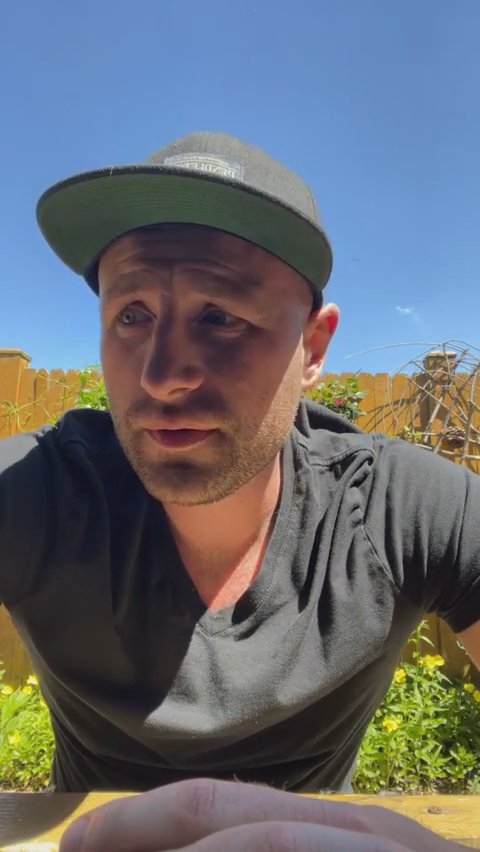
I have an exciting announcement that I want to share with you all. I am going to be introducing a series I will begin creating on chronic pain and chronic illness. This will be something that everyone should be able to get value from because it's likely you or someone you know suffers from it and it's a topic that very few people bring light to. So come join while I intro this series!
Evan: I'm going to be doing a series, video series. It is on chronic pain and chronic illness. Something like 25% of people struggle with chronic pain, he says. Evan: There is a dire need for more awareness and education on this topic.
What up, Cadre family? Evan here, your resident counselor, addiction and mental health therapist. I just wanted to pop in live because I wanted to share something with you, something that I am extremely excited about, something I am extremely passionate about. And that is, I'm going to be doing a series, video series. I don't know how long it's gonna be. Whenever I do one, I think it's gonna be, you know, three videos, and then I end up realizing I need to do more. But I've always wanted to do this, and it is on chronic pain and chronic illness, and I thought this would be a good topic for a series, because in my experience, not only as a mental health professional, but as someone who creates content and interacts with the public in general.
People who are interested in this topic, I kind of stumbled on by accident of how big of a problem this actually is, and the lack of awareness and dire need there is for more services, for more awareness, and more education on this topic, and there's some reasons why. And so even if you're not someone per se, who struggles with chronic pain or chronic illness, and it is to very degrees, for sure, but there's a decent chance that if you're watching this, you do, and there's an even better chance, if not certainty, statistically, that there's someone in your life close to you who is struggling with something like this.
So I think this will be something really valuable. So, you know, keep watching. I'll tell you a little bit more about it. But, you know, for everyone who's watching this, I think there may be something that you can get out of it. So definitely keep your eyes open for it. So, just a couple getting deeper into the reasons why I'm doing this. Something like 25% of people struggle with chronic pain, and the definition of chronic pain is anything lasting over three months. And that often is much, much longer for people.
Like, many years, decades, but anything that is more than three months, and people suffer in silence. And there's a lot of, you know, shame around it. People don't want to talk about it. It's not a fun topic. It's sad. I mean, when I do this series, I'll try to make it as fun as I possibly can, but it is. It's really sad. And I noticed the need for this even deeper when I started to talk about it on my social media. I just made, like, one video about it, you know, and there was just more engagement on that video than almost any other topic I did one video, just got a ton of engagement, just the amount of people that shared the video, that commented on the video just blew my mind.
I didn't really expect for it to do very much or people to care that much, but I knew that for a small percentage, percentage of people, they really would likely care. But it really exceeded my expectations and it really showed me, wow, there is such a demand and need for this that's not talked about, you know, and some of the problems people discuss is just like the misunderstanding in the medical community, the misunderstanding among family and friends, people who will say, you know, just buck it up, you're complaining.
The folks that kind of have to be on meds, you know, you're a junkie. This is not real. This is in your head. So some of these issues that I talk about, people just, yep, yep, yep. Experienced that. Been there, been there. And what it really does for your overall mental wellness, for your mood, depression especially, is really highly correlated. So, you know, and then as well, you know, I have some personal experience with this, too. Being diagnosed with a back condition at a young age and, you know, for many years struggling with it.
I mean, I'm luckier than most in the fact that, you know, I had some pretty good outcomes as far as medical, but I was there for six long years, and it really, I mean, if it weren't for that, I probably wouldn't give it a second thought. And then for chronic illness, too, right? That's like d*** near 50% of the population. And again, it's always to varying degrees, but this is a huge topic that needs to be talked about. So I decided, and I've had this in mind for a while. I was like, maybe this would be a good series to do.
So I don't. I haven't written it yet. I haven't created the videos yet, but that's going to be my next project. Once I'm done with this content creation series, which will be for sure July 1, I'll be done with that. And then I'll just go ahead and get started on chronic pain. And so what I know, though, is that, you know, we'll do an intro, kind of similar to this, to the course, and then we're going to do an intro, talking about the problem, but then really quickly hop into solutions. So just going over some things that you could do to improve your quality of life, some practical things like dealing with medical professionals, how to try to find the best medical solutions you can, while at the same time the psychological element, and how to live a best life possible.
Because for a lot of people, you know, they live. I hate to say it, but a miserable existence. And so I'm going to try to bring as much positivity to it as possible and try to bring as many solutions as possible. So keep an eye out for that. I know that a lot of you will find some benefit to it, hopefully a lot of benefit, but I have a lot of, you know, experience with it. You know, I know some pretty good strategies for improving your quality of life. Right. It's not gonna cure your chronic pain.
It's not gonna make you happy over, but it's all about improving the quality of life that you have. And significantly, not just. 7. I mean, you know, really try to give you some tools that you can use, that you can really benefit from. So we're going to be going over a whole bunch of different stuff there, so I just wanted to check in with you all, let you know that that is coming. So keep an eye out, and until next time, I'm Evan, your resident mental health and addiction therapist, and we will see you soon.
All right, everyone. Take care. Three, two,
Reactions and comments are for members. Joining is free and takes a minute.