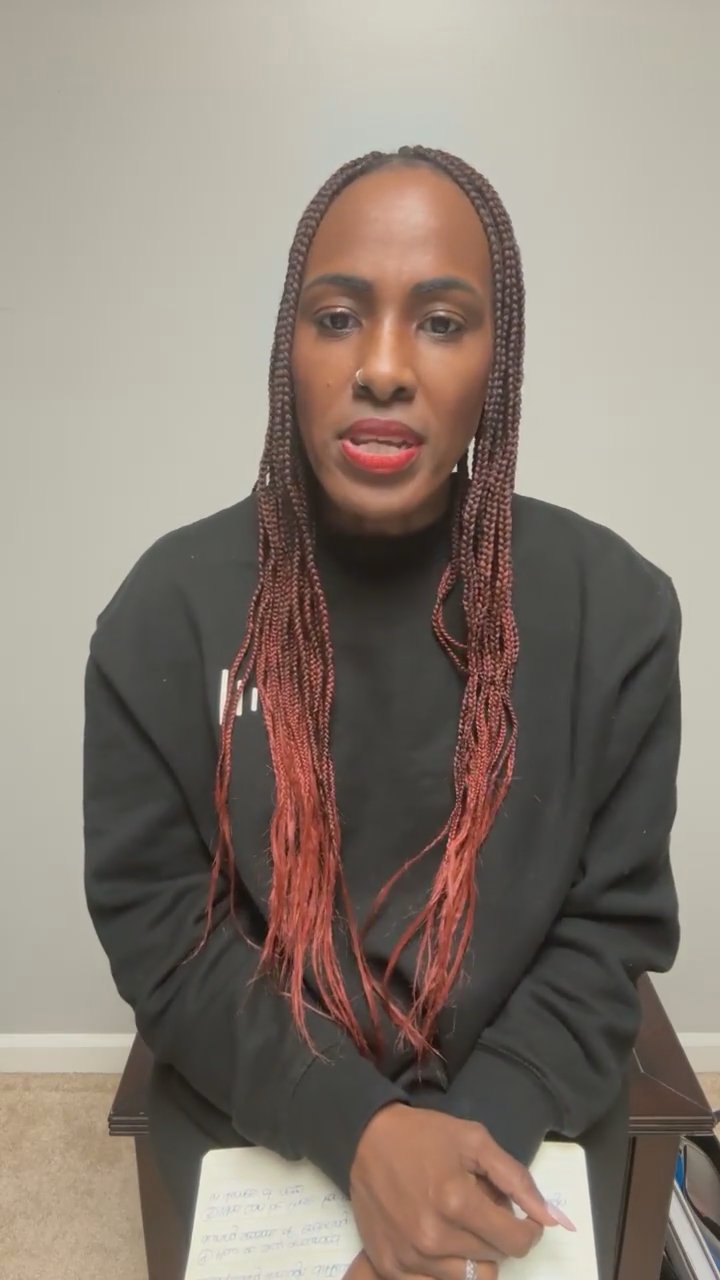
Dr. Charisse Johnson explores what difficult seasons reveal, offering five lessons on pruning what no longer serves, recognizing futile people-pleasing, staying grounded, and simple practices like a joy jar and random acts of kindness to keep moving forward.
Dr. Charisse Johnson: I want to focus on getting through difficult seasons. Difficult seasons often let us know where we need to prune, where things aren't what we thought they were. Here are five things that we can learn from difficult seasons, she says.
Difficult seasons can show us where your attempts to please others has been futile. Sometimes discomfort is letting us know your presence has stayed too long. The only thing that we can choose to change with our power is our response.
Difficult seasons teach us how to stay grounded during seasons of enduring. Create a joy jar to remind yourself there is joy still happening in the midst of the difficulty. engage in random acts of kindness. The only way to get through difficult times is to keep moving forward.
Hello codiosphere. Welcome to this space. I'm glad that you chose to come. Whether you are here live or listening via replay, I hope that you will find that this is a great place to be. I'm always excited to be here with you if this is your first time. I'm Dr. Charisse Johnson, a licensed clinical mental health therapist, mindfulness practitioner and authority. I come into this space a few times a week to talk about life, mental well being, trauma, neuroscience and all the things. But what's most important is my ultimate goal is to be a friendly, familiar face to you.
My goal is to be, what's the word I want to say? Insightful for you and for you to leave with a little something that's going to support you. We typically come in a few ways during my lives. One, you rate your week. One, meaning it has been super awful. Hello from Statesboro, Georgia. 10, meaning it's been fabulous. Then let me know where you are in the world. It's a great way for us to kind of join in the stratosphere, the kardosphere, and see how incredible it is to all be from different places, different seasons, seasons of life.
And we come into this space where all are welcome. I am happy to report that my week earlier was at a 7. I rate my week a couple of times a week, but it's been a good weekend so I'm ending the weekend on a nine. Hello from Philly. So good to see all of you that came to spend some time here. Tonight. I want to focus on getting through difficult seasons. Hello from Charlotte. If you're comfortable, I want you to take a moment and think about something in your life right now that's a little difficult.
One thing I also want to say, hello, White Plains, Maryland is that difficult moments can also coexist with great moments. And we think that only one can happen. Hello, Dorinda. But they can both coexist. And so once you have that difficult moment in your mind, just put in the chat. I have it so I can kind of see how this is resonating with you. And I think this is going to be something that's helpful even if you're not in a difficult season at any given point. Right. We're either heading into, we're either in the middle of, or we're coming out of something that's difficult.
And difficult is subjective. So that means. Hello from Northern Minnesota. You're difficult. Could even just be that you're frustrated that you're working on something and you're not able to stay consistent with it. It could be that you're working on creating a new habit. It could be that you're doing something that's new and exciting, but it's also really hard. I see a few I have. It's coming in now. I want you to consider as I kind of walk through a few things. What are you learning about. About yourself through this difficult season?
Because if we handle difficult seasons as well as possible, we're not going to be perfect. They teach us about ourselves, they teach us about other people, and they teach us about the places that we coexist. I almost made this live, but I think I'm going to save that for like a Wednesday live focused on. Sometimes you just have to let people know they miss their window. And you're like, what does that have to do with difficult seasons? Difficult seasons often let us know where we need to prune, where things aren't what we thought they were.
And so the window of time or the window of opportunity that someone may have had in order to have the privilege of knowing you and being with you or spending extra time with you needs to close. But here are five things that I want to highlight that we can learn from difficult seasons. But I want to start off with a quote from Maya Angelou. It's one of my favorites. It says, you may encounter many defeats, but you must not be defeated. And I want you to remember that if you don't remember anything else that I say, I will not be defeated by this difficult moment.
That's an important thing for us to declare. Will is a declarative statement. I will not. Might get knocked down, might hurt a little bit. I might cry, I might be angry. I might feel hopeless, but I will not be defeated by this difficult season. Say that to yourself as many times as you need to. So five things that difficult seasons teach us. Number one, where your presence has stayed too long. So that's that that window needs to close sometimes. Tell me if you resonate with this. You're in a situation that is, like, good.
And then all of a sudden things change and you're like, what in the world happened? I would have never thought in a million years that we would be here. And often when I'm talking to people about those situations, they've also been on the line with the need to make a shift or pivot. But due to comfort or due familiarity, they stay somewhere too long. And let me tell you, maybe I'm just speaking for me. I have absolutely seen in my own life that when I stay somewhere too long, and it starts limiting my growth or tying my hands.
It gets ugly, it gets uncomfortable. And then I'm like, but it almost had to be that way, Shareese, because I don't feel like you would have left if it didn't get uncomfortable. So sometimes discomfort is letting us know your presence has stayed too long and you need to go take that big step that you've been afraid of. Number two, Difficult seasons can show us where your attempts to please others has been futile. Say it's me. If you've ever been in a situation where you have kept striving and working and bending over backwards and saying and doing thinking, what do I have to do to please this boss, to please this co worker, to please this family member or this friend?
And it felt like no matter what you did, it was never enough. It's me. I've been there. And sometimes I didn't even realize at first I was doing it until I got to the point that I was like, wow, this situation isn't changing no matter what I do. And that's really difficult. When we feel like we don't have the power to shift something, when we feel like we don't have the power to change anything, we don't have the power to change people. We don't always have the power to change a situation. The only thing that we can choose to change with our power is our response.
So my response to the situation, to the person, to the circumstance, that's what I can change. But if you've been in a place where that's. You see what it's like to kind of loosen your grip a little bit and just go, you know what? I've done enough. I've done enough. Number three, things we learn from difficult seasons, what we are capable of accomplishing through difficulty. Most of you said, I have it. You came up with something that you feel like is difficult. Now, I want you to chime in and I want you to tell me what's something that you have continued to do or continued to do well, even through the difficulties?
So, for example, maybe you're like, it has been a difficult season in my life, but I am proud to say I have remained kind. It's been a difficult season in some ways, but I'm proud to say I've continued to eat well or to prioritize my sleep or to move or to care for myself or to show up for the people who matter. It's important for you to be able to acknowledge it's not all bad. You're not failing. You're still doing, I have no doubt, some pretty magnificent things in the midst of your difficulty.
And I want to hear them, I want to see them, I want to read them. Number four, difficult seasons show us how to stay grounded during seasons of enduring. I love it. To exercise, reaching out to friends to talk about it. That's so good. I've continued to exercise daily. Absolutely helps our mind, our body. I will say I have continued to attempt to prioritize rest, which is a big thing. My rest is not always great, but I'm at least trying to continue to make it a priority. And that's big for me because I could just be up all night with everything spiraling in my head.
Yeah. To continue to focus on your health. I love it. I want you to remember that you're doing great things in the midst of whatever is challenging. Number four, difficult times teach us how to stay grounded during seasons of enduring. So when we are exhausted and we feel like, is this ever going to end? I don't see the end in sight. We also learn. We're going to focus on our health. We're going to exercise, we're going to keep moving daily. We're going to prioritize rest. We're going to take a hold of our faith in spiritual practices.
We're going to journal, we're going to connect, we're going to stay grounded, and we're not going to let the difficult season shake us. And number five, this, I think, is so valuable. Difficult seasons teach us who can be there for us in our times of need. Because let me tell you, difficult seasons will show you the people who were only there for what you did for them. They're gonna fall off, they're gonna drop off. They're gonna take every conversation that you have and turn it towards themselves.
Difficult seasons allow great friendships, great relationships to rise to the surface. And you really get to see who are the people who are there for you when you are barely able to be there for yourself. And I hope you all have somebody like that in your life. I want to leave you with this quote. The only way to get through difficult times is to keep moving forward. Here are a few ways you can do that. One, create a joy jar. Just get a little jar, take a little slips of paper, put in it joyful moments and positive experiences that you have as they occur.
To remind yourself there is joy still happening in the midst of the difficulty. Number two, adopt a character or an alter ego, one that has or embodies resilience. I actually have my clients sometime name another part of themselves that feels stronger than they feel in themselves. It's really powerful. I know it sounds weird but it is an actual skill. And number three, engage in random acts of kindness. Just little small things that you do. Maybe you just encourage somebody else. Maybe you pay for somebody's coffee or their meal or you say something and you go out of the way to remind yourself I not going to lose myself.
I'm not going to lose my own joy and my ability to connect and help others in the midst of everything. So that gives you three simple ideas that you can take and incorporate in your life. But remember you are capable of navigating through this time and you can always come back to this space and myself or any of the other contributors will be here to lift you up to encourage you, to remind you that we're all going through something and you're not alone. I will see you soon. Have a good one.
Reactions and comments are for members. Joining is free and takes a minute.