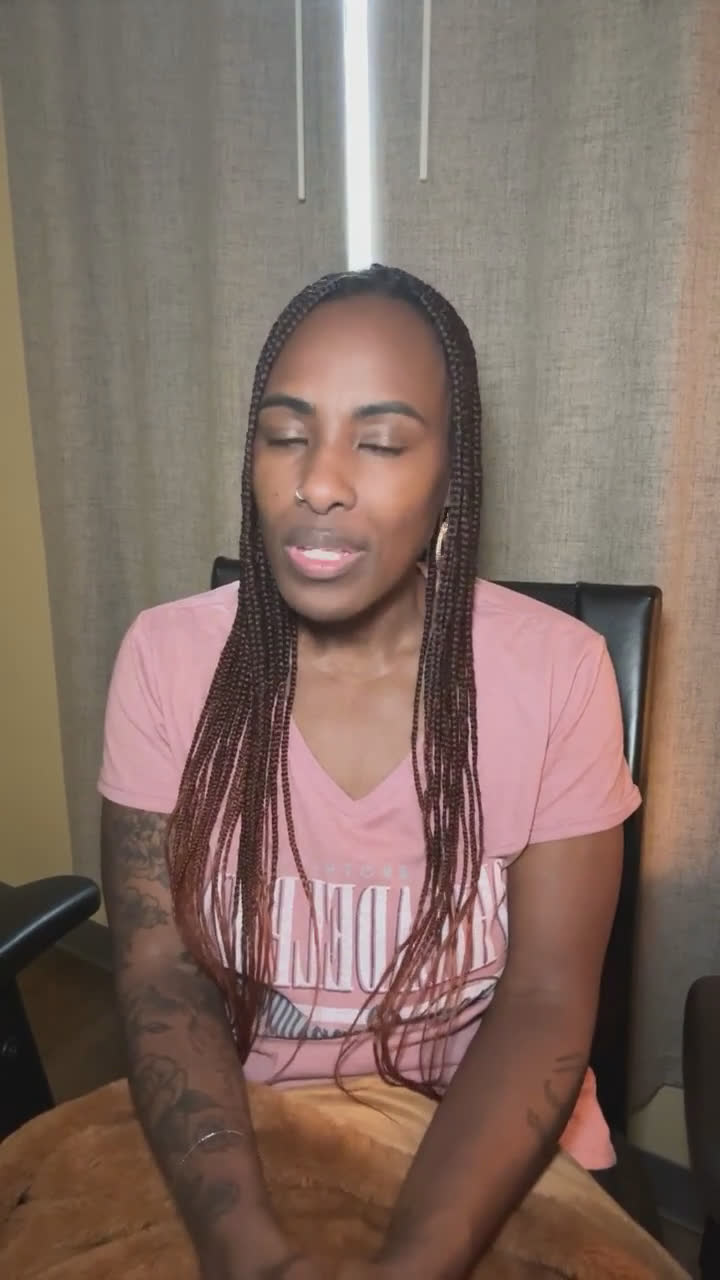
Dr. Charisse Johnson explores the difference between productive and passive pain and connects it to eating patterns and life responsibilities. She guides a simple plate exercise to notice what on the plate is burdensome versus growth-oriented.
Dr. Charisse Johnson is a licensed clinical mental health therapist, mindfulness practitioner and author. She comes into this space twice a week at minimum to talk all about life. Let me give a few caveats for today. I am not feeling my greatest voice is just starting to come back.
As always, how's your week been? Let me know where you are in the world and how you would rate the end of this week. Remember that ideally we don't want to set too many goals. If we focus a little bit here, there. We will do better.
Where are things put productive pain and where are they passive sources of pain? And understanding the difference between how you are navigating the areas in your life that are challenging. Our eating patterns and how we nourish ourselves can be a pretty good indicator of what's going on.
What are you noticing about your eating patterns? You may not be comfortable sharing what's on your plate and how you're carrying it. My eating patterns have been like a roller coaster this week. I have a great plan in place to kind of level set.
So let's talk about the difference between productive pain and passive pain. Passive pain is discomfort or suffering that does not lead to constructive outcomes. Productive pain is characterized by it being growth oriented.
Here's what I'd like for you to do. What are you holding on to that has become such a passive source of pain that it is weighing you down? Often when we collect passive pain, we become depressed or anxious by trying to manage it all. Prioritize what's on your plate.
Hello, Cogisphere. As always, I'm so glad that you're here. This is your first time here. I'm Dr. Charisse Johnson, a licensed clinical mental health therapist, mindfulness practitioner and author. I come into this space twice a week at minimum to talk all about life, keeping harmony in our life and our responsibility to do the work and understand what it means to to be well. Let me give a few caveats for today. I am not feeling my greatest voice is just starting to come back a little bit. Throat still hurts, all the things.
But I'm here, so if I sound a little weird, a little congested and all the things, that's why. As always, how's your week been? Let me know where you are in the world and how you would rate the end of this week. I also want to check in for those of you that are with me consistently at the beginning of the year. I encouraged you to create an overarching goal, one that you wanted to focus on this year. And then each quarter take a look and take inventory around how you are doing with that goal and what you're working on.
So write your week one. Let me know where you are and then let me know how you feel like you're doing with the goals that you're setting for yourself. And as always, remember that ideally we don't want to set too many goals. When you set five, six, seven goals every single week, you're typically gonna end up pretty disappointed. We will do better and feel so much more accomplished. Hello, Shelly from Canada. If we focus a little bit here, there. Hello. State spiral focus of today. I want to talk about painful experiences.
And this can be physical pain, this can be emotional pain, it can be situational pain. And understanding the difference between how you are navigating the areas in your life that are challenging. Hello from Charlotte. And where are things put productive pain and where are they passive sources of pain? To set us up for this moment, I want you to go ahead and do what hopefully you do with me every Sunday. Either put a line down the middle of your paper or you draw two plates. And I want you to take a moment while I talk and I want you to identify what's on your plate.
One plate has all the tangible responsibilities, all the mindsets, beliefs, all the people, all the situations that are worrying you. So just jot down those that are coming to mind. You're more than welcome to share in the chat if you want to kind of communicate and voice any of the pains that you are not pains, any of the things that are on your plate, they may not all be a pain because good things can be on our plate. And then on the other side, Andrea, way to push through your obstacles. I just want to stop and congratulate you on that.
It's not always easy. And then on the other plate, I want you to be very honest with yourself about what you're eating and how you are noticing the way you are eating and the way that it's correlating to what you're carrying. For example, are you in a season where you're like, I'm mindful of my eating. I'm doing well. My plate feels balanced, or are you in a season where what you're eating is an indicator that things on your plate are not where you like for them to be? Because we always want to look at that integration and that correlation because our eating patterns and how we nourish ourselves or choose not to nourish ourselves or choose not to move our bodies, it's a pretty good indicator of what's going on.
If I had to rate my week, I would give my week a four. It's probably one of the lowest ratings I've had. It's just been a tough week emotionally. It's been a tough week physically, and I look forward to starting a new week for me, I choose Sunday, which is today. For those of you who are listening to this in the moment as my week to as the start of my week. So I look forward to it. I do want to find out one thing from you that I think everyone will be comfortable placing in the chat. What are you noticing about your eating patterns?
You may not be comfortable sharing what's on your plate and how you're carrying it, but give me some insight around what you're noticing in your eating patterns. I'll start first because this is also about us sharing. My eating patterns have been like a roller coaster this week. They started off well, ish. I was coming off of some travel, so I was really mentally focused on trying to reset some of the ways that I was nourishing myself and then as the week than I have ever had before. So that's something that I just, you know, have paid attention to.
And I have a great plan in place to kind of level set. So let's talk about the difference between productive pain and passive pain. So passive pain as a whole, that's discomfort or suffering that does not lead to constructive outcomes. This means you're often in a place where you're stuck by the pain that you're going through. It can stem from inertia, just not moving, taking action in your life. It can stem from avoidance or a lack of action. It's characterized by feeling stagnant, by feeling like things are not moving, you're feeling very stuck.
You can feel like you're in some brain fog. So that level of stagnation can be in terms of your day to day, or it might even be a mental stagnation. It's also often characteristic of or characterized by being chronic. When passive pain is in place, we are in situations where it persists over time without resolve. And I would say passive pain can also be the things in your life that end up being on your plate. That you realize when these things are on your plate, they kind of immobilize you. Sometimes passive pain is the pain that we take on that really belongs to someone else.
It's not intended to be ours. Then there's. It's also demotivating. So when we're in situations where passive pain is present and primary, there will be a level of demotivation. And that's going to typically lead us to feelings of despair or resignation. Do you see yourself there in any areas? Also recognize sometimes you can have a level of passive pain happening in your life, but everything else is going okay. So it's not all encompassing. It can be in a specific area. Some examples of passive pain are like chronic physical or emotional pain without some level of treatment in place.
It could be a lack of utilizing coping skills so we get stuck in passive pain. Or when it starts off general and light and could be well for us. But our issue is that we don't use coping strategies. Or passive pain can persist if we stay in a toxic environment or relationship without taking some level of action. What we hope to experience when it comes from pain or how we want to move from hurt to hope is we want to move into pain that is productive. So if we define productive pain, that's a discomfort or struggle that leads to growth, improvement or positive change.
So it often involves facing challenges that are necessary for personal or professional development. So sometimes when we do things that are outside of our comfort zone, or we make decisions that are outside of what we would typically do for ourselves, then there's going to be a level of progress. Productive pain. Productive pain is uncomfortable, but it does not hurt. It does not feel like it is taking us out. So I want you to pay attention to where things feel painful in your life. There are definitely moments where things become passive pain that should be productive pain because we're not looking at Those experiences through the right lens or we're not doing the work that we can do in order to make things better.
Productive pain is characterized by it being growth oriented. It's temporary. You know that, hey, when you get to the end of this season or this moment or this goal, when whatever you're focused on is achieved, then the productive pain is going to cease. And that is key and it's motivating. So it's like, oh my goodness, this is so hard. But you're telling yourself it's worth it. So productive pain is going to inspire some level of resilience or determination. Examples are physical training. If you're training for a raise or a muscle show.
I don't even think it's called muscle show. I'm trying to think of it. But any type of show where you're utilizing muscles, there's a word for it not coming to mind. Emotional struggles can be productive pain if we're utilizing the right coping strategies and doing our work not to get caught in a cycle of them. So really, we play a big part in what's productive versus what's passive. And then learning a new skill can be a really great example of productive pain. Here's what I'd like for you to do.
I want you to go back to those two plates, right? What do you notice about what you're eating? What do you notice about what you're carrying? And then I would love for you to move things from there and really categorize them. What are you finding under each dynamic? What's productive and what has become a passive sort of, you know, source of pain? What this is entitled to do is it's entitled to help you look at what are you holding on to that isn't yours to carry? What are you holding on to that has become such a passive source of pain that it is weighing you down?
Often when we collect passive pain, we become depressed or anxious by trying to manage it all. And then as an action step as you go throughout the week and you notice yourself being uncomfortable with something or considering whether or not you take action, ask yourself, if I take action in this area, whether that's to continue doing something or to stop doing something. Will this help produce something in me that is going to be for my benefit? Or is this creating a level of passivity where there's avoidance and you're not facing the things that are important to you?
Regardless of where you are, whether you're carrying a lot of productive pain or passive pain, remember that you are strong enough. You really are to get through everything that's on your plate. You get to choose as much as possible what's on your plate. And sometimes we have to take things off. Sometimes we have to pause things that are on our plate and come back to it. Prioritize what's on your plate. Prioritize how you are nourishing yourself. As always, I'm so glad that you came. Come back to this space as much as you need to.
And I will see you in a few days. Have a good one.
Reactions and comments are for members. Joining is free and takes a minute.