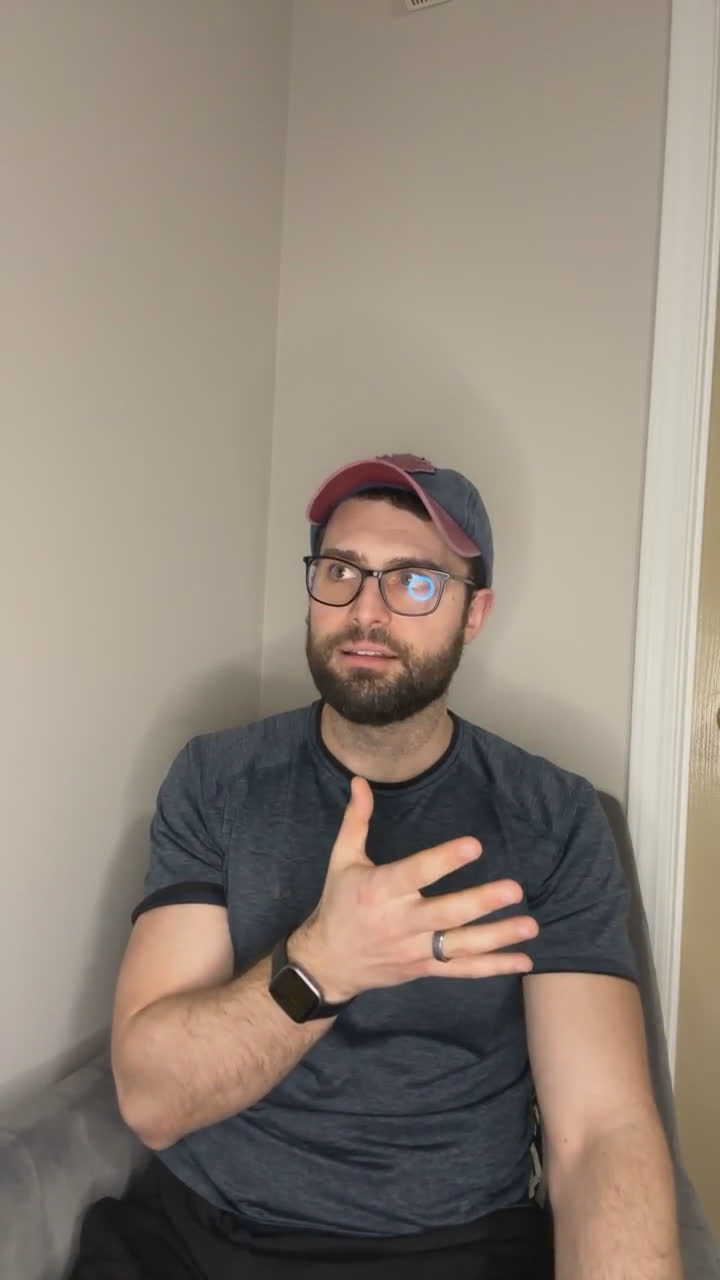
Sunday Spark session focuses on overcoming imposter syndrome and perfection. JC like to use Sundays as a reflection period, as a way to prepare for the week. I encourage all of you to do the kind of this, like similar reflection, whichever day works best for you.
Randy Johnson: There's not one thing that can make our inner critic, our inner self doubt lessen. meditation, breath, work, exercise, diet, these, all these little things add up. Building mental resilience, mental toughness, it takes time.
Cadre: There's things that happen that steer us off course sometimes mentally, physiologically, spiritually. Do a daily ritual, daily practice, like meditation, breath work. Utilize kind of gamification, small habit stacking, right?
Alex Muir: Sunday Spark sessions about overcoming and navigating self doubt and imposter syndrome. Also the host of the Mindset podcast. Personal transformation, personal empowerment, self improvement. Will see you this Wednesday for Wealth Wisdom Wednesdays.
Foreign and we are live. Ladies and gentlemen, welcome back to another Sunday Spark session. I did miss my wealth was Wednesday this past Wednesday. So I'm gonna make up for that this Wednesday coming up. But I want to make sure I didn't miss this because again, it's 6:30 6:29pm Pacific and they'd be talking about overcoming imposter syndrome and perfection and yeah, just basically learning how to navigate. Hey JC welcome. Happy to have you on the live. Hey, Dorinda, welcome to have you on the live.
Awesome. Thanks for tuning in to Sunday Spark session. Basically, like a lot of us have the challenge, whether you're an executive CEO. Good evening, jc. Thanks for tuning in. Whether you're a student all the way to a CEO, we all have the challenge of feeling like we're not good enough or having the inner critic say, oh, I don't know if I can do this. Oh, I don't feel like I'm qualified. Oh, I don't feel enough. The credentials and so on and so on and so on. So overcoming that. So, yeah, so overcoming self doubt and imposter syndrome is the theme and the topic of this Sunday Spark session.
So I like to use Sundays as a reflection period, as a way to prepare for the week and a lot of times just to see where my psychology is at my mindset. So I encourage all of you to do the kind of this, like similar reflection, whichever day works best for you. Some people like to do it on a Monday or, or a Saturday or whatever day works best for you. But I just like to do Sundays because it's the end of the week or the beginning or you're preparing to begin your week. So it's a great strategy to see how to navigate, you know, those feelings and those emotions and those thoughts that we all have self doubt, like your inner critic and imposter syndrome.
So let's dive right into it. Randy Johnson, thanks for joining the Live. Happy to have you here. So something that I talk about, I know I talk about it repeatedly, I know I sound like a broken record, but meditation, breath, work, exercise, diet, like eating a good diet, these, all these little things add up, right? Because of my kind of my, my brand, my podcast, all of it stems from a holistic lifestyle, holistic mindset. There's not one thing that can make our inner critic, our inner self doubt lessen.
It's just a combination of a bunch of different things. But what's really helped me over everything else, right? When you have everything else dialed in, you're eating your Sleep, your exercise. Mindfulness. Mindfulness. The is our psyche, right, Doing some sort of mindfulness ritual that works for you, Breath work, meditation or Some are two, two tools that I use and that has helped me lessen the inner critic and self doubt. Because I'm someone my, my past self and I still have moments, we all have moments where we're like doubting ourselves before we're about to do something big that we're really passionate about, that we could have been preparing for for a while.
And all of a sudden, boom, that self doubt creeps in and you're like, oh my God, like your backs are backpedaling, start backtracking. You're like, I don't know if I can do this, I made a mistake or I'm not prepared enough or blah, blah, blah, blah. We have all these thoughts that arise that might come up right as we get closer and closer to the event that we've been preparing for or the speech or meeting someone that we just really want to impress or all these little things. So something that I started to do because I used to the self doubt and the inner critic.
Ray Ray, thanks so much for joining the Live. Happy to have you here. Thanks for tuning in. Something that my old inner critic, which our inner critic will evolve over time, right. Depending on how we nurture our mind and how we prime our mind to improve that mindset of like, you know, trend transitioning from like a kind of a negative inner critic to a more positive one. Right. So I used to be like my, my mindset in high school was very different than it is now. My mindset before was like, oh, I don't know if I can do this.
Everyone's gonna laugh at me. I'm not confident. I lack the leadership skills, whatever. But nowadays, so that was back when I was 17. So my mind's really evolved since then. And a lot of people might go through this as well where they're feeling a lot more negative, they're feeling a lot less confident earlier on, in their earlier years. And then they find ways to evolve. They find ways to build mental resilience, mental toughness. And sports helped a lot with that. Ms. Shannon Paul, thanks so much for tuning into the live.
Happy to have you here. And that's, you know, that's the, you know, it's not an easy thing to do. Building mental resilience, mental toughness, it takes time. It takes a little bit of effort, but little bits compounded over time. That's what helps us build like a mental suit of armor around self Doubt. Because we still will have self doubt. I still have self doubt. We still, we all still have self doubt. But my mindset is now when I'm feeling that self doubt. Like, you know what, I know you're feeling anxious right now.
I know I'm feeling stressed a little bit, you know, anticipating something that's going to go wrong. I'll do like talk therapy. Me and my wife will do like talk therapy about it or I'll talk to my therapist about it. I'll be like, hey, where my brain's at right now, I'm just thinking worst case scenario. So I just kind of labeling the fears. Yeah. Do little things often. Yeah. Little tiny micro learnings. Yeah, absolutely. They make a big difference. They make big mental shifts. It's the small mental shifts that we make that lead to big wins.
The small wins that lead to big wins, which lead to huge wins. So that mental shift from old Alex, from being like, I can't do this. I'm not confident. I lack the leadership skills. I'm not qualified. I don't have the credentials to. I may not have those things right now, but I'm working towards those things right now. I'm preparing to be in a position to have that opportunity to have those things or to have the opportunity that I'm looking for, whatever it is. Xyz. So it's a very different, it's a very different thought.
Right. It's more positive and uplifting thought of going from I can't do this to hey, I'm scared in this moment, I'm stressed. I might feel anxious, but I'm still gonna do this anyway. And that's one thing that my parents taught me, which was probably one of the best life lessons I've ever learned, is like, hey, you can still be scared or you can still be maybe not as prepared as you thought you were, but you still do it anyway, regardless of the result. So I transition also. It's, it's like the getting lessening.
You can never really get rid of the imposter syndrome of the self doubt, but you can lessen it, make it less loud. Turn down the volume. Turn down the volume on the, Turn on the volume on that inner critic, that self doubt, the, the imposter syndrome. And it makes a big difference. And just that those little mental tweaks of going like, I can't do this to. I can do this when I'm. But I'm. But I'm also scared is like, is a huge mental shift. Because a lot of people, they just Feel like they don't have a, they can't get out of that mental state.
And I'm here to tell you that you, you can. I'm someone that felt I can get out of that mental state and through reading books. So like personal improvement books, self improvement, mindfulness, psychology. I would highly recommend reading books on psychology and utilize your healthy curiosity for learning and for wanting to improve. And I think it all comes down to like whatever, like passion. Like I'm really passionate, I'm really passionate person. Like I really, I really, I really really like things or I really really don't like things.
So I really pay attention to that. So healthy curiosity, passion and just being okay. It's okay. Like JC did a really good post. I was reading some of your posts there JC or videos or posts. And, and a lot. And like a lot of psychologists or therapists will post it on socials and they'll be like it's okay to not be okay. No one is a hundred % productive. They're 100% on their game all the time. There's things that happen that steer us off course sometimes mentally, physiologically, spiritually. And sometimes we, we do, we get knocked off the horse or knocked off the saddle and steered off course through doing a daily ritual, daily practice, like meditation, breath work.
I just did a 15 minute session of meditation this morning and really practicing visualization and mental, mentally rehearsing like some of the greats like Michael Jordan, Arnold Schwarzenegger. I look to athletes because they're my role models growing up. And a lot of us look at athletes as role models growing up, you know, when you're younger and stuff. Because no one, maybe when you're younger like you, you understand. Like really, you've got your psychology dialed in, but most of us don't. And it takes time to develop our psychology on how to write like lessen self doubt, lessen the imposter syndrome.
Right. And it's difficult for me sometimes because I am a perfectionist, right. But I'm learning that doesn't get things done. Being a perfectionist isn't helpful, it's a deterrent. So utilizing different modalities like meditation, like breath work, like journaling, exercise, right. Yoga, weight training, all these little things that make a big, big difference. Mental, they create mental wins for us and they put us in a better psychological position when we're going through tough times. Because there's going to be tough times, there's going to be challenging times, but when we build.
So I spent the better half, better part of my 20s building the physiological fortress, but I wasn't, I was still spending time building my psychological fortress, right. And mental fortitude, but I was spending more time building like the pseudo armor, like the body of armor, the physiological armor before I was really honing in and building my mental armor. So I just wanted to say that basically if we're doing a daily meditation practice, we're doing breath work. Even if it's, even if it's like I talked about in my previous Sunday Spark sessions as well.
You don't have to do super long. It's taken me almost four weeks to get back to 15 minutes. I was doing 10 minutes a day because I fell off the saddle a little bit like I was mentioning. So start with a small, small amount of time to put towards reading, journaling, right? We're talking like a two minute. There was like, I think Tim Ferriss said he calls it the five minute journal or something like that. And he does that every morning with his 20 minute meditation. He does. And it makes a big difference.
It doesn't have to be long, it just has to be consist. You just have to be consistent with it day in and day out. And then again if for some reason you're normally doing in your meditation session in the morning. I've learned to like adapt. I'm getting better at adapting on the fly when sometimes the morning just doesn't work or whatever, my mental state's not there and I can't like it was a rushed morning, then I will do the meditation in the evening because I'm a big. I love these apps that are on about streaks, right?
No one likes to lose their streak. So I was on a 27 day meditation streak and, and then I felt, and then I just missed a day because I, I left it till the evening and then I was too tired to do it. So it happens and now I'm back on a seven day streak. So you guys can all do the same thing, right? Utilize kind of gamification, small habit stacking, right? Do one habit, start one habit like breath work or meditation or if you've never exercised, start going on a daily walk with your dog. Utilize, utilize your environment to help set yourself up for success physically, mentally and spiritually.
And I guarantee you you'll feel better and you'll lessen the volume, you'll lessen that volume of the, your, your inner critic internally and your inner imposter syndrome. And there's some, yeah, there's, there's, there's ways to navigate imposter syndrome and self doubt And I just want to tell you that even though it doesn't go away, it gets easier. It gets easier. And all of us on the Cadre platform are here to help, are here to inspire you, are here to show up, to show you that, hey, even on our not, not, not our best days, like, we're, we're still showing up and it's not easy.
And I know I'm rambling, but I just, yeah, I like to be off the cuff and be authentic, be genuine. And I feel like that's what, that's what the Cadre platform is all about. It's about, it's about a community all coming together, different backgrounds, different knowledge, and then sharing all that with all of you so you can navigate good times, tough times, whatever time you're in. And we're here to meet you where you're at. So I really hope you enjoyed this live. Thank you all for joining me on this live today for the Sunday Spark sessions about overcoming and navigating self doubt and imposter syndrome.
Thank you. And this is your host as well. So Alex Muir. I'm also the host of the Mindset podcast. Haven't done a podcast episode in a while, but if you ever want to get further, delve further into kind of like my content and stuff like that. I've got my own YouTube channel at mind-sep m I n dash. And that's also my podcast, Mindset. The Mindset podcast on Apple, Spotify. Personal transformation, personal empowerment, self improvement. That's my obsession. That's my mission. I want to make everyone, I want to have a global impact and I'm going to use my personal brand and Cadre to, to, to help get me there and to help inspire each and every one of you that no matter where you are, no matter where you start, you've got it in you.
It's always been in you. And you can take it all the way with a little bit of, a little bit of hard work, little bit of elbow grease and a lot of passion. And great things are yet, great things are coming and welcome soon enough. All right, thanks for tuning in to this live and I'll see you this Wednesday for Wealth Wisdom Wednesdays. Take care, y'all.
Reactions and comments are for members. Joining is free and takes a minute.