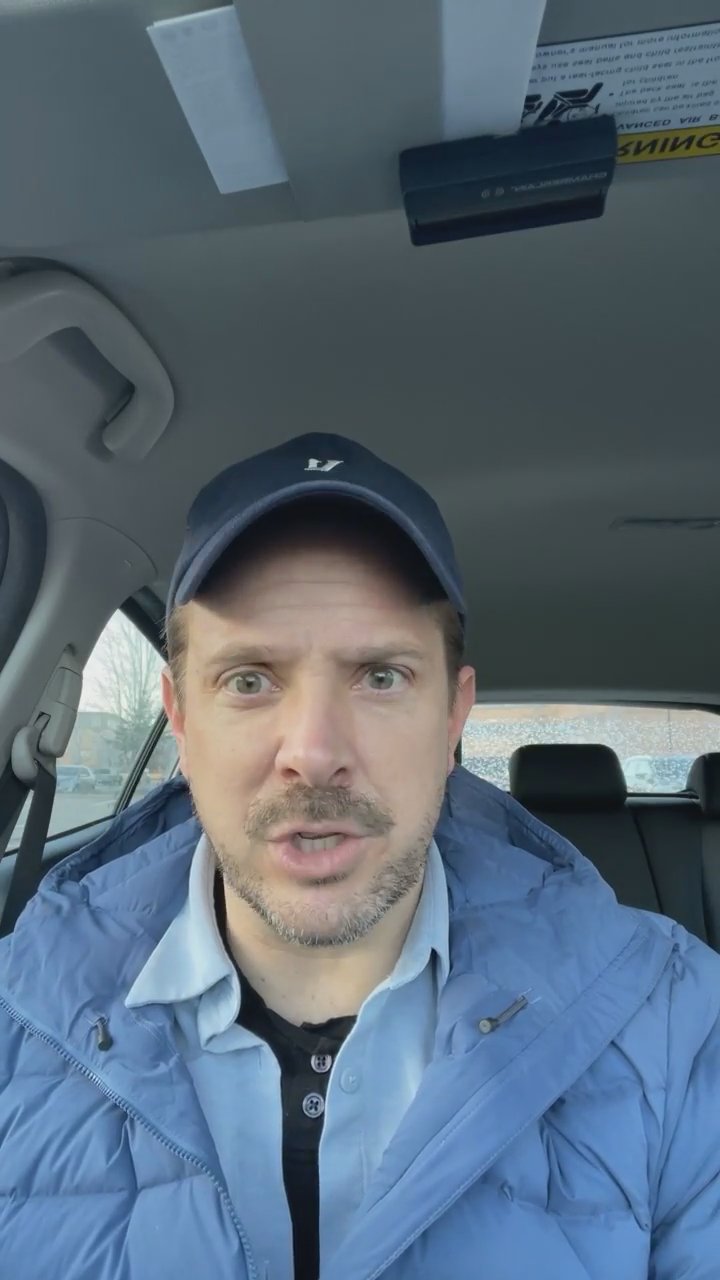
Host frames Monday work conversations around followership, exploring why teams need followers, how following enables movements, and invites listeners to look for small daily ways to grow within their roles.
Hey there, Cadre. How are we doing this morning? I hope you're doing great, but if you're not, it's okay. I'm not minimizing the not greatness, but I am standing on the side that you are going to make it.
Mondays are often a start for a lot of people in their work conversations. But the problem is that you can't start a movement if everyone is trying to be heard. You need people to be on the team, and people to follow. You can't sell a product if everybody's doing their own darn thing.
Every great thing that's ever happened on this planet has happened because of followers. To follow is a highly nuanced, difficult Act. And it's the act that all great things that have ever happened in this world has been born from.
JC: Think about all those opportunities where you can do those things 1% more today and tomorrow and the rest of this week. JC: How do we grow within that scope and in that scape? JC: If you're ever like, wow, I'd really love to have a deeper conversation with JC about that idea.
Hey there, Cadre. How are we doing this morning? I hope you're doing great, but if you're not, I want to assure you, I'll bet you a nickel that it's okay that you're not doing great. May not feel like it, you may want to be doing great, but it's okay. I'm not minimizing the not greatness, but I am standing on the side that you are going to make it, that you are going to have moments of better perspective and better reality. So I wish you greatness, but I also serve as the squeaky wheel to remind you that you're okay no matter how you're doing.
Hey, Ray. Ray. Hey, Jules. Nice to see you all. Nice to see you all scrolling on in here this morning. A fresh week. If Monday is the beginning of a week for you, whether you're getting ready for work, whether you're at work, whether you don't work, whether you're out of work, whether you have any of whatever amount of options of relationships with work that you can have, whatever's going on today, thank you for jumping into the Cadre sphere. T. North, Nice to see you, my friend. So on Mondays, because it is often a start for a lot of people in their work conversations, we talk about work.
We talk about doing the things that you do to make a living as well as you can, or as sustainable as you can, or with as much joy as you can. And so often that leads us to thinking, okay, I need to get out in front. I need to run, run, run. I need to be the first one. I need to be the person with the idea. I need to be the person who's heard. I need to be the person who is seen. But if we think in the world, if every single person is trying to be heard and every person's trying to be seen, and every person's trying to come up with a new idea and every person is trying to go the farthest.
What's the problem with that? The problem is that you can't start a movement. You can't run a company, you can't lead a team, you can't sell a product to people if everybody's trying to do their own darn thing. You need people to be on the team. You need people to follow. You need people to buy. You need people to listen. You need people to do the work that one person can't do alone. Which is why I always kick off the week starting with the conversation on followership. To follow. To follow is a highly nuanced, difficult Act.
And it's the act that all great things that have ever happened in this world has been born from. I don't say all or always or never very often, but I think I can make the case that every great thing that's ever happened on this planet. Hey, Robert, nice to see you, my friend. Every great thing that's ever happened on this planet has happened because of followers. Think of the person who, all right, I'm pulling this out of thin air. Throw me a situation. You try to stump me, and I'm trying to stunt myself.
If you ever read the story the Life of PI or seen the movie or the musical, the Life of PI is about this young 17 year old who gets stranded after a cargo ship that they're on goes down in the Pacific Ocean and they're stuck on a raft for like 300 days. So if you're saying JC how did PI be a follower there? Well, PI was going through ideas in PI's mind. PI was remembering things that mom and dad and sister said, things that all of the deities that PI is attempting to go, what is God and who is God and how is God?
PI was following the Bengal tiger who was on the raft with PI. In the story, PI was constantly going, huh, how do I survive? And rather than PI going, I'm going to pull out things from the air that, that I thought of. I listened to memories and thoughts and mentors and, and critics. I don't know if I could ever think of a situation where I could not tell you the importance of the followers in making the thing come to life. And that's the shock I want to provide you this morning. And I mean shock often I say invitation.
My invitation for you today is today is I want to shock you this morning with considering the idea of every opportunity you have to follow. You know, a lot of people talk about the idea of. And my buddy Craig, if you ever see 1% better in a live stream, that's Craig. And Craig has a podcast called the one percent Better Podcast. And if you know me, I always talk about how 1% better ideology without context doesn't make sense. I've never met the person who simply gets better, better, better, better, better, better, better every day.
That actually, unless we pair that with a progression and regression is how we actually sustainably grow. Anyways, I think of like a 1% better mentality. How do we grow within that scope and in that scape? How do we actually get better doing the things so much of it is within those moments where we go, huh? Right Now I am the follower right now. I need to amplify that voice or I need to give my hands, my head, my heart, my energy to that person's dream or that person's mission. I need to decenter myself, get out of the way and focus on someone else.
Think about all those opportunities where you can do those things 1% more today and tomorrow and the rest of this week and see what happens. You know, I say it often and I mean it. If you're ever like, wow, I'd really love to, you know, have a deeper conversation with JC about that idea, please reach out. Find me. You can find me on all the socials. You can go ahead and message me right here. I want to be in conversation with you about these ideas and how they continue to shift and wiggle in your mind.
Because as you do that, you go, huh? I'm changing the way that I operate. I'm changing the way that I look at my mental health and my wellbeing. And that's what we're doing right here in the Cadre sphere, y'all. You know, you got a great lineup of Monday contributors coming your way, but I'll remind you, tomorrow, top of the day, noon Central standard time, me and Betsy Hodges are going to be talking about the power of fun in difficult times. And then on Wednesday morning, me and Sayer Keeley, who most of you haven't met yet, but Sayer is wonderful.
Sayer was one of our panelists for Teen World Mental Wellness Day. And Sayer and I are going to recap that event through the eyes of a younger individual being Sayer. But I'll be here every day tomorrow and Wednesday at noon and 9am and Thursday, Friday, back to our regular 7:30. Y'all have a good one. We will see you later. Peace.
Reactions and comments are for members. Joining is free and takes a minute.