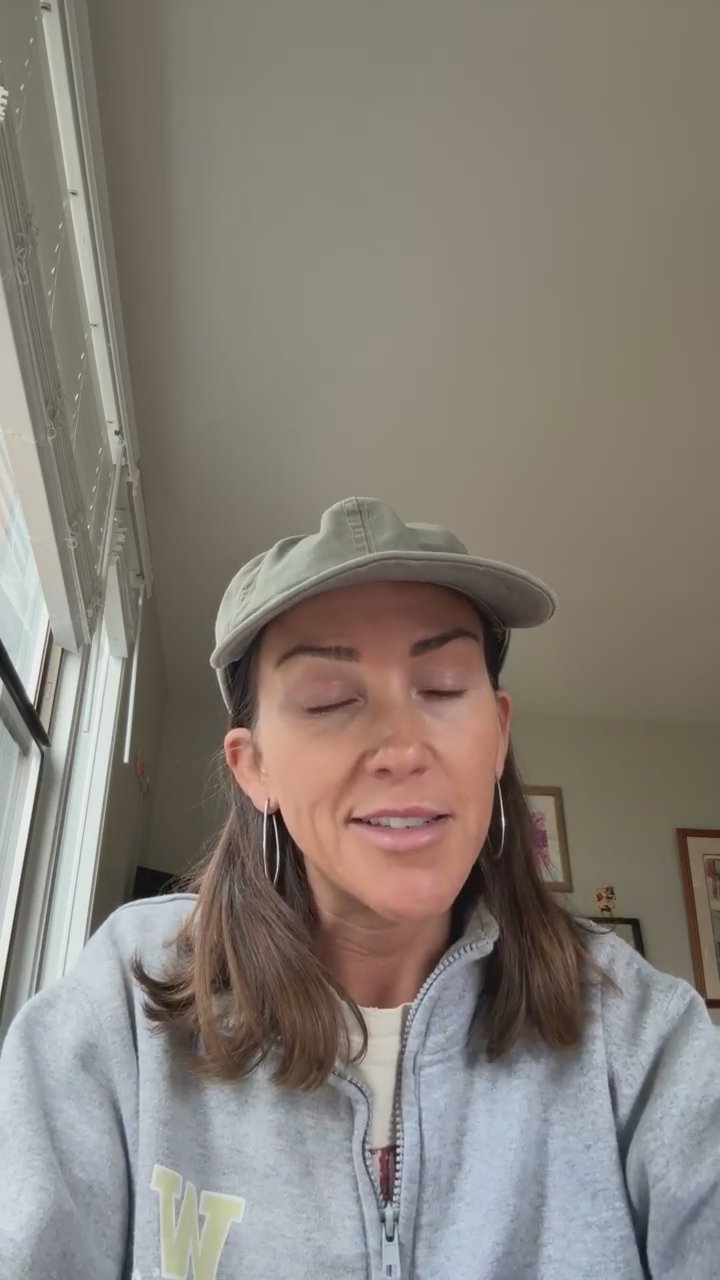
Rachel shares therapy insights on reframing parts of herself once labeled negative and examines how fearing being difficult keeps her from asking for needs in relationships. She also reflects on returning to creativity and finding musicians to jam.
Happy Wednesday. If you don't have water, this is your reminder to hydrate. From me to you.
I just got home from therapy, and it's been really interesting to have these lives on days that I have therapy because I feel like I always get these sort of really lovely nuggets of wisdom. Getting to share them with you is really joyful.
A lot of the reason I don't ask for what I need in. my relationships is not necessarily because. I think that what I needs is too much or it's because. what I want makes me an unlikable person. We're talking about accepting parts of ourselves that perhaps in the past we have thought of as negative qualities.
Rachel says it helps to be able to connect when it's expressed you. Junk food junkie says sometimes you have to weigh out your wants versus what you really need. Jules: If I can learn to love myself, so can somebody else.
Rachel: What do you feel like is missing in this season of your life? She says she needs to bring creativity back into her life purely for the sake of joy. Rachel: I'm gonna see if I can find some musicians to link up with and play some music and jam.
Happy Wednesday. Cadre Crew. Hello. Hello. From me to you. I will give folks a few minutes to trickle in per usual. If you don't have water, this is your reminder to hydrate. My reminder as well. I just got home from therapy, and it's been really interesting to have these lives on days that I have therapy because I feel like I always get these sort of really lovely nuggets of wisdom. And getting to share them with you is really joyful because not only do I feel like it allows you to reap the benefits of what my therapist has to offer, but it kind of solidifies everything I learned because then I have to talk about it with you.
So thank you for. For allowing that to also be part of my process. So. Hi, Jules. Hi, Karen. Hi, Rach. So. So today I want to talk about. This is something I have talked about before in my lives, but something that has started to really stick with me and was another really great reframe today in my therapy session is about. Is about accepting parts of ourselves that perhaps in the past we have thought of as negative qualities or personality traits or have been culturally or socially taught that they're negative personality traits.
And so we try to change them about ourselves rather than accepting them. And it's been very interesting for me to have these conversations with my therapist because I've been in therapy for a very long time. I've been in therapy since I was 15 years old. And a lot of times in therapy, I feel like I have nothing left to learn. I feel like I've done it all, so I can't learn anything new in therapy. And so it's always really wonderfully surprising when I get new insights. And what we were talking about a lot today and what has been a common theme is me working on asking for my needs and identifying my needs and knowing what they are.
And in that process, I'm also learning a lot about myself and who I am. And in doing so, I'm recognizing that there are. That a lot of the reason I don't ask for what I need in. In my relationships, all kinds of relationships, is not necessarily because I don't know what I need. It's because I think that what I need is too much or it's because I think that what I need makes me an unlikable person. And it was really interesting to kind of talk today, her today about specifically this notion of being difficult.
I have this story in my head that when. And not even in scenarios where I'm asking for what I need, but in scenarios when I really know what I want, or I'm going after something I want, or I'm giving feedback about something. It's coming from a place of knowing exactly what I want or what I need. And when I. When I verbalize it, I have this belief or the story that that's making me difficult. And so, like, an example that I'm. That I'll use, it's sort of like, we'll sort of step into how this relates to personality traits and growing to accept those things about ourselves, but also relationships is.
I am. I just finished a book and writing a book. And so I'm working with my publishers right now on the design, and they sent me different design. They sent me different covers of the design, and they were really excited about them. And I looked at them all and I kind of thought, well, these are nice, but none of these are my book. None of those are my book. And I came back with some feedback and some suggestions, and they did another round of edits. And again, I was like, this is not really. These are all so nice, but this is not my book.
And we kind of did this process until I saw a version that I went, oh, my God, that's it. That's the COVID of my book. And while I was doing that, I thought to myself, like, wow, I'm being really difficult. Like, I'm being a difficult client because I'm not appreciating the graphic designer. I'm telling them that this is not, you know, what. What the book cover should be, and that's their job. And, you know, and I, you know, I've had some reframes around that of, like, well, but if I was a man, I would just be passionate and driven and know what I want.
And she said, well, that's really interesting. Like, what, you know, what is it about you, like, being difficult or being passionate or knowing exactly that you know what you want that makes you feel bad about yourself? And I said, well, I feel like being difficult makes me unlikable or unlovable. Like, yes, it gets me what I want. Yes, it gets me the COVID that I desire. Yes, it helps me go after things in a really grand way. And I worry that it pushes people away. And she kind of smiled and was like, well, you know, you could.
You could just be really easy and appeasing so that everybody likes you, or you could know exactly what you want and have not a lot of people like you, but the people who do will fall madly in love with you. And it was just a nice reframe. Because it made me feel like, oh, this is a. This is sort of like this story or this framework that I bring into my life often, which is I want to be appeasing to people. I want to be easy to like. And the easy easier I want to people or to make myself easier for people to like, I choose to be less difficult.
Meaning I don't put up a fight about things. Maybe I don't tell them what I really want to eat for dinner, or maybe I don't disagree with them on something, or maybe I don't say like, you know what? That's actually not helpful. I don't say those things because that would make me difficult. But in doing so, I'm not expressing my needs. I don't. I'm not helping anybody get to know me or learn who I am. And. And I just, I thought that that was a really interesting reframe for me because it helped me sort of a realize that I do actually know what my needs are.
Like, I do know in moments when I'm not speaking up about something really small, what I actually want or need. I'm just not saying it because I want to just go with the flow. I want to be easy, I want to be simple. And maybe there are times where I don't have to die on a certain hill. And I can go with the flow, of course. And by not allowing myself to just simply say, like, you know what, actually, that's not helpful, or actually, you know what, this is what I need, or actually, you know what?
That's what I want. I'm silencing myself and I'm not expressing the things that I need. And in doing so, I'm also minimizing opportunities and moments for other people to get to know me deeply, but also for me to recognize that I deeply know myself. I actually know very, very well who I am and what I want. I just don't allow myself to express it because I'm afraid that if I do, I'm going to be rejected. And I don't know, it just was a very empowering reframe as well to honor. Like, what if I'm like, Even if we're.
Let's just say we use this word difficult, right? Or I'm particular. What if I'm a really particular person? That just means that I know what things that I like, it doesn't mean I'm not flexible. It doesn't mean that I can't make compromises. It doesn't mean that I don't know how to connect with people at a deep level. It doesn't mean that by being particular, I'm pushing people away. So somebody might not like that I'm particular about something, and that's okay. Excuse me, I just ate lunch. But it helped me sort of feel like.
Feel a little bit more grounded in the fact that. Cause I've been really anxious about this whole concept of needs and having this story that I just don't know what I need. And that's why I don't ask for it when I think really the truth is that I'm afraid to ask for my needs because I'm afraid if I do, it's going to make me hard to love. And. And so that was. It was just a really nice reminder. And it was empowering as well, for me to, again, like, settle into, like, actually, this is who I am. And if I can learn to love that about myself, then so can somebody else and so can the people in my life.
And again, it doesn't mean, like, I'm giving myself permission to be a d***, right? Like, I'm not saying, like, I just get to go out and tell people what to do and what I want, and they have to do everything I say. It just means that I get to. I get to say it. I get to say in small ways that something is bothering me or hurting me or I don't like something, or I do like something. And. And so I just really appreciated that. Reframe. I'm gonna try and catch up, but there's some comments in here, so let me just pause for a moment and go read back.
Hi, junk food junkie. Rachel says it's so hard to do, but so important. III yes. Oh, no. The Internet's cutting out. I hope that that is not true for everyone. Love that reframe. Yes, me too. Jules. Rachel says it helps to be able to connect when it's expressed you. Yes. When it expresses you. Absolutely. Yeah. And so in some ways, like, it does offer connection. It's like an opportunity for someone to connect with me in the same way that if a friend tells me what they need or what they like, that's giving me an opportunity to connect more with them and learn more about them.
Then I don't have to do this guessing game of, like, well, what do you need? Or what do you want? Like, I can't guess. You know, I think we talked about this in my live last week about, like, this idea of, like, mind reading. Right? Like, I can't read my friend's minds. I don't know what they want or need all the time. So when they tell me it's a gift, right, Even if it's not something that I normally would do or would. Would necessarily want for myself, like, it helps me get to know them better.
Karen says, yes, I know the ceiling happened today. I wanted my counter installed a certain way, and I just had to be difficult. I have a problem with people respecting my boundaries, and this is why. Yes. So that's a really good point. Oftentimes when we feel this way, it is because in the. Typically in our childhood, we were not. We were not given positive feedback when we asked for what we wanted. We were told that we were being difficult or that we'd had to just be grateful for what we had or that, you know, it wasn't appropriate for us to speak up in those ways.
And so we learned, you know, we. We learned these behaviors from somewhere, and so unlearning them is really challenging as an adult. And it's part of, you know, it's part of the practice, so. Junk food junkie says, I have learned sometimes you have to weigh out your wants versus what you really need. Doing this will clarify things better for you. Yeah, that's. That's so true. It's really. It's definitely like a work in progress of trying. Like, it's like throwing spaghetti at a wall and seeing what sticks.
Like, I'm not going to get it right every time when practicing a new skill. And, you know, I might ask for something I want and realize it's just, like, it's not actually something that I need. And it's again, like, weighing out these moments of, like, is this a time for me to really express this need? Is this actually something that's super important to me, or is this something I can let go of? And learning in those moments is really. Is a really important, and it can be super challenging. So, yeah, that was my.
That was my sort of little nugget of wisdom for the day. And another thing that she asked me that was really lovely that I'm gonna use this week was, what do you feel like is missing in this season of your life? And that was a nice question because I have been very focused on things that I have to do, like my job, find an apartment, take care of Milo, wake up, feed myself, do my lunch, you know, chores, whatever. Been super focused on, like, what I have to do to survive, that I'm not really bringing things into my life that are just about joy.
And so it was a helpful question because I kind of reflected on Like, I actually, like, really am. Miss something in my life that is purely for joy. Like, I don't have. I don't have to worry about how well I do it. I don't have to worry about, like, how well prepared I am. There's no grade. There's no. There's nothing attached to it except for I like doing it. So I get to look forward to doing it, show up, enjoy it, and then leave. And so we brainstormed a little bit about what that is. And, like, for me, like, I'm a very creative person.
I have a history of the arts, and even though my work as a writer and a creator is very creative, it's still my job, right? And so I was like, wow. I think I really need to find ways to bring creativity back into my life purely for the sake of joy. So I'm gonna. This is so. No, this is not silly. This is. It's. I'm excited. I've always had this fantasy of being a singer in a band. Like, a very, like, a really small, like, cover band that plays at, like, tiny little coffee shops, like, not anything big or grand.
So I'm gonna see if I can find some musicians to link up with and play some music and jam. Because I really miss performing. Like, I did a lot of theater as a kid, and I really miss the collaborative energy of putting together a show with a group of people and working together on a project and then performing. Like, I just love that it is so fun, especially when there's nothing attached to it. Right? Like, as soon as I started to do things, theater professionally sucks the joy out of it, because then it was my job.
But when I did it as a kid, and it was just for the joy of, like, working together with a group of people, working through all the fumbling of, like, how are we going to make this work? And the collaborative effort and the ensemble and then the high and the thrill of accomplishing it and doing it all together is so rewarding. And I really am missing that in my life. So. Yes. Rachel. Watercolor. So that's the other thing, too. My therapist was like, what about painting again? And I was like, you know, I've tried to start painting again, but I realize, like, doing a creative thing alone is one thing, but doing it with others is a totally different experience.
And I realized what I'm missing is not just being creative, it's creating in collaboration and the camaraderie that comes with that. So I'm really looking forward to that. I'll keep you posted if that happens. Yeah. So junk food Junkie says open mic night. My therapist suggested that too. And low key. That gives me so much anxiety. Like, the idea of, like, me just going up alone and presenting something that feels like maybe for a different season of my life where I need to, like, meet a growth edge or challenge myself.
But I was telling her, I was like, I need something in my life that's not about growing or getting better or self work. Like there's nothing. There's no outcome attached to it. Like, I just want it to feel fun. But open mic night is something that has been in my back pocket for a while of, like, things that I want to do in my life. And this is not the. The place where that sort of like, fits. But one day. One day. So there's a lot of things. Yeah, that was. I was also just. I just burst into tears in my car this morning before going to therapy.
And so when I got there, I was like, already crying. And she was like, well, you know, what happened? What was coming up? And I was like, it's just. It's all too much. Like, it's all too much sometimes. Sometimes it's literally just everything is too much. And I struggle deeply with allowing myself to feel my feelings as they come up. So they kind of just build and build and build until it's too much, and then I just have a big meltdown. And that's another thing I'm working on is how can I allow like, little small cries, right?
Little small moments of I'm feeling sad or lonely or anxious or overwhelmed and let myself really, truly, somatically feel them so they don't get to that place if it's all too much. But part of that it's all too much is now that I really want to be alive, now that I really want to live, I oftentimes get scared that I'm not going to get to do everything I want to do, which is a beautiful fear to have. I'm grateful to have that fear. That is a much better fear to me than other fears I've had in my life.
So all that's to say is open mic is on the bucket list. I'll get there alongside many other things. But I'm very grateful for all of you for being here and spending your Wednesday with me. And I appreciate all of your. Your comments and your questions and your presence. I'm proud of you for being here, for showing up, for waking up today. I hope that you find moments today to just pause and check in with yourself, let you, like, let yourself know, like, you're doing a good job, like, you're doing okay.
You're lovable. Life is very long, and we have a lot of it to live. And I hope that you all get the chance to do at least one of the things that's on your bucket list, too, and to ask for what you need in life. Because we only get to do it one time, as far as I know. So, okay, my dears, I will see you next week, same time, same place. Have a wonderful rest of your Wednesday.
Reactions and comments are for members. Joining is free and takes a minute.