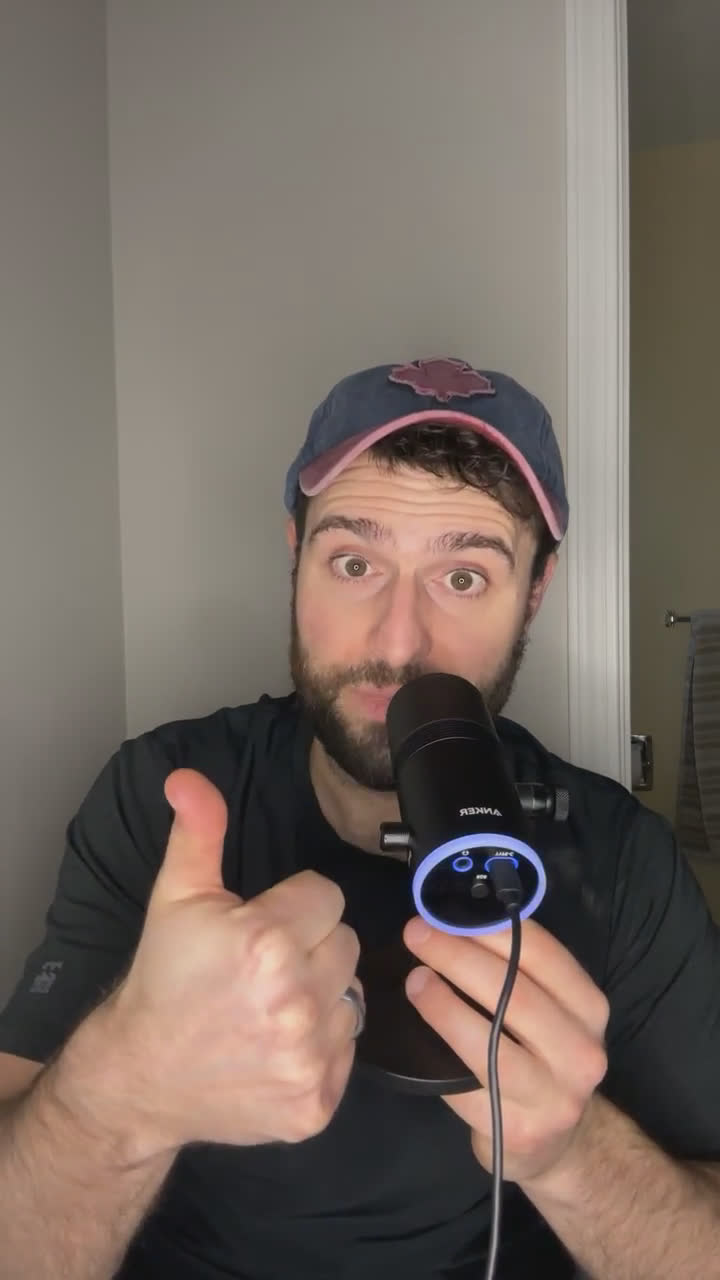
Alex discusses overcoming fear around financial choices, shares personal real-estate experience and investing mindset, and outlines time-horizon thinking for portfolios and wealth-building approaches.
Welcome to another Wealth Wisdom Wednesday. We are going to be talking about how to overcome your fears and still do the thing. Something that might be top of mind for some people is getting to the housing market.
Robert: Wealth Wisdom Wednesdays is about attracting abundance, building abundance. Robert: One way to do that is through real estate. Although he's not necessarily wealthy per se, he's in a better position than most. Over time we get, we get a little bit better.
This wealth Wisdom Wednesday is about taking the leap of faith and taking risks. Is bitcoin a good way to build your wealth? There's three, three main variables for wealth creation. The more time you have.
If your investment time horizon is under five years, you want to leave your money more liquid. When your time horizon shorter, just keep that money available for like emergency fund. Have all the rest of your portfolio based on your objective.
This is me personally. Even though I'm a conservative investor, I like to be more aggressive with my investments. My objective is wealth creation and retirement and retiring early. When you have clarity, we have clarity. And you keep things simple.
So thank you all for listening to this Wealth Wisdom Wednesday, Wednesday. I want to share with you that will help you overcome your fear of taking action towards your your financial goals. Stay tuned for this Sunday for Sunday Spark sessions.
All right. All right, ladies and gentlemen, welcome to another Wealth Wisdom Wednesday. It's your host, Alex. And we're going to be talking about, we are going to be talking about how to overcome your fears and still do the thing. Anyway, so talking about wealth was in Wednesdays. Something that might be top of mind for some people is getting to the housing market. Or maybe you're in the housing market and you want to make a change. You're wanting to. Anila, welcome to the Wealth Wisdom Wednesday.
Happy to have you, Happy to have you join us live. Junk, Junk food junkie, welcome. Jules, welcome. Thanks for tuning in, guys. Oh wow. Nice healing with Dr. Green. Welcome, welcome. Happy to have everyone here. So talking about Wealth Wisdom Wednesdays, attracting abundance, building abundance. Good evening, junk food junkie. Happy to have you here. A big thing that's on people's minds globally, all over the place. Good evening, Jills, welcome. Is, you know, getting better, like being financially better off, building their income, building your monthly cash flow, all these things, right?
Something, yeah, that's, that's been on my mind, right? It's because I'm trying to build my, my, my monthly cash flow, right? Because I'm not exactly making what I want to make and a lot of people are in that predicament where they want to make more, they want to make more money because they want to do more things, right? Like me and my wife love to travel. We want to travel more. So it all starts with baby steps. And, and that's why I'm so happy to be part of this Cadre sphere because it goes to show like opportunity.
Abundance is everywhere. We all have the opportunity to improve our situation no matter the situation we're in, even if it's a really difficult position to be in. But just for illustration, just to show you guys what's possible. So my background is actually in finance. Even though, like long term I want to be a content contributor, I, I want to become a full time content creator slash personal trainer. I'm taking my personal training course right now. Robert, happy to have you join the live. Thanks so much.
And basically, you know, these things take time and they take patience and perseverance and consistency and but over time we get, we get a little bit better, right? And figuring out like how to make more money and it's is very simple. Not easy, but it is very simple. And like a one way to do that, to do that is through real estate. And that's kind of how I did it. Although I'm not necessarily wealthy per se, I'm In a better position than most because I started off in banking back in 2016. 2016, I started banking, and I was in.
Then I've been. I was in and out of banking for five and a half years. But throughout that journey, I was able to buy my first condo. Buy my first home. So my condo was my first home. And then I did that at age 23. So right now I'm age 32. That was age 23. And I had a really good mentor books and my boss so. Well, two good mentors books, personal finance books, which I was. Was gobbling up like crazy because you can learn so much from other people's journeys to finding wealth, to finding their. Their.
Their dream husband or wife or partner, partner in crime. And these things can be done. These things have been done by others. And so it's like, that's why I love reading books, listening to podcasts, listening to audiobooks, because they give you success, leaves clues. Question, is bitcoin a good way to build your wealth? I'm gonna tell you, I'm a very conservative investor. This wealth Wisdom Wednesday is about taking the leap of faith and taking risks. But for bitcoin specifically, I'm not the person to ask.
I don't have much experience in that. And personally, I prefer not to invest in it because it's speculative. Speculative means it's. That there's like, It's. It's decentralized. That means it's not governed by any financial institutions. It's on, like, networks. Like, how do I explain it? Yeah, it's a very. It's. It's more complex. I like to invest in what I understand and what's been researched, and that's real estate, stocks, mutual funds. And there's other ways to. Even insurance, too. There is a.
I had an insurance policy that was. What was it called? So a whole life insurance policy. So there's term life, which is basically till whatever age 65, 75, and then there's whole life. And I did have a whole life policy, but it was very expensive, so I canceled it and I got. I switched and I went through my wife's actual work association because there's better rates and better coverage in some cases. But there's multiple ways to build your wealth. It's not just one size fits all. And the way that you build wealth will be different person to person as well, because there's three, three main variables for wealth creation.
Again, very simple. And we always. As an advisor, when I was in the bank, as a financial advisor, we would always Create our kind of cash flow. It was like a cash flow quadrant, kind of like I talked about my previous lives like Robert Kiyosaki and it was time. So what was it? Time risk. And there was one other one. They call it like tor time risk. Oh time objective and risk. So time, objective and risk. That will determine a lot of things of where you want to go with your personal financials. Right.
The more time you have. So that's our first variable. The more time that we have, the better we are able to weather financial storms which for example, kind of the economic climate in the world right now is very unpredictable. It's very uncertain. However, even when things are uncertain and emotions are riding high, that's where we need to bump up our logic and really think about things critically. Set. I know it's difficult, but setting emotions aside, as an advisor, that's what I was always teaching my clients.
Again, I'm a former financial advisor, I'm not a current financial advisor. This I'm just talking from experience because I did work in three different Canadian banks over five and a half years and I'm an insurance. That's been over two years. And then the personal finance books that I've read have been very helpful in creating that foundation for myself to be able to manage my money and build, you know, slow wealth over time. So those are three things you guys want to look at is time. What is your.
What is your time look like if any time a client told me oh, I was just curious to know. So I won't take that big risk. Yeah, no, no. Do your research. I do have a tiny, tiny bit of crypto. I use wealthsimple. Canadian Canadian investment platform is free. They do free bank accounts as well. Depending on where you are. S. it's probably. They probably have some sort of similar financial mobile app. There was Robinhood I heard of. I don't know any other ones. But you can have US accounts on the wealthsimple app as well.
For like I do stock trading is what I do. Not day trading but I do stock picks. I do research on the stock and then I invest in what's called a tax free savings account here. They probably have a similar financial product in the US I know there's. What are they called? 401ks so which is similar to a registered retirement savings plan in Canada. S. if you guys have a tax free savings account but a very good product. It might have a different name than Us, but I'm not sure. But yeah, definitely. Like, if you're gonna invest in crypto, do your research on it, but make sure it's like literally like 1% of your portfolio.
Have all the rest of your portfolio based on your time horizon, your objective. So I always tell clients if your time horizon's under five years, if you're like three years, two years, one year, four years even, that's when you want to leave your money more liquid. So in like savings accounts, GICs, what else? Savings accounts, GICs, short term investments. Right. Cash. So your money is accessible, very easily converted to cash if it's not in cash. Because if it's, it's just, you know, when there's lots, lots of up and downs in the market like there is right now, you're better off to leave that money accessible.
Even though inflation is eating and dipping into the value of your money, then the value of your dollars aren't stretching as far as they once did. Yeah. When your time horizon shorter, just keep that money available for like emergency fund, for example, if something were to happen, you're a homeowner or even you're a renter, something happens, right, you need to replace like or I know usually when your renter, your landlord replaces like dishwasher, fridge, that kind of thing. But again, any of those things that you just want to have a contingency fund, right?
Emergency fund, really good thing to have. If your time horizon is under five years. If your time horizon is over five years, that will change your objective, right? So your objective with a time horizon under five years would be, let's say you're for me and my wife who was saving for our wedding, our engagement party. So we had two huge financial obligations happen in the same, basically the same year. So it was like, yeah, September 2023 was our engagement party and then November 2023 was our wedding and we did a destination wedding.
So it was, it was a, it was very reasonable. Much more reasonable than having a wedding locally here, where we're from in Canada. It was like, oh my God, if we would have done it locally here, it would have been like 40,000 or. Yeah, double 20 to 40,000 Canadian, which is a lot. So. And we were able to do it for much, much better than that. So again, that's an example of your, one of your objective. Right? Under five years, it's going to affect what you can and can't do with your money or how you want to invest your money.
If your investment time horizon is under five years, really limits your options. But if it's over five, then you're okay. Then whatever happens in the markets, disregard the ups and downs in the markets. Sometime depending on your risk tolerance. This is me personally. Even though I'm a conservative investor, I like to be more aggressive with my investments. Let's say my registered retirement savings plan because I'm still young and I've always picked medium to high risk. That's just me personally.
Some people are low. My wife is a medium. She's like, she's like low to medium risk. And with that risk tolerance, it limits what these banks and financial firms allow you to invest in. Right? Because if your risk tolerance is too low, that's going to restrict what you can invest your money in, right? But when it's higher, if you're comfortable with taking on more risk, there's more potential for reward, for return. So that's what I'm after. And because I'm only age 32, the way I think about things is in little five year increments, right.
Because our mortgage, our mortgage is a five year term, right. So I like to think about things in five year increments. So my long, long time horizon is like, right, 10 years, 15 years, 20 years. When you have your money invested in something for 15 to 20 years, even when the market's all over the place and it might be in the short term, might have been going like crazy, right? My objective is wealth creation and retirement and retiring early. Let's say I want to retire at age 55. That's an objective, right?
I need to match up the risks that I'm willing, the risk tolerance that I'm willing to take on. My objective is retiring early. And then we said time horizon, objective. Yeah, sorry, time horizon objective and risk. Right. So we've talked about the three, the three pieces of wealth creation and utilizing those principles from those are. I would run that financial planning sheet. It was like a worksheet for all of my client meetings. And it was an absolute game changer. You can do it for yourself.
You can literally make yourself a chart however you want to divide it, right? T. So yeah, make yourself like a. Get yourself a piece of paper. Let you can do it landscape or vertical and then draw like, make yourself like a grid. That's the way we had it already set up. It was like bank branded worksheets. Oh, I know I'm already at 645, but this is. You guys are getting me going here and put in T for time O on the other side for objective and then bottom quadrant. I know there's only three. There's a fourth quadrant which you can do, you know, jot your notes and stuff down there.
But T for time, O for objective, and R for risk. And I guarantee you, if you set up your financial planning or budgeting that way, let's say the fourth quadrant's blank. You use that for budgeting. Use that for like a monthly cash flow. Right? And keep it simple. Money in, money coming in your account, money coming out of your account from expenses. And I used to do this with my clients. And when you do that, it helps you see the vision, see the financial picture of where you want to go. So that helps you.
When you have clarity, we have clarity. And you keep things simple. That's what helps you achieve any financial goal, regardless of how big or small it is. It helps you create a plan, simplify it, and then take action towards it because you've got that clarity of that what you're searching for. So thank you all for listening to this Wealth Wisdom Wednesday, Wednesday. And again, this was strategies and tools and tactics, techniques that I personally use and I want to share with you that will help you overcome your fear of taking action towards your your financial goals, your financial plans for the foreseeable future and accumulating wealth.
Thank you all for listening in and stay tuned for this Sunday for Sunday Spark sessions. Thank you. This is your host, Alex Muir, also the host of the Mindset podcast. If you wanted to check out my YouTube channel as well, I post mind, body and soul optimization hacks on my YouTube channel and it's Mindset Junk food junkie. Pleasure to have you on the the live and thanks for tuning in. Yeah, take care. Thank you for everyone that's tuning in and stay healthy, stay happy, Cadre community.
Reactions and comments are for members. Joining is free and takes a minute.