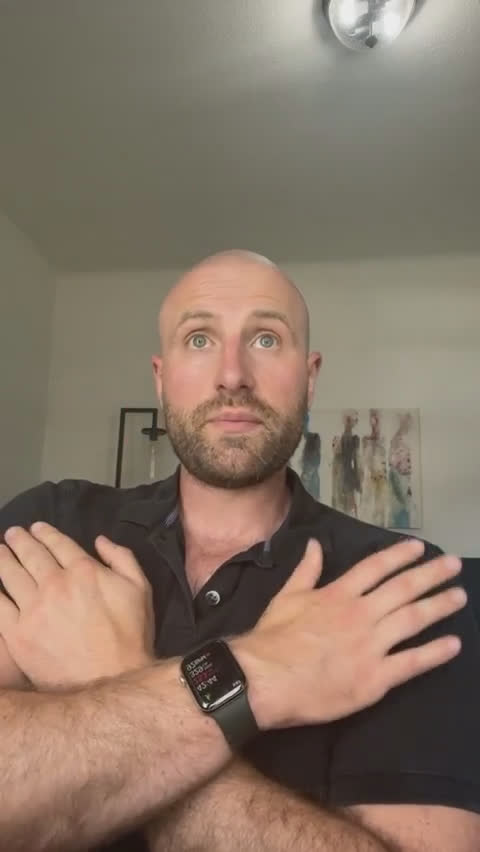
Today I thought I would do something a bit different in this Livestream. As trauma therapists, one of the most important things we do is to help clients "resource." When we say resource this means finding tools to help you calm your body and mind. This is especially important in trauma therapy as it will often trigger uncomfortable feelings from the past. Therefore, today I will be walking you through a calming exercise I do with trauma therapy clients. Come do it along with me and or save it as a resource for later. You don't wanna miss it.
Evan: A series I'm putting together, which is going to be about mindfulness. It will be some guided meditation exercises. A big part of trauma therapy is finding calm, finding what we call resourcing. Just find a comfortable space.
So usually then what I have people do is I want you to think of a place, a place that you associate with calm serenity. Then we're going to go through the senses. Notice the sounds, feelings, the emotions, the smells. And now encapsulate this feeling.
Think of something that's like a little bit stressful. Now, then go back, think of that word off. The more you do that, the more it becomes paired, the easier it is to get back to that place. I'm going to make a video of this later on, so keep an eye open for it.
What's up, Cadre peeps? This is Evan, your local addiction and mental health professional. Though I usually try to act professional anyways. Yeah. So today's live, there's a couple things I wanted to accomplish. Number one, I wanted to talk about a series I'm going to be putting together, which is going to be about mindfulness. So I have an intro video that's going to be out, and it's going to detail the series, but basically just going to be some guided meditation exercises. And from my purview, you know, again, I'm not a tibetan Buddhist or anything like that.
I'm no expert or master. However, a big part of what I do is trauma therapy. Right, and a big part of trauma therapy is finding calm, finding what we call resourcing. So something you could access to calm your mind and body. Because when we're doing trauma therapy, inherently, you're thinking about it, you're being triggered just by the. The fact of thinking about it, reliving it. Now, the point is to do it in a safe setting and desensitize you to those triggers in a safe place. But nonetheless, everybody's going to react differently.
And for many, it's going to be inherently difficult. Right now, it's one of those things that's an investment because it's like exercise. You feel a little bit of that pain. Now. However, on the other side, it decreases pain as it boosts how the rest of your day feels and how you feel in general as you get more in shape. Anyways, I digress a little bit, but the point is that we do calm, anxious. When you learn something like EMDR or any of the other trauma therapies in your training, you're gonna learn various different calming exercises for that purpose, for a resource, for clients that they could utilize that whenever they feel like they need to.
So I thought today it would be cool to give you a little bit of a taste of it for those of you watching. And we would just do a calmness exercise together. And this one will be from Emdr. It's not going to be exactly what we do, because with EMDR, we're doing bilateral stimulations with it, and you actually can at home. But for this one, we're just going to go through the basically guided imagery of it. And I guess I could give you the option to do, like, slow taps, kind of like a self hug on the shoulder as you.
I could cue you in at certain times to do that, do different taps. But anyway, maybe I'm just making it more complicated. But anyway, so I'm just going to walk you through this and this will be one that I will do on our series so you'll be able to more easily access that one. So basically what I have people do is just find a comfortable space. So I'd recommend not looking at the phone, not looking at anything that could be distracting, like me doing this, like I usually do, you know? So just find a spot.
And I usually say find. You're not kicking your garbage can. So finding a spot, that's kind of neutral, right? Like for me here, I'm just looking at a white wall. So there's really nothing that's going to be distracting for me except me getting over COVID. That may be distracting. So, you know, we're gonna look at the wall, look at whatever and just kind of let your eyes go to wherever they wanna go at some point too. You'll close your eyes, but for now just kind of let your eyes focus in on a spot.
Call it a soft gaze. And the soft gaze just basically means you're not like honing in, pinpointing, right. You're just kind of blankly looking, not looking at anything in particular. You're just kind of getting rid of that stimulation. So once you find that spot, just start taking some deep, slow, but also natural breaths. You're not trying to force anything but you're doing like three, four second inhales. And then just exhale naturally and just keep that pattern. Inhale, exhale naturally. Usually what I tell people is on the inhale notice it's a good feeling, right, because you're getting fresh oxygen.
And then as you exhale, feels good because you're kind of relaxing, right. It takes no energy to exhale. Takes some energy to inhale, but it feels good. And then exhale feels good because you're just releasing, letting go and just letting yourself sink a little bit deeper into your chair. Just kind of get into that cadence and noticing inward some of those, I'm already like more relaxed here. The key is not to fall asleep but just to get in that relaxed place. So even just doing that, I'm feeling pretty relaxed, right.
So usually then what I have people do is I want you to think of a place, a place that you associate with calm serenity, right? It could be like a vacation you went on a beach, it could be hike that you like to take and a beautiful outlook. It could be somewhere that's nostalgic, like, you know, your grandparents den or something or the cabin you used to go to with your family as a kid sitting on the dock, sitting on the lake. So it could be literally whatever you want. It could be a made up place.
But just think of somewhere that's calm that you associate with serenity. Maybe other good feelings, too. Happiness, contentment. So just take a second as you breathe, and maybe you already have a place. And think about that place. What you do now is now be a good time to close your eyes. And I want you to put yourself in that place. So actually put yourself there. Imagine that you're there. And then now we're going to go through the senses, right? So right now, when you're there, I want you to notice, what do you see?
And when I'm doing this with a client, I'll actually have them say it out loud. You don't have to, but just in your head, what do you see? For me, I'm at a scenic overlook of a beautiful lake in Minnesota here that overlooks the wilderness. It's a high point. I could see the trees. I could see the leaves changing color. I could see the sun glistening on the lake. So just do that for yourself and just notice, what do you see in this place? And just take note of it. And then we're going to move on to hearing sound.
What sounds do you notice for me? I could hear some birds in the distance. The wind blowing, rustling the leaves. But what do you hear next? What do you feel for me? I'm sitting on a rock, still comfy. I'm sitting on the rock. I could feel the wind blowing. A nice cool breeze in the fall. I can still feel the sun warming with the breeze. Next. Are there any smells? Right? You could smell that kind of. That smell of the leaves turning that fall. Smell some evergreens. But what can you smell? Maybe no need to do taste, but maybe you're at the beach sipping a margarita or something.
If there's any taste, it's just kind of associated with smell. But if there's something there, notice that, too. Maybe you're in the water, the ocean, you could taste the salt. And then the last one is, how do you feel? Not what you feel, but how do you feel in this moment inside your body when you're in this place? Is it calm? Is it serenity? Is it peace? Whatever. And just notice, like you did, the senses. Notice the emotions in that moment. Now take a couple breaths and just bring it all together.
And just be at this place. Notice the sounds, feelings, the emotions, the smells. What do you see? And just take a few breaths and just be in this place. And now encapsulating this feeling, the senses, the emotions, the body, feelings all together. I want you to think of a word, and it could be any word, but a singular word that really encapsulates how you feel in this place. So some people, peace, serenity, home, awe. I think that's the one I'm going to go with. I'm going to go with awe because when I'm in this place, I kind of get that sense of awe and how beautiful it is and how serene it is.
What I want you to do, again, all the sensory information and just continue to breathe and think of that word in your head. And as you do that, if you want to do the taps with me, you don't have to. As you breathe in, think aw. And do slow taps. Three, four. Each one is, each two is one. Five, six. I'm thinking of my word. Do about twelve of those. Keep breathing. And as you breathe in, notice as you breathe out your word. As you do that again, do some slow taps. Keep your arms crossed. If that feels good, just continue to be at that place.
And if you want to do the taps, every so often, every time you think of that word, go ahead and continue for three more breaths to be in this place. And when you're ready, you could come back here. Oh, man. I am relaxed. I really actually don't do that myself very often, even though I have people do that all the time. But it really is pretty much like most everyone I do that with feels really good afterward. Right. You could probably see why, putting yourself in that place. But one thing you do with that word, the word becomes like a key to come back there.
So that's what you can use. So for me, the word awe, let's say, you know, I'm taking that feeling, everything that goes with it, thoughts, feeling, just being in that place, and I'm pairing it with a word. And the more I pair that, the easier it is to go back, right. It becomes that key if I'm feeling amped up, right. And so it's just easier to get back to that place, to that feeling. So that's something that you could use. Like if you start to feel a little stressed and sometimes in the exercise they'll do that, they'll have you actually.
All right, think of something that's like a little bit stressful. That's going to happen later. Now, then go back, think of that word off. I don't like doing it that much. I don't want to like stress you out at all or like, have you test it and then all of a sudden it, like throw you off. But, but, yeah, try that. Try to use that. And then again, the more you do that, the more it becomes paired, the easier it is to get back to that place. And then, ladies and gentlemen, you have one resource at your disposal that you could use, one that I really like.
So go ahead, try that. And again, I'm going to make a video of this later on, so keep an eye open for it. And folks, as usual, it has been a pleasure and we will see you soon.
Reactions and comments are for members. Joining is free and takes a minute.