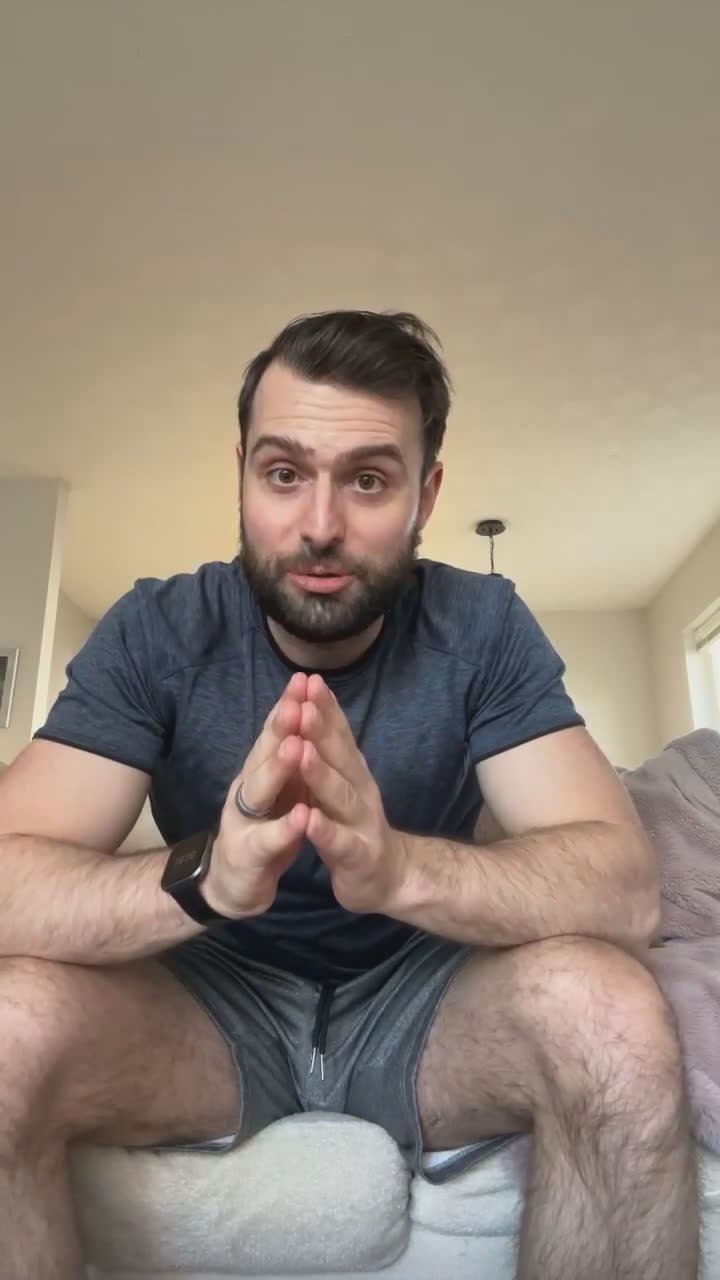
Luke explores how compounded daily efforts mirror compound interest, connecting time and money investments to career moves, side hustles and personal growth through seed-planting analogies and planning concepts for building a wealth mindset.
Luke Cadre: Wealth wisdom Wednesdays is about attracting abundance, building wealth, building your wealth mindset. Compounded efforts are like compound interest, similarly to how we invest our time and our money. It does apply to career as well.
All right. All right, Cadre, we are live. And I just finished the Himalayan amount of dishes, ate dinner and I know I'm a little bit late for this live, but just wanted to say this live super important because it is wealth wisdom Wednesdays and compounded efforts are like compound interest, similarly to how we invest our time, how we invest our money, what we invest our money in. So I want to talk about this because some of you may be in a career transition or maybe hey, Luke, welcome to the Live.
Hopefully you're doing well. Some of you may be in a down the road, maybe in a career pivot, maybe a role switch, maybe a career transition to another career. Myself, I'm kind of like, my goal is to become a full fledged personal trainer. Happy Wednesday, Luke. Absolutely super happy to have you on the Live because of like where, you know where, wherever you're at in your personal development journey. Right? This is, this again, this, this is about kind of helping you with your attracting abundance, building your wealth, building your wealth mindset for, for this Live today.
But it does apply to career as well. And I just wanted to point out that our compounded efforts also create compound and compound interest, just like our investments and what we invest our time and our money in, right? They're very correlated. So it just kind of, this idea just kind of came to me for this live. I do have a list of all my lives for all of all future lives, like for titles and stuff like that. But this one came to me, I was like, very fitting because the work that we put in today, into our careers, into our passions, into our side hustles, whatever it is they're working towards, it's going to help grow that, right?
There's going to be growth there. Like our investments. The more money that we can put away towards our investments, the more potential for return our investments have over time, right? Just like we're planting, they always use, I always like to use the analogy to my clients of like, you know, because again, financial planning and wealth accumulation is all about planning, forecasting, right? This is what could happen if you do this. And this is what can potentially get you from A to Z, right? Or between A to B to C to D to E to F, etc, right?
Whatever your goals are. So I love to use the analogy about when you're planting the seeds to a flower or like a tree, right? Let's say you want to like, for, for me and my wife, we just planted some spinach and some lettuce, right? And it starts from a seed. And similarly, our Compounded efforts that we put into sowing the seeds right in the fall or the winter correlates into what kind of yield we're potentially going to get in the spring and summer. Right. So although there might be some turbulence in there, there might be some wind, there might be some rain, there might be some thunder, there might be some hail, some snow, all those things happen in between when we sow our seeds in the.
Right. Because we might sow our seeds in the, the fall, in the, in the winter, and then reap our yields in the spring and summer. That's usually the way it goes, Right. So it's similar to our, how we invest our time and how we invest our money. And it just, I love that analogy about again, planting from a seed because you want to, you want to grow some veggies, right? Me and my wife want to grow some spinach. The same thing applies and can apply and does apply to your investments, your investment philosophy.
And then a couple lives ago I talked about how it's a very simple. Financial planning is very simple and the variables can be very simple. It's just sticking to it that could be the tough part. Right. And, and that's where I can, and that's where I can come in to kind of guide you guys on like with my previous financial background with that money mindset. Right. Cause that is at the end of the day what it is. It's compounded efforts. It's consistency over a long period of time. You can't have a short term mindset when it comes to finance because that's how you get burned.
When you think of things long term over like five years or over five years, your likelihood of doing extremely well is way higher than if you're think you're gonna short term mindset of like maybe I, oh, I want to do super, super well in like two years or one year, less than two years. And the likelihood of that happening's a lot less likely because we need enough time. We need to spread out the time horizon. Anytime a client comes to me, would come to me and they want xyz, I'd be okay, well, what's your time horizon?
Right. The longer the time horizon we have, the longer we have to build our financial habits. Create that compound, create those compounding periods, those compounding returns, compounded returns over time because we need more time. So what's your time horizon if it's under five years? Not going to put you in anything too high risk or growth oriented because in order for things to be more growth oriented you need more time. Okay, next thing, what's your object? So time now, what's your objective?
That's the next thing we look at. Okay, well, I want to save for retirement. Okay, well, okay, you're age 44 now. Well, let's just say hypothetically you want to retire at age 65. Right? Well, there you go. There's 21 years that you still have your age 44. Right. We have a long time horizon. Your objective is retirement. Right. Okay, we've got that out of the way. And then the last piece is risk. Time, objective and risk. These three variables are what we constantly need to manipulate in the financial planning world and the wealth accumulation world, but also in the personal growth and personal growth and personal development space, a lot of the same principles apply.
Not much changes there. So when it comes to risk, that's another thing too. If you're someone that is employed, right, like myself, like I'm employed. But my future goal, my long term time horizon goal is to be self employed and to work for myself, become a personal trainer. That's something I'm working towards on the side because I've always been passionate about it and I know I can help thousands of people, millions of people globally, worldwide. And I want to, and I want to also do the same thing with Cadre is utilize the Cadre sphere to influence and impact as many people as possible worldwide.
It's super important. It's my mission, helping you flex your mind, body and soul. So hopefully you guys all enjoy this live again, it's the impact that and the, the similarity between compound interest and compounded efforts, they go hand, they go hand in hand. You can't, you can't have compounded return, compounded returns, compound interest and wealth accumulation without compounded effort. The more effort we put in, the, the earliest possible time, the earliest we can do that, the more effort we put in initially and the more consistently we apply that effort, the more potential that we have for wealth accumulation and in building our wealth and building our abundance and attracting wealth to us.
Not only do I have to do the apply those principles of compounded effort, right, to earn that compounded interest, but we have to also have the wealth and abundance mindset, knowing that we're also attracting wealth to us through the habits that we create and the compounded efforts that we keep consistently and habitually acting upon through action. So hopefully you all enjoy this live. Thank you so much for tuning in and stay tuned for this Sunday spark session. Ciao.
Reactions and comments are for members. Joining is free and takes a minute.