Shannon reflects on living with cPTSD and caregiving while sharing how therapy and values work helped her move out of survival mode; she offers a values-focused exercise and examples from a tense business situation to guide decisions.
Cadre. Happy Friday from Minnesota. Shannon lives with anxiety, and she parent a child with autism. She talks about how she stopped living into survival mode. Rick Cram also joined the live stream.
Jenn Verelli: This week, I learned that it's really about going back to your values. She says as a people pleaser, historically, she can get sucked into feelings. She suggests a simple exercise to help you figure out what your values are.
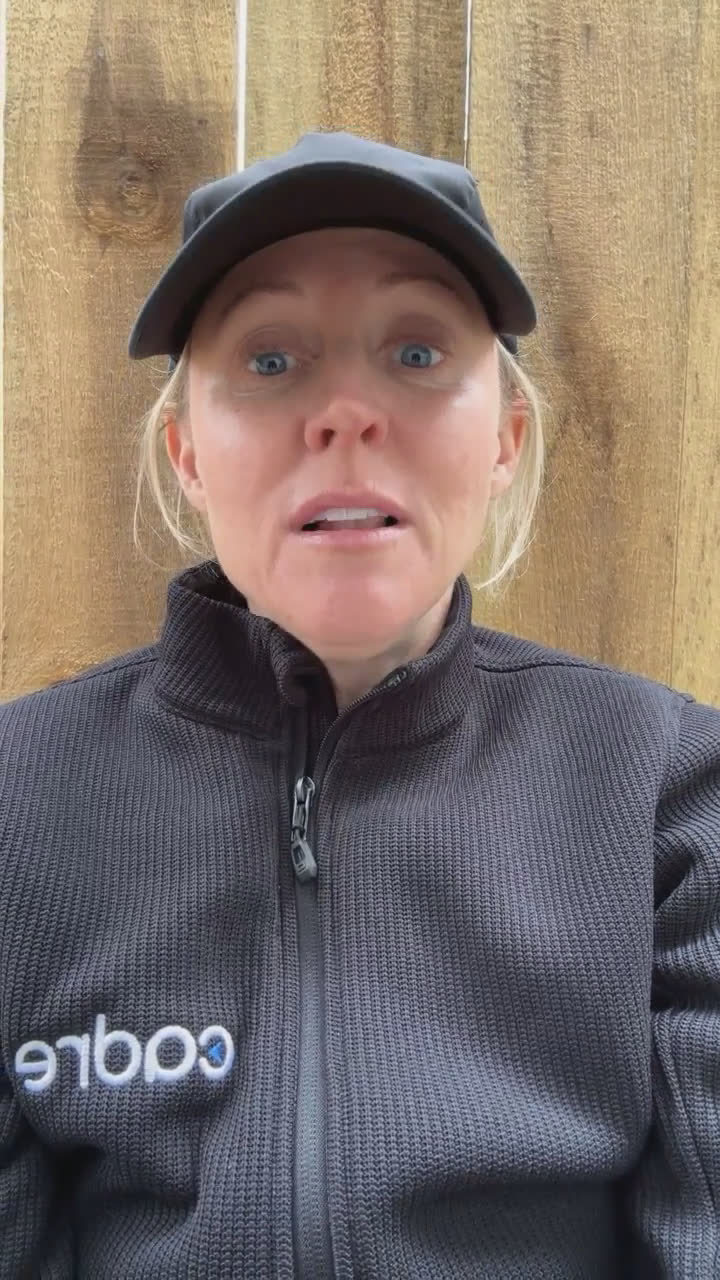
Cadre. Happy Friday from Minnesota. St. Paul, Minnesota. I think it's May 2, May 3. It's nice to see you. I'm all pimped out here in my Cadre gear, so welcome to my live stream. For those of you who do not know me, my name is Shannon. I'm part of the Cadre team. And I am not a mental health clinician. I am not a mental provider. I a human who lives with something called cptsd. I live with anxiety, and I parent a child with autism. So I'm a caregiver. So I come to you live every week on Fridays, and I talk about things that I learned and how I stopped living into survival mode.
So what does that mean? That means I have been in therapy for eight years. I continue to go to therapy, and I learned a lot of things during that time of how to do things and how to use skills to stop living in survival mode and start making decisions from the place of what I want to be and how I want to be showing up in the world. So I just share, like, I don't know, a little lesson each week from all of that work that I've done. Happy Friday. Hi, Jenviralle. It's nice to see you. Happy happy Friday.
Rick Cram. I saw you joined as well. So good to see you, too. All right, so this week, I want to share something that I learned, a lesson that I learned that it's really about going back to your values. So one of the things before I went through therapy and as someone with anxiety and someone who lived through a bunch of stuff and has trauma, is that I could. I would get swept away by other people's opinions and other people's feelings. And when I needed to make a decision, I would struggle because I was a people pleaser.
So this week, in my business world, my business, professional life, there was some stuff going on. There were some big deals that were happening, and I was super excited, and that's amazing, right? And in that process, there were a lot of feelings, right? So there are business partnerships at play, and there's feelings that come with business partnerships because business partnerships are made of people. And so there's a lot of stuff on the table, right? And I was sort of in the middle of all of it.
And there's moments where, you know, you can get swept away by people's feelings, and there's a lot of intentions and there's a lot of. What's the word? Everyone has a different sort of like this. The skin in the game is different, right? Everyone is in it for a different reason. And as a people pleaser, historically, I feel a lot and I can get sucked into those feelings. So this week, as that was happening, navigating this business situation with a lot of implications, with a lot of folks who had stake in the game and who had feelings, I had to stop in the middle of it, right?
Because it kind of like went up and up and up. And I think for all of you out there today, I'm guessing you can relate, whether it's professionally, whether it is personally, but the idea that in the middle of something relationally and this person has an opinion and another person has an opinion, and maybe it's a familial relationship, right? Maybe it is a friend, whatever that is. But you're in the middle of a lot of opinions and a lot of feelings, and maybe you're a person that can take on all of the perspectives of those around you, right?
So that's a blessing and a curse. I'm somebody that can do that. I have a ton of feelings. And so I can easily say, well, I see it from your perspective. And then I can say, I also see it from your perspective. So when I get in that messy middle, and it used to be a place that would take me down, what I've learned in therapy and how I stopped living in that place of survival and fight or flight, which is, frankly, honestly where I would go is I go back to my values. And I know that sounds so simple and like cheesy and therapy.
Ish. But it's true. And so how do I do it? Number one, you have to know what your values are. So that's one thing to say to you today. I know that also sounds really simple and basic, but just I think the question is, do you know what your values are? And by that I mean deep down inside. And for me, I kind of went back to like, when I go through this exercise when of the ways that I feel most like myself, I've been a runner since I was a kid. And so when I go out on a run, I feel like I'm 16 again.
And I just. That's me. And so I think about what I know to be true. And I'm that version of me. And those are my values. So for me, some of my values are being authentic. Like, I. I hate fake conversations. I always want to go for the truth. I. Another one of my values is freedom. That matters to me. I want people to have autonomy, I want to have autonomy. Those kinds of things. Jenn Verelli says you can relate. You're going through this with two business partnerships, Totally, right? Like, you're stuck in all this stuff.
So as you're figuring out what your values are and then applying it to that situation, right? So step one is like, hey, what are my values? And spend some time on that one exercise for that. If you don't know, you honestly, you can Google it. It's a list of a bunch of different values, and you just do an exercise of cut it down to 10, cut it down to three, right? And then maybe think about that, sit with it, and it might evolve over time. Right. For me, though, this week, the value, and it's probably my biggest value in general, is authenticity.
So I just am always going to speak the truth, and I'm going to do it with love, but I'm going to do it. And so today, this week, with this partnership, as I was in the middle of all of it, I had to go back to the beginning of all of it and say out loud to a colleague of mine, all right, how did this start? It started from a place of wanting to make a connection. It started from a place of meeting an objective. And then this was the next step. And then this was the next step. And so I was able to walk through that process in my value of authenticity to say, okay, step one was this.
It came from a good place. Step two is this. It came from a good place, right? And just sort of following that pattern through. So when I got to the point yesterday afternoon where I was swirling around with all of the, oh, my gosh, what do I do next? I stopped and I said, all right, I'm authentic, right? I'm authentic. What's actually happening here? What's actually happening here is my intention was X, Their intention was X, and their intention was X. And it all came from the right place. And so nobody's wrong, and this is the situation.
And so by following that exercise and again, following my value in that situation, I was able to get to a place where I did not go into fight or flight. And that's the survival mode part, right?