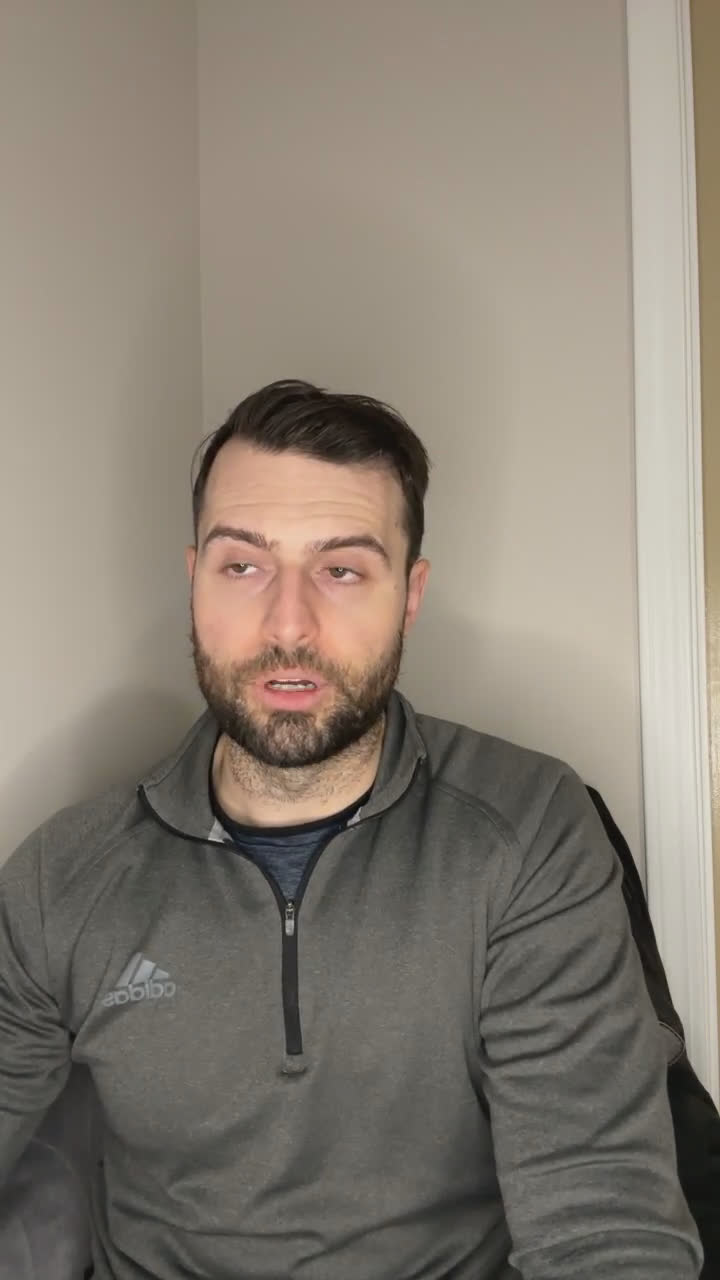
The 80/20 Rule: How to Work Smarter, Not Harder" 🎯⏳
Live for Wealth Wisdom Wednesdays. Today is all about the 8020 principle, working smarter, not harder. More volume doesn't equate to more production or better quality or better value.
The 8020 principle applies to building wealth, building your abundance mindset. Investing a small amount over a super long period of time and. high frequency, low volume. This applies to exercise, finance, this applies to pretty much every area of life.
Building an exercise routine similar to also an investment routine, right? It all stems from different variables, and working smarter, not harder. When your vision's clear, when you know exactly what you're supposed to be doing.
When it comes to building your wealth, start small. How much time do you have on your side? What's your goals? And then risk. If it's over five years is your time horizon, then you have a much better opportunity to build your wealth.
And we're live Cadre. I know it's a little bit later than anticipated, but I just had to do a few things earlier, so that's why I couldn't make it for my 6:30pm live for wealth Wisdom Wednesdays. But again, we're Live for Wealth Wisdom Wednesdays, and today is all about the 8020 principle, working smarter, not harder. So with the 8020 principle, right, in order to get to the point where we figure out how to work smarter, not harder, before that, we do first have to learn how to work, how to work really hard.
And then once we figure that out, then we have to start. Once we figure out that we put in the volume of what we're working towards. Speak Wonder. Welcome to the Live. Happy to have you here. Then we can refine our strategy. And that's when we have to really look at tools, strategies, techniques to work smarter, because then volume reaches kind of its ceiling, and then more volume doesn't equate to more production or better quality or better value. So that's why I want to talk about the 8020 principle and how it applies to you and your life.
So welcome. Speakwander. Thanks for tuning in. So what kind of example can I give her for this scenario? So when it comes to the mind and when it comes to the body, right? Yes. So, for example, let's, let's talk about exercise, right? So how. And how it applies to kind of like your building wealth, building your abundance mindset. So when I talked, when I was working at the bank, and I still talk to clients in insurance the same way. So high frequency, low volume. So when I say high frequency, low volume, this applies to exercise, this applies to finance, this applies to pretty much every area of life.
When I say low, when I say high frequency, low volume, it means to get that compounding effect of our efforts and to get the compounding effect of interest in our bank account, to grow our investments, we need to do something often enough and long enough that it will compound over a really long time. It's very, very powerful. So investing a small amount over a super long period of time and. Yeah, high frequency, low volume. Yeah. And it works, it works across many facets of life. Right? Exercise programs, nutrition programs, wealth building.
Like, you know, you're trying to save, you're trying to save for a house, you're trying to save for a vacation. Right. Use that same methodology when you can do more, do more. But over the long haul, you're gonna, you're gonna have a way bigger nest egg if you did Small amounts over a long, long period of time of let's say $25 a month is your investment goal. And then, and then in order to hit that goal, if you're age 25 now and you know it says in the next 25 to 30 years, if you do $25 a month and you're invested in a moderate to high risk investment, you have the potential to make 6 to 7% approximate, or let's say 6 to 8% approximate annual rate of return, right?
This is just, this is just hypothetical example, right? For an investment, we're using a long time horizon. Time is one variable. We're investing a small amount, right? So our objective is we want to retire early. So that's objective and, and then r the last part, risk tolerance, time objective and risk tolerance. So that's kind of like how we can still utilize those variables and apply that to working smarter, not harder, right? That is how you work smarter, not harder, right? Because otherwise going with someone that's older, let's say they're in their 50s or 60s and they have no investments at all, right?
Right. They're starting from scratch. The difference is someone that's younger, it's got a long, long, long time horizon, they can invest smaller amounts over a longer period of time. But someone that's older, conversely they can, they, they have to do way more upfront investment. So it's like when you're older, your upfront investment is way higher and your time horizon is way lower. But when you're younger, it flips. You can do you have a long time horizon and then your, your investment up front is a lot smaller and it's a lot more affordable because you have time on your side.
So thinking about high frequency, low volume now that's one example, right? Because again, this is wealth wisdom Wednesdays, right? Training your mind to see the abundant opportunities around you to create financial opportunities, looking for financial opportunities. It all comes down to our mindset, right? And learning and learning the right tools, tactics, techniques, reading the right books, it puts us in the best position to be able to build our wealth, build our influence, etc. Danila B. Welcome.
Welcome to the Live. Thanks for tuning in. So using that principle of high frequency, low volume that can be applied to anything. So. Right. So we gave the, the investment example of like investing a small amount over a long period of time, right? That's for a young person versus an older person that's just starting off, they've got no investment at all, no nest egg, they're in their 50s or 60s, right. They're going to have a way higher upfront investment of starting to invest or save and it's gonna, their time horizon is gonna be way shorter, right.
So it flips so theirs becomes high volume, low frequency because they just don't have time on their side. Right. So another way that we could put that as right, if you're starting a new exercise program and you're younger, right. We wanna, if you wanna see the best bang for your buck, three days a week of weight training, two days a week of cardio. So it's a nice balance, right? Let's just say you're a brand new like weightlifter, you want to maximize the gains as much as possible. And when you're a newer lifter, you're, you're going to see gains a lot quicker than someone else that's been lifting for a while.
Because eventually those gains, when you're intermediate to an advanced lifter, they plateau. Right. Which is nothing wrong with that. It's just part of the game. It's just part of same thing when you're in business or you'll, you'll reach us. Like everyone has their own ceiling and once you reach that ceiling, then it's learning how to get the rest away there. But building an exercise routine similar to also an investment routine, right? It all stems from different variables, right? And working smarter, not harder.
For myself, I used to train six to seven days a week and I was able to sustain that because of all the sports that I was playing, it was required, right. I was, I was training for a specific purpose, for a specific goal, day in and day out. And I knew exactly what I was training for. So when your vision's clear, when you know exactly what you're supposed to be doing, when you have the, the, when you have the vision, when you know what your goals are and when you, and when you know what you have to do daily, then it makes the vision and the reality that you're working towards much, much more easier to obtain.
So hopefully you found this helpful. Again, this is wealth wisdom Wednesdays and we talked about the 8020 principle, working smarter, not harder, and some other strategies and ways you can do that. When it comes to building your wealth, start small. If you're someone that's just starting your investment journey regardless of your age, you have to think about those three variables that I mentioned. Time. How much time do you have on your side? Or how much time do you have to invest? Objective. What's your goals?
What's your financial goal? What do you have coming up. And then risk. Risk is those three variables when you're always going to be thinking about, you have to be thinking about those three things every single time you're about to make an investment decision. Right? Anything under five years, that's short term, that can't, you're, you're going to be disappointed if you're like, oh, I want to make 30% in under five years. Right. Unlikely. Yeah, it can happen, but it's very, very unlikely because most of the time people that see those kind of returns, they've been in the game for five years, they've been investing for five years, they've been working on a business for five years.
Right? You don't see those kind of returns when it's under five years because there's a lot more up and down turbulence changes all within five years. So if it's, if your time horizon is less than five years. Sorry, yeah, yeah, less than five years. Then you're better off to just save, build an emergency fund, focus on just interest bearing investments with no risk. But if it's over five years is your time horizon, then you have a much better opportunity to build your wealth and to have be in the best position to get the most interest.
Right? Mutual funds, stocks, real estate, much, much better position. Again, not a financial advisor. I'm a former financial advisor of three different banks and I'm a current insurance broker. As my occupation right now, these are just things that I've learned from my background, my education and my experience. So hopefully I enjoyed and, and thank you for tuning in for this wealth wisdom. Wednesday's live. And again, my name is Alex. I'm the F. I'm the founder of Mindset at mind-sep YouTube channel and the Mindset podcast helping you flex your mind, body and soul.
Have a great evening everyone.
Reactions and comments are for members. Joining is free and takes a minute.