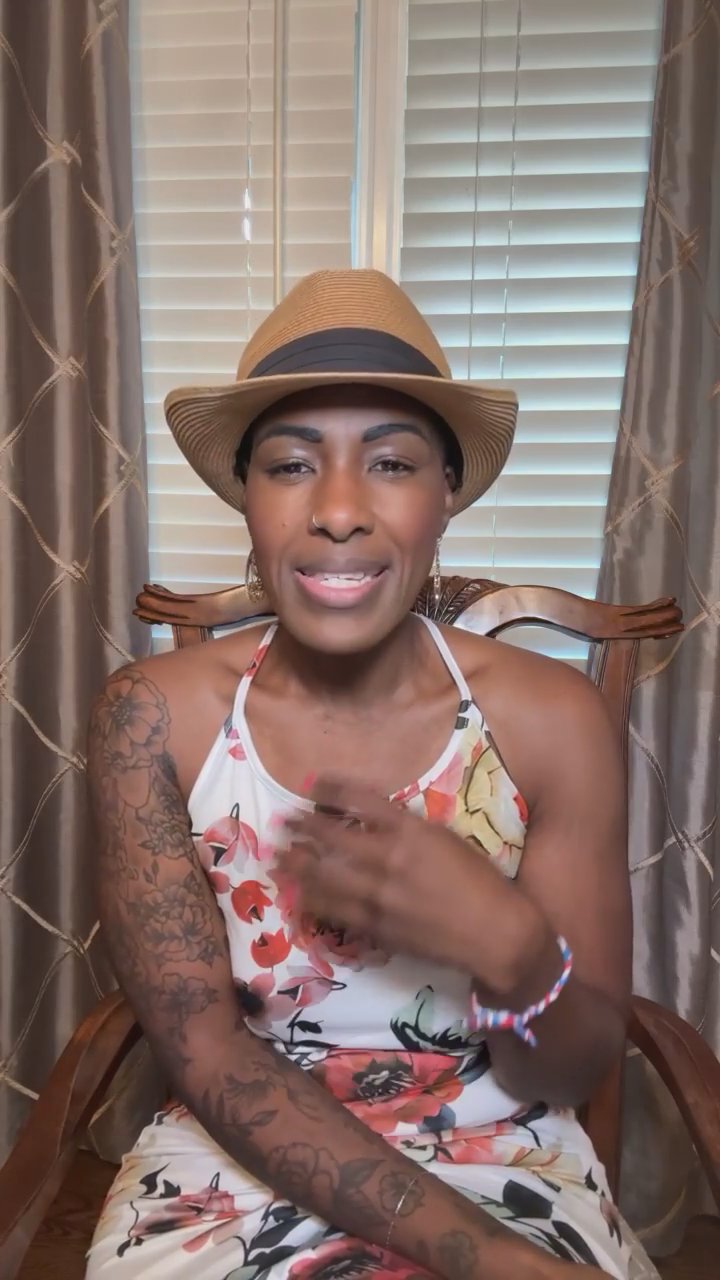
Dr. Charisse Johnson explores choosing peace over people-pleasing by defining balance, naming why boundaries matter, and offering practical anchors like the three-breath rule and clarifying what protecting your peace looks like in relationships.
Dr. Charisse Johnson is a licensed clinical mental health therapist, mindfulness practitioner, and author. We'll talk about what does it mean to be well and to live a life that is integrated, that is in harmony. One to ten. One being the lowest, ten being the highest.
We've been talking about balance, and today I want to focus on when balance offends. How do you choose peace over people pleasing? Choosing balance can create tension, especially when your boundaries challenge the expectations other people have. To protect your peace without losing your compassion.
How do you maintain balance when it offends? First, anchor yourself in your why. What am I protecting by saying no? Often it's things like your peace, your time, your healing, and your energy. Some relationships are worth communicating a little bit more.
When would balance help? Balance will help anytime you feel it's needed. Ask yourself why and anchor yourself in it. Stop apologizing for your growth. Practice the three breath move three breath rule in triggering moments.
Where in your life have you shrunk your boundaries to stay light and what has it cost you? When you're in survival mode, that's going to be the priority. Take one step at a time to protect your peace, even if it shakes someone else's.
Conscious fear. What is up? It is another. I was going to say beautiful. It may not be beautiful for you, but it's another morning. It's another day of life. It's another opportunity to breathe, to be present, to really check in with yourself. And I'm glad that this is the space you chose to do it in. This is your first time in this space. Come in, make yourself comfortable. I'm Dr. Charisse Johnson, a licensed clinical mental health therapist, mindfulness practitioner, and author. And I come into this space at least twice a week, maybe more sometimes, depending upon what I have to say, so that we can really lock in and talk about what does it mean to be well and to live a life that is integrated, that is in harmony, which is a perfect segue for what we're going to continue our focus on in terms of balance.
It's good to see some familiar faces and some new faces. Hello, Southern New Jersey. Let me know where you've been. A ten. All right, Maria, I need to know what made it a 10. If you're willing to share, because that's amazing. So we come into this phase, we always just drop a little. Rep your city, rep your state. Hello, Dr. Teresa. And then what's your week been like so far? One to ten. One being the lowest, ten being the highest. Hello, Andy Hatz. I'm always gonna call you by the name on the screen unless I know your name, otherwise.
Oh, what's up, Bronx? Hello, New York. I always get excited about that funny story. For those of you who are wondering. Hello, Chattanooga. Actually went to school in Cleveland, Tennessee, which isn't too far from there. Good morning, Minnesota. Good morning, Maryland. Okay, so I look like I'm on holiday. I am not. I was about to tell the funny story about that. So, you know, if you've seen me, I've had braids in my hair for a very long time, and I took them out last night. And this is the little in between stage.
And I still need a few tools before I can not wear hats. And it's too early. So the hat is what you get today. Hello, Mount Pleasant, South Carolina. But after that, you won't see it. So not on holiday, just a regular work day. We've been talking about balance, and today I want to focus on when balance offends. So how do you choose peace over people pleasing? And even if you don't consider yourself a people pleaser, there are absolutely moments, there are absolutely times and situations where we may struggle to maintain balance.
Hello, Statesboro. Because it's difficult or because the people around us are opposed to the kind of balance that we want. So sometimes choosing balance will upset the imbalance others have come to expect from you. Hello, Lake Erie, Northwest and Pennsylvania. And that's not your burden to carry, right? I almost want you to put your hand on your heart and go, it is not my burden to carry when my balance creates imbalance for someone else. And that is real. I see the hearts because we've been there.
It doesn't mean that what you're doing and the things and the boundaries that you're putting in place are wrong. That's not what it means. In our last session, we kind of redefined balance. We said, it's not a perfect routine, but it's a living, it's a breathing practice of honoring your values, your capacity, your time, your energy. Well, thank you. Speak, wonder. But let's be honest, right? Choosing balance can create tension, especially when your boundaries challenge the expectations other people have.
But when it offends other people, it's still your responsibility, right? To protect your peace without losing your compassion. So I also want to reiterate you putting in new boundaries that you need for your life based on this season, this context of your life, your capacity, your values, your energy, doesn't mean that you don't care about someone else. Tell me if anyone has ever said this to you. I'm a roll with the sassy. Have you ever tried to create balance for your life? You pulled back off of something you said, no, not now.
And someone tried to make you feel like you were being selfish. Selfish. And you did not care about them. You can either give me some hearts or go say, been there in the chat. Yeah, I need to start bringing back a little non alcoholic beverage to drink. Because that happens constantly when you are trying to protect your peace and you're putting something in place. If someone says, you don't care about me, here's two things to keep in mind. One, that's their perception. So it's okay for them to communicate their perception.
It feels like you don't care. That's. That's all right. But two, it doesn't actually mean you don't care. It just means they're uncomfortable with this change. They don't understand it, they don't like it. Right. That's not always a bad situation. But I feel like we know, we know when someone is saying, man, I really feel like you don't care about me or our time together doesn't matter as much. But you also know the moments when someone is being Manipulative. And it might be a boss at work or a co worker that says, well, you used to do this for me.
How come you don't do it anymore? All right, here's what's really happening. Through some of those exchanges, people get used to the version of you that neglected yourself for them. Oh, I need to sip something magical right there. When you shift, it disrupts their comfort, but not your worth. The challenge is that our brain has social wiring. For a moment, I was like, oh, let me get into the neuroscience of that. I'm not going to do all of it. But I will say this. We have a part of the brain called our interior cingulate cortex.
You've heard me talk about that a little bit. So the brain does pick up disapproval as a threat. So it makes it feel emotionally risky to hold a value. And then we respond in all these different ways. Sometimes we feel like we have to get tough in order to hold that value. Sometimes we might distance ourselves in order to hold that boundary or that value. But here's the truth. You can be caring without being compliant. And I'm going to talk about that a little bit more today on the IG broadcast channel, free little channel.
You drop in and just hear me talk about random things. You can be caring without being compliant. Compliancy is not necessary to mean that you care. So here's some tangible tips I always want to give you. How do you maintain balance when it offends? First, anchor yourself in your why. Right. We talk about balance being this practice, this guided rhythm and flow where you honor what's most important to you. So rooted balance, or balance can't be rooted in shaky opinions. Do you know why you're doing what you're doing?
And if you vacillate, that sets you up, because that is absolutely when people are like, but you were doing this last week. Or when I push you hard enough. And some people know that when I push you hard enough, you break down, you change. So balance that's rooted in values that can't be shaken by opinions is going to be the most significant. So I want you to ask yourself this question in whatever area it fits. What am I protecting by saying no? I love the way that's framed. What am I protecting?
Are you protecting your time, your energy, your emotions, your hurt, your grief, your overwhelm? What am I protecting by saying no? And often it's things like your peace, your time, your healing, and your energy. Yeah. There are going to be moments looking at a comment here in the clip where we ask for space and people put up walls. That's a natural reaction. People don't know how to respond to the request for space. I can even let me out myself. I can be that person. Not the one that puts up walls sometimes, but I can be the person that goes, I need space.
What I've learned is that there's some people that I can say that to and they're like, all right, cool, we'll catch up soon. And they trust it. There are other people that are so connected with me that if I ask them for space, it rattles them because they don't know what space means. So then we put up those walls. The other person or we ourselves, out of a self protective layer. Well, fine. Well, if they want space for me, then that's what they'll get. That's really rooted in uncertainty and insecurity.
So something that you might consider if you know that you need space for someone. And maybe it's not because of who they are. Could be. Maybe it's. I'm going through a lot right now, so I just need to pull back. It is not personal. I have some things that I need to regroup and reset around. And I don't want you to be impacted by this version of me, but please trust me, we will find our way back to each other. So it's giving them some level of reassurance that they're not the target of that space.
You know why you need the space. Now, don't get me wrong, there's a part of me that is a full proponent of you can ask for what you need without explanation. However, I want you to consider the nature of that relationship. Some relationships are worth communicating a little bit more because you want to make sure that they're not hurt over it. All right? So when it comes to balance, of working on multiple projects, being overwhelmed, when would balance help? Balance will help anytime you feel it's needed.
There's definitely not a right or wrong time for that. And I love that you all are asking questions and bringing in yourself because that's what I want to be here for the moment. You know, that you're waking up and you feel anxious, overwhelmed. Too much is on your plate. That's a very small, subtle sign that there's some level of imbalance in place or there's a level of imbalance that you're anticipating. I'll use myself as an example because I don't use other people without their permission. I woke up early this morning feeling anxious.
I don't typically Wake up with anxiety. Took a moment and was like, why do I feel this way? And then I realized today's too full. Monday and Tuesday were already extremely full, both with my time, my energy and my emotions. So I'm feeling it this morning. The first thing that I then did is I sat down and I looked at my day and went, where can I say no? Where can I move something off of my plate so that it feels more balanced? And once I made that decision and communicated that decision, even though I was like, oh, you know, I want to try to do what people need from me, I felt a sense of relief.
So there's never a wrong time to incorporate balance. Ask yourself why and anchor yourself in it. That's the first tangible tip. 2. Stop apologizing for your growth. I understand that this may be uncomfortable for you. I'm still choosing what's right for me. You don't need to convince other people or defend. Let your no be complete. You get to decide how much you will say how much you will give the people in your life based on how much they mean to you, the nature of the situation. There are some people in some situations where you feel like I've said things over and over.
I'm done explaining now. I just need space. And it's for them to figure out and to recall and replay in their mind, well, how did we get here? Sometimes they'll know, sometimes they won't. That's pretty complicated. And you know, I might go into that a little bit more in detail next week. And then the last thing that I would say is practice the three breath move three breath rule in triggering moments. First breath notice your body's reaction. Tense, tight, anxious, nauseous. Second one remind yourself this is not rejection, this is redirection.
Third breath choose a grounded response, not a guilt based reflex. I am okay and what I'm asking for is okay, right? Whatever you want to say. Putting in place what I need does not mean I do not care. A grounded response is something that you can say to yourself that's going to encourage you to continue in the path that you're in. So tangible tips Anchor yourself in your why. Understand I'm saying no because I need to say yes later. I'm saying no because if I continue to stay engaged with this person to the degree that they want, it hurts me.
I'm abandoning myself. That is not okay. 2. Stop apologizing for your growth, especially to people who are not a part of your growth. That might be a barrier. And three practice the three breath Rule. First breath, notice your body's reaction. Second breath, remind yourself this is not rejection. This is redirection. This is what I'm doing. This is why it's important. In third breath, choose your grounded response. 4. I'm going to say one more. Reframe their discomfort. I love this one. As data, not direction.
You're not responsible for someone else's emotional process, even if they tell you that you are. Their discomfort is data about their dependency, not a signal you've done something wrong. Right. You feel like wearing a sandwich board, walking to the world with these phrases. Yeah, speak wonder. That might be a good idea. I'm listening to all of these that I put together and I'm like, that's a whole thing of itself. That's a whole thing itself. That's a whole thing in itself. Here's the thing. Sit with this reflection.
You can reflect in it. Here. Reflect in it on your own time. Where in your life have you shrunk your boundaries to stay light and what has it cost you? You can think about that in the moment, you can think about that in the past, you can think about that in the future. Tell me a little bit more of what you mean. How about survival mode? What do you mean? I'll wait and give you a moment to pop that in before I'll wrap up. I'm going to say that reflection again. Where in your life have you shrunk your boundaries to stay light and what has it cost you?
Right, because boundaries and balance is not about being cold. It's about choosing clarity over chaos. You're not selfish for protecting your well being. You're not too much or too distant. If you're asking for space, you're becoming someone who can give and breathe. That's really radical. You can continue to give and still breathe. So I want to start a business. It doesn't have the income. I want the business to government contracting and housing stabilization over services. Maybe message me or go into the community chat and ask me that.
I hear about the business, I hear about survival mode, but I'm trying. Okay, I got you now. I feel like I'm doing too many things, not moving forward with starting a business because I. Oh, gotcha. Thank you for the clarification. So I'll say this, of course, anybody that needs to hop off, you're more than welcome to do so. But I'm going to answer this because I think it's very valuable and it takes a lot of courage to put these things in here. So there are definitely seasons in Our life where we're going to feel like we're trying to do too many things, we're trying to launch something and we're in survival mode.
When you're in survival mode, that's going to be the priority for your brain, for your body, for your actions and for your emotions. You will not be as effective. When you're in survival mode. I am not giving you advice. That is not what we do. But I would encourage you to ask yourself, is this the right time for me to launch this business? If the answer is yes, what do I need to prioritize and what do I need to deprioritize so that I feel like I'm moving forward? And that can be applied to all of us in any situation.
Is this the right time to dot, dot, dot, you fill that in for you. If the answer is yes, this is the right time. I need to do it now for multiple reasons. What do I need to prioritize? What has to be deprioritized so that I feel like I'm making progress and I'm moving forward in this area? Because it is not possible to give everything 100% every day. You have one set of 100% every day. I was just talking about this with an organization on Monday. You have one set of 100% every day. Within that 100%, you have to decide what percentage you give to what as long as you're giving your all that day.
And then you have to work on moving through survival mode. Maybe I'll make that a focus next week. What does it look like to find some level of balance when you feel like you're in survival mode? All right, last thing I want to say, I want you to walk away knowing this. People who benefit from your imbalance may never cheer for your boundaries. But peace doesn't need applause, it needs practice. So take one step at a time to protect your peace, even if it shakes someone else's. All right, have a phenomenal day.
I know I kept you guys over a little bit. I try to keep it under 20 minutes and I did that about 19 and a half. I hope you have a phenomenal, phenomenal right week and I will see you all on Sunday.
Reactions and comments are for members. Joining is free and takes a minute.