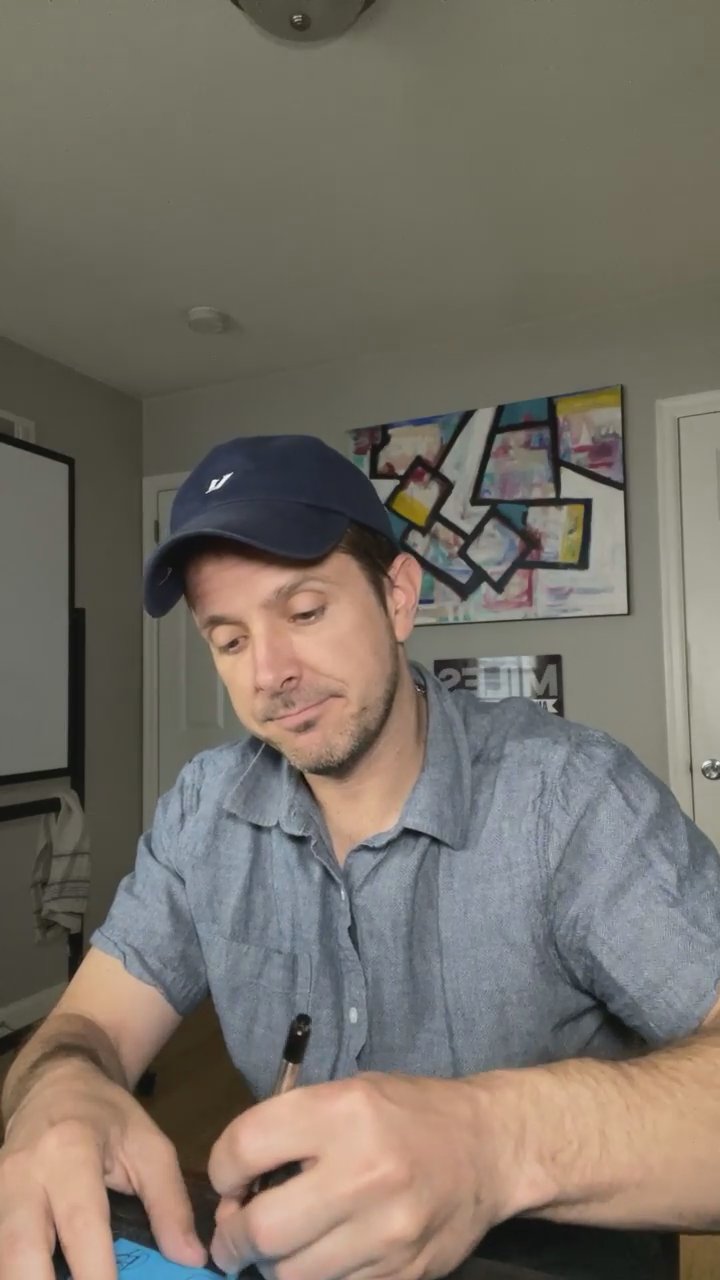
Host explores enoughness as a mindset and practical calibration, turning existing resources up or down. The talk highlights balance, small consistent habits and their compound benefits.
Good morning, Cadre. How are we doing today? Jules, Nice to see you, my friend. Luke. Chris Portman. Rachel. Anybody ever listen to bluegrass? What a beautiful atmosphere to go ahead and have conversations in.
Enoughness is a mindset. It's kind of a practice that we can all engage in. As we do little things often, all of a sudden we start seeing the benefits of those little things in compound. All month long, here in the Cadre sphere, we're talking about the balance.
About a third of humans have experienced either food, body or fitness shaming. Nine out of 10 people say they live with the impacts of that shame for their whole lives. Rather than responding to the shame, but speak to them.
Good morning. Good morning, Cadre. How are we doing today? Jules, Nice to see you, my friend. Luke. Good morning, my friend. Update. Chris Portman. Nice to see y' all this morning. Rachel. Hey. Cause I'm home. That was a little wee. Banjo 3. Anybody ever listen to bluegrass? I play mandolin, so I've always been kind of in the bluegrass space, but there's something about summer or, like, rainy or just, like, good nature, times of life, where bluegrass feels like the music to listen to. But how are we doing this morning?
I'm glad I'm here. I'm glad you're here. I know what I know, and I care about you. By golly, for the last, I think, three months now, that's how we've kicked off Cadre today. I'm glad I'm here. I'm glad you're here. I know what I know, and I care about you. What a beautiful atmosphere to go ahead and have conversations in. Oh, update. I just saw Allison Krause and Union Station this week up in Duluth, literally right on Lake Superior. It was a beautiful, beautiful concert. Good morning, Amar. Say on Saturdays.
I love talking about the idea of enoughness. Enoughness is a mindset. It's kind of a practice that we can all engage in. And I like to think of it as a calibration. So rather than it being like, you need to become something new or you need to add on something to you. No, it's taking what you already have and turning some things up and turning some other things down. Why is enoughness an important thing? Well. Cause I think, and as I observe, most of the world sets us up to go, hey, you're not enough.
But once you are, then all these things will be possible. That's a really hard hamster wheel to live in. Enoughness takes you out of the hamster wheel and says, okay, here's where you are. What can you do? And it brings you to a place of going, gosh. In a world where I don't feel like I have power, enoughness empowers you. In a world where it feels like you may not have a path, enoughness gives you a little flashlight and says, hey, now I can see where my next step is. You know? And at the end of the day, all month long, here in the Cadre sphere, we're talking about the balance.
And balance quite often isn't the most sexiest thing in the world. We live in a world that says, go harder, go stronger, go deeper. Give yourself the goal. 100 days. Do it. Go. There's not a Lot of balance within that type of loudness. Although in the mindset of balance, sometimes that's exactly what we need, that's what we crave, that's what we are able to execute. I think most of the time, enoughness brings us to a place of going, yeah, let's work on this thing. As we're working on this thing, we may not see the pomp, the circumstance, the fireworks.
What we will have is this cadence of doing little things often. And as we do little things often, all of a sudden we start seeing the benefits of those little things in compound. So I was on a podcast yesterday, the Health Marketing Collective, with Sarah Payne, who's the president of a PR firm called Imprella. And we talked about some research that I worked on all around the idea of shame. I thought it'd be a good idea to talk about one of these kind of icky words in our world, define it, and let you know how enoughness can maybe help you, maybe lighten the load of shame in your life.
So first of all, what is shame? I like to make the distinction this way because often we go, it's like, oh, that's like, I feel shame, I feel guilty. And we use those words sometimes synonymously, but here's the difference. Guilt is the feeling after you've done something bad. Shame is the feeling that you are bad. Right? So it's like I feel guilty that I, you know, that I stole the, stole the money. Shame is I am a bad person, not because I've done something, but because I am, I literally am a bad, bad person.
Living in a not enoughness world leads you to having a lot of shame, Right? We live in a world that gives us simple messages that lead us to believe that that life should be simple. If all of a sudden we don't accomplish life in the way that we think life is supposed to be lifed, we go, gosh, well, it sounded simple and I failed. Therefore I must be the problem now. The world loves selling simple messages because simple messages are easy to sell. Get this thing and it'll fix your problems. Do this thing because it changed my life.
These messages with really good intent are lovely and yet because they are unique to an individual, all of a sudden, if others assume or if others are sold the idea that they're going to live in that same space or that same result and then they don't accompl accomplish it. Yeah, they think they're the problem, when in reality they're the solution. They're the uniqueness, they're the leading Player. They're the, they're the star in the story. So how do we use enoughness to make shame have less power?
Well, here are some stats. Specifically, the research I worked on focused on body, food and fitness shaming. And the range of people who've experienced One of those three things is from like 29% to 33%. So about a third of humans have experienced either food, body or fitness shaming. And 89% of those people say that they have a long lasting change in themselves due to this shame. In other words, the lifelong impact of shame on these individuals. Nine out of 10 people say they live with the impacts of that shame for their whole lives.
So if 1/3 of people experience shame and 9 out of 10 of those 1/3 never move on from the impacts of that shame, you could go ahead and make the assumption that you are surrounded by people who are living, who are laden with shame. So you may go, there's no way we can get rid of that. There's no way we can snap a finger and make it disappear. You're right. You're absolutely right. But here's the deal. Even though we can't get rid of shame, we can bring it out of the darkness and move forward with it.
So here's a little tip that I have for you today. I always like leaving you with something tactical and practical. Can you see those three dots on the page? Yeah. Here's how you have conversations with people who are laden with shame so often. So that's you up in the top there, trying to get to focus. There we go. That's you. That top dot is you. This is them, and this is their shame. So often when you try to talk with someone who is living with shame, the shame responds first. And they're sitting there as the quieter voice within this three person conversation.
You, you desire to speak to them and to try to make the shame go away, but the shame responds. And because you're a loving, caring person, what do you normally do? You respond to the shame. You try to win the conversation, you try to win the debate against the shame. Here's how you fix that. Rather than responding to the shame, acknowledge that the shame exists, but speak to them. So if all of a sudden you go, wow, you did a really good job today, and they go, nah, you know, I had this goal, but then I didn't commit to it because of kids and family and life and so on and so forth, you may go, no, no, no, you did a really good job.
You're responding to the shame. But if you do this instead, hey, I acknowledge that. Know you had a plan. And right now, you live in a world that says if you don't stick with the plan that you did something wrong. But I'm not going to speak to that shame right now. I'm going to speak to you, and I'm going to let you know that I think that I appreciate your work, your results. I appreciate you. I understand that maybe things didn't go the way that you wanted them to, but in my mind, you're number one.
And all of a sudden, that shame, you acknowledged it. You acknowledge that it's there, but you let the person know that they are more important than their shame. Can't make the shame go away, but we can acknowledge it, destigmatize it, bring it out of the dark, and let the person who's carrying it know that you still see them. Y' all. There's no better feeling than being seen. So no matter where you are, no matter what's going on today, no matter if you like bluegrass music or not, I hope you have a good one.
I'll be back tomorrow. Have a good one. Nobody and I feel alone. Bunny and I feel alone.
Reactions and comments are for members. Joining is free and takes a minute.