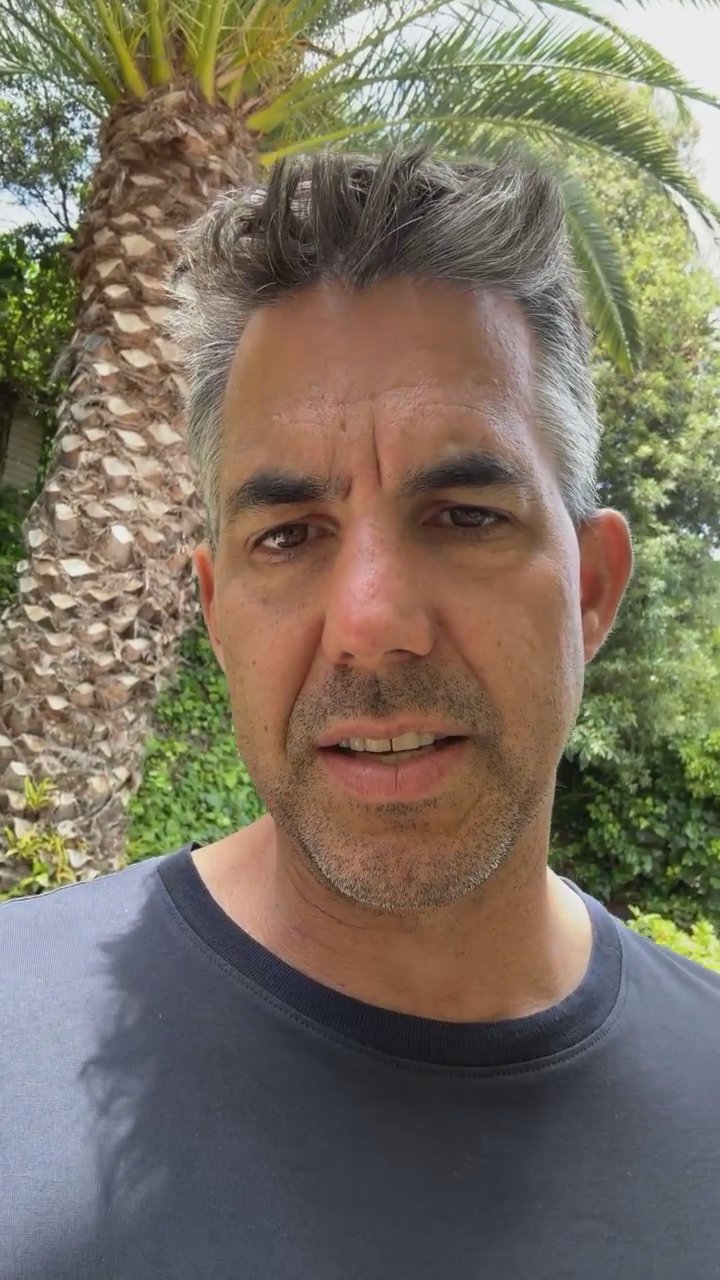
Balance is tricky for everybody. But what exactly does it look like and feel like if you’re a healthy man? What does it look like in your relationships? What does it feel like internally?
Cadre has decided to come up with themes every month. This month's theme is about conscious masculinity. How do men find balance and how do we even know if we found it?
Emotional balance is critical for men because we are so easily disconnected from our inner world. As men, we have to balance a healthy sense of self with ahealthy sense of contribution beyond ourselves. How do I know if I'm balanced?
All right, another week for Cadre. And welcome, everybody. Happy, happy first weekend of Pride Month. We still celebrate it, whether people try to cancel it or not. And, and Cadre has decided to come up with themes every month. Some kind of core ideas that are going to be a part of the contributors and various people. Right. And so balance is the theme is the kind of the thread that is going to run through June. So I thought, well, that's, that's a great topic for me to, to be thinking about and incorporating into my different areas.
Right? So the first Saturday is always about masculinity. It's about conscious masculinity. Second one is about conscious fatherhood. The third one is about conscious coupling. And then the fourth Saturday, the fourth weekend is always about conscious living. And if there's a fifth is just kind of a bonus. So today is about conscious masculinity. And the question is like, how do men find balance and how do we even know if we found it? Right? Well, I think there's a, even a little bit of a lesson in me getting here today to do this live stream.
I was just in Santa Monica playing volleyball with my daughter, having fun, being silly, being competitive. And even that called for some balance because there were different level players and this is a group that is not the strongest group. And it's really easy to lose patience. It's really easy to think, oh, this is supposed to be different than what it is. And it's easy to even get outside of my own scope, thinking that I'm better and all that sort of stuff. And so there's a balance kind of component there.
But then we're leaving and my daughter says, hey, can we go to Simply Salad? I don't know what Simply Salad is, but it seems like pretty obvious by the name that it's going to have salads. But she really wants to go now. I said, hey, I got to get home and do my Cadre live stream right at 1:30 Pacific. And she's like, okay, we got time. Now, of course, there is a line at Simply Salad. So we're sitting there, I pop in the ways when we're leaving the restaurant or after they've gotten the food. I've been sitting in the car chilling, trying not to let my mind spin about the time, right?
And then the Waze says, gonna get back at 1:35. Well, that's not a horrible thing, but I like to start as close to 1:30 as I can. So what does this have to do with balance? Well, I'll tell you Hello. I still don't know if I'm supposed to break the fourth wall and say hi to people when they join or talk to me, but in the past, I would have had this voice inside of me saying, they're going to be upset at you if you're not on time. You're going to look bad if you're not on time. There's. And it's like a shame voice, a shaming voice, a critical voice.
It comes from shame, you know, it comes from pressure. And where I'm. Where I believe it connects to balance, right, is the fact that in the past I would have driven like an idiot. I would have endangered people's lives potentially, by the way I was driving just to be on time for a live stream, which, no offense, is just not that important. So where does balance fit in? Balance for me, right, it's always. There's always an emotional component. And the emotional balance is my family's safety, my safety.
Balancing, thinking, being able to think, you know, being able to stay in my prefrontal cortex, because if I get too worked up, if I'm getting too worried and perseverating about whether how I'm going to look and I'm not going to show up on time for my Cadre and what are they going to think of me and all and all of that, and I just bring it down. I stay in the prefrontal cortex and I balance emotionally my commitment, my responsibility to show up with my commitment and my responsibility to my family, to myself, to the community, for safety, right?
And so balance, I think, especially for men, right, in the 12 step community, we have a joke, right? Oh, yeah, I know. Balance. I see it as I swing from one extreme to the other. And there's some, sadly, some truth to that even at this point of my recovery in my life. But like, when I think of balance, you know, because I. I've been reflecting on this, you know, since the. The theme came up, and I'm excited to talk about it in all these different areas that I talk about because I think there is something, right, I think there is something in.
Emotional balance is critical for men because we are so easily disconnected from our inner world. We're so disconnected from our body so easily, and then not even paying attention to what's happening inside. And so, you know, I need to balance what I think the world expects of me versus what's realistic. There's a balance there, right? Because I put pressure on myself. There's this pressure that so many men feel to perform our performance is our key to our masculinity, our performance and the applause from the world and the rewards from the world are the contingencies of our masculinity for so many of us.
And we don't even realize we're doing that to ourselves. So where does balance fit into that? The balance for me has to be being able to say when enough is enough, being able to say what matters the most. Because I'll tell you what, if I'm driving like an idiot and I'm starting to feed that adrenaline and feed that anxiety and feed the shame kind of that's coming up, then I start to get worked up, I start to escalate. I start to get a little more angry, a little more reactive. And I'm going to take it out on my partner, I'm going to take it out on my daughter.
And it could be at a one, it could be at a three, it could be at a five. Hopefully not past that. But a five is bad enough. You know, a five creates enough disconnection. And so that's. That has to be a part of balance for me, right? That has to be a part of it for me. Where, like, our society is so good at telling people who they're supposed to be, Even us supposed experts and all that stuff, you know, we have our opinions, we have our ideas, and it's like I have to balance who I am and what's important to me with what I think the world needs from me, expects from me, or even what I'm obliged to do to be of service or with my responsibilities.
And that balance is really, really important. But there's also, like, the other balance, right? If my masculine identity, if my identity is contingent upon my success, where's the balance, right? What am I going to sacrifice in my life to make that happen? I've been there in the past, and I thought I was doing the right thing. Now, of course, I was providing my own counsel, right? Even though I was in recovery, even though I had a sponsor, I had other mentors, I had other stuff, but there was, like, stuff that I was keeping to myself, right?
And I didn't even necessarily realize I was keeping it to myself. And it was driven by all the imposter stuff. But as men, right? As men, we have to balance a healthy sense of self with a healthy sense of contribution beyond ourselves, right? And I think, you know, that's. That's a piece of it for me. So how do I know if I'm balanced? Well, one, I gotta have other people help me Understand, I gotta have. I gotta ask other people and talk to them and ask them how I'm doing. And how do I know I'm imbalanced?
Well, part of it is, is like right now, in this moment. Because you wouldn't know, right? You wouldn't know if I'm calm or not. But I know I'm calm. I know I'm grounded because I didn't race to get home. I didn't drive like an idiot. I didn't cut people off, I didn't go through red lights to get here for a silly live stream in order to be on time, right? And to me, that's balance, right? That's balancing the obligations with the outside world, with how I take care of myself and my duty, my duty to myself.
Because if I'm not taking care of myself, then I'm really not going to be the father and the husband that I aspire to be. So checking in with other people and asking them, hey, how do you think I'm doing as far as balance and maybe even beyond that, in recovery, we have three things, right? We have recovery, family and work. And that's the divine order. But to check in with somebody and say, hey, how do you think I'm doing with balancing my recovery and my time with our family and my work, what's it look like?
How would you grade me getting that kind of feedback when I don't have a lot of experience with balance? And getting external support around that can make an absolutely huge difference? Then the other thing around balance is just to be really intentional, really intentional in how I do it on a regular basis, thinking of it, consciously focused, thinking of, like, what looks like balance right now, you know, did I, Did I. Have I taken any time this week away from work to do something fun? And just for me, have I taken too much time away from work to do fun things for myself?
It's all balanced, right? So those are my thoughts on a Saturday. Once again, happy Pride Month for all our friends. Celebrating and wishing you all the very best on this, this first Saturday of June. Take care, Cadre.
Reactions and comments are for members. Joining is free and takes a minute.