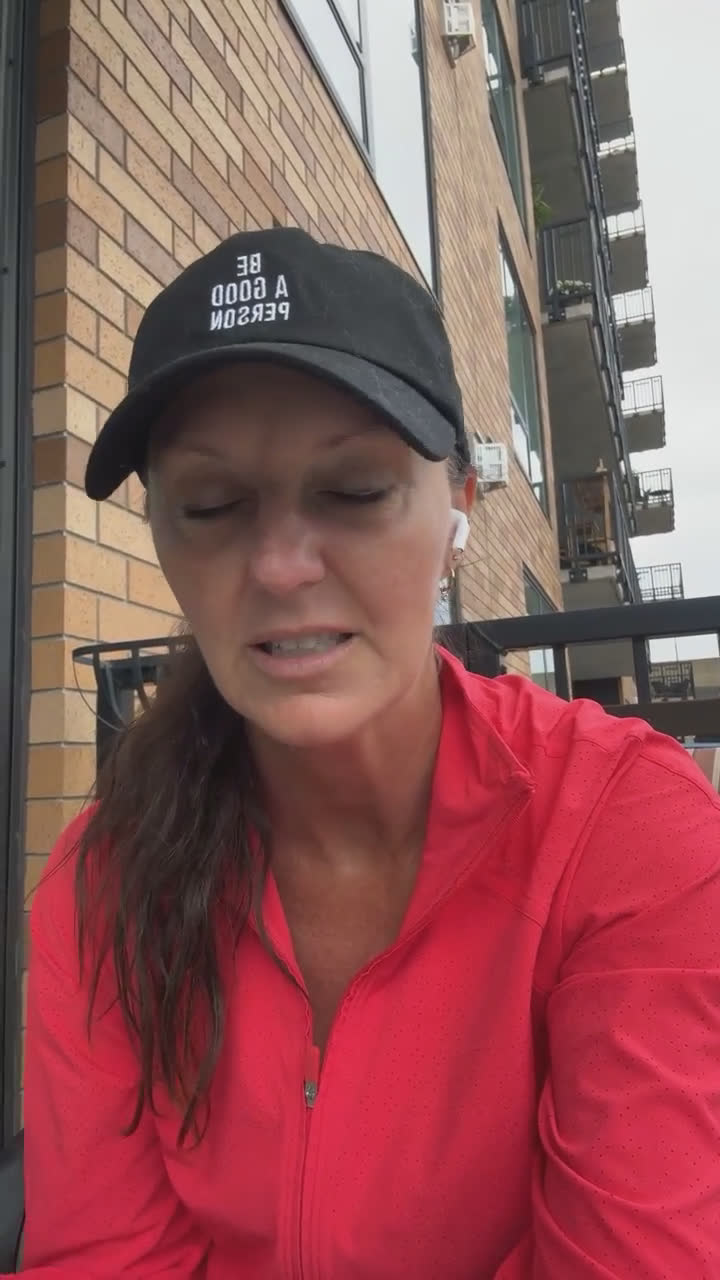
Host invites a slow breath and shares a conversation about leading with authenticity by minimizing multitasking—trying single-monitor focus and short timed sprints to foster presence and test focused work.
On this beautiful Monday, we have Major in the house commanding some pets. Do you have furry friends? If yes, what kind of furry friend do you have? And type in the chat their name. My invitation to you on this Monday is to just simply take a deep breath.
Today's conversation is around leading with authenticity and minimizing multitasking. What if for the next hour only you shut off one of the monitors and you just focused on this one. Once they started just leaning into the activity they were working on, they felt like they were so much more effective.
Rose: What do we sacrifice when we minimize our screens and focus on something with purpose and intention? What do you think we, as individuals, lose? Rose: Are we really connected or are we more reactive?
Multitasking has become a way for us to do exactly what you just said. Take one hour, turn off all the screens, but maybe the one you need to be working on. Minimizing multitasking actually increases our success rate.
Good morning, Cadre family. Happy Monday. Thought I'd take a moment to sit outside, relax a little bit. On this beautiful Monday, we have Major in the house commanding some pets. Good morning, Jules. Happy Monday, love. Speak wonder. Happy Monday. We're here. We've arrived. As you come on in this morning, my invitation to you on this Monday is to just simply take a deep breath. Good morning, Amar. Offering you an opportunity to simply breathe, to slow down, to be present, to be. In this moment, Major is slowing down and demanding all the pets per usual.
Do you have furry friends? If yes, what kind of furry friend do you have? And type it in the chat. Type in the chat their name. Let's bring all our furry friends into this Monday. So today's conversation is around leading with authenticity and minimizing multitasking so that we can be more present. I don't know about you, but I find that recently my list of to do's is super, super long. Oh, you have a cat. Aw, cute. Shambhae. What a great name. I wish we could post photos in here. I'd love to see them.
So multitasking. You know what's really great is we think we are really great multitaskers and we can fly from one event to the next, one exercise at a time. Different things happening all the time. We can have monitors, multiple monitors, and have our email up on one monitor and whatever we're working up on another monitor. And it's funny because when I was in an office, I was working with a colleague one time and they were so frustrated working from home because they only had one monitor at home.
So they would come into the office because they had two monitors at the office. And I was like, well, share more with me about this. And they were like, well, I like to have this up over here and this up over here so I don't miss anything. So I took a pause and I was like, let's try an experiment for the next hour. What if for the next hour only you shut off one of the monitors and you just focused on this one. And if an hour seems too long, what if we just did 30 minutes? And they were like, why?
Why do you want me to do that? As we were having a conversation, and part of our conversation and part of why I asked this individual to do this was because they were telling me how stressed out they were. And their list of getting things done was so long that they just didn't feel like they were getting anything done. And so they had multiple monitors on because they felt like they could achieve More. And so I was like, well, let's just do a test. Let's see how this goes. And they were very hesitant.
And so they did shut off one monitor, and they focused in on whatever the thing was. And I checked back in a half an hour because I was just sitting down the way from them. And I came back and I set my timer. I came back in 30 minutes. And we took a pause and had a conversation. And I asked. I was like, did you get done a few things that you needed to get done? And they were like, yeah, I got so much done. And they were super excited about the progress that they had made on this one particular project that we were working on together.
And I asked like, why do you think that happened? And they were like, I don't know. I just felt like I could finally focus in on the one thing. And I said, well, what happened during the first five minutes? And they were like, oh, yeah, I was really mad at you. And I was like, me? And they were like, yeah, you're the reason I shut off this other monitor. And I felt like I had one hand strapped behind my back. And I was like, okay, you can blame me for that. I'll take it. I'll receive that for sure.
But they said once they started just leaning into the activity they were working on, they felt like they were so much more effective. And so we. We had a conversation about it, like, working from home versus working in the office. Multiple monitors, multiple screens. And for this individual, you know, it was really important that they felt that they could be connected even though they were in the office. A lot of people weren't in the office, so they wanted to feel connected. They also wanted to be very responsive to people.
And so my question or my invitation to you or even my conversation this morning is, what do we feel like we sacrifice when we minimize our screens, when we reduce our multitasking and focus on something with purpose and intention? What do you think we, as individuals, lose? So I mentioned yesterday I've been doing these little mini experiments for myself, for my own mental health, so that I could also, as a coach, share this more as well. So I've been intentionally leaving my phone behind or leaving it in a different room on a charger and not having it in the same space as me.
And what I found is more peace. What others have found is they haven't been able to connect with me as quickly, and I'm not as responsive. So who wins in that scenario? Amar, I love it when I offer you the invitation to say what Happens if you, what do you lose? You say nothing. I agree. We don't really lose anything. What might feel different is less connection. But are we really connected or are we more reactive? Only you're going to know the answer. So for me, I'm not usually a list maker. They kind of actually make me a little anxious if I'm being honest.
But I've started making lists, but inside my list I categorize them. Which, which company am I focusing on or which key area am I focusing on. And then I make mini lists inside there. And I've been allowing myself one hour increments where I detach from everything else and I only focus in on that one business on that list. So I wear multiple hats. I'm a serial entrepreneur. I have a coach, I do teach spin classes. I'm a reiki master, I facilitate a run club. I'm a consultant. Right. So all these different hats.
Rose, I love that you said it this way. We lose control of, we lose the control of technology and gain freedom. Yeah. So when I'm working with clients, a lot of times things that we'll work through as tactics so that they can minimize the technology, minimize them all. Multitasking 1. Turning off notifications. So if you're working on emails or you have teams or instant messenger, whatever that looks like taking off notifications. So even if you only turn them off for one hour in a day, it's one hour of time that you can focus in.
Time studies tell us that it takes on average five minutes for us to re engage with the work that we are working on so that we can get back to where we were and then move forward. So think about that. The other day I was super annoyed and it was like, not like mad or anything, but I was right in the center of a very big project that I was working on, a task that I was working on. And I was two minutes away from finishing out this email that needed to go out so that this whole communication was done.
And I had someone walk in and start asking me a whole bunch of questions and I was like, hold on. And they were like, wouldn't stop. And it wasn't bad that they wanted my advice or my insights. It literally was. I was two minutes away from finishing this thing and because there was this interruption that came in that caused my brain to pause, reroute, focus on a new task, focus on a different question that had nothing to do with what I was working on, it took me two minutes to just allow my brain to pause.
This individual is getting Frustrated, like, it's a simple question. Just answer the question. I was like, no, no, no, you don't understand. Like, I'm so deep in this that I actually have to create a brain flip in my head to answer your question. And then I was so frustrated because the intention of what I was writing got lost. So I had to go back, reread all the things. When I finally got back to it, reread everything to just finish out those last few sentences so I could hit send and go. It took me, and I timed it.
It took me seven minutes because I had to gently come back in reframe. I had to get rid of some frustration. So I had an emotional transition. Then I had to reread everything so that I made sure I didn't miss any of the key points. So as I was writing my closing section, I knew exactly what my messages needed to be. So I actually jotted down notes to try to remember what it was I was trying to finish. So this exercise that would have taken me two more minutes to finish, now it took me 17 minutes because I timed it to complete, to hit send out of one tiny disruption.
So think about that time. Studies say, on average, it takes us five minutes to re engage with the activities that we are working on. So it took me five minutes to just scan through what I was doing. It took me another few minutes to reframe my thoughts, and then it took me another few minutes to find the exact words and try to recapture the essence of what I was trying to finish in the first place. 17 minutes. So think about that at the end of your day, you're trying to nail through a bunch of different things.
17 minutes later, I. I'm now late for anything. I could be late for getting to happy hour, I could be late for dinner. I could be late in walking my dog. So when we think about the art of multitasking and putting that on pause so that we can just prioritize and focus in on the things that we're working on, it allows us the opportunity to really use our brains to feel that sense of accomplishment, to create great work. And if we spend our whole days jumping from text messages to instant messages, to emails, to insert whatever the other things are walking major, that can be a disruption sometimes, even though I love every time I walk in.
So the more time we can spend creating time blocks, even to allow us to focus in, to minimize the multitasking, to allow our brains to settle in, to do what it does really well, which is think complex, problem solve, create, write all of those things. It allows us opportunities to feel more successful in our day. It allows us the opportunity to minimize the stress. True north. Hey, what's up? How's Iowa? Speak, wonder. Thank you for the pop of color comment. It's one of my favorite colors. Multitasking has become a way for us to do exactly what you just said.
Speak, wonder. On the days that I'm feeling the most distraught or I'm working through sadness or grief, I multitask and I flip, flip, flip. Almost as a distraction, right? So we're used to the prefrontal cortex, the cortisone impulse, the cortisone shots, the dopamine that comes on in every single time we look at our phone. We get a dopamine rush. Ooh, somebody contacted me. Awesome. So we've become addicted to this little dopamine rush, this prefrontal cortex blurp of work that we have to do because we multitask.
We flip to the point where our prefrontal cortex, which this is a real thing in brain science, neuroscience, this can get exhausted because we're taking in so much that we don't even have the time to take it to the rest of our brain to process and to interact and integrate and move forward. So my invitation to you today, Take one hour, turn off all the screens, but maybe the one you need to be working on. Set a timer, see how far you get where you can just focus in on the one thing. Because to be honest, it's gonna take a little retraining for us to get off of so many opportunities to be connected so that we can focus in and be really super successful at the things we need to do.
Speak, Wonder. You're a writer. You write poetry. Imagine you're right on the cusp of that one sentence to make this poem amazing, and something causes that disruption, and you need to come back to that. Or maybe you're having a writing block and you create mini disruptions because you have that writing block. What if, instead of trying to push through, you took a break and went to a different task that used a different part of your brain so that you could feel accomplished and successful, and you let that writing part of your brain have some peace and quiet and calm?
So minimizing our multitasking actually increases our success rate. Minimizing multitasking allows us to lean into this moment with purpose, with curiosity, with opportunity. So my invitation to you on this Monday is to do this for yourself. Because great leaders often take the step first, and then they can share their experience with others. So whether you lead people or not, whether you are a friend, a parent, a mentor, a sibling, a boss, owner, a business partner, an individual contributor, doesn't matter what hat you wear.
What matters is, is we practice what we preach, right? So my invitation to you is today. Make the list. Even if you're like me and you're not really a list maker, focus in on one thing and if an hour feels too big today, 30 minutes, 15 minutes time. Block yourself so that we can start to retrain ourselves, reprioritize ourselves and our work. Redefine our boundaries of when we can be available and accessible. And if that means having a conversation with somebody that says, hey, today I'm going to focus on these three things.
I'll get back to you at 1 o' clock today. Then they know at 1 o' clock today you're going to get back to them and then get back to them at 1 o'. Clock. Create the shift. Allow your work to happen. Allow yourself to flourish. So I'd love to hear if you try this today. Come back to this video and type in it. Send me a dm or you can even go out to comments and put them on out there. I hope you all have the best day. I look forward to seeing you again soon. I'll find a new color for the next one. Speak Wonder.
Let's see how that goes. And just remember, I'm here for you anytime you need me. We'll see you soon.
Reactions and comments are for members. Joining is free and takes a minute.