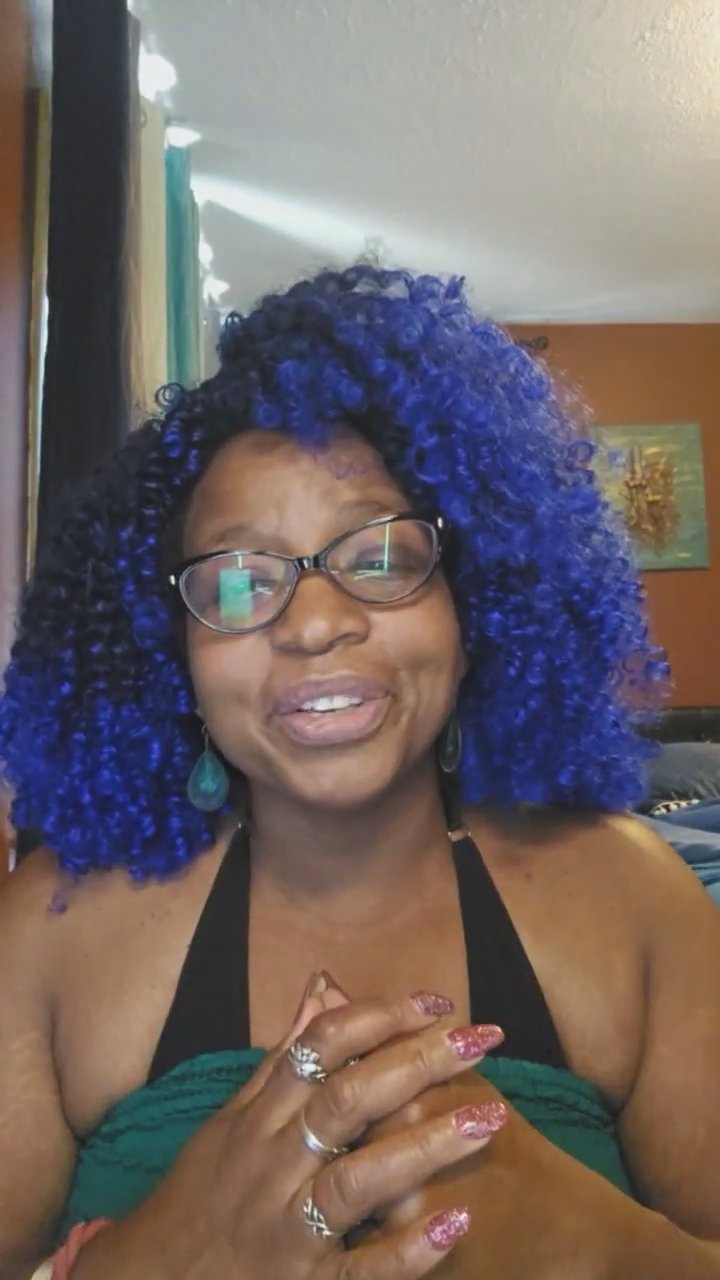
This week we're talking about the freedom that comes from saying the quiet part out loud: This is hard
Foreign. Happy Thursday. If you are watching us on Thursday, if you're watching us somewhere in the future, happy whatever day it is, wherever you are. After we have our conversation, I am going to get ready for a show I have this evening.
Ms. Shannon usually joins you here on Thursdays. I also now join you on Saturdays. Today is a general edition, but it will cover some things that I also will cover on Saturday. It will be a very detailed parenting edition.
How can you navigate mental wellness and mental health? Yesterday we were talking about how mental health can be your guiding light during uncertainty. One of my major takeaways from yesterday is that uncertainty, certainty is a certainty.
Tremaine: I wanted to discuss the concept as caregivers, the freedom to admit that it is hard. Sometimes it also feels like I'm saying something negative about my kid. Have you ever gotten this compliment?
All right, everybody. I appreciate all of you. I hope the day continues to treat you well. Somebody needs some tea or something. I will see you on Saturday at 10am Central for the parenting edition of this. Be safe, be well.
Foreign. Happy Thursday. If you are watching us on Thursday, if you're watching us somewhere in the future, happy whatever day it is, wherever you are, we appreciate you either way. I'm Ms. Shannon, everybody. Good to see you. And there's a weird code on here. Hopefully we don't need that. So we'll see how it is. I'll check it out later. Hello, Nikki. Good to see you. Good to see you. I think I need my glasses. Hold on a second. Let's see. You're joining me. This is my bedroom. You are sitting at my vanity.
So we are both sitting at my vanity right now because after we have our conversation, I am going to get ready for a show I have this evening. So I'm gonna put a little pre makeup on and then I'll dust a little bit more this evening. So I want to say hello to everybody here in the Cadre sphere. I hope that you are having a pleasant day and that the day is treating you well. If it is, shame on it, not on you. That is the way that it works. I am Ms. Shannon and so I usually join you here on Thursdays.
I also now join you on Saturdays. We do comedy through the chaos. Today is a general edition, but it will cover some things that I also will cover on Saturday, which will be a very detailed parenting edition where we kind of talk about the variety of different chaos that we navigate. And one of the things I started off this morning with is I was part of a mental health health seminar yesterday. I have some wonderful speakers and one of the things we were talking about is how can you navigate mental wellness and mental health?
Thank you. Yes. So wanted to yesterday bring that up and then I'm going to get to the conversation today. So yesterday we were talking about how mental health can be your. Your guiding light during uncertainty. And one of my major takeaways from yesterday is as we were all talking about uncertainty, is that uncertainty, certainty is a certainty. That is one of the few things that we know is absolutely going to happen. So doing your best to go, hey, well, how much do I have in my toolkit when this happens to come into play in my life?
Instead of it being that thing that throws you off because you were so expecting these calm waters and really anchoring yourself to that. So terminology that we are used to if we listen to our good friend Cathy and speak. Wonderful. So that was wonderful to join that and what I wanted to talk to you about today as we continue, so many of us contributors here in the Cadre sphere talking about freedom from a Variety of things. And so I wanted to discuss the concept as caregivers, the freedom to admit that it is hard.
And that's often saying the quiet part out loud. And I'll tell you where that came from. Yesterday I was hanging out with my son and I have a new ish PCA personal care assistant that works with him. And this is a really good guy. They mostly get along to nobody's fault other than having a complex onion of a kiddo. So yesterday my kid was having a hard time, you know, and I didn't say it that way yesterday. I was like, it's challenges, it's this, it's that. And so we were in the midst of this pretty serious behavior and meltdown and just figuring out how we were going to navigate it.
And my sister, who also helps me out a lot and who lives on the other side of my duplex, she came over because she could hear us having our conversations in the backyard. And I'm talking to her about how I've been switching some of my kids med around. Hello, Amar. Good to see you. So was talking to my sister yesterday about how I've been switching his meds around and trying to get the balance right and figure out how to give him the right tools to help self regulate and just things that we talk about all the time.
And so she said something to me that like, hit me in my chest. She said, yeah, I know it's hard. And her just saying it like that, I know it's hard, really impacted me, you know, Good to see you, Tremaine. I because I don't use that terminology, I say things are challenging or I say that they're chaotic. Hence the name of our livestream in my series. But I don't usually use the word hard. I think a lot of us do that. We spend a lot of time reframing. And I'm a big fan of that. I understand that we need to do that and that it is a powerful tool that we have in our toolbox.
To be able to say that, you know, changing the way that we name things, that is quite important. And I'm a big fan of that as well. And I do it almost too much is what I felt like, was the revelation I had yesterday because her just acknowledging that the challenges that I go through are hard felt foreign. Me being able to acknowledge that what I do day to day is hard because that's not the way I talk about things. And so it was interesting to go through that mental roller coaster with myself and go, you know, why don't I ever say it's hard?
Where is that? You know, as a caregiver, as a parent, why is that something that I don't do? And I think part of it might come from this feeling of if I acknowledge that it's hard, it means that I am not staying positive. If I acknowledge that it's hard, I'm leaning into this. I'm not strong enough to deal with it. And that is part of it. I think it also leads into if I acknowledge that it's hard. Sometimes it also feels like I'm saying something negative about my kid. And maybe you've had somebody tell you this as caregivers, have you ever gotten this compliment?
If you had, go ahead and just tap the screen or let me know. Because one of the compliments that I get, and I want to say compliments and air quotes, is I'll have people come up to me and they'll say things like, they know what I'm going through with my kiddo. And they'll say, wow, I could never do what you do. And that's how they'll say it. I could never do what you do. And I understand their reasoning by saying that and why they feel like that's a compliment. But to me, it always felt negative.
Because if you're saying you can never do what I do, that means that you think that the situation that I am in is so untenable that nobody could do it. And that's kind of how it felt to me. And instead of feeling empowering, it always felt really isolating. And again, I didn't usually come at them and say, hey, let me tell you how come this really makes me feel bad? I would just go, thanks for saying that. And I appreciate what you're saying. And that would be what I do. And I'd kind of yada, yada, past it.
But it's really interesting to think about it from the perspective of allowing yourself to acknowledge that what we do as caregivers can be hard, full stop hard. There are a lot of things that we have to navigate on top of navigating all of the things that we do just as normal human beings. And I think it's interesting to think about it from that perspective because I know a lot of times I'm like, hey, you know, I'm a superhero. You know, don't. We are. We're doing all these things, we can do all the things, we talk about it amongst ourselves here in the Cadre sphere, about how we can do hard things.
So why can't we acknowledge that what we're doing as caregivers is hard? So I encourage you to do that, to give yourself some emotional validation in this particular matter, to allow yourself to acknowledge that the work that you do and the care that you give and you provide and is hard sometimes, maybe not every moment, but there are difficult days. And it's allowed to say that, you know, what I needed right now is to acknowledge, hey, I just did something hard, and this counts. Not right now. So just something for you to think on this week.
You know, hopefully saying that out loud make some space for you to give some support for yourself as you are navigating the challenges that you may be doing. Uh, maybe it gives you a little bit more time to think about some other tools and rituals that you need in order to get through these as we're gonna name them hard days, hard moments that we might have in our lives. And, you know, I just want to invite you to. To really just relook at your coping strategies and make sure that they are strategies that also are refueling you and not strategies that are only putting a band aid over it so that you can't really see what's going on underneath.
Not right now. You're right. So do you want me to get off? Are we gonna go give you something? Get off. All right. Say goodbye. Goodbye. All right, everybody. I appreciate all of you. I hope that the day, as I said, continues to treat you well, if not not. Shame on you. Shame on it. We always appreciate you being here in the Cadre sphere. Somebody needs some tea or something. So I'm going to go and give care to the person that sometimes makes my life hard. I love you. I appreciate all of you. I hope the rest of the day goes well.
And I will see you guys on Saturday at 10am Central for the parenting edition of this. So enjoy the rest of your day, everybody. Be safe, be well.
Reactions and comments are for members. Joining is free and takes a minute.