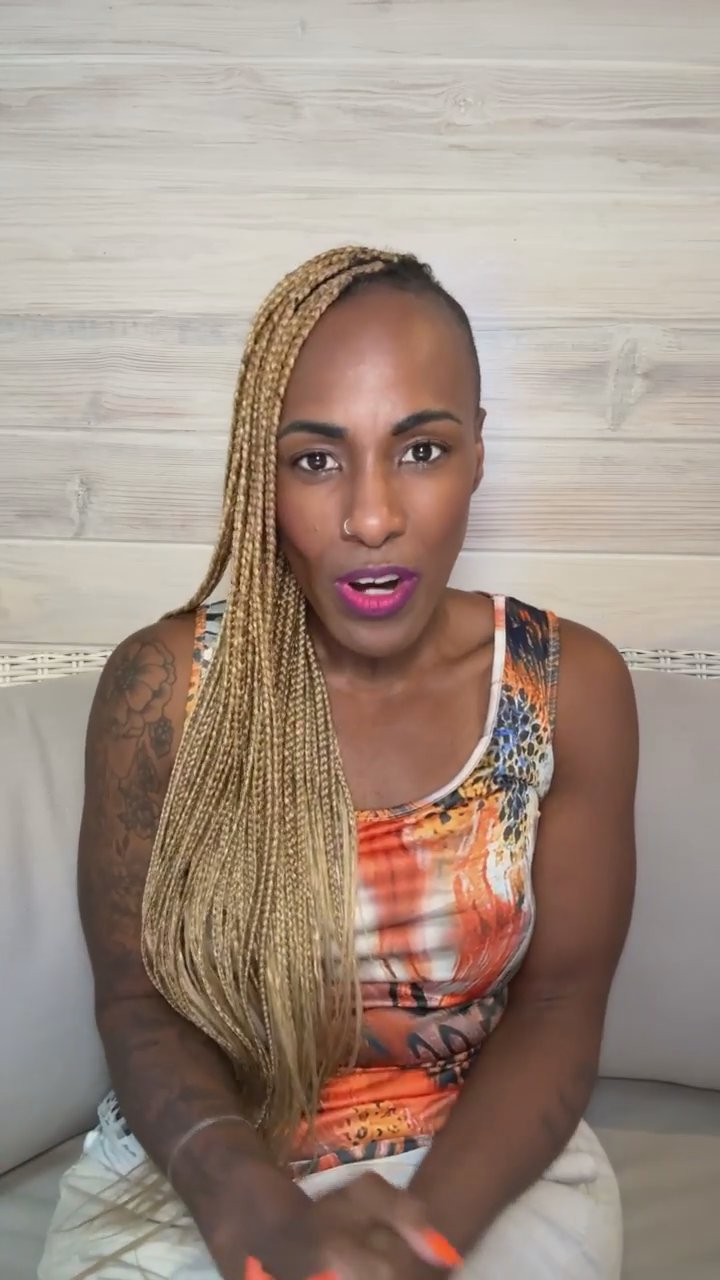
A host explores balancing ambition with emotional rest, discussing cultural pressure to appear strong and offering five practical habits: naming and normalizing feelings, scheduling micro-rests, using meals as mindful anchors, and setting unapologetic boundaries.
Kaitrosphere. com welcomes another if youf Plate Can Talk. What you hear is there's truly something for everyone. I hope that can take you and help you to see things from a different perspective.
There's no award for being stronger than you really are. When we are not feeling strong, we struggle to ask for help. There are a lot of patterns of strengths that come from what was modeled for us. There has to be a different level of balance.
Name and normalize your state. Schedule micro rest windows. Make food a mindful anchor. Set boundaries without apology. Throughout this week, challenge yourself to have at least one meal a day without screens, without work, and without rushing.
Kaitrosphere. Welcome to another if youf Plate Can Talk. Come in, take a deep breath. Make yourself comfortable. Let me get us adjusted here. It's wonderful to have all of you come and spend a little time just kind of checking in and getting a little encouragement. I hope that can take you and help you to see things from a different perspective. You know, that's one of the things that I love about all of the various parts of the claddiosphere. And what you hear is there's truly something for everyone.
As always, let me know how your week has been this so far. We typically come in and rate ourselves one to ten. Oh, thank you. One meaning the lowest. It's been a rough week. Ten meaning it's been a fabulous week considering everything. And where are you? I am still at home in Charlotte. I know I usually don't say that quite as much, but it's been a nice, nice kind of stretch of time without me having to travel. And good to hear, Andrea, that your week was at a 9. And that just gives me a chance to kind of check in and know how you are and what you need.
We've been talking last month. This is kind of wrapping up the dynamic around freedom and just kind of moving us into a recap. Last week we talked about being strong but exhausted. Anyone ever been there where there is definitely a part of you that feels strong, There's a part of you that you know is strong. And I think strong is such a unique word because it can mean something very different to all of us. But the real focus of our time is helping you understand that there is no. What's the word I want to say?
There's no award for. For being stronger than you really are. And even though we often live in a world and a society that expects strength, we have to be very honest when trying to be strong has us in a place where we feel trapped by it. Tell me this, is there anyone in your life? And you don't have to tell me who they are, but just if this is a point that you resonate with, you can say something in the chat or use the emojis. Is there anyone in your life or an area of your life where you feel like I have to be strong here or I'm expected to be strong here, even though I may not always feel that way?
And that's a part of what we want to be conscious of when it comes to our health and well being. We can sometimes be in roles, life roles, intentionally, unintentionally, that have placed us in Situations where we were strong at one point and kind of kept it going too long. Right. Or sometimes we're not really great at communicating. When we are not feeling strong, we struggle to ask for help. I even want you to think about this a little bit. Growing up, this is a question I would love for us to all get into.
For a moment in your home, how comfortable did you feel asking for help, asking for what you need, or communicating that you weren't? Okay. All right. Because I think that that is super, super helpful for us to consider that. There are a lot of patterns of strengths that come from what was modeled for us. And sometimes us recognizing that our parents or our grandparents or our caregivers in life had to be strong in a way that we don't actually have to, but we mimic those same patterns because that was our earliest view of strength.
And we don't always realize that it needs to adapt or evolve. I was having this conversation with a friend of mine and she adores her mother. Her mother had the opportunity and the privilege to be a stay at home mom and kind of kept everything pristine, kept the house all together. And that was just a beautiful picture that she felt like she grew up with. So of course, as she went into marriage and motherhood, that was something that she felt like she wanted herself. But she works full time. And so there's been this push and pull between her trying to keep the house and keep up with life, as if that's all she had to do.
And then recognize, wait a minute, you are actually a full time working mom. And so there has to be a different level of balance. You can't be exactly what you saw someone else be and recognizing that, that's not a fault. But yeah. Yes. So one person is saying that in their house, asking for help or not being strong was a sign of weakness. And you may have seen one parent be strong, but again, it could be they had no choice, not something that they wanted to do. So we have false perspectives at time of what that looks like.
For those who are just joining, welcome. We're just kind of talking about patterns in your family of origin that gave you messages around strength and what strength looks like and what strength is supposed to look like. I want you to really consider that. And if you're comfortable, you don't have to just share a little bit about what that was like. And then I want you to ask yourself, where am I still attached to that belief system? Where are you still operating off of a level of strength that doesn't fit where you Are.
Oh, that's a good one. Another person here is saying, I spent a lot of time on my own. I had plenty of help, but not with my own feelings. If you are someone who spent a lot of time on your own, whether that's you're an only child or what we call a latchkey child, we definitely find that as we grow, if that was our upbringing, we have a part of ourselves. If that was you, that will feel like you have to do things on your own. It's not even that you don't want to ask for help. You don't even think to ask for help because you're so used to having to figure it out yourself.
So sometimes if that's you, you might actually find that you're on yourself than you should be or could be because you feel frustrated that you can't figure something out. That being said, I want to give you today five tangible tips to help balance the part of you that wants to be ambitious, that wants to succeed, and how to balance that with emotional rest. And thank you for all of you who are continuing to put in there. Yeah. Try to work through emotions on your own. A lot of music, emotional eating, avoidance.
It's important to know, here are the things that I'm still doing to try to navigate that. And then it's also important to know, here are the things that I want to start doing so that I don't use coping patterns that actually don't help me cope, that actually have consequence. And let me say this as a caveat. Anything that you do that comes with consequence, we won't consider a healthy coping pattern. So we have our automatic coping patterns, and some of those come with consequence, and those are the ones that we want to work on, kind of distancing or challenging or not doing as much.
But the best way to know, is this a good. Is this a sustainable coping pattern? Is. Is it something that you can do without consequence? If you do it over and over and over, will it continue to benefit you or will it make you hit a wall? So, five tangible tips. Number one, name and normalize your state. So you want to say things out loud like, I'm functioning, but I'm stressed, or I might look fine, but inside I'm crumbling. Being very honest with yourself and with others about what you're actually experiencing.
And when you can acknowledge what you're feeling without judgment, that activates the prefrontal cortex and that helps you regulate your stress response. So here's something I want you to pick up on. What I just Said a lot of times we think we need other people to notice that we're not okay. And while that's phenomenal and great, when you can name and notice without judgment what you're feeling, it automatically starts to reduce your stress in a really powerful way. Is there something that you need to acknowledge today that you're holding and that you're carrying and that you're feeling?
Whether you acknowledge that, if you're taking notes, acknowledge it in your mind, saying it out loud, or putting it in the chat, I want to invite you to acknowledge a truth without judgment. This is not about shame. This is just about, hey, here's the truth of what I'm experiencing right now. Second tip, Schedule micro rest windows. So set a five minute timer at least twice a day to to do nothing productive. Close your eyes, breathe, stretch, step outside, cold plunge, whatever you want to do. But those micro windows of rest helps retrain your nervous system to feel safe in stillness.
I find so many people that have used productivity as a crutch. And then when it's time to slow down, it's difficult, it's a struggle, it's a significant struggle. But when you give yourself those micro windows of rest, it helps your body go, okay, let's reset and then move on with the rest of the day. Number three, upgrade your internal dialogue. This is big. So replace things like I can't stop now or slowing down means I'm failing with things that are more positive and neutral. Your words matter.
I'm going to focus on that in the coming weeks. Your words shift your brain's neurochemical environment and so that's going to reduce your cortisol over time? I always want to give you an opportunity to consider how have you been talking to yourself? Are you speaking to yourself in a level of an internal dialogue that is positive, that is motivating, that is neutral, that is extending hope and confidence? Or are you kind of beating yourself up? And don't feel bad if you're beating yourself up, but just be aware of it and then give yourself an opportunity to shift back.
Number four, make food a mindful anchor. We talk constantly, especially here on if youf Plate could talk about what's the parallel between what's on your tangible plate and what's on your metaphorical plate because they're often going to run parallel as you go. Throughout this week, I want to challenge you to have at least one meal a day without screens, without work, and without rushing. I feel like I just said that and some of you went, it's really possible. We used to do it all the time before the world of cell phones and notifications and smart watches.
One meal a day. Take your watch off, close your iPad, move your phone away. No work, no screens, no rushing. Yes, you're going to feel a little uncomfortable in the beginning, but if you do it daily, I think you'll be surprised at how you feel and what you notice as the week goes on. And it's also an opportunity for you to really kind of connect with your food. Feel the texture, notice the flavors, recognize your body signals with this is good for us. Some of you need to do this because you're not eating.
And that meal where you slow down does not include coffee. Coffee is not a meal for those of you who live off of that until you get to dinner. And then number five, set boundaries without apology. So practice your no. Without over explaining. I know it's hard. It's really difficult because we want to give people all the explanations in the world. But the more you can just say, you know what, I'm going to pass on that and move on, the better you feel. The more you'll work through the anxiety and the guilt.
And. And then remember as you go throughout the week that being strong isn't about pushing through. It is about knowing when to pause, when to reset, and when to let others carry some of the load. High functioning stress can be very invisible to the outside world, but you don't have to hide it from yourself. All right? So as you go throughout this week, please be gentle with yourself. Please come back into this space and join us here for everything that you need. And I want you to remember that better is possible and that all is not lost.
So don't give up on yourself and I'll see you again soon.
Reactions and comments are for members. Joining is free and takes a minute.