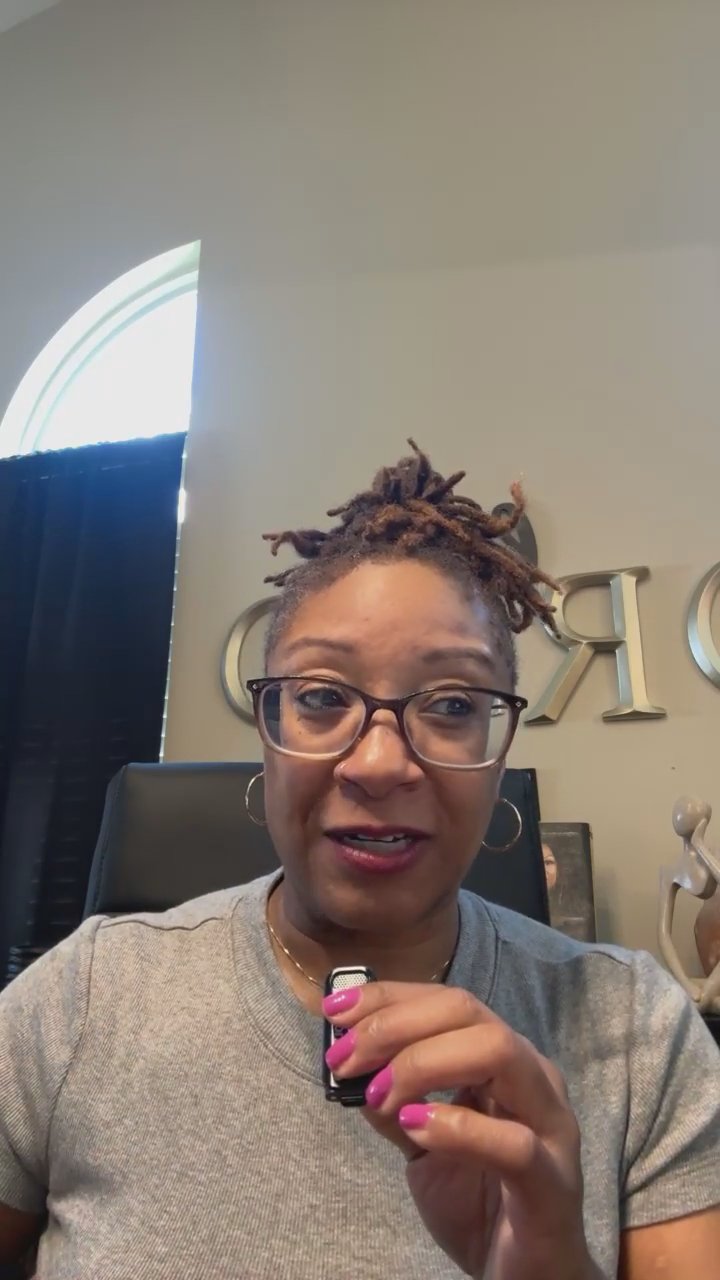
A host explores reclaiming one’s voice in relationships, comparing yelling to using silence as power and offering reflections on when and how to speak up to break cycles of pain.
Every Tuesday at noon, Central standard time, Shannon is trying to get this camera adjusted. You like my mug? It's from Target. Give me one second so I can get this fixed.
Today's topic is about reclaiming your voice in relationships. What if we flipped it and we actually use silence as power? When we choose to get soft and quiet, that is noticeable. So there is power in our silence.
Next month, I forgot what our theme is for Cadre, but I will check it out. And if there's ever any topics that you would like for me to cover, just put them in the chat for me. But I hope you guys have a wonderful day.
Hey, Cadre. So apparently I did not have this scheduled on the the Cadre calendar. So I apologize if you didn't get the memo. But I'm here as usual. Like I am every Tuesday at noon, Central standard time, and I am trying to get this camera adjusted. Give me one second. And I do have my coffee with me. It's my second cup of the day. You like my mug? It's from Target. I think I get most of my mugs from Target. At least the cute ones I do. But give me one second so I can get this fixed. Okay, that's a little bit better.
Hi, Shannon. So I want to rewind because last week I was supposed to talk about reclaiming your voice in relationships, and I talked about something completely different. I think there's just something on my heart, and I totally forgot that I put out a schedule for the month of July, trying to stay with the theme of freedom this month. So I'm going to get back to what I had planned on talking about. So today's topic is about reclaiming your voice in relationships. And if you kind of go back and recap what we talked about earlier this month, you know, sometimes when we are deciding to make changes in our relationships, we can silence ourselves.
Or it's scary to leave something that is toxic for us, or it's scary to speak up when we're hurting. And so we end up getting quiet and shutting down and just continuing the cycle of pain because we don't say anything. And so today, let's. Let's see. How do we speak up? How do we do this? I think sometimes, you know, for me personally, I'll share. There are times when I have learned to speak up when I just couldn't take it anymore. Right. So there's been moments in relationships where it was so tight that I was tired of going through the same thing over and over.
And even some toxic experiences, I'll say, where I actually became a yeller. And that is not like me. And I think I held on to that because it worked. And let me know if that hits you off with that, too. So I started yelling to make my voice heard. And over time, I started learning that yelling doesn't really do anything. It gets people's attention, but it doesn't keep attention. So people will. And you've probably experienced this when we start to yell or someone is yelling at us, our tones tend to match.
And so someone starts yelling. If we are trying to be heard, we will also raise our voice to match them or get louder than them. So our voices are heard, and that's a really bad cycle to get stuck into. But I want to lean into the flip side of this. So I always talk about flipping the coin. It sounds easy to say, well, just speak up. Just talk. Just say what's on your mind. You know, talk louder so people can hear you. But what if we flipped it and we actually use silence as power? So think about that.
Think about moments, and maybe you witness this, or maybe you have experienced this when you have been in an argument with someone and they're yelling, and you want to raise your voice to match them, you want to match their energy, but instead you choose to speak softer, lowering your voice, changing your tone, making it more softer and approachable. And what does that do? Well, that is what gets people's attention, because you're not yelling back. I think the automatic thought is that we're going to yell back at someone.
Like someone's yelling at us. We're going to join in and yell, and it becomes this yelling match where no one's hearing each other. But when we choose to get soft and quiet, that is noticeable. And I actually saw this yesterday in a video. I was watching this movie. I can't remember what it's called. I think it was the Resonance on Netflix, a new series. And the person was a female. She was interviewing people, and she didn't say a word. She just sat there, and people started spilling everything that they had within them and assuming the questions that she was going to ask them, and they just start talking.
And I thought that was so powerful to watch, because we think that we have to say things to get people to respond in certain ways, or for us to get information or for people to kind of understand us. We feel like we have to say something, but we don't always have to do that. So there is power in our silence. Although silencing yourself, two different things, right? Silencing yourself is when you are choosing not to speak up because you're trying to protect the relationship, because you're afraid of losing it.
You're afraid of abandonment, you're afraid of being alone. That's not the same thing as using silence as power. So when we're using silence as power, we are in that space of being calm, being a calm presence for the other person to actually notice us, to pay attention to us. And that's really what we want when we're in communication. We want to be heard, we want to be seen. And so sometimes if we're yelling or if we're using violent words, we're not actually being seen in the way that we want to, and we're not being heard in the way that we want to be heard.
What people are hearing is really what they feel about us. And I can imagine if we're acting that way, that doesn't feel good for the other person. It might feel powerful for us in the moment, but it's hurting others. So what if we chose to get quiet and be silent and open the door for the space of hearing others? So allowing us to hear others actually gives us space for us to be seen. So I want you to think about, has that happened with you? I've experienced that, and I will say that has been more powerful for me when I'm working with youth or with teens who are angry, or if I'm in a couple's therapy session where there's one partner who's just flaming, like, just so hot and so upset about something where they expect others to join in with them.
But I sit there in silence and just watch. And it's uncomfortable for both parties. It can be uncomfortable for me, and it's uncomfortable for them because it's not an expected response. Silence is not always expected, but it is very powerful. And so if you can train yourself to even sit in silence with yourself, try that and see what does that feel like? You know, if we take. I like taking quiet mornings sometimes when I get up on time, but if I don't do this in the morning, I will spend time in the evening before I go to bed, just sitting in silence.
No tv, no screens, no lights even, and sitting in quietness and stillness. And one of my tattoos says, be still. It's a practice that I have to engage in often to settle myself. And so if I can learn to settle myself, I can also help others get regulated in conversation. So it takes a lot of practice. Try it. Let me know if it works for you. So, yes, we're talking about. Hi, Ms. Shannon. We're talking about reclaiming our voice relationships. And I just want to challenge that. Reclaiming your voice doesn't always mean that you have to speak loud.
You don't have to say a lot. Sometimes there is power in your silence. So try it. All right, y'. All. Next month, I forgot what our theme is for Cadre, but I will check it out, and I will try to get some topics that align with our. Our theme with the community. And if there's ever any topics that you would like for me to cover, just put them in the chat for me, and I will definitely do some research and give you guys some nuggets on that stuff. But I hope you guys have a wonderful day. Don't forget your coffee, okay?
All right. Have a wonderful day. Bye.
Reactions and comments are for members. Joining is free and takes a minute.