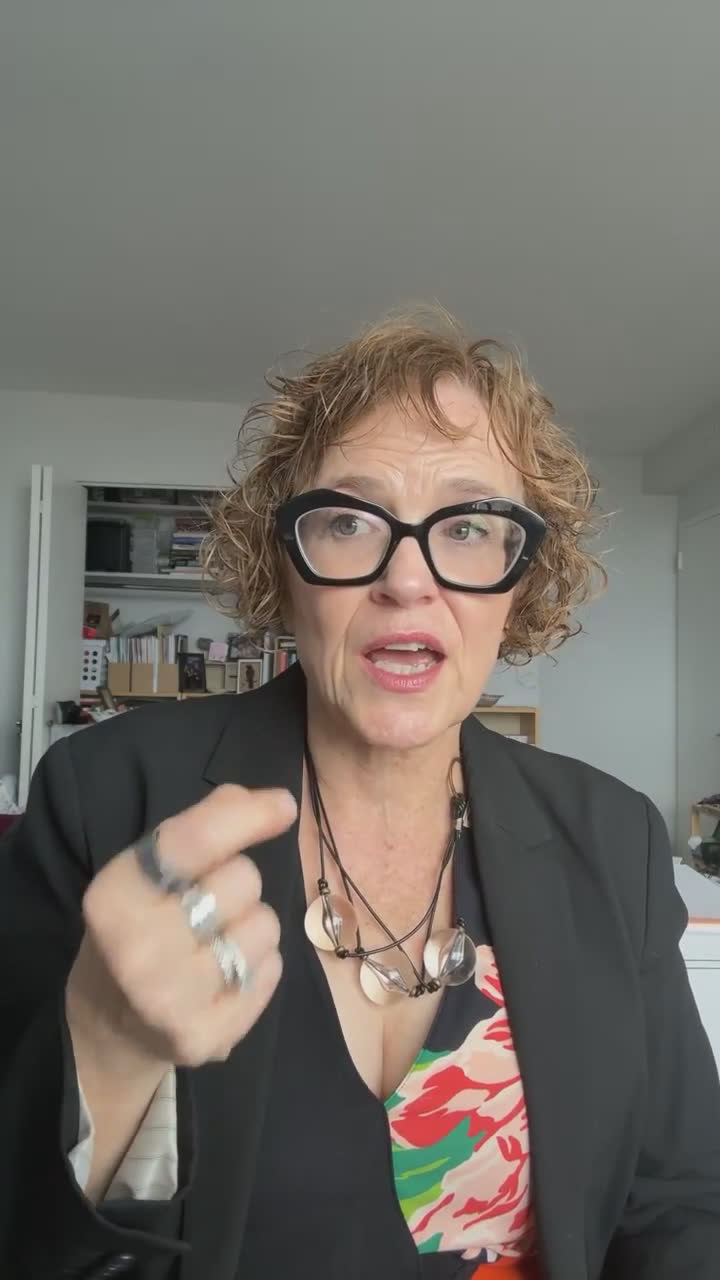
Well, hello, cadre. We are back together again. I am delighted to be here with you. I am all, I'm in the middle actually of getting ready to go to an event on the Hill today. I am a sister on the planet for Oxfam International. It's a group of former elected officials who are women who get together and advocate for basically policies that have an impact on women globally. And so today, we're going to learn all about some stuff. And then tomorrow, we have meetings on the Hill to go lobby. And I live here, so I just have to hop on a train and go.
When I used to live in Minnesota, I would fly here and do this. But I'm in the middle of getting ready to go, which is why I look a little gussier than usual. So hello, welcome. We have some folks who have come here. The witness has joined. I can't see everybody. But I know a few people have joined. So welcome, welcome. I have my glasses on. I go between putting them on and taking them off, depending on the glare, honestly. And it's been a little while because I was unable to be here last week. I was coming home.
I offic iated a wedding for some friends. And it went really, really well. Of course, because they got married. And I feel good about how I did. And hi, Reidner, Reed-ner. I'm guessing your name might be Reed. Or last name, Reed-ner, Reidner. Hello, regardless of how you pronounce it or how I mis pronounce it. The intention is there. Yeah, the wedding went really well. Old friends who just asked me to officiate their wedding. And it was beautiful, of course. And who, the topic this week is, you know, safety is the topic for September.
Safety is the topic for September. And the topic this week is emotional and relational safety, which is about boundaries. And when I went over my rules of engagement, I was delighted because, I mean, please, because I get to talk about that today. But also the reason there's so much about how to be with other people and boundaries in particular, touch on in my rules of engagement and my guidelines, is because I had a difficult young life. And in that difficult young life, my boundaries were crossed a great deal.
And most of us who have that experience as children, if we're lucky enough to find healing, recovery, a place like cadre, emotional and mental, you know, support, tons of therapy, recovery. I have learned a lot about boundaries and how to set them and learned a lot about my emotions around boundaries, how I feel about them, how I feel about setting them, how scary they can be. For anybody who's had significant boundary violations, particularly as a young young person, this can be a very fraught topic.
So I'll just say, if that's you, welcome, welcome to the fold, we are together in this, and it's possible to feel better and it is possible to set boundaries and be safe in your own life. And so there's a few of them that matter when it comes to how do you stay safe in relationships? The number one thing, this is a guideline of mine, and we've talked about it before, fixed systems, not people, right? Whenever you're setting a boundary, the goal is never to get the other person to do something. No, the goal of a boundary is to understand myself well enough and to act on my understanding in ways that keep me safe and open, right?
Boundaries don't just happen, you know, boundaries happen in good relationships, not just bad relationships, right? Boundaries happen in relationships where things are going well, in part because if they're going well, you know that there are boundaries . If they're not going well, there's probably not boundaries, right? And for those of us who struggle with boundaries, there are people who keep an eye out for us consciously or unconsciously, and then do their best to take advantage of the fact that we struggle with boundaries.
Hey, speak wonder and welcome. So boundaries are important in any relationship, but they are not about getting the other person to do something or not do something. They are letting other people know what I will do depending on what they do. In other words, I don't say you can't say that to me. We can't talk about that. What I can say is if you say that to me, I'm going to go. Or if you say that to me, given that, and this is in a not sort of hostile environment, it's right, when you approach me that way, I am still vulnerable there.
So if you approach me that way about this issue that is between us, it's totally reasonable for you to bring it up. I don't have a lot of bandwidth. I'm going to have to leave for a few minutes. I'm going to have to pull myself together so that I can figure out how to proceed and then come back to you. And that's a boundary. Don't bring that up. I can't. I can't. I can't. Nope. It's here's what's going to happen because I know myself well enough and I know what gets me in my stuff. Here's how I'm going to handle it when it comes up.
If I'm able , if I'm too flooded, I may just have to leave without saying anything. I will do my best. But you can let the other person know if I'm too flooded, I will probably keep engaging with you and it won't go well. And I don't want that outcome. But sometimes that's what happens. You change. So the witness says you change your behaviors. Other people's behaviors automatically change. That's a neuroscience fact. Yeah, we are wired with each other. But trying to control other people, which was what I witnessed a lot as a young person.
And then people not paying attention when I was setting boundaries. Also witnessed a lot left me feeling like I had to control other people as opposed to govern myself. So that is a guideline for me is fixed systems, not people. In other words, fix. Don't try and fix or change the other person. But something's going on between us. And I want to make sure that system is either set up well or starts working differently. Yes, I can only change my own behavior. I cannot change another person's behavior.
So some of the rules of engagement I have that are around this number seven be a center of gravity. We've talked about this a lot. But being a center of gravity in my own life means I give consideration and care to boundaries in my life. And I give consideration and care to the places where it is difficult for me to set boundaries. I think of, you know, Westerns, where they're always going out to check the fences really regularly to make sure that their cattle are not going to leave the ranch. You know, they check their fences and the parameters to make sure that their stuff's in order and they check them pretty regularly.
Like sometimes it's a daily task , maybe a weekly task. I don't know. I've never been a rancher. But I think about this in terms of boundaries. Check my parameters. Where are their weak spots? Where have some poles fallen down? Usually they've fallen down in the place that they always fall down. Right? And so doing enough work over the years means I know where to look to see where my boundaries are strong and where they're not. I think it's number 22. As much as you can, make decisions while you're planning rather than while you're doing something.
In other words, I use this to schedule. Will I actually want to go to that event on September 16th? No. Then in July, just say no. Just put myself in those shoes. That's where I use it a lot. But it works here too because it's hard to think about your boundaries while someone is violating them. Right? We are in our feelings. Anger is a sign of a boundary crossed. And once I'm angry, once I'm, you know, the witness probably knows way more than I do about this about the neuroscience, you know, that if I can, with a clear mind, understand what my boundary is.
Listen, I'm going to go to this family meal. If, and I actually had a friend who had to have this conversation about her sister-in-law and brother-in-law, you know, if these topics come up, then I am going to say, hey, can we talk about something else and ask for what I want? You can ask for what you want. The other person has a right to say yes or no. Number 22, as much as you can, make decisions while planning, not while doing something. That's what I'm doing right now. If I can think ahead of time and the witness is understandable that you would want that explanation.
If I can make that plan ahead at a time, if I can know what my boundary is, first I'm going to ask to talk about something else, then I'm going to go in the kitchen and help clean up the dishes. And if they're still talking about it, then I'm going to make my farewells and leave. As opposed to, I have no plan. I show up. My brother-in-law says his BS and I get activated and I say, rah, rah, rah, rah, rah. And all of a sudden I'm fighting with my brother-in- law in ways that are not useful. So if I know I'm coming up on a relational thing that is difficult or that I have to be around someone who's adept at pushing my buttons, then I can make decisions about what to do.
Then I can make decisions ahead of time. Here is my chain of events and that's my boundary. If they do this, then I'm going to do this. If they do this, then I will do this. If they do this, then I'm going to do this. I'm going to have set up some time with my therapist the next day to go through everything. Or I 'm going to have my friend on speed dial, so on the ride home I can debrief what happened without having it sit heavily with me for the rest of the time. That's what I mean by that. It's like planning pranks or having jokes ready.
Yeah, great. I love a light way to talk about something like that. Number four is very much related to number 22. You can tell this is something I struggle with. By the way, I have multiple rules of engagement about it. Number four, rule engagement number four for me is trust the decision I made when I'm thinking most clearly. It's not the exact same thing because in this example, it means I show up at the house, the brother-in-law says the thing. I am activated and I remember I said that if he said that I was going to ask to talk about something else, if I'm following rule of engagement number four, then what I say is then what I say to myself is trust the decision I made when I was thinking most clearly.
I decided to ask to talk about something else when I was thinking more clearly, so I'm going to do that instead. If I'm not following guideline number four, I have the plan to ask to talk about something else, but when it comes up, I say, ah, eff it. And I get into the argument with my brother-in-law . I trust my thinking. No, no, he really needs to learn a lesson about how he can say this or that or this fact really needs to be made. It's like, no, when I was thinking most clearly, I knew that even if I'm right, and of course I'm right, but even if I'm right, it's not useful to get into that conversation with him.
It doesn't help create the family dynamic I want, and I can't change him, so I have to change what I'm doing. I'm going to, you know, and I'm activated. I'm going to skip the part where I ask them not to talk about something else, because usually that just, you know, I wouldn't advise that as a first part of the plan, because often people who love to argue, love to argue with you about why you want to talk about something else. So I would just get up and go to the kitchen, but in my, in my example, that's where we would start.
So I'm going to have to talk about something else, and then I'm going to high-tail it into the kitchen, right? That's what I mean. Those are related, right? Make your plan, you know, it comes down to, this is campaigning 101, plan your work, and work your plan, right? So 22 is plan your work, do it ahead of time. And then number four is, and then work your plan. Trust the decisions that you made when you were making your plan, and then actually follow up and follow through with your plan. So I'll leave you with a couple other guidelines.
I'm looking down here at the ones I wrote down. I would say, I'll leave you with this one. Number 10. Oh , my guidelines, number 10. This is probably when I renumber them someday, this might be number one. I had this framed where I could see it from where I sat during most of my meetings when I was mayor of Minneapolis. I had it in a frame on a bookcase, and this is what it said. For every problem, there is a solution better than the one that didn't work. I 'll say that again. For every problem, there is a solution better than the one that didn't work.
So if you try something out and it doesn't work, trust that there is a better way to move forward, that there's data in the situation that just happened that you can mine for ways to fine tune your plan and then move forward. Speak under trust your decisions. Yes, trust your decisions, but I like to remind myself to just trust the decisions I made when I was thinking most clearly, because in the, because I, this was one of the adjustments I had to make for every problem, there's a solution better than the one that didn't work, because sometimes I'd be in the, in the situation and I'd be like, well, I'm making a decision right now.
I'm going to trust my decision. I'm going to trust my decision right now, and my decision is to yell curse words at this person right here. And that is not the decision I made when I was thinking most clearly. So that's why I have that caveat on there. Sematic skills help calm and activate the parasympathetic nervous system. Thank you, the witness. Go watch the witnesses' videos and talks about all of this, because that neuroscience is really important. I, one of my favorites is I breathe in for four, hold it, and then I breathe out for eight a few times until I almost feel like I'm short of breath, because that for me helps calm everything down.
I hope the science proves that at some point. I think I read that it did. So that's what I do. So we're at time, cadreing. Talking about safety and safety and relationships and the best way to have safety and relationships is to know is to know what my boundaries are and what boundaries actually are. Anger is a sign of boundaries been crossed. But thinking about it ahead of time really helps. So I heard from a yogi, every problem has a solution. The solution is accepting the problem for what it is, and the problem is resisting the solution.
Thank you for sharing that. So yes, accepting reality first. But I don't know. My reality was so shaped by terrible things that I drew so many incorrect conclusions from what happened to me when I was young that it is shaped how I see reality. And sometimes I have to put on a different set of lenses to have a different analysis of reality. But I hear you. Simply rubbing the ears helps. Breathwork is scientific. It activates the vagus nerve. Yep. Thank you for sharing all that, everybody. We are at time.
I'm over time. Thank you all for being here with me today. Wish me luck as I go out into the world up to Capitol Hill, where I don't go very often. , a heck of a time to be there. And we'll see how it goes. Have a great week, cadre. I look forward to seeing you again, and have a really good one.
Reactions and comments are for members. Joining is free and takes a minute.