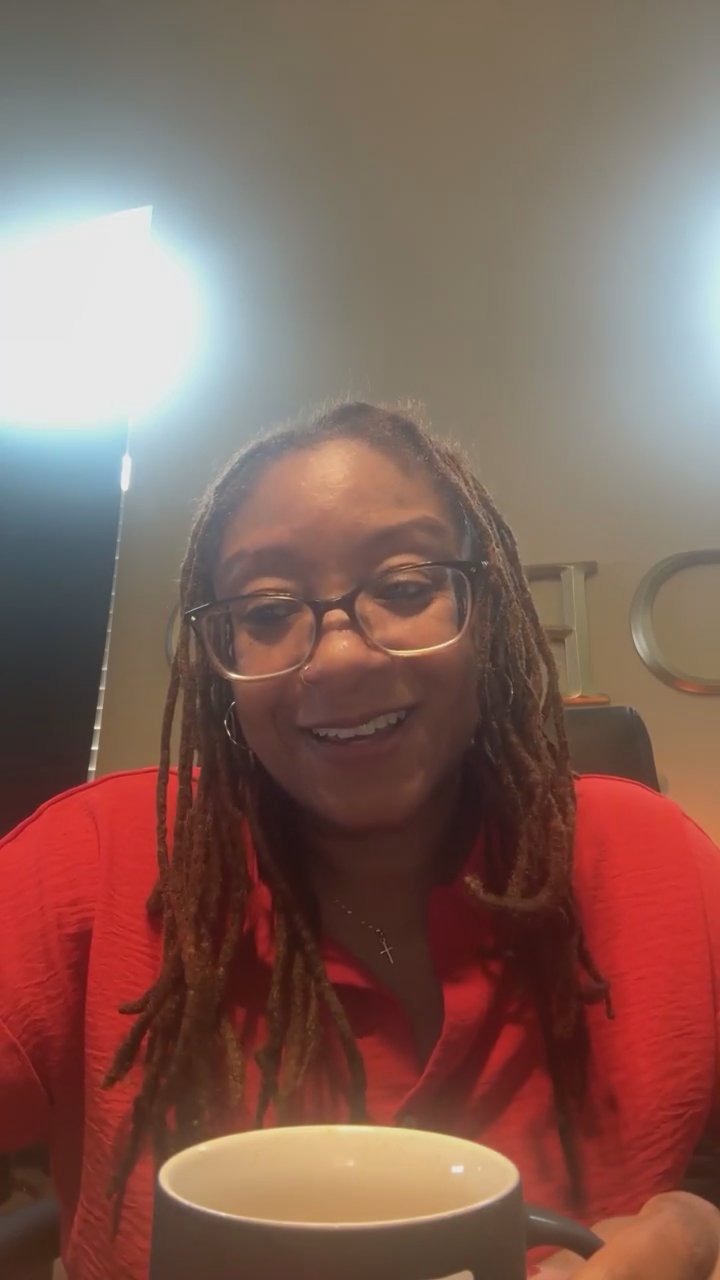
The host explores safety in relationships during suicide awareness month after a viral post about a child who died by suicide reportedly linked to a relationship with ChatGPT. She shares personal memories and highlights the 988 crisis line.
Hey, Kai Adre, hopefully y'all can hear me, because I don't have my mic plugged in today. But let me make sure this is off the ground so you can hear me okay. Okay, that's a little better. All right, so we are talking about safety in relationships today. Well, this whole month. And I had a planned discussion, and it totally got switched. Hello there, Katie. Katie, as I'm guessing, thanks for joining me. But my whole plan for the day just got messed up, because I'm going to confess y'all. I scroll too much on Instagram.
And actually, I was on Facebook, but there's a mom's group that I'm a part of, and one of the moms had posted a video that was shared on Instagram, so, of course, I had to go check it out. And the video, and maybe you guys have seen it, and there's trigger warning today. So we're talking about suicide awareness. But the video was of this father who I guess was giving a statement about how his child, and I don't know the age, ended up dying by suicide after having, and he called it a relationship with chat GPT.
Okay. And so that completely changed my heart and my, just my place where I'm at today. So I want to talk about this. So if this is a trigger for you, please forgive me. But it is suicide awareness month. And if you don't know, so there is a new suicide prevention lifeline number, it used to be this long number. And now it's just 988, just like if you were calling 911, for mental health crisis, you can call 988 and is available 24/7. And I think that this is a topic that a lot of people are afraid to discuss for many reasons.
Um, sometimes it's because you might have had a loved one that has struggled with this, or that has completed their attempt to end their life, or maybe new a friend or someone in your neighborhood. And if I think back to, I think I was maybe in first or second grade is when I first became exposed to what suicide is. And I remember at that age, there was a young man in my friend's neighborhood. And I remember we were just riding our bikes, just playing, you know, we didn't know what was going on.
But I remember this house, and there were a bunch of people outside crying and very emotional. And you can just feel the heaviness at six, seven years old. I didn't know what that feeling was. I just knew it didn't feel good, it felt uncomfortable. And I remember seeing people just not just sobbing, but more than that. And there's just so much pain in the air. That's the best way I can explain it. And it was something I'll never forget. And I later learned that someone in that household had died by suicide.
And that was the first time I had heard that term. So I know back then that was something I didn't quite understand why someone would do that, why someone would choose that for themselves. And as you get older, you learn how hard life is, right? And even today, you might know someone who has had thoughts like that, or who has actually done that, and you still are confused, why would you choose that for yourself? And to be honest, you know, there's so many stories of suicide survivors that they talk about.
And there is a theory behind this. There's theory that backs up, it's called interpersonal theory of suicide. That backs up how many people who actually take action towards their thoughts of suicide is because they lack this sense of connection to others. So consider who is in your life that you know, right? People know us, we know them, but we may not actually have a connection to them . There are people that are surrounded by so many people. Think about all the celebrities that we've heard of, and just maybe go back about three years ago.
It was like a chain of celebrities that were coming up in the news that they had died by suicide. And think about all the people in their lives that struggled to have connection . And so today's topic, High Speed Blunder, today's topic is about safety, how we feel safe with others, or who do we feel safe with. And so this leads me back into, I'm wrapping this around, okay, just follow me here. This video of the young man who had a relationship with chat GPT was prompted to end his life. And there's been other stories of youth and adults who have created relationships with AI, doesn't matter what platform it is, that they feel safe in that space because they don't feel safe with people to share what they're thinking, what they're feeling, what hurts them, all the pain that they're experiencing, all the random thoughts, they don't feel safe to do that with the people in their lives, or any other human, and they choose the route of, "I'm going to talk to AI about this."
And AI, and I have a shirt that says, "Chad GPT is not show therapist," okay? A lot of people do go to AI for answers, for understanding, help me understand this, tell me how to do this, and it's like we've learned in just a short amount of time, okay? We have trained ourselves not to think anymore for ourselves. We are allowing a system to help us think things through and to think for us, yes. And it's sad that we are in this space, but I think just going to poke this a little bit, I think this is more about because we are lacking connection.
We're afraid of connection. We were taught back in the pandemic that it's not safe to have connection with people, right? It's not safe to be around people, and we've embodied that the last few years. And so we are in this mental space now where we can't share our thoughts and even online. There's so much happening in the world job, and I'm not trying to pinpoint specific events, but there are so many examples that we're seeing where we can't even express ourselves verbally online anymore, where let's say Facebook was a safe space, and we could put our random thoughts on there.
And now we put our random thoughts, and then people are commenting, and then another person comments, and it starts an argument maybe, or just there's just so much disconnection online on places that are designed for us to connect. For example, I don't think that happens here in cadre, so let's just shout out cadre for that. This appears to be a safe space, and I know all of us constant creators here, and I know Luke is very big, and his team are big about making sure that cadre stays safe, right?
We want this to be a safe space for everyone who's on here, everyone who shares their personal stories, everyone who comments, asking questions. I don't know if people have reached out and got coaching through here, but this is designed to be community for people who are struggling. We're all struggling in our own ways, right? But what about the people who don't know where to go for safety, for emotional safety, for mental safety, and they're turning to AI for their place of safety, and they're creating relationships with AI.
It's not supposed to be like that, okay? And a lot of times, those of us who are looking in, we may not even recognize that that's what's happening in that person's life. We might think they're healthy, or we might think they're just being quiet, or they're introverted. We might call it that, but there's so many people who appear to be introverted that are really struggling, that have social anxiety, that have some dark thoughts that they don't know how to tell people because they're afraid of what could happen next.
But they're so quick to go to AI and share what hurts them. And so I want to encourage all of us here in this space to check on your people , check on the ones that are quiet, but also check on the ones that are loud and bold because sometimes those people who are putting on the face for everyone else are hurting inside. And that's what we see with most of the celebrities, right? They have a face to put on. They have a mask that they feel like they have to wear for the public, but inside they're hurting and they don't know how to say anything, or they don't feel safe to say to someone.
And I don't know if you've ever been in that space, right? I think we all have dark thoughts sometimes. And that's normal, but what we have to remember is that our thoughts are not who we are. Our thoughts are, they come and go, right? And with some of the clients that I work with, I try to describe our thoughts. We can hold onto them like they're people. So if you imagine yourself in a park, busy park and you're sitting on a bench and your thoughts are like the people walking by, well, you can choose to interact with that thought or not.
You can see the thought, that thought might see you, but it just keeps on going , right? And there are sometimes where there are thoughts where you see it, it sees you, and then you start to have a conversation with that thought. And that's where it keeps, it continues. And sometimes those thoughts are unhealthy. Sometimes they're healthy. Sometimes they're good. But when those unhealthy thoughts walk by us and we decide to interact with it, my challenge for most people is to also share that thought with someone else, even if it hurts, because sometimes we can interact with our thoughts and our conversation may not be healthy, right?
We don't know how to have healthy conversations with ourselves sometimes, which is good to have connection because people in our lives serve as buffers, right? When we're not in good spaces mentally or emotionally, the people in our lives, and you have to be careful with who you choose to do this with, but there are people in our lives that should serve as a healthy buffer for you, that can call out when your thought is not rational, that can call out when you're thinking something that's way off from, you maybe even thinking negative about yourself, right?
We can't, I mean, rephrase that. We shouldn't allow people to decide how we should feel, right? Our feelings, our emotions, our signals for us to pay attention to things. So that's not what I'm talking about, but when we are having dark thoughts that are not safe for us, that are not safe for others, the people in our lives need to serve as buffers for that. So who is in your life that is serving as a buffer? Who is safe for you to share your deep, darkest thoughts? Do you have one person that you can talk to, and do you have one person that it doesn't matter what time of day that they're going to be available to you because they care about you?
And not everybody has that, but that's why there's 988. That's why there's a suicide prevention lifeline. That's why there are so many organizations that have trained professionals to help you with those thoughts. And sometimes, you know, if we're talking about filling our cups, right? Sometimes the people in our lives, their cup is not big enough for us, and that 's okay. That's okay, right? That doesn't mean that they don't care about us. That doesn't mean that they won't want to be there for us, but there's just so much that they can handle.
And it's the same for us. There's so much we can handle for other people, all right? So if you do have that one person, I speak one or you jump into it. You do have one person, so blessed to have a safe person to help you during troubling times. That is beautiful. I love that for you. I do want you to maybe reach out to them today and just say thank you, because sometimes the person that's in our life that is our buffer that can hold us sometimes, they don't even know that they're the one. And I bet that that would really speak to them if you share that with them.
Yeah. All right, I know this was pretty heavy today, y'all. I'm sorry, but I had to get that off my chest. That video really, it's heartbreaking to see that people are not choosing real connection with humans, because humans don't feel safe for them. So let's change that. Okay. All right, y'all. I will be back next week. I am going to kind of lead us into October, which is domestic violence awareness month. And so we're going to talk a little bit about that. Just a little trigger warning there, if that is triggering for you.
And I hope y'all have a wonderful day. All right. I'll see y'all next week. Bye. [BLANK_AUDIO]
Reactions and comments are for members. Joining is free and takes a minute.