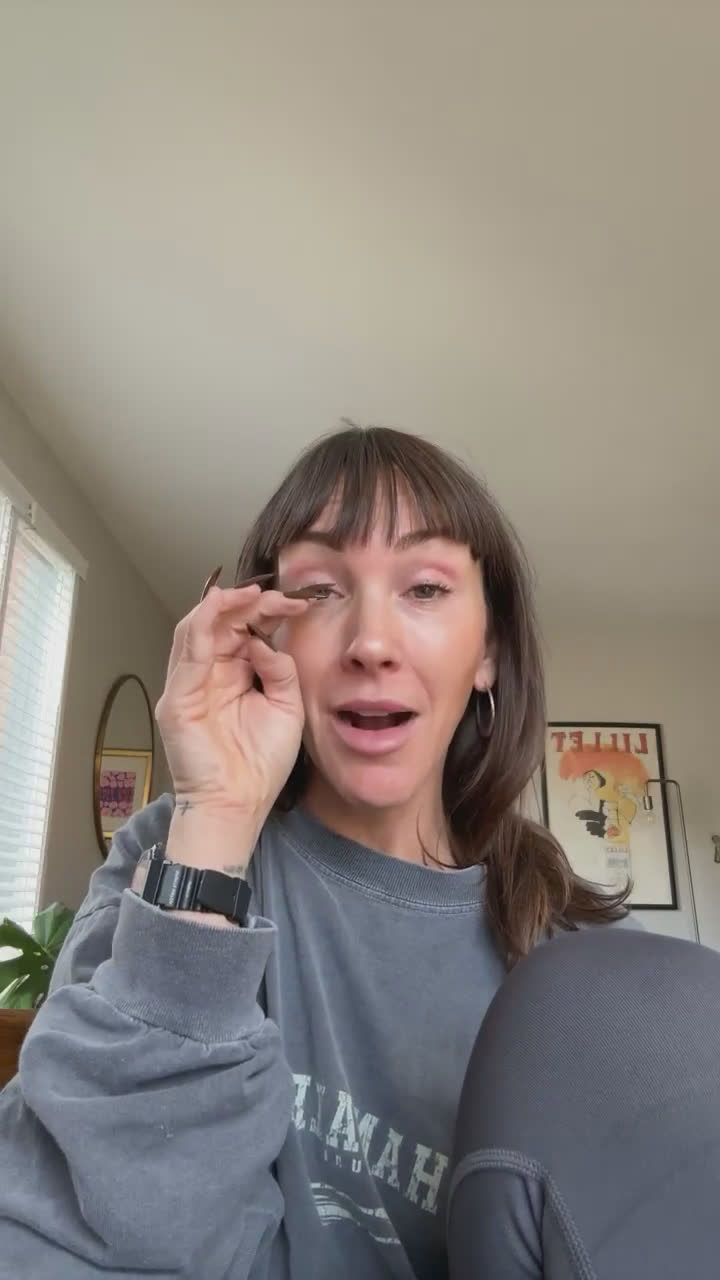
Rachy explores how to rewire negative thoughts using a garden-as-mind metaphor, sharing reflections on harvesting and planting mental habits to cultivate thoughts that support a more intentional, cared-for inner life.
Cadre crew Rachie here on a Wednesday this week instead of Thursday. The Mariners are in the playoffs right now. My brother has tickets to one of the playoff games tomorrow. We talk about negative thoughts and how to rewire them.
This month on Cadre, most or many of the creators are going to be talking about the concept of harvest and harvesting. What I want to talk about today is creating thoughts that build a better life for ourselves. I've been journaling in the morning and listening to meditations.
The way we think about what we're going to do impacts how we do it, which then impacts the outcome. In the psychology world, there is like this triangle, and it's your actions, your. thoughts and your feelings. There's not a right or a wrong. It's a matter of what works for you.
Happy Wednesday. Cadre crew Rachie here on a Wednesday this week instead of Thursday. I don't know if any of y' all are baseball fans, but the Mariners are in the playoffs right now. I'm in Seattle, and my brother has tickets to one of the playoff games tomorrow. So I will be there tomorrow, which I'm very excited about. Hi, Luke. It feels like a once in a lifetime thing. Hi, Michelle. So we're here today, and I'm very happy to be with you here today. Hi, Jules. So today I. Hi, Rach. I want to talk a little bit about our thoughts, specifically negative thoughts and how to rewire them.
Yes. Let's go, Seattle. Honestly, just as a moment for the Mariners, Like, I'm not a big baseball person. Person. Like, I love watching sports, but baseball has never been the one that I've, like, watched a lot. But my brother and my dad are super into the Mariners, so they are so excited. And anytime there's, like, anytime a team, a home team is doing well, it's exciting. It's really exciting. It feels like there are not that many. The. The one time thing is that the Mariners are in the playoffs and I'm going to one of their games tomorrow with my brother.
So that's why I'm going live today instead of tomorrow. Yeah. So I'm very excited. But what I want to talk about today is creating thoughts that build a better life for ourselves. And in the theme of harvest, which is the theme of the month on Cadre this month, if you haven't noticed already, this month on Cadre, most or many of the creators are going to be talking about things that have to do with this concept of harvest and harvesting. And so for me, that obviously has to do with mental health.
That's kind of how I am interpreting it. So I'm thinking a lot about harvesting my thoughts and harvesting thoughts that are going to grow something that I actually want in my garden. Like, if I think about my mind as a garden that I am nurturing, that I am tending to, that I'm taking care of, I'm thinking about things right now that I want to harvest, things that I want to plant, plant and bring to life, rather than maybe just what I've been doing. Honestly, a lot of which is like, looking at my garden like, d***, there's a lot of weeds in there.
Like it. That garden really looks dry. It's dying, and it's really not. Not a nice garden. And instead of just looking at it with disdain and being, you know, sort of apathetic or complacent with the state of my mental garden. I'd like to start harvesting. I'd like to start creating a garden that feels beautiful, that I want to look at, that I want to pick flowers from, that I'm proud of, that I want to invite people to. So I've been really trying to focus on that this week and really examining the thoughts that I have on a day to day basis and which I am pretty good at doing.
Like I'm pretty good at monitoring my thoughts and being aware of them. But I want to start practicing actually bringing new thoughts into my mind. So I have. There's a couple things that I've been doing. The first one is I have picked up journaling again, which is a big deal for me because I used to be an avid journal. It north an avid journaler. Every morning I would journal and I haven't been doing that in the last several years. It's really been something that I have not been in practice with and well, guess what's happened?
My thoughts are not that great. So I've been journaling in the morning and I use. Use. Let's see if I have it handy. Yes, I do. So this is the journal I use. I made it. This is not meant to be self promo. I. When I was traveling with my ex husband in 2018, I used like a regular blank journal and every morning I would like make these little squares in the journal and I would do like a little mindfulness activity, I would do a little gratitude and I would do some affirmations and I did it every day and I found it to be incredibly helpful to keep my mental state like really great while on the road and without a therapist.
So I decided to put it into like an actual journal that I could like replicate. So like you'll see in this journal it has like pre filled sections with prompts. So I've been doing this in the morning and it's been really helpful because I have to write a list of things I'm grateful for every morning and then a list of affirmations based on a different category every morning. And that alone like kind of puts my brain at the beginning of the day into a state of positive thinking from the start. So it's like I'm putting on these like positive glasses at the beginning of the day which is really helpful.
The other thing I've been doing is listening to meditations. So like if I go for a walk with Milo, I'll pop on some affirmations in my headphones or there's folks on this app that will, you know, that have lots of incredible videos that you can listen to TikTok as well. Like, people just sharing a meditation or words that you can listen to while in movement that can go into the subconscious and rewire your thoughts. And so that's something I've been doing and really trying to. As hard as it is right now, I know this belief will come back because I used to have this belief, and right now I don't have it.
I'm very cynical right now, but trusting that in time I will start to believe again that my thoughts do create my reality. And funnily enough, having that cynical thought that my thoughts don't create my reality is creating my reality. So trying really hard to harvest thoughts that will create a reality I want. Like, do I want to feel unmotivated? Do I want to feel sad? Do I want to feel anxious? Or do I want to feel excited? Do I want to feel grateful? Do I want to feel hopeful? And trying to harvest thoughts that will build the reality that I want.
So taking some accountability as well for my thoughts and, you know, knowing that obviously I can't control everything and there are things outside of my brain that I can't control, but I can control my thinking. We have. Billy, I read this the other day. Like, we have billions and billions and billions of thoughts all day long. Billions. So we might as well. Like, we might as well have some good ones, you know, and we can change them. Like, we can literally think new thoughts even if we don't believe them right away.
Like, we can choose to think a new one even if we don't believe it. And the more we think those thoughts, the more they become beliefs. So that's something I'm practicing right now. And funnily enough, I. This is just sort of a side story, but it's related. I don't know if you guys know Dan Brown and like his series of books with Robert Lang Langdon, the symbologist who solves mysteries internationally, but he just came out with a new book called the Secret of Secrets, and I'm a big Dan Brown, Robert Langdon fan.
So I just started reading it, and in the book, it's. I haven't. Obviously, I haven't gotten very far, but there is this theory that a scientist in the book is working on about. Oh, God, I'm gonna forget what. It's called Neo. Neotronics. I don't know. It's something to do with the brain. It's like a neuroscience, like, neuropsychology. Study of some kind. Neotropics, I don't know. I'll have to look. But it's the study of consciousness, which I find, like, super fascinating. And it's the study of consciousness and thinking about, like, where is our consciousness?
Like, and there's, like, two arguments in science. One argument is that our consciousness lives inside of our brain. And there's another argument in science that consciousness actually lives outside of our brains. And. And it's in the energy of the universe and the, you know, the planets, et cetera, et cetera. And so this neuroscientist in the book is talking about this idea that there have been studies where, like, certain parts of the brain will react, like, to different images. And they've done these studies where they have someone sitting down in a lab or whatever, and they show them three separate images that are going to light up different parts of the brain.
And as they assume, each image lights up a different part of the brain. But when they go and zoom in on the timeline of the brain lighting up, they see that the brain lights up before the image is shown. And when they zoom in further, they see the brain lights up before the person has even selected what image is going to be shown. Which means in some ways, our brain is predicting what is going to happen. And it's sort of this argument of, like, is our brain predicting it or is our brain creating it?
Which I think is just. I think it's really cool. So I'm trying to adopt this mentality this month that my thoughts are going to create my reality. And not, like, in a grandiose, like, I'm a magician, you know, I can make magic happen. Or that, you know, not to an extreme, but enough where, like, I can start to change my thinking and see what happens in my life. Like, just as an experiment, like, if I. If I really believe that I'm going to have, like, the best day ever, will I have a better day than I did yesterday?
If I really believe that I am going to do an incredible job on this video that I'm editing, what kind of energy then am I going to pour into that video? And then what is that video going to be like? Right. The way we think about what we're going to do impacts how we do it, which then impacts the outcome. So to some degree, our thoughts do create a reality. It has an impact on a lot of different things. So that's what I'm harvesting right now. That's about it. Just gonna read this comment. Really quick reminder.
Flowers start as seeds and have to grow in order to bloom. It takes time for them to be pretty. Unless you plant them already grown, obviously. Yes, I love that. I feel like I don't necessarily have control of our thoughts. Sometimes they seem to come out of nowhere. Like actions. What we do have control over is what we will do with them and whether or not to believe or change them. That's interesting. So this is. This kind of goes to, like a psychological argument. So in the psychology world, there is like this triangle, and it's your actions, your.
In this corner, thoughts and your feelings. And there are arguments in psychology about which one comes first. Some people believe that your actions influence your thoughts and your feelings. Some people believe that your thoughts influence your feelings and your actions. Some people believe that your feelings impact your actions and your thoughts. And based on that, that's how a lot of therapists or psychologists will decide what the problem is and how to fix it. Right. So if someone believes that it's your actions that cause your feelings and your thoughts, they'll focus on having somebody do different things in order to feel and think differently.
Psychologists who believe that it's your thoughts that impact your actions and your feelings will have their clients change their thoughts in order to change their actions and their feelings. There's not a right or a wrong. It's really a philosophy, and it's really a matter of what works for you and what feels like it's in alignment to how to make change, if that's what you're looking to do. That's. I think it's. That is the cognitive triangle. Don't quote me on that. I did learn about that in school years ago, but.
Okay, my loves. I hope that that was informative or interesting. No, I'm gonna reframe. I'm gonna do a different thought. I think that that's really interesting and informative, and I'm really glad that you were here. And I will see you next week on our regular time on Thursday, sending you lots of love. And I will talk to you in a week.
Reactions and comments are for members. Joining is free and takes a minute.