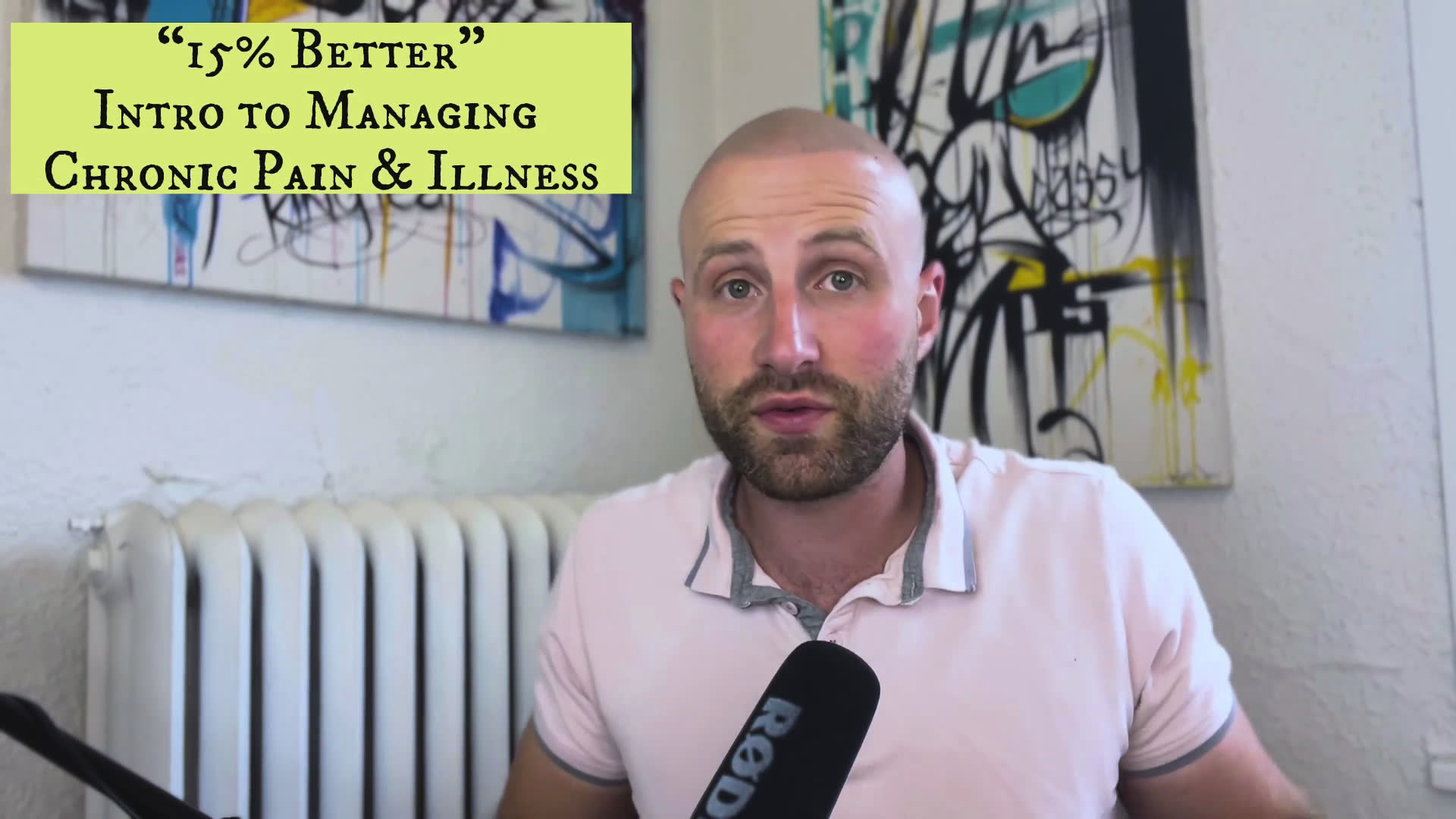
Host introduces an ongoing series on living with chronic pain and chronic illness, outlines common problems people face, and frames the series around practical solutions and future topics like navigating medical care.
Welcome to the intro on my series about chronic pain and chronic illness. Now, if you're clicking on this video and on this series, my guess is that it's something either you suffer with or something you've struggled with or maybe someone else you know has. Now, I want to acknowledge right off the bat, this is a heavy topic. There's one day I made a social media post on chronic pain and some of the things that people tend to struggle with and I was shocked because that video got more engagement than almost any other video I did, the amount of people that shared it or stitched it, do edit the video.
I mean, it was unbelievable and it really made me realize how much of a problem this actually is and it makes sense because when you look a little bit deeper, a very high percentage of people struggle with chronic pain and chronic illness and I know personally just how debilitating it is and that's really what got me started on this journey speaking about this topic and also noticing that in the, as far as the social media world, I have found very few people that really focus on this topic or go into depth.
So when I was thinking about series that I could do on cadre, this one really came to mind because I think that having some resources on this or having some direction on some of the things that you could do to help with chronic pain and illness would be a huge benefit. As I mentioned yet, this is a heavy topic and when I made these posts, honestly , I had a hard time reading the comments and I still do when I make posts about chronic pain because it's so clear how people's lives have been drastically impacted, how chronic pain and chronic illness has completely diminished many people's quality of life and not only that, just the level of hopelessness there.
So again, it's a heavy topic, but I really want this series to have more of a positive element to it, right? Because I think there is a tendency for us to dwell so much on the problem because it is so obvious and glaring, but I want the series to be a little bit more positive and focused on solutions. Now, on the first video of my series, I'm going to be talking about the problems that come with chronic pain and it's really important to acknowledge those and there 's definitely a handful that I've found that so many people suffering can relate to, that it 's this common experience that just about everybody has so I think it's going to be important to really lay out the problem but then have the rest of the series be about solutions.
So as of right now, I want to make this an eight part series, but every time I do a series, I end up remembering something else and probably adding some videos to it and maybe we'll just make this an ongoing series as more information comes and you all have more questions that we can make more content on it. So some of the topics that we're going to cover again, I mentioned some of the problems in breaking that down, but also things like how to navigate the medical community and finding certain medical solutions that may help things like mentality and using some therapeutic skills to diffuse from pain and not make pain intertwined with who we are.
Things like managing relationship is a huge one that's one of the biggest complaints people have is how their relationships are impacted and there's a lot of clear reasons why that is and I think that's a really important topic. Things like mindfulness as well and I'm also doing a mindfulness series that can go with this and help and so this is all about improving your quality of life. So I'm going to call this series 15% better. Now where did I come up with that number? I just kind of made it up.
So I mean my goal in doing this is by implementing these skills that you could improve the quality of your life somewhere like 15%, right? For some people maybe it's 10, 5, 20. I don't know what that is and you may be saying hey that's not really a significant number 15%. Well, I think it is significant, right? Any amount we can improve the quality of our life. Now I'm not saying that that's as good as it can get, right? 15% could just be a start and this series is just a start and it's just giving you some ideas and some skills for you to implement and hopefully as you do them over time the quality of your life can improve.
So another reason why I'm doing this series is that this is something that I've struggled with myself. It's interesting being someone who's a mental health professional and works with people to improve their mood and gain a better quality of life. This is something I was struggling with all along for 7 years, right? So there's part of me as just an average person who's struggling with this but then also as a therapist someone who's interested in psychology like noticing how this is impacting me and thinking like well this has to be impacting so many other people yet I work in mental health and I never hear about this.
But almost like I could count on one hand the amount of people that I've really worked on this issue with yet I know that 25 to 50% of people struggle with it, right? So that's telling in and of itself how so many people struggle and silence. So I really hope that you all are going to stick with me on this series. Just give it a try, right? What do you got to lose? Let's do this together and in the first part of the series I will tell you more about my story and what I've learned and then we could go from there.
So again let's give this thing a shot. I hope you take this journey with me and I hope that you're going to get something out of it. We'll see you there.
Reactions and comments are for members. Joining is free and takes a minute.