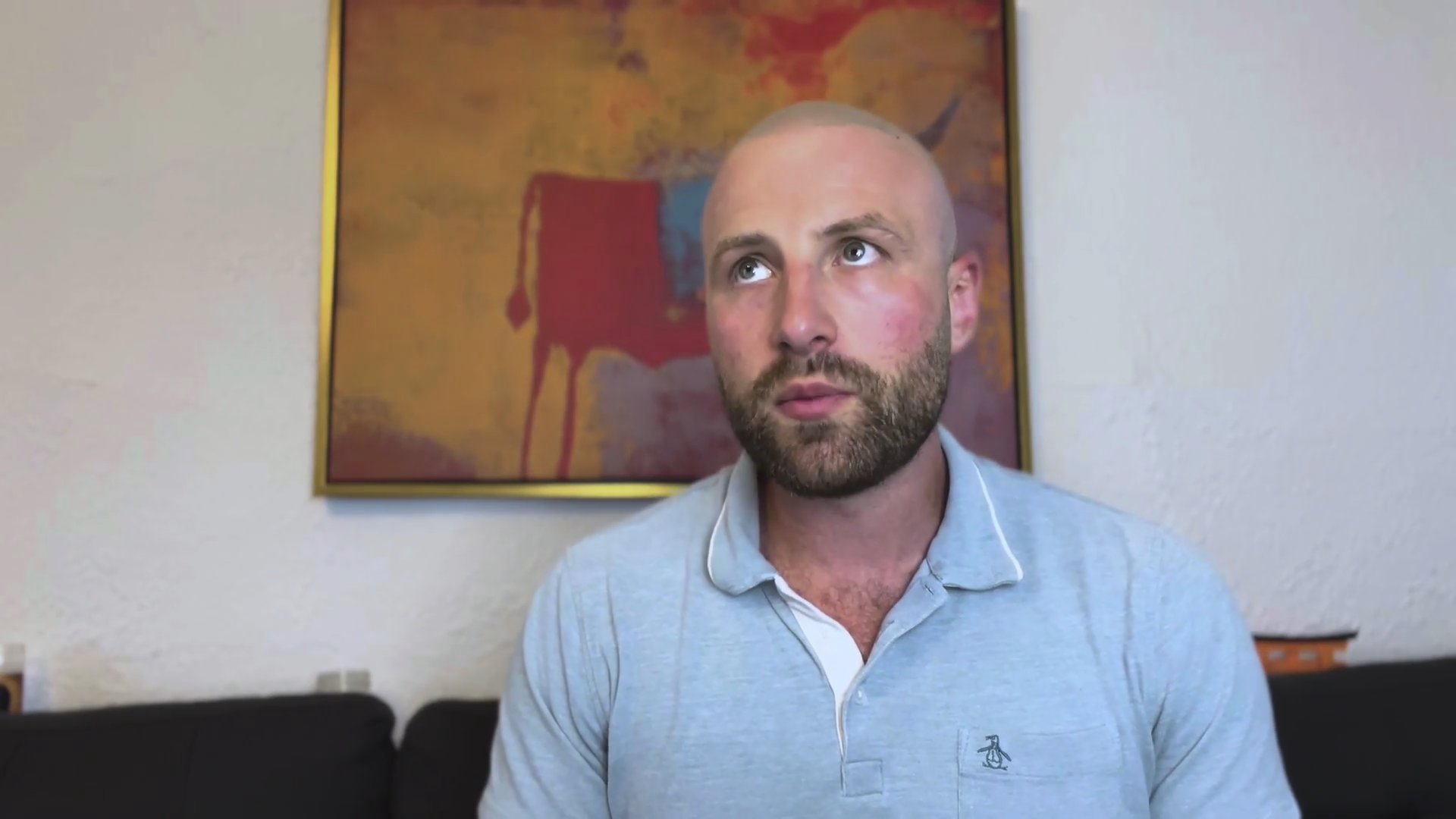
A presenter recounts his decades-long journey with scoliosis and chronic back pain—from childhood diagnosis and refusing a night brace, through worsening symptoms and spinal fusion, to months of recovery—and connects these experiences to practical lessons in the series.
The presenter welcomes viewers to the 15% better series and explains he'll step back to share his personal experience with chronic pain and illness before diving into the main content.
He recounts the first discovery of scoliosis around age 10–12, the x-rays, and his emotional confusion and fear about what the diagnosis might mean for his future.
The narrator describes follow-up with specialists, being prescribed a night brace, the discomfort of wearing it, his refusal as a child, and how that decision set the stage for later consequences.
He traces the onset of significant back pain in his late twenties, multiple specialist visits and x-rays showing severe curvature, and being told by surgeons that fusion surgery was the only viable option.
The speaker shares years of worsening pain, attempts at conservative treatments, frustration with mixed medical advice, and the emotional toll including guilt and strained relationships with family and friends.
He describes finally scheduling and undergoing spinal fusion, the intense immediate postoperative pain and hospital stay, then gradual improvement over the first weeks to months of recovery.
At eight to nine months post-op he reports substantial functional gains, reflects on regained mobility and lingering uncertainty about the future, and previews how his experiences inform practical advice in the series.
Hey folks, welcome back to my series 15% better on managing chronic pain and chronic illness. I thought before jumping into the meat and potatoes of the series that I would take a step back and share my story with you. As I mentioned in the intro, I'm someone who suffered with chronic pain for many, many years and that's what got me interested in the topic. And if we're going through this journey together, I think to better connect, you should hear a little bit more about my story and my experience.
All right, it all started when I was about 10, 11, 12 years old. I'm not sure exactly but I had a really bad stomach virus. Like I was really sick and I went to the hospital or doctor or whatever it was and they gave me some x-rays and apparently on that x-ray they saw that my spine had a small curvature to it. And I would imagine they told my mom this and said, hey, you know, he has scoliosis, what's called idiopathic scoliosis. And essentially idiopathic means we have no idea why. Maybe that's the idio idiot.
I don't know. But anyways, So the first time I heard about it was after getting those x-rays and I distinctly remember this. Our memories aren't always 100% accurate, right? And we remember more the emotions around it, but I am pretty damn sure this happened where my mom walked into my room And she sat down on the bed next to me and said, the x-rays came back and you actually have this condition called scoliosis. Your spine has a curve on it. And I don't remember what else she said, but I remember she left the room and I just started crying.
And I remember that I didn't really know why because no one ever really explained what scoliosis is besides the fact that I have a curve in my spine. But what are the implications of that? what is a life with that going to look like? And at that point, I had no idea. But I think on some level, intuitively, I knew that this was going to be a problem and this was something that was going to impact my life, even though I had no information or evidence to conclude that is the case. So shortly after, I'm not sure how long my mom and I went to an appointment.
where we saw a spine specialist who reviewed the x-rays and this is a really significant part of this story because I remember pretty distinctly what this doctor told me and the implications of what he told me really have had an effect on me my entire life and I'll explain why. So what I remember him saying whether this is actually 100% true or not but I pretty vividly remember this and whether it's accurate or not this is what I took in and decisions off of with my 13 year old brain. So he said that your spine will likely continue to curve until you're full grown and then it's going to be what it's going to be.
and depending on how much it curves it may or may not be a problem because a lot of people actually have curvatures in their spine and for a lot of people even people who have pretty significant curvatures it may not have a significant impact on them. So given all the circumstances of my condition the typical treatment course is bracing right so they fit you with a brace and the hope is that this slows down the curvature and he told me that for your case you only have to wear it at night and it was very common and for certain people who really have significant curves as a kid and it's actually more likely for women to have a significant curve younger and they may have to wear a brace all day and that's extremely hard for them just to divert a little bit because as a woman and very stereotypically being judged on looks and especially at this time when you're 13 years old and developing to have to wear a brace to school and of course this impacts guys as well, it could be really embarrassing for folks.
But I mean, I guess luckily in my case, I only had to wear it at night. So I'm like, okay, do what the doctor says. And so I went to an orthopedist. I got fit for a brace. And again, this is where the story becomes very significant because things could have gone one way or another and I don't know. And so I got fitted for the brace and I remember pretty distinctly wearing it and it was extremely uncomfortable, especially when you sleep because it makes you really hot. And I remember I had a hard time falling asleep and I would wake up in the middle of the night and I don't know if I consciously did this or not, but I took the brace off and just threw it on the ground.
My mom would wake up or she'd come into my room, see it there, and they were trying to be supportive and say, wear it. But again, with my, I was actually probably more like 10 or 11, but with my brain at that time, I didn't really fully understand the significance of the condition or the implications. And so, I pushed back on them and said, I don't want to wear it. And my parents eventually said, well, he doesn't want to wear it, so we're not going to force him. And again, this is going to be a part of the story that is really significant much later in my life.
So I just went about my life and we could fast forward quite a bit of time to, let's say I was 18 years old, right? And I had this in the back of my mind. And that whole time, the scoliosis had no impact on me. I didn't have extra pain. I wasn't like seriously deformed. I'm in college. And I didn't really think about it much, but it did occur to me. I said, well, that doctor said when it's 18, that's about as bad as the curve is going to get. And I'd never really had follow-up appointments. They never really tracked the curve, which I learned later you should probably do regardless.
But that never happened. And so, yeah, I'm 18 years old. No effect. 20, 22, 24, 25, 26. And I did notice that there was more deformity, but I never really put two and two together that actually my curve was getting worse and significantly getting worse. So now I'm about 28 years old and I'm starting to see the first signs of pain. And this would happen after a very serious workout. Like I used to do martial arts and jujitsu and extreme lifting and that kind of thing. And it never hurt when I did it, but then after I remember when I would walk or stand, I would get this sharp pain in my back, but then it would go away and it would go away when I sat down or laid down.
So I didn't think all that much about it. And so this is around 2014, 2015. I'm about 28 years old, as I mentioned. And just over time, I would work out, the pain would get worse and worse and worse. And then I started to have the pain. When I started walking a longer distance of time and I remember I was with my girlfriend and some friends and we went to the Minnesota State Fair and we walked like 5 miles all around. I remember by the end of that day, my back was like really, really hurting and I could not wait to get back in the car and sit down because again, when I sat down, the pain went away.
Then about a year later, I was on a trip with my family. We went to Seattle for my cousin's wedding and I remember walking around all day and again, the pain came and my family noticed like, wow, you're in a lot of pain. I'm like, it's actually been pretty bad. And again, I never really fully connected it to the scoliosis. I knew that probably had some impact on it, but I didn't know why the pain was so bad, but I just kind of gritted through it, like a typical guy. And then around 2016, I'm like, all right, I got to do something about this because this is starting to impact my life.
And I'm still doing more extreme sports and activities. This was something that I really enjoyed doing. And it's significant because when I suffered with bouts of depression, the number one thing that helped me most was doing these types of workouts. So I believe I just looked online and I found a doctor who was like an orthopedic back specialist. And I went to his office and he did some x-rays, once again, my best friend x-rays. And he came back and he said, you have a really significant curve on your spine.
It's at about 50 something degrees. And I remember when I first got it, it was probably like 17, 18 degrees. And so I never realized how much it curved. And he basically said, you may have to get surgery on this. And that was my biggest fear. And I didn't mention this before, but I had heard about the fact that if your spine curves too much, you would need a fusion. And I remember hearing a story about a girl, a friend of a family, who had a really significant curve at a young age. I mentioned females tend to get it worse.
And she had to get her whole spine fused. And I remember hearing about how difficult that is because it really significantly impacts your mobility and you could still have a really significant amount of pain. So I always had this fear in the back of my mind and again probably intuitively knew that maybe this would have to happen to me. So this is like my greatest fear that one day I would have to get my spine fused. So I'm like, okay, like this doesn't make sense. The doctor told me then that it would not curve past 18.
yet he's saying that it's significantly curved. So I'm like, okay. And he referred me to a spine surgeon. And this is a really, really big part of the story. When I went into his office and he reviewed the x-rays and basically said, your only option here is a fusion. There's no minimally invasive surgery because I've heard all these different back surgeries that are minimally invasive or microscopic or whatever. And it was really like the cell of a jail, closing down on me, where I was like, holy crap, like this is actually real.
And I didn't really believe him at the time. But I was like, my God, some of my worst fears are coming true. And I kept pushing, like there's nothing I could do. I can't do yoga, I can't do this. And he's like, nope, there is absolutely nothing you can do, whether it's physical therapy or chiropractic or minimally invasive surgery that's gonna help. Nothing. Only thing that we could do is fuse your spine. Do you wanna do this? And I was like, no, I'm not ready to do this whatsoever. So I walked out of his office and I think I told myself, you know what?
I'm gonna do everything I can to fix the problem. I'm going to see every doctor that I can, get every opinion that I can. And the more surgeons that I saw and the more specialists I saw, it's kind of unusual, but they all said the exact same thing. Exactly. There's nothing you could do whatsoever. You could try physical therapy, go try it. And they would all, they were all pretty conservative. They said, you know, this is a big surgery and you never know what the outcome could be. You know, we think that you're gonna have, odds have it, you're gonna have a pretty good outcome, but there's a certain percentage of people who don't get better at all.
There's even a percentage of people that actually feel worse after the fusion, but most people are gonna feel pretty moderately better. And I'm like, well, I probably love those odds. It just doesn't sound great. And they did mention that my mobility would be limited. And they said even with my condition, I would have to go and get my spine, like my whole lumbar spine fuse all the way down to the sacrum. And they said that once you get that last one done, it locks your hips and you really lose mobility.
It'll affect the way you walk, go to the bathroom. I'm just like, wow, this does not sound at all. And they said, we could fuse not all the way down, but we could fuse one more up and you won't lock your hips, but there's a 90% chance, 99% chance you are eventually going to have to have that last vertebrae fused. And so they're like, so every surgeon just said you have two options. You go down here or you could go down here and that eventually you will need that other one. So I think I saw, I was in such denial because I, again, this was my worst nightmare that I saw, I don't know, 6 surgeons and all of them said the exact same thing.
And the hardest part about all this was like I was completely powerless. There was nothing that I could do about it. And this whole time my pain is getting worse and worse. I could walk, I could stand less and less. And it was always the walking and standing and what enabled me to go a longer period is because when I was in pain I could just sit down and it would go away. The problem was all those things that I like to do, the extreme sports, the most simple things like going out with your friends, going to an art fair, going to a concert.
It all became this mental game of chess of how can I go do these activities and have as little pain as possible and still try to enjoy it, whether it was a back brace, certain pain medications. I never went the route of opiates because that used to be a drug of choice. I am in recovery and it probably wouldn't have mattered anyways. It probably would not have helped all that much. Would have just masked the pain and I would still not be able to do a lot of these activities. So it wasn't worth the risk for me.
But my pain got worse and worse and I could do less and less. And I always described it like a boa constrictor. Like it would wrap around me and it would only get tighter. It would never get better because over time, gravity, it shrinks your discs. And especially when you have scoliosis, it wears them down and I was having a nerve pinch. And this is what caused all the pain. So I did try literally everything I could. I saw the best physical therapist that specialized in scoliosis. I went for like a three day intensive and this woman who was literally the expert at the end just threw her hands up and said, yeah, it's not really helping and you need to get surgery.
But I still put it off. I was still so afraid of it because it's known that a fusion surgery is one of the most painful that you can get and for all the other reasons I mentioned before and my friends around me they just like they didn't understand like why aren't you doing this? Why aren't you getting the surgery? Because you equate surgery with getting better yet with this surgery even if you get better there's going to be complications with it. So I had a lot of frustrations with people in my life you know who are all well-meaning And not to mention the significant part I told you with my parents just throwing their hands up with the brace, some of the doctors said like, you could have avoided this potentially, but other doctors said, look, like probably would have happened either way.
But I did have a lot of resentment towards my parents being like, wow, you let an 11, 12 year old make this huge decision that's going to impact the entirety of your life now. I love my parents and they always do what's in their best interest and I understand where they came from, but I still had this anger towards them, especially as this went on and I told my mom, hey, this is the situation, I may have to get surgery. I remember being in the car and I very rarely get that angry with my parents.
But my mom said something that really, really kind of stabbed me in the gut. And she said, kind of flippantly like, you would have just decided to wear that brace. And I lost it. I mean, I probably just said a couple things like, well, you should have made me do it. You know, I just, I lashed back at her and all that anger that I had that I never really expressed nor did I think would be that helpful to express just came out, I lashed back out or I hung up the phone, the only time I've ever really done that in modern adulthood.
And I mean, she felt really bad and I forgave her. But I think it's just another example of how pain can impact your relationships with your friends, with your family, some of the anger, because I harbored a ton of guilt as well. And the guilt was I should have made a better decision. right? And when you have things like trauma, as I'm a trauma therapist, right? Let's say someone's gone through abuse. A lot of times it's common to blame yourself, whether you're like an 8 year old being sexually abused, like you still have this blame, even though it makes no sense.
But I had this blame and anger towards myself for making this stupid decision. How could I do this? I mean, this is something that affected my whole life. But then now I could look back and be like, look, I was 11, 12 years old. I didn't fully understand. And that's where the anger came to. Well, the adult should have done something. What could they have done? I don't know if I refused to do it. Maybe they could have bribed me. Maybe they could have given me some sleep medication, like something, you know, to make me wake up and realize this is what I need to do.
Because if my spine does curve, if I need a fusion, this is going to have a negative impact on the rest of my life. And that's exactly what was happening in that moment. So the more and more years that I was struggling with the pain, So like I said, it first started getting bad when I was 28. Now fast forward, I'm like 34 years old and I had about six years of this. I had the mental and physical anguish. The less and less I was able to do, the more and more of these issues that compounded, you know, I finally threw my hands up.
And there were a couple of times like throughout the last few years that I actually signed up to do the surgery and then backed out. Because again, it was like you have to take a significant amount of time off work. I have all these cool things happening with work and big responsibilities having my own businesses. So it's interesting because in my life, things were getting better and better in a lot of ways except this one way. And I always described it like no matter how good things were and the cool things that were happening in my life, it was like this dark cloud that was always overhead that I can never reach a certain point of happiness because I had this monkey on my back.
So Eventually it was like, I don't have anything to lose. And that's what the surgeon said at that point where you feel you have nothing left. If your quality of life is that significantly hindered, that's when you should do the surgery. And I could have made that argument. five years, four years before that. But finally I was like, this is what I have to do. And I scheduled the surgery and this time I was gonna go through it. And that was actually October of last year. So I got the surgery and what they promised was pretty accurate of how much pain I would be in after the surgery.
And I'll spare all the details, but I was in the hospital for about 5 days and it was pretty hellish. I could put up with a decent amount, but hearing from other people like on Facebook groups, and we're going to talk about these Facebook groups later, but hearing people's stories was one of the reasons why I avoided it because these Facebook groups of thousands of people on it who needed fusions was so negative. It was like so many people had a worse outcome, no good outcome. Very few people had a good outcome.
So I'm like, well, this is what I have to look forward to. But then a lot of people who got the surgery talked about just how hellacious it was. And I thought, yeah, it's probably going to be bad. But The surgeon said it would be bad, but it was like this range of it's either going to be this is the best, this is the worst. It lived up and it was about as worse as I imagined as it could be. So that first four days in the hospital, I couldn't even believe they let me go after that because I was in so much pain.
I was completely helpless and luckily I had help from my mom. And so I came home and I was just this is absolutely horrible. I couldn't sleep. That's probably the worst part is like not just the pain but not being able to sleep, turn on my side. But after about a week I started to turn a corner and every day I got better and better and better. And actually by the time I hit about six weeks I was able to walk and stand more than I was before after only six weeks. And the other thing that they said was that this surgery every surgeon said about one year to 18 months for full recovery.
And as I'm talking to you right now. I'm at like 8 or 9 months. And so I'll tell you a little bit about how I feel now and what's happened. As I mentioned, things got better and better after that one week, six weeks, 8 weeks. And I was able to do more and more. And I was doing some physical therapy. And eventually, even after a couple months, a physical therapist said, it's like, you're as good as you're going to get with me. You know, keep doing what you're doing. And I started to be able to do heavier and heavier workouts, things that I thought I would never be able to do before.
got to the point where I would go on these long walks 3, 4 miles and have no pain. And none of the doctors said that I would be able to do that. And I know that they quote low. They're like, yeah, you know, you can maybe walk a mile. There's still be pain probably. So again, another reason why I'm like, why would I even do this? But you know, I couldn't find a distance that I wasn't able to walk without pain. And the other fear was that loss of mobility. And the choice that I made was not to go all the way down and lock my hips.
I decided I'm gonna go one above and risk having to get that surgery later. And some of the, half the surgeons recommend I do that, the other half recommend I just go all the way. And I decided not to because a lot of them said like, hey, you're young, you're active, like, hey, maybe you get 5, 10, 15 years where you have more of this mobility and then the next surgery you do, it's only gonna be one. It'll be significant, but you know, I'm glad that I did that because again, after six weeks, I was much better than I was before.
So if I had to do it again, it'll suck, but I know that it will probably get better pretty quickly. So I'm pretty lucky, right? I had so far at eight months, the best possible outcome and it's still getting better and better. Like I am extremely glad I did it. Part of me is beating myself up a little that I should have done it way sooner because I lost all these years and some like years that I'm in my prime 28 to 36 or 35, right? These are like prime years of my life that I kind of lost out on.
But you know, I've been able to forgive myself, right? Because with all the information that I got, that I had at my disposal, I know it wasn't easy to make that decision because it was a gamble. It was a scary gamble that I had to take. But I am super grateful because when you go through life, not being able to do the most simple things, like after you are able to once again, it feels like a miracle, right? And I'm grateful because also, like for some of you who are watching this, may not be a great solution, right?
Like you may still be in chronic pain, you still may be for the rest of your life, right? And here I am, I thought I was in the worst position because I'm like, there's absolutely nothing I could do but this huge surgery. But here I am much better now. This is just now, right? I know in the back of my mind that there's a good chance a year, two years, three years the pain could start coming back, that pain in the lowest disc is gonna wear out and I'm gonna start having that pain again. I know that eventually I will have to lose another significant chunk of my mobility.
I know that that's coming, so there are no guarantees. But what I'm doing right now, and this is something we're gonna talk about, is I'm just going to enjoy my life as much as possible, be as grateful as possible that I have at least this period where I have little to no pain. But I know that it's coming. And one of the hardest things to do when I was in pain was to have any level of acceptance of it. was one of the hardest things was to change my mindset around it. And it's easy for me to say, hey, there's these things that you could do.
And it was really, really difficult for me to get to that point of acceptance of. being okay with my situation. So there were some things that really did help me. I got help from a pain psychologist who really helped me change my mindset and I learned a lot about it. And those are the things that I want to impart onto you to see if you could find help and benefit. And not all of it is just changing your mindset and being okay with it. Some of it is trying to find medical solutions, how to navigate the medical field.
And these are some things that we're going to talk about as well. So I have spoken about 10 times longer than I thought I would, but I hope you've made it to this point and got something out of my story and I hope that you're excited to continue on this path and we're going to really get into the bones of this thing and we're going to talk about problems, solutions, and hopefully get you onto that path to be 15% better.
Reactions and comments are for members. Joining is free and takes a minute.