Host explains activity pacing for people with chronic pain, describing the balance between avoidance and overdoing. They demonstrate a simple baseline method: time an activity on three days, average the times, subtract 20% to set a starting limit and advise consulting a clinician.
Welcome back to 15% Better, my series, I'm coping with chronic pain and chronic illness and I'm really excited because today I'm going to be talking about our first skill and that is called activity pacing and I was first introduced to this by my pain psychologist and this is extremely well documented and evidence based and it really helped me as well. Activity pacing is simply meant to allow you to do more of the things you love. So folks with chronic pain are in this really unique dilemma and that's that you have to do this mental calculus of do I want to participate in these activities based on the level of pain that I'm going to have so how much pleasure is this going to give me versus how much pain is this going to cause.
With chronic pain when it comes to participating in the things you love people tend to go one of two ways and the first is that of avoidance and that's obvious but it's also problematic because when you avoid doing the things that make you happy that can cause you to feel depressed and when you're depressed then you're less motivated to do those things you once love. Another problem is that when you're not doing many activities you're sitting idle and oftentimes that's really bad when you have chronic pain to not be moving and doing things that keep your body healthy.
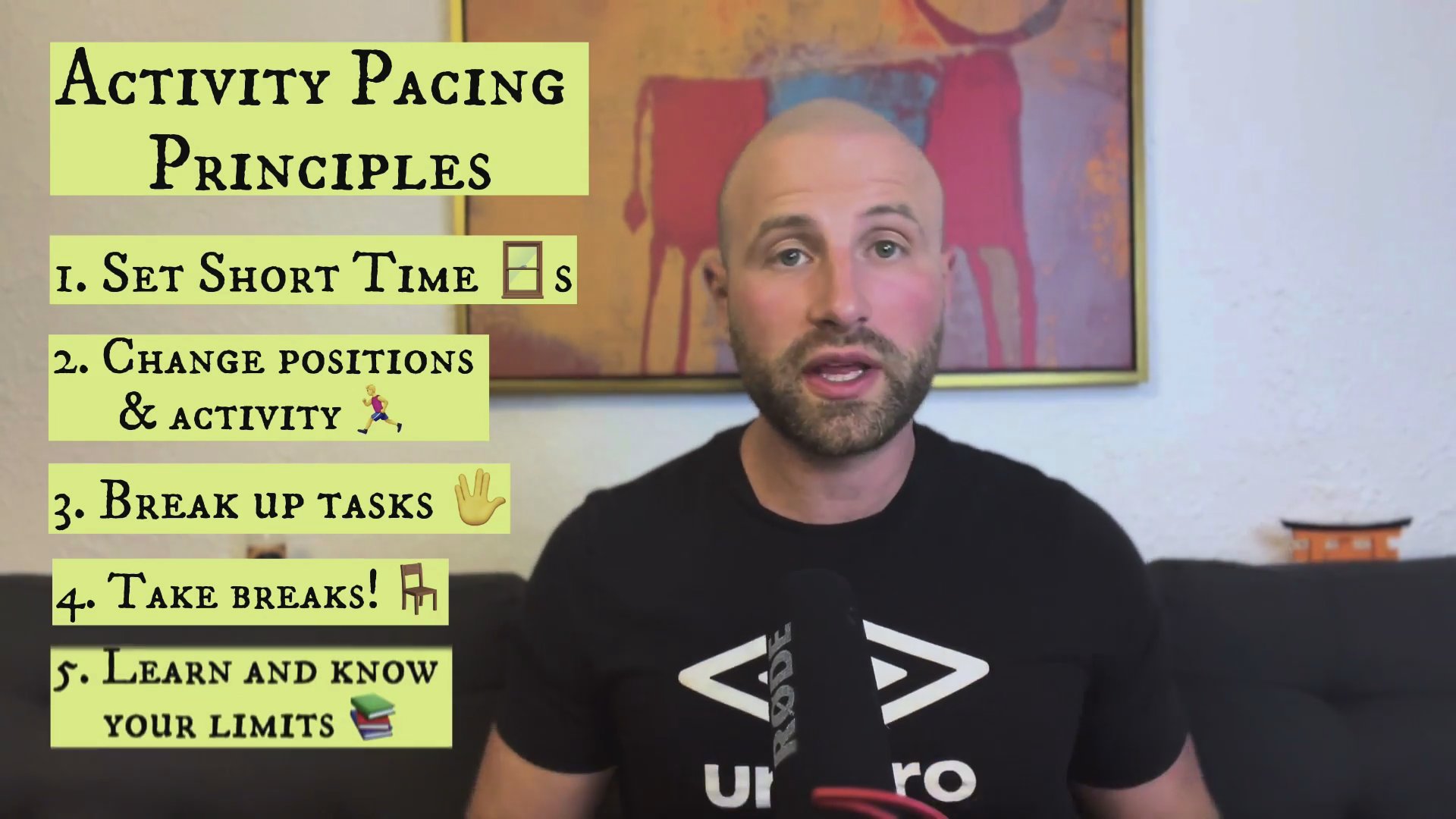
The other reaction tends to be the exact opposite and that's throwing caution to the wind and saying I don't care how much pain this causes me I'm going to do it anyways and you push yourself too hard and this causes more pain down the line and can make your condition worse therefore activity pacing is finding a happy medium between these two. When I was looking through the research I found an interesting formula in how to find a baseline of how much time you should do an activity so you're going to pick anyone an activity that you do that often causes pain but something that you want to do like walking standing mowing the lawn whatever that may be and you're going to calculate on three separate occasions how long you can do it before it causes a significant amount of pain so you want to do it on a good day a bad day and you want to find the average of those three so let's say for example I'm going to do standing and I calculate on three days each one of those I'm able to do 10 minutes and we're going to pick 10 minutes for each just to make it easy so then we find the average of those three times which in this case would be 10 minutes and then we calculate 20% of that so in this case it would be two minutes so then we take that 10 minutes we subtract two minutes that leaves us with eight minutes and that's a good baseline to start when you're practicing and exposing yourself to doing the activity and the pain that's associated with it before we go any further I just want to state a disclaimer and that is you want to talk to your doctor or other medical professional that's treating your condition before you try any of these things these are general principles and I don't want any of this to cause you undue pain or make your condition worse so let's go over some of the principles behind activity pacing the first is setting short timed windows for the activity next is changing position and the activity regularly the next is that you take a task and you break it up to smaller tasks throughout the day and if it's a really big task you want to break that up throughout the week also taking short and frequent breaks it's important to stick with your plan and not your limit so even if you're having a good day don't overdo it and finally learning about your pain self management and self discipline when trying these principles a really important part of activity pacing is a concept known as graded exposure and this is gradually exposing yourself to more and more pain in a managed way but also the anxiety that comes with pain and it's interesting because as a mental health professional I do the same intervention with folks who have anxiety and it's very slowly exposing yourself to these things that you fear most because when you anticipate that the pain or anxiety of the pain is coming it's more likely to happen and it's more likely to dissuade you from doing those things that give you pleasure just like anything else we do in life the more we practice something the more we build a tolerance to it just like lifting weights we started a lightweight and the more we do the more we're able to tolerate so after watching this video I really hope that you challenge yourself I want you to try activity pacing but I want you to do it under the guidance of your medical professional now look I know that this could be scary I know that this is something you're not used to but try it and do it at your own pace and at your own comfort level I hope you enjoyed watching this video and that you've got something out of it this is just one skill so I encourage you to stick around and check out some of the other videos in the series to gain more skills and help you get to that point where you're at least 15 percent better
Reactions and comments are for members. Joining is free and takes a minute.