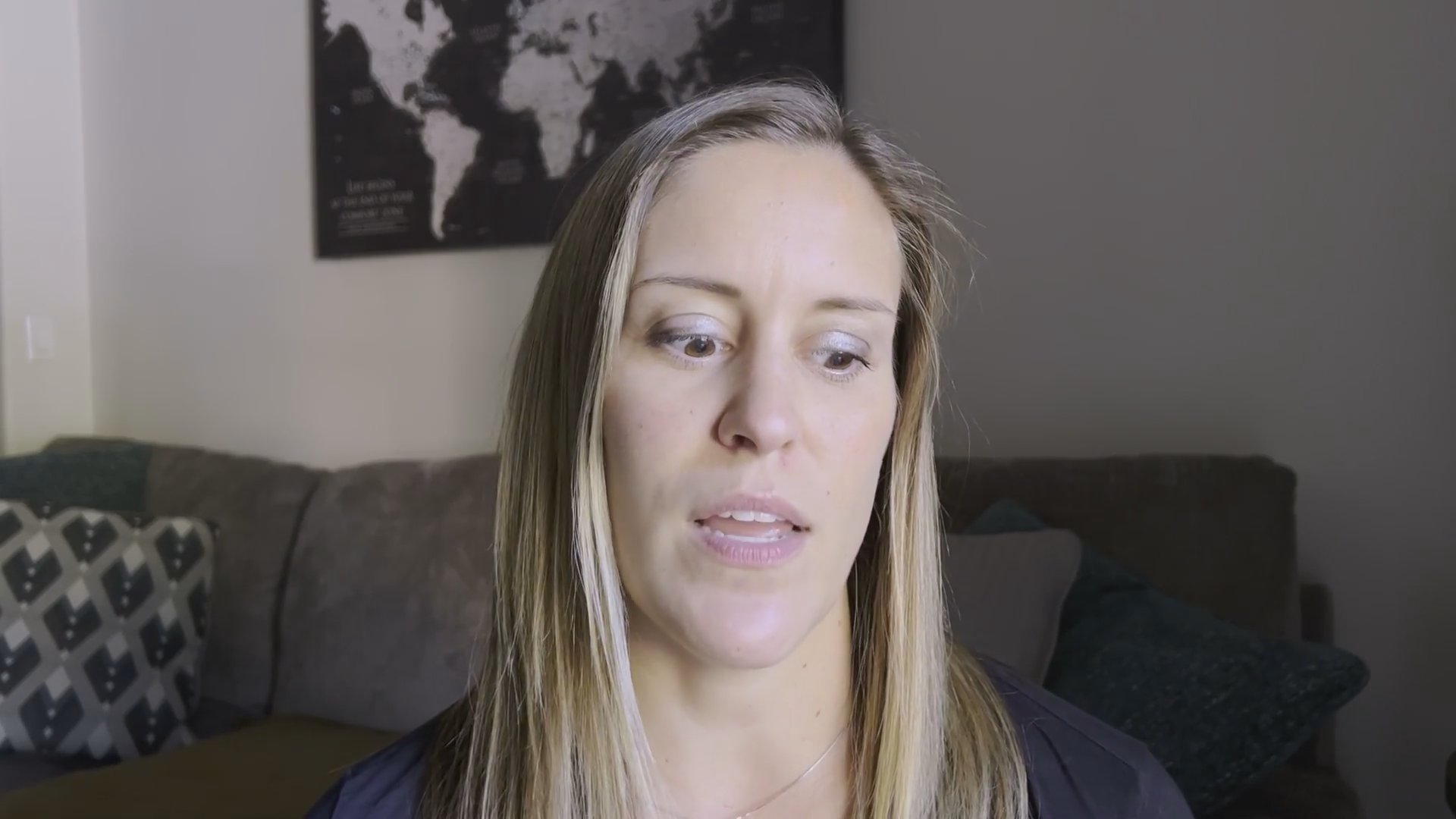
In this episode of Stories from the ER, Dr. Carrie shares about a challenging situation when she misjudged a patient and made a mistake in treating the patient appropriately. She explains the trauma endured from this mistake and the lesson learned in recognizing when you're becoming jaded and judging others.
Dr. Carrie opens the story and explains this will be a difficult lesson, then sets the scene in a crowded Level 1 Trauma Center where a young woman is placed in a hallway bed.
The patient is described as a 'good kid' who'd been sleeping and acting off; staff interpret her signs as hangover or drug use, delay thorough evaluation, and prepare a urine pregnancy test before imaging.
After difficulty obtaining a urine sample a catheter is placed so imaging can proceed; while in CT a pager calls for emergency personnel and the team learns she is having a stroke, prompting emotional reaction from the narrator.
Carrie explains the patient ultimately improved with treatment, notes the stroke affected an atypical brain area without classic facial or speech signs, and describes a care conference where the team recognizes how they misjudged her.
She discusses becoming jaded, the causes of assumption-making, and resolves to treat every patient equally regardless of suspicions, deliberately setting aside assumptions going forward.
Carrie shares the lasting shame from the mistake, urges viewers to catch themselves before judging others, and closes with gratitude and a blessing.
Hey Cadre family, Dr. Carrie here. You are tuning in to Stories from the Part 6. And this might be one of the toughest ones I'm going to share on this series because I still carry a little bit of shame about it. But it was probably the biggest lesson I've ever learned as an nurse. And this particular day was really busy in the Level 1 Trauma Center. And we actually had patients lining the hallways because we ran out of room. And it was just one of those days. It was a, I want to say like a Saturday or Sunday.
And this girl was put in one of the beds in my section of rooms and she was in the hallway. She was 21, I think. And she was like kind of out of it. She'd been sleeping most of the day, her parents said, but when they went to wake her up, she just wasn't acting herself and they were starting to get really concerned. So the night before she had been out with some friends, they said, and she was a good kid. They kept saying she's a good kid and that she doesn't do drugs, she doesn't drink, she's hanging out with her boyfriend or whatever.
And I'm like, Okay, sure. She's a good kid. Like she has classic signs of like being hung over essentially. So we didn't pay a lot of attention to her. We had a lot of other really sick patients in our section and finally got to the point where like, you know, the doctor saw her, we got some orders and started to, you know, be able to get some work done to see if there was something else going on. But her parents were just kept insisting that like this was unlike her like behavior. She came home and she'd just been sleeping all day and they didn't know what was wrong with her.
So we finally eventually get her into a room. And at this point, I'm trying to collect a urine specimen so we can test her for pregnancy because she needs a CT scan. Because her other tests had shown up fine and we're like, okay, let's scan her head, see if there's anything going on. And she couldn't tell us if she was pregnant or not because she wasn't answering any of my questions. So I was like, okay, I'm going to have to collect a urine sample and test her for pregnancy. But the oddest thing about this patient is that sometimes she was cooperative.
And she didn't really ever open her eyes. I'd ask her to open her eyes. I was trying to do a neuro exam, but she sometimes was cooperative and other times would just be like moaning and be like, and just kind of ignore me. And so I'm like, okay, well, if you can't go pee, I need to put a catheter in you and collect a urine sample. So much easier if you just help me work with me here and go to the bathroom. I was getting really annoyed and frustrated by this girl. And so I actually ended up having to put a catheter in her to get a urine sample and test her for pregnancy.
And she wasn't which was great so then we could get the CT scan done. But it was just really odd because she was sometimes cooperative, sometimes not. And she was just kind of like my least sick patient at this point. I had some other patients that were really sick. And all of a sudden I overhear paged overhead. emergency personnel to the CT scanner. And I'm like, I'm pretty sure that's my patient that just went to the CT scanner to have her scan. So what the heck? So I run over there and come to find out that this girl had a stroke.
And I'm sorry, it's gonna make me a little bit emotional here because I brushed it off, right? I didn't give her the attention that she needed because I made assumptions. And It was probably one of the hardest days I've ever had at work because I had gotten to the point where I was now a jaded nurse and it affected how I cared for this girl. And unfortunately, had we gotten her CT scanner done like maybe two hours prior, it probably wouldn't have changed her outcome because she had the stroke before she came in, but she could have gotten treatment sooner.
And for those wondering, she ended up being okay. She ended up actually getting some function come back and we were able to reverse some of the damage from the stroke. But it was such an odd stroke too, because a lot of times when you have a stroke patient, they have, just like weakness down one side of the body. It's pretty classic symptoms. They have slurred speech, like it's really easy to see. But this was the type of stroke and a part of her brain that didn't affect those things. And so you couldn't see it on her face.
Her behavior was just kind of inconsistent. But the one thing I never did was assess her from both sides of the bed and try to get her up and walk because that would have indicated to me that she might have had a stroke if I would have done those things. And so we ended up having a care conference with myself, the resident, the attending physician, because we were all kind of struggling with this, right? Like she was our, we thought our least sick patient and she ended up being the sickest that needed the most attention.
And we all brushed her off and we all just thought she was faking it. And we all had the same assumption. Like we all assessed her individually and we all had the same assumption that she was just this young kid that had gone out and gotten some drugs or something. And we didn't believe the story that the parents were telling us. And so I guess what I want to share from this is one, it's okay to make mistakes. And I have to remind myself of that right now, that it's okay to make a mistake, that I'm human.
And we were all human and we all made a mistake in how we judged her and how we treated her that day. But then also to remember to take what people say at face value and recognize when you're getting jaded. Like there's other ways you can get jaded in your profession, even if it's not in healthcare. And At what point are you just making assumptions because you're tired, because you've been doing this for so long, because you haven't had a vacation, because you didn't sleep well last night, because Starbucks was closed on your way to work today and you didn't get your favorite coffee.
Like because you're just tired and you maybe have gotten a little bit jaded and you've lost a little bit of emotional touch. Like recognize when that happens because that's was a wake up call for me to be like, I haven't even been doing this that long and I'm already jaded and making assumptions. And from now on, I don't care how stupid I look to my peers. I'm gonna make sure that every single patient gets the same level of care, whether I think they're faking it or not. Whether they are drug seeking or not, they are gonna get the same level of care from me because they deserve it.
And I'm going to push any of those assumptions out of my mind when they come up and those judgments. And what? A lot of times they were true. That's the hard part, especially when you work in an A lot of times these assumptions you make about patients are true. And you've just done this enough to have like some educated guesses, right, about the ones that are drug seeking or whatever they may be doing. But I pushed those aside every day I worked after this to say, know what? Not today. No, I'm going to treat them like a human being and I might look like a fool, but I'm still going to give them the best care that I can.
And so if that's you right now, if you are in a place where you're like, I'm worn out, I'm jaded, I'm making assumptions and I'm judging other people, I just want to invite you to think about the damage that could be causing to them and also to you. Because I've had to live with the shame of not being able to give her the best care that she deserved. And that affected me for a very long time. And this story happened years ago and it still affects me. So think about the shame that you might carry if you misjudge someone and just don't even go there.
I just want to invite you to just not even go there. Don't even judge them and catch yourself when you do it because we all do it. We're all human, but we need to give people the benefit of the doubt and just see them for their face value and who they are. So that is the lesson I learned and I just wanted to share that with you guys and hopefully you can take some lessons of non-judgmentalness from me and learn from the mistake that I made. So thank you for tuning in with me and being with me on this journey.
God bless.
Reactions and comments are for members. Joining is free and takes a minute.