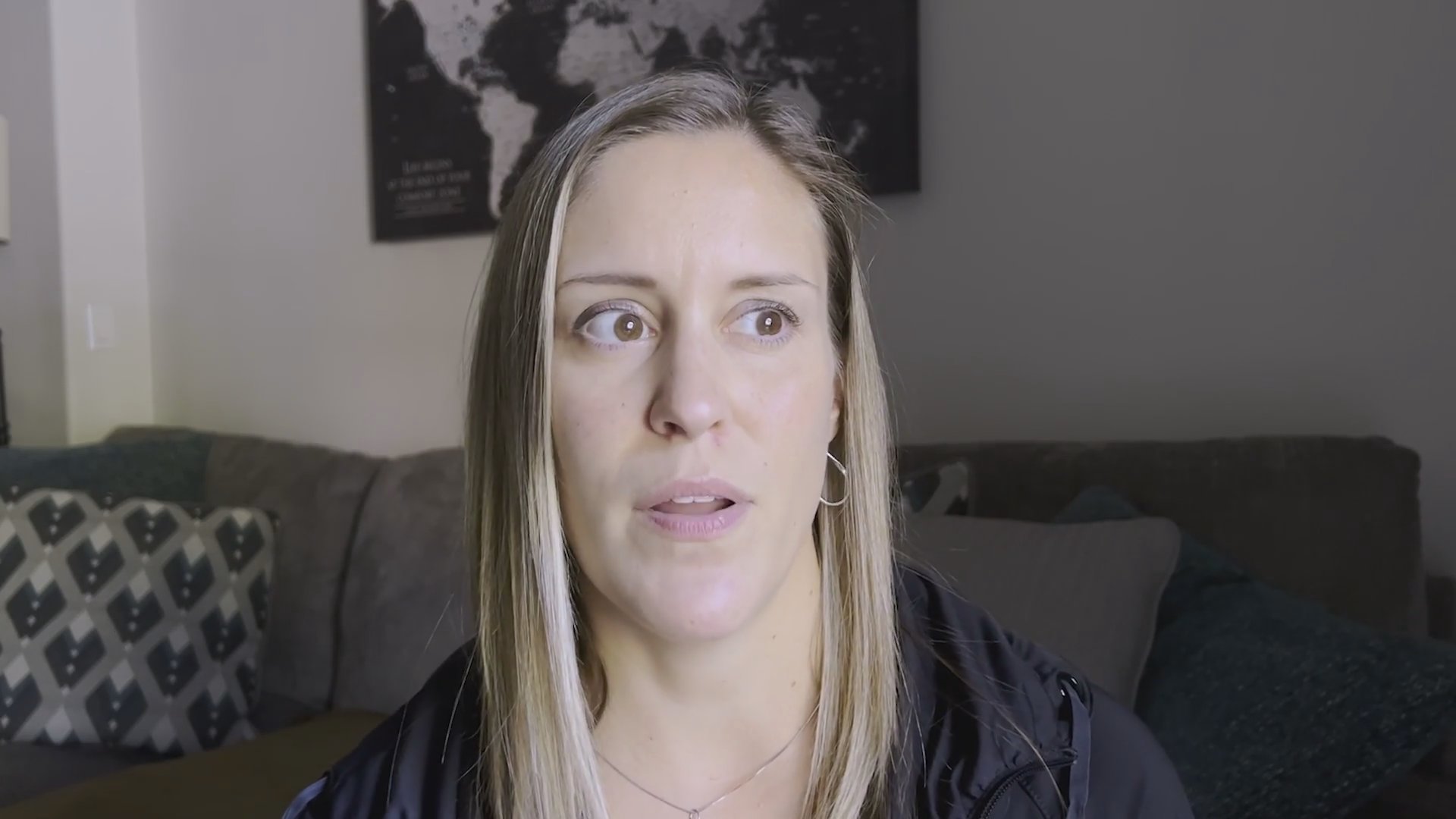
In this episode of Stories from The ER, Dr. Carrie shares about a time when she didn't advocate for her patient and the detrimental effect it had on the patient's outcome, and the lesson she learned in knowing how and when to speak up.
Hey, Caudrey family, Dr. Carey here. This is story from the ER Part 8. And in this story, I'm going to talk about a mistake that we made as health care providers. And I'm not sharing this to shed light on the mistakes that health care people make or anything like that. It was just a really good learning opportunity for me. And that's what I want to highlight in this story. But unfortunately, we did make a pretty bad mistake as a team. So this particular patient had come in. He had been sick for several days, maybe weeks.
He looked really bad. He looked like maybe he'd had a stroke. We just couldn't really tell. He was just really on the verge of not doing well. His blood pressure was really low. He was super pale, very weak. So we realized, OK, he's pretty sick. We should probably start working quickly on this guy, because he's declining quickly. And so we had a whole team of us around him. And they said start giving him IV fluids. So my nurse partner and I, we start giving him some fluids. And at one point, they're asking the guy questions.
They've got a neurologist at the bedside trying to do a neuro exam thinking he might have a stroke. We don't really know what's going on with him. But I just said, we need to stop. Something's wrong. And my coworker, the nurse, was like, yep, I feel it too. We just have this feeling come over us of something isn't right. And I just said, we need to slow down the fluids. And he goes, yep, we do. I think we're drowning the guy. Like we were pumping him with fluids really, really fast. And I started to think if his heart isn't functioning right, we could actually drown him.
Because his heart can't pump the fluid that we're putting in him. So we kind of talked amongst ourselves and said, like, yeah, we need to do that. So we just went ahead and slowed down the IV fluids. And the doctor was like, what are you doing? I said, we need to slow down the fluids. I don't think his heart can handle it. And he goes, no, turn him back up. And I was like, I don't think so. And so I turned it up a little bit. But I think we were already too late. Within about 60 seconds, this guy coded.
And he went into cardiac arrest because his heart couldn't pump the fluids. And at this point, we were obviously really scrambling because now we're doing CPR and all sorts of stuff. But he became completely unresponsive. And afterwards, my friend and I, the nurse and I, were talking. And we both said, we saw it happening. We were kind of standing back waiting for the doctors to kind of keep doing their assessments and figuring out what was wrong with the patient. But we saw him declining before they did.
Because we saw his mentations starting to go. We saw his eyes kind of start to roll around his head. And we're like, yep, I think I know what's wrong. And unfortunately, we didn't speak up soon enough. We didn't say something sooner. And we didn't speak with an assertive authority in our voice either to say, no, this is what I've observed happened. And I'm really nervous that we are drowning the guy with fluids. And so it was a really good lesson for me to be able to realize I need to speak up more when I see something.
And I am going to carry that lesson with me because I can trust my knowledge. Like, I do know what I'm doing, right? I've done this for not that long. The nurse I was working with had been a nurse for like 30 years in the ER. But I'm like, we knew enough to know something wasn't right. And it was just such a profound experience because I'd always had this uncertainty about my knowledge. I'm definitely not as long of an ER nurse as he is as they are. Like, I don't think I know that. I was struggled with imposter syndrome as an ER nurse because there's just so much to know.
But there are times when you just know. And fast forward, about a month later, I actually got to act that out. And I was so grateful that I had learned this lesson on that day because this patient fortunately got the best care that they deserved. I was taking care of a woman not in our stabilization area, but in just a regular room, she came in. You know, fairly sick, but something wasn't right. I knew something wasn't right. Her blood pressure was a little bit on the low side. And I was ordered to give her a medication that was gonna drop her blood pressure.
And I just said, okay, I'll give her one dose, but I don't feel comfortable giving her more because I think her pressure's just gonna keep going down. And I knew something was wrong with her. Something wasn't adding up. And so I went and got the resident. And I said, you need to come look at this patient again. Something's not right. And he goes, Carrie, we're waiting for her lab results to come back. I have nothing to go off of yet to diagnose her with anything. I said, just completely eyes on her, please.
I'm not giving her another dose of that medication, I'm sorry. And he's like, okay, I guess you're putting your foot down and saying you're not doing your job today. I'm like, just trust me, come look at her. And so he came in and looked at her and he's like, okay, run the blood pressure again. Like what am I looking at, Carrie? I'm like, something's not right, something's not right. And he's like, okay, well, I'm just gonna go and wait for her results to come back because I don't know what I'm looking at.
Like you keep telling me she's not doing well, but what are we looking at, Carrie? And so he goes back to his desk. I called him to that room three times within about a half hour period because I said, she's going to crash. I know it in my gut, she is going to crash. Like something isn't right here. And I just kept looking at her and kept looking at her and lo and behold, she did. She went into cardiac arrest and this was about the time that her labs came back. So he thankfully had like a diagnosis that we could start treating her.
But he was just like, Carrie, thank you for continuing to advocate for that patient. And even though there was nothing like I could have done differently to treat her 'cause I didn't know what was wrong. You laid eyes on her, you kept your eyes on her and we got her treated immediately when she started going into cardiac arrest. Like she could have been in there for a few minutes without me even knowing, but I just did leave her side. I was just so nervous about her. And so I was just so grateful because I went home that day going, I gave her the best care that I could because I advocated for her.
And that's what my job is as a nurse. My job as a nurse is not to just give medications, is not to treat somebody, fix their boo boo, whatever it may be, use my scientific knowledge. My job is to advocate for my patients. That's what I do as an ER nurse. And even though her outcome wasn't that great, I did everything I could for her that day. And I felt so much better about myself than I did a month prior when I went home going, yeah, I should have spoke up. I should have spoke louder. I should have advocated more for that patient.
So whether you work in healthcare or not, the life lesson here is who are you advocating for? Because you're probably advocating for somebody in your life. Maybe you're advocating for your kids. Maybe you're advocating for your spouse. Maybe you're advocating for your, you're even like your elderly parents. Like who do you need to advocate for? Maybe it's the person on the street that just got made fun of by somebody else because they struggle with mental health issue or whatever. And somebody else mocked them.
Who can you advocate for today? And who can you stand up for? Because that's really all any of us need on this earth, right? Is somebody to stand up for us and somebody to advocate for us when we can't speak for ourselves. Maybe somebody that knows a little bit nor about a situation or has an awareness about a situation. So that's the lesson I want you to take from today is thinking about who you can advocate for. And be that voice and be bold. Because at the end of the day, when you head hits the pillow, you will not feel bad about being bold.
You'll feel bad about not speaking up about something, but you'll never feel bad about being bold about something that you truly believed in. Thank you for tuning in with me on the stories from the ER. Have a good day.
Reactions and comments are for members. Joining is free and takes a minute.