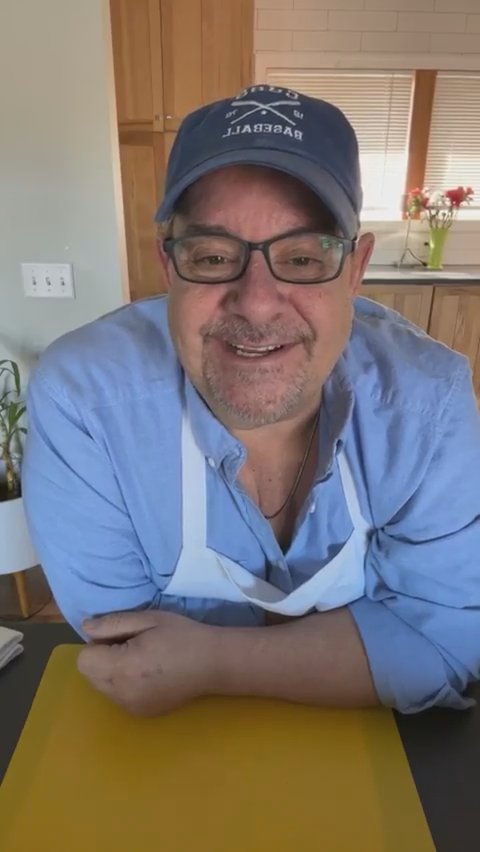
Coach Dan shares kitchen organization tips, walks through a simple pickled onions recipe using a mandolin, and discusses how cooking and food intersect with trauma, PTSD, and food choices like pickled foods and plant-based options.
Every Sunday I go live and share some kitchen tips or tricks or a recipe. I love to talk about organization and how organization affects our day to day. If you're watching live today, let me know in the comments.
Food can help us when we are experiencing trauma and discomfort and confusion. Food and cooking in the kitchen might be a way for some of us to heal. Actually cooking can trigger PTSD in some people. Here's a simple recipe that I love, and it is pickled onions.
Use a mandolin to make pickled onions. When you're prepping vegetables, keep a ziploc bag or a reusable plastic bag in the freezer. If you are suffering from PTSD, you can definitely find help here.
So I wanted to talk about different foods that help with stress and promote calm. One of the things that's recommended are probiotics, and those are pickled foods. You want to choose a plant based diet, if you can, with whole grains and nuts and seeds. Food really does play a huge part into how we feel.
Pickles may help with stress and anxiety. If you are going through stress, anxiety, PTSD, don't forget to reach out for help and stick around here on Cadre. Have a great week ahead, and we'll see you next week.
Hey, everybody. Welcome to Sunday Dinner with coach Dan. I hope everybody had a fantastic week. And if you're watching live today, let me know in the comments. Say hello. If you're watching this pre recorded, feel free to leave a comment. We check back often. So I'm coach Dan, I'm Cadre, and every Sunday I go live and share some kitchen tips or tricks or a recipe. And I love to talk about organization and how organization affects our day to day, how we show up in life, and especially as it relates, in the kitchen.
Hi, Katie. How are you? Hi, Brian. Happy Sunday. Indeed. The sun is shining here in Michigan, which is a rare sight this time of year. So today I have an interesting. An interesting live today for me. I am a survivor of PTSD, of trauma in many different forms since early childhood. And I like to talk about how I developed organization systems that helped me day to day. Even as a youngster, especially as a youngster, I found passion in food, and it helped me with my trauma. It still does today. Being in the kitchen is where I'm comfortable, where I can create, where I can share my love of food with other people, not just in conversation, but actually feeding their bodies with.
With what I make for them. I love challenging myself in the kitchen. And I wanted to talk today about the trauma that so many people here in Michigan, that so many people here in Michigan are experiencing right now. And we have been for quite a while. So I wanted to jump in the kitchen and talk about how food can help us when we are experiencing trauma and discomfort and confusion. Food brings us together. It keeps us alive. It allows us to express our creativity. It's something that we can control sometimes.
Sometimes things burn. They're out of our control. But I just wanted to take a minute today and acknowledge all of the people throughout our country who are experiencing trauma day to day. It's so much more real these days, at least in the. In the volumes that it's presented to us. So trauma and PTSD affect so many different people in so many different ways. And food and cooking in the kitchen might be a way for some of us to heal. And although that's not for everybody, actually cooking can trigger PTSD in some people.
Some people have awful memories around things that happened in the kitchen, either for them or other people. So I think the first thing to do is really determine whether you're not cooking just because you don't think you know how or because it just makes you uncomfortable. And it's not. Not something that you want to spend time with if you identify why you're uncomfortable in the kitchen. A great majority of people can just get comfortable and quickly just by learning a few easy things. And so, for me, I found recovery in food and in the kitchen.
And I think for so many other people, that's a possibility. There's one person that we all know, and his name is Bobby Flay. Most people that know food and people in food media. Bobby Flay is one of the popular chefs on food tv, on the food tv network, and very popular. And he found his own recovery in food and kitchens and cooking. He was a troubled kid. He grew up in New York. He got into a bunch of trouble, and working in the kitchen, for him was. Was, you know, a way for. For him to find his comfort.
And so I'm wondering how many people out there really could find some stability and some comfort and some self esteem and just positive feelings in the kitchen. So, today I wanted to teach you just one simple recipe that I love, and it is pickled onions. A lot of times when you're in an eating establishment, one of the ways they will elevate either a deli sandwich or a burger or hot dogs or a charcuterie board is with pickled onions, and it's extremely easy to do. They're very inexpensive, and it's a great recipe to.
To conquer, because it's very easy. And so I encourage you to make these. If you don't love them, share them with somebody else. Try them. Maybe you do like them. Maybe you just don't think you do. All right, so let's get started again. I want to acknowledge everybody who's suffering. Cadre is a great place if you found your way here. There's so much support and help and love this. This is a great, supportive community, and so welcome. And if you are suffering from PTSD, you can definitely find help here.
So let's get started. I'm gonna lower the camera down to the cutting board here for a minute, and we are going to make some pickled onions. We're gonna start by making one cut across the onion that way, and we're gonna keep it whole because we want rings. And we'll just peel away that first layer like this. The next. The next step here is using a kitchen tool. I'd love for you to get familiar with if you're not already. It's a mandolin. They're very inexpensive, and they're sharp, sharp blades, and you run food across them.
You use a guard so you don't cut yourself, and you end up with a perfectly even slice across the board so every slice is the same. So this is how she goes. You just slice, slice, slice. And what you end up with are these beautiful, perfectly sliced, pretty purple, red onion. Purple onion. However you refer to it, this recipe uses just one. And there are beautiful onions. They look so pretty when you're left with things that you make in the kitchen when you're prepping vegetables, keep a ziploc bag or a reusable plastic bag in the freezer and load it with all of these scraps.
After you collect a bag full, whether it's the end of a celery or carrot, whatever your scraps are, keep them in the bag. When they're done, throw them in a pot of water and simmer and you will have the most delicious vegetable stock. If you're not ready to use it, you can freeze it in solo cups or ice cube trays and always have it on hand. It's a great flavoring for, for tons of different recipes. It's also a really good locale, substitution for oil and butter. You can use stock in a lot of recipes.
So the next thing we're going to do is take a mason jar and we are going to put all of the pickles in the jar, and then we're going to heat up our liquid. So we have one cup of water. To that, we're going to add a half a cup of apple cider vinegar. There we go. One tablespoon of sugar, one and a half teaspoons of salt, and we're gonna mix it all together in our pot. Oops. I should get all of that out of there. Now, this is another trick when you use a cutting board. I love the flexible ones because you can dump what you cook into whatever pot or bowl you need.
This helps them stay in place when you're cooking. So when you put the mat down on the towel, the wet towel keeps it in place and keeps it from sliding everywhere. We're going to turn on the heat to our pickling liquid and tidy up a bit. So I wanted to talk about different foods that help with stress and promote calm. And, you know, some of them are no surprise. It's a very healthy, recommended diet. One of the things that's recommended are probiotics, and those are pickled foods. So that's one of the reasons why I'm making the pickled onions today.
So these, if you eat probiotics, pickles, sauerkraut, yogurt, kefir, they're all good for gut health. And also, if you move toward anti inflammatory foods like omega three rich fish that's recommended three times a week, actually. Flaxseeds, cherries, sour cherries, berries, apples, anti inflammatory properties and, you know, a good balanced meal. You want to choose a plant based diet, if you can, with whole grains and nuts and seeds, fruits, vegetables. So, you know, none of it is really all that surprising.
It's just really paying attention to what you're putting in your body. Trying to stay away from processed foods, red sugar, things that are stimulants and that are not whole foods are really best to stay away from when we are experiencing trauma, discomfort, depression, anxiety. Food really does play a huge part into how we feel, and honing in into a healthier diet can really be. And talking about how you feel, getting into the kitchen, getting comfortable, small steps that you can take toward focusing on stress, anxiety and ptsd, even, you know, just the tiniest little steps toward acknowledging that and dealing with it, creating systems for yourself that that will help you along the way.
Alright, so this liquid, we don't want it to boil. Got it heated right here in the pot. So we're just almost done this without even a spoon. It's almost ready now. Let's just pour it right into the pickles. Oh, wow. Making some. There you have it. You let this sit at room temperature until it cools down. You cover it. I love these tops. For the mason jars, you cover it up and when it's cool, you put it in the fridge and in 24 hours, I mean, you can eat them actually before that, but after a day, they taste so good and they may help with your stress and anxiety, along with sauerkraut and other pickled things.
So that's it for today, you guys. I thank you for checking in again. If you are going through stress, anxiety, PTSD, if you're having a really hard time, don't forget to reach out for help and stick around here on Cadre. There's tons of love and support here for you. So thanks again. Have a great week ahead, and we'll see you next week. Bye.
Reactions and comments are for members. Joining is free and takes a minute.