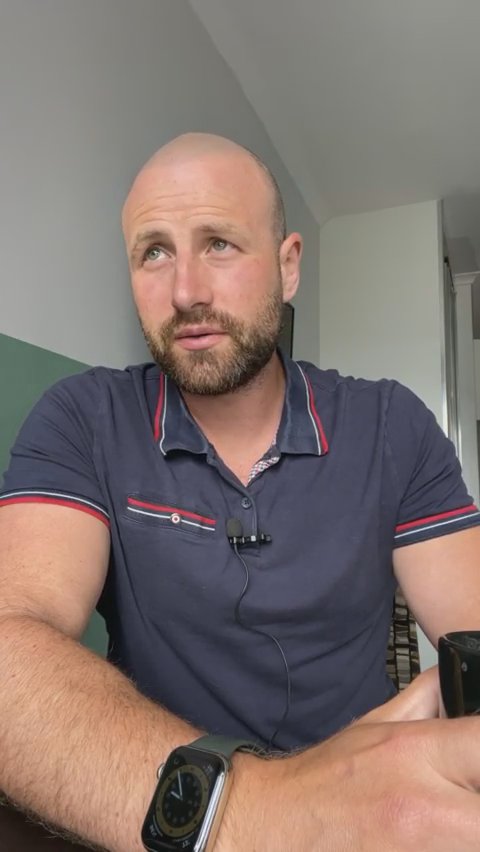
When I started working with the LGBTQ+ population in 2009 I heard story after story of traumatic upbringing from those who grow up gay, lesbian, bi, trans, etc. Very quickly, I noticed a pattern of how even those who were LGBTQ and proud struggled with deeply ingrained internalized homophobia that came from society at large. This has come up time and time again in my practice so I wanted to share about this phenomenon an how people have healed from it.
Well, probably in the evening for most of you, but yeah, today I wanted to talk about something that I noticed over years and years of working as a therapist, but also working in various treatment centers that specialize in working with folks who are, you know, identify or are LGBTQ+ now, let me just give a little bit of background here about how this came about. So I don't really identify as being in that community except for the A, and we used this age, LGBTQ, so A would be an ally, right? So I definitely consider myself to be an ally of the community.
So it started off where, you know, prior to working in the field, I had a couple gay friends, right? That was my first exposure to anyone LGBTQ. And one of the first ones was a friend of mine who actually met in a treatment setting. And I didn't know. I was not aware that he was gay. I mean, he even went as far as to talking about women he'd been with. But that's because at that time he was not out of the closet, so to speak. So it actually known him for quite a while, maybe about a year of being friends, and he continued to struggle with substance use.
And I found out later that he went to treatment because I knew he'd just still struggled and I'd gone back to college, kind of went our separate ways, and we still stayed in touch. But he gave me a call and he said, you know, Evan, I'm a men treatment right now. And I just was like, yeah, I'm in Minnesota. I'm in treatment. I rewapped at a suicide attempt, and he said there's something else I want you to know. And I was like, okay, what is it? And he goes, I'm gay. I was like, oh, okay. Cool, man.
I don't remember exactly what I said. But I appreciate you telling me that. It doesn't make me think any different of you. I love and support you. And so I got a little bit more exposure to that community through him and a couple other friends. And it's actually because of him that I ended up moving to Minnesota because he told me about this college program for folks in recovery. So he and I have remained friends. Now fast forward a little bit. I went to this treatment center, not as a patient, but it was called Pride Institute.
And it was actually the first LGBTQ specific addiction treatment program that was right outside Minneapolis. And so I think it opened when I was born in 1986. So it was definitely way ahead of its time. So I'd heard of it. I had known people who went through it. And I had a friend who worked there. And I was looking for a job. I want to do something in the field. I was finishing my site degree. So I started working at Pride Institute as a tack. And it was a very interesting experience for a whole host of different reasons.
But in working there, it really immersed me in this community that I was just kind of on the periphery of. And I mean, I learned a lot about the history of LGBTQ struggles. I mean, I knew some certainly about discrimination. But really hearing it from the individuals. What up, Katie, but really hearing the stories of these folks who were in treatment or maybe in their fifties or sixties. There's one guy in his eighties or nineties. And actually, that's an interesting character to talk about. But you could hear from their different experiences of what it was like growing up gay, whether it was in the 50s, 60s, 70s, those who, you know, were coming of age in the eighties during the HIV pandemic epidemic pandemic.
So it, you know, really opened my eyes to hear these firsthand accounts. Yeah, for example, folks in the eighties who've lost a whole host of their friends and the different trauma that they all experienced. And the thing was and maybe, hey, maybe you could say, oh, just because they're, these are the folks in addiction treatment probably had it some of the most difficult. But every single one of them had some very traumatic stories. You know, really opened my eyes. I knew it probably wasn't easy growing up gay at any point.
I was not under any delusion. But really hearing it from the individuals was, I'd say very eye opening for me at that time. You know, so I think I developed somewhat, I don't know if it goes far, say a passion, but maybe a professional passion for working with folks in the LGBTQ community as I started to get more and more understanding and acquainted with it. Now, one of the interesting parts of that dynamic was I, as a heterosexual, that's why it's a little brighter here. But yeah, working as a heterosexual male in this LGBTQ facility actually brought up a bunch of really interesting dynamics, let's say, because a lot of these folks, especially we're going to focus a little bit on gay men here.
But it applies to both because both, let's say, especially for gay men, they were not used to a straight guy, a heterosexual guy, being okay with them, right? Being okay with being around them, because their experience had typically been that a straight guy would not be comfortable around them, right? Maybe in fear. For a couple reasons, one, maybe they were afraid of being hit on, objectified, another guy would make them uncomfortable. You know, but also the fear of a straight guy may have to be associated with someone who is gay, because then if that's the case and other people will think or assume that they're gay because they want to hang out with a gay guy.
Now, what's funny is, you know, funny is not the right word. But those stereotypes were perpetuated probably by both groups, right? So a lot of people in the treatment who were gay men had a hard time believing that I was straight. I'm just going to dress nice. I would make them house music at the time, CDs, right? So there's some, you know, I liked a lot of music. So, you know, not everyone perfectly fits in any box. So, you know, one could see how maybe I could come off as quote gay, but they even had a hard time believing it because the attitude and their experience was no straight guy would want to hang out with us.
Therefore, this guy must not be straight or he must be kind of secretly doing something or something. So presented a lot of interesting dynamics there. Because to a lot of what many of their experience was is that these stray guys that would want to hang out with them were actually gay or closeted, right? And there's actually a lot of violence around that too, because you'll hear stories of, let's say, you know, guys who are straight or they're in, you know, public positions, that they are not okay with who they are internally.
And they even outwardly project homophobia straight up. But then that comes from projection and fear and anger about who they are. So they go act out their internal desires, but then immediately regret it after. And sometimes there's violence that gets perpetrated by these individuals who are not who have this extreme version of what I put in the title internalized homophobia. So that was the first time I had heard about that concept. Okay, that's interesting internal ized homophobia. So why would someone who's gay was being bisexual?
Why would they have internal ized homophobia? I mean, obviously a guy like that who's, you know, a pastor or something like that, whose life is a lot of it centered around not being gay, or to very least, you know, that would be that would have a heavier consequence for them to be out. And they struggle with it internally, right? But how would you have that if you're out, right? If you're out and most people there, you know, they're proud to be gay. There's not many people like struggling. You know, there's a couple people maybe who are still in the kind of questioning phase of who am I?
But for the most part of room there, you got rainbow flags and they're proud and some like, why would you have internalized homophobia? Again, I get it if you're not out, but you know, most of these folks have been out for quite a while. But what I came to learn is that when you grow up in a society that is largely homophobic, those things will sink in, especially as a kid, because you're never taught as a kid. And you can hear a lot of the controversy now around this, but you never taught that it's okay.
And many of the folks, especially the older you get, and a lot of the clients I have now , I call them my, my Gen X gay guys, I have a, I always have like a few Gen X gay dudes on my roster of therapy. They're about in their fifties, but it's interesting to hear their experience because all of them experienced severe bullying growing up. And it's not necessarily they were out and gay, but you know, they were maybe more effeminate and other people could kind of pick up on the fact that they were different, not like the other guys in this and not interested in the same thing.
And so they, you know, frankly, a lot of them got tortured. I don't use that word lightly. A lot of these guys got tortured. And so living in the society that is largely homophobic, right, literally, in the most literal sense, like afraid of being around gay people, or that's not okay, or you know, that's against their religion, which is technically not true for a lot of these religions. A lot of this is just a projection of the society and culture, and then they make religion fit that they could find doctrine or whatever.
So we won't get into that. But you know, and that's just, you know, I don't like to always in these contexts in my professional get into politics. But there's certain things that, you know, are to me just human rights. And, you know, just because you say you're against it in your religion, right, you can't say that your religion is against a race of people, right, that's not acceptable. We don't make laws any more specifically based on that. We've deemed that to not be acceptable. But we're not there yet fully with the LGBTQ.
We've taken some severe steps back from that. You know, these are folks who are born this way. You cannot help yourself. And the people who question I say, okay, you say you're straight. Okay, if you wanted to, could you just be gay? Can you just choose? Well, no. Well, then how could they? It means it's that simple . You know, we don't choose that. This is something this is actually a natural phenomenon that occurs in nature, in a very certain percentage of people. This has been studied a very certain percentage of people in the population will be attracted to the same sex or both, or have some form of gender dysphoria, right, which leads to, you know, an identification of that may come later.
So, you know, we live in the society that even though we've made a lot of progress, there's still a lot of that homophobia, especially, you know , it's just such a hot button issue, you know, in the, quote, cultural wars right now. So as a kid, you cannot grow up in a homophobic society and not take in some of those messages. So all those clients who I've had, especially the older you get, they've been receiving these messages for their entire life that being gay is not okay. And most all of these guys who I met and got to know were, let's just say, they knew, right?
They knew they were gay or they knew something was different at a very young age, right? So if we don't really develop, you know, sexually mature, physically, right, until you're young, earlier for a woman, but 12, you know, in this, in the supplies to women as well, right ? 12, 13, 14, whatever that may be, right? This is long before that, right? That's how deep this runs. I mean, you know, they're, they know to some degree, right? There's, you still often have a traction before that point. And even if you don't have any kind of sexual template, they just know they either know they're gay or they know something is different.
They don't know what that is. They can't put words to it. And so then from a very young age, it's not just okay, being gay is wrong. Hence, if I am gay, then I am wrong. I am wrong. And that's where the home internalized homophobia is and where it comes from, whether you're gay, lesbian, whatever. This is wrong. This is who I am. I am wrong. And so imagine getting that message at a very young age, right? Whether it's LGBTQ or you have horribly abusive, neglectful parents, this concept of I am wrong.
And that stays with you, right? So for every, just about everyone, I don't like absolutes, but just about everyone in that community, there is a process of coming to grips with that and shedding some of that. And one of the ways that happens is finding a community. Now it's a little bit of a double edge sword there because, you know, usually as they grow up or you move to a city, right? And you find this culture, this community, and it really was for a long time still maybe to be considered, I don't know, a counterculture.
And that's centered around the gay bars. Okay. So the centered around the gay bars. And for the first time, it's okay to be gay. I'm with other people who are like me. It's like you learn more about your own culture, if you will. Now a lot of these people I'm working with, who struggle with substance use, which is at a far higher rate, two, three, five X, the normal, the average rate. It's because of that trauma internalized homophobia, but also the culture becomes centered around that because that is where you go.
I mean, it'd be nice if they have like community centers and stuff, which they do, but typically someone's experience is the connection at the gay bars. So it becomes a lot of raptor on alcohol, other drugs that are common. And so that can become a problem. But there's a sense of finding community and it becomes this process of accepting who you are being okay with who you are. However, those things that we learn, those messages that we get when we're extremely young, you can't just shake those.
So a lot of the work I do is around that trauma, that early trauma, around that internalized homophobia. So just again, bring that up because I have not met a single person in that community that doesn't have it to some degree. And even the ones who are out and proud and married, have a kid, got the rainbow flag, their dancing at the, whatever, whatever person you could put in your mind of them being out and proud, there still exists that deep internal ized homophobia to a certain degree of this is not okay.
So it's a lot of the work that I think maybe if you someone are in the community, if you haven't done therapy or you haven't recognized that hasn't been something that's come up for you, something to think about. And even if you're not LGBTQ+ and listening to, you know, who are listening to this, right? It's just a good thing to know, a good thing to understand about, you know, our brothers, sisters, or anyone in that community and what they go through, what they struggle with to begin to have more empathy for folks who have been in that position, right?
So that we could try to change some of these old ideas. I mean, I could go on about this forever about those dynamics of how gender and sexuality play out and how that affects people and how that affects our culture and our society. But I don't know, so I think that's just something to think about, you know, something that, I don't know, something that was on my mind, you know, because of how many clients I'm working with. I have a pretty small caseload now and so probably half or more, you know, or in that community.
And that's kind of always been that way where I've had about half of folks in this community. And I'll leave it. I 'll leave you with this. When I was at the Pride Institute, right, being in the community, I was curious because I, you know, I was hearing all these stories and there are certain things I noticed. So just for just for the, for my school, for a school project, I did a presentation or I did a little bit of like research on some of these issues that they struggle with. And so some of the ones I identify were HIV, this is among LGBTQ substance users, presence of HIV, you know, meth use, abuse, childhood abuse, neglect, sexual assault, so all these adverse experiences.
What up, Chris? And notice that at least in every category, about half the people there had experienced it, which is something like at least five times the amount that other populations do. Right. So again, these are folks who are in treatment, right. But if you look at a lot of the research, some of those things really affect that community. Therefore, there is more substance use and more mental health struggles because of those adverse experiences and trauma. So anyways, I hope you learned something from that and we'll go from there.
I'll see you guys next time. See you next week.
Reactions and comments are for members. Joining is free and takes a minute.