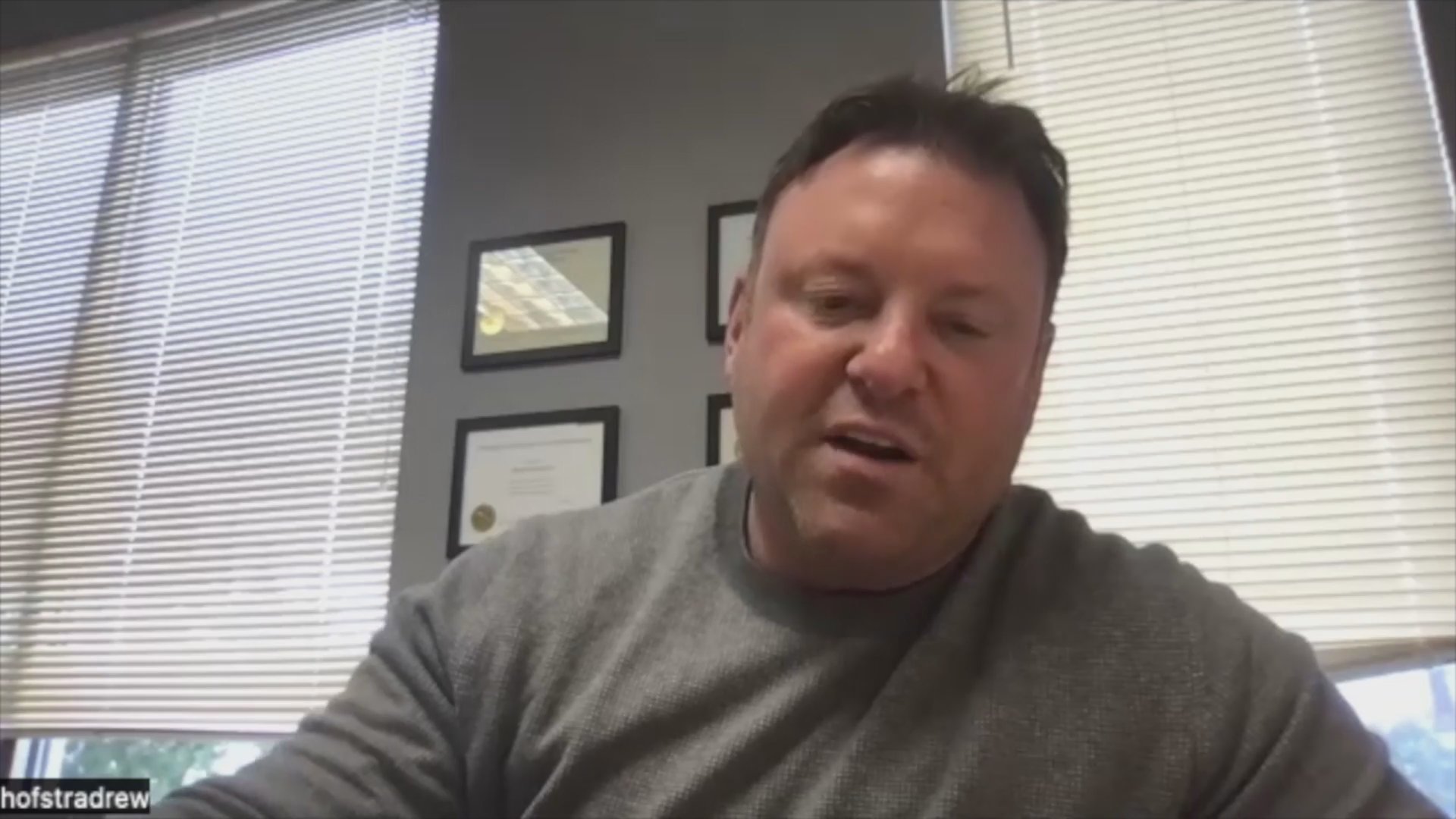
In today’s interview, Evan, our resident mental health and addiction therapist, interviews a nationally renowned Addiction Interventionist who has performed nearly 1,000 addiction interventions. They discuss how Drew has one of the most complicated and specialized jobs in behavioral health and what he has learned about helping individuals with substance use disorder seek treatment even if they may not seem ready.
Drew Horowitz is a licensed and trained interventionist. He works with the family and the client to help get that person in treatment. How do we get friends and family members who are struggling with addiction to find that insight and the motivation to go to treatment?
If I have a family member, a friend or family member struggling with addiction, how do I help them? First and foremost, educate yourself a little bit about the nature of the condition. Anything accusatory or guilting or shaming will do the exact opposite of what you're trying to accomplish.
An interventionist is a professional who inserts himself into the process of a substance use disorder. Early intervention is more effective and successful, he says. "My job is to confront that illness, that addiction, head on," says the expert.
I'm in recovery myself from addiction. I decided that I wanted to be in the human services industry. After a year of training, I started doing it on my own. It's like an adrenaline junkie job within the field. Keep yourself on an even keel.
The worst thing you can do as an interventionist is be caught in emotional drama. To be in to do interventions, you know, the level of professionalism and expertise should be at the highest level. It's by far the hardest job I've had.
My professional experience is not a matter of if the person's going to get help, it's when. Almost everyone goes to treatment. The same change happens whether they go or they don't for you. It's separating the family from the addiction and helping the individual separate themselves.
The family is the chaos fueling the addiction. If you stay in that fear, it keeps the system, you keep enabling them. Until there's a modification and behavior from the loved ones that are around the addiction, it is going to be hard.
5% of our conversions don't happen because of cost. The 95% is because they're not ready. And the other thing I deal with all the time is on these initial calls. It's just lack of knowledge. That's what I do more when I do work with families is just working with the parents.
Only about ten or 12% of people actually self admit. 80 some percent enter treatment through some form of an intervention. The problem is our society has it flip flopped. It's hard for professionals to understand this illness. That's such a challenge in our industry.
Evan: How do you break through the mindset of someone in an addiction? He says the usual combative nature of addiction brings their walls up. Evan: All these tenants of communication of approaching it from a place of kindness can work.
There's a time and a place for leverage. Some personalities and people with certain mental health conditions that could do more harm than good. That's why this part of our profession requires, I believe, much more oversight.
Evan, you've admitted that alcohol is bad. You're asking that your wife sit here on the sidelines and watch this experiment. If this works, great. If not, there's another option to provide options for them. People choose their level of care.
Evan: Intervention is a process. It's not an event. Doesn't happen overnight. And that's why you got to be really well versed in this. How do you work with the family?
Evan: It's very much a dance, Evan. Intervention. It's always a dance. You can go in hard and then pull back. And that's a lot of what intervention is. If you don't take a gentle approach, it's gonna be hard.
Evan: We would prep in advance with the family to say, let's give them some options. The skill of an interventionist is also to help raise their awareness about the benefit of a residential treatment. If there is enabling, you want to discontinue it.
Drew Wheeler: What is the process of working with you? Wheeler: I take an initial call, usually from a family. Then I request a Zoom call or a face to face meeting with all potential participants or people who are worried about the individual. The fee is dependent on a number of factors.
The Johnson Institute created the learning institution model for addiction. It was effective for many years, but it's undergone some rearranging. Addiction is just in a world of its own. There's just a lot of different ways of doing it.
How many interventions have you done in your life? I don't know. 900, maybe 800. One every, like, few days? That's unbelievable. It's hard. But when you have experience, right, it's intuitive.
There's one story that stands out to you on an emotional level, perhaps if you have one. Jim was a lawyer in New York City who was homeless in Las Vegas. He was psychotic from methamphetamine and other things, which led to his homelessness. Judge allowed him to go out of state for treatment.
Drew: If someone has a family member struggling with mental health addiction, as far as communication with them go, I'd advise you to stop. You ultimately want to get them assessed and get them in front of a person that can help facilitate treatment. If you sense defensiveness and unwillingness to talk about a solution, I wouldn't go any further.
Hey, Cadre family. I am super excited today because I have a special guest that I was able to bring on, and I'm making this part of my communication series because this guest is a licensed and trained interventionist. His name is Drew Horowitz, and he's one of the more respected clinicians and, honestly, entrepreneurs in Minnesota working in this space. So I'm really glad I was able to book him. And the reason I wanted to bring Drew on is a very specific reason. And. And that is because, as an interventionist, he has one of the most difficult jobs in behavioral health whatsoever.
It takes such a special person to be an interventionist, and if you don't know what that is, many people know of it because it got popularized on the a and e show intervention. But basically, it's when you have someone that is resistant to going to treatment, who's struggling mostly with addiction, and their family doesn't know what to do with them anymore. They can't seem to get them into treatment. And this person is going down, usually a very dangerous path. So what Drew does, he comes in and works with the family and the client to help get that person in treatment, even though they're really resistant.
And one of the most common questions I get as a therapist who makes content is, well, how do I support friends and family members who are struggling with addiction, who maybe aren't ready to get help? So, that is essentially what we're talking about. And Drew is someone who goes in. In the most extreme cases, he flies all over the country to do this. He's also well respected across the nation. He's very well known as an interventionist. So some of the things that Drew and I talk about are, yes, how do we get friends and family members who are struggling with addiction to find that insight and the motivation to go to treatment?
But also the importance of the family system, because so often it's not just about the person who's the addict or alcoholic that's using. It's the family system. Sometimes there's a network of folks who are enabling, or sometimes it is the behavior of the family that is contributing to the addiction. So we talk all about that and his history, how he got into it, some of his own personal experiences. And, again, one of the reasons I wanted to bring him on is just so I could learn from him. So, I'm actually a trained interventionist.
I've done interventions, and I don't love doing them. So, I mean, I stopped doing them because of a lot of those reasons I listed of how dramatic and difficult they can be. I mean, I'm pretty good at it, but it's just not for me. And I approach it in a little bit of a different way. However, there are limitations when I'm doing it just from a consulting standpoint or therapy standpoint, working more with the individual families themselves or the individual clients, and not necessarily doing the whole intervention.
Anyways, I really wanted to bring drew on so I could get his insights, because you all know, or maybe you don't know, if you haven't been watching the communication series, but I do a lot of teaching on it, so I wanted to hear some of his tips and tricks for communicating in some of the most difficult situations possible. So check out this interview. I think you'll enjoy it. All right, Drew, welcome to the show, man. How's it going? Appreciate it. Happy to be here. Good to have you going. Well, thank you.
Well, yeah, I've been wanting to chat with you for a long time because I thought it would be really interesting. And we have a lot of our audience that's super into addiction, a lot of people who are in recovery, but a lot of people have family members in addiction. And one of the more common questions I get is, what do I do? If I have a family member, a friend or family member struggling with addiction, how do I help them? So I thought it would be a cool opportunity to. I feel like you're one of the authorities I know on that topic, based on the work you do.
Yeah, it's a great question, and the fact that people are even asking it is encouraging. Years ago, it was thought that you let the person kind of suffer and continue use until they bought them out and asked for help. And in today's world, it's. We come from a place now much more of prompting care and suggesting, initiating. And I think the fact that people care enough to ask and want to help is great. But, you know, if you know anything about addiction, you know, some of the most common traits, um, circle around sort of lack of awareness within the person who's using.
Right. They. They can't properly perceive and see the world as others are seeing it around them. And so they're missing a lot of the connection between how they're behaving and how they're using a substance and reality. And so, um, you know, so. So I think when. When looking to help somebody, I mean, there's a few different approaches you can take, is, I think, first and foremost, just briefly educate yourself a little bit about the nature of the condition. And I think you can find some really basic text and understanding online.
Mayo Clinic, Hazelden. Publishing YouTube videos where you can learn some basic information about a person suffering from a substance use disorder. I think that would be the first thing I'd recommend, is just do a brief overview so you understand maybe what's happening for them and what, what they might be experiencing, and it will give you a better idea of how to approach them because knowledge is everything and it really certainly helps. Second is you want to understand that a person who is active in a substance use disorder lives with a lot of shame and embarrassment and guilt for the way they're living and behaving, and that has to remain at the forefront of your mind when you speak to them.
So anything accusatory or guilting or shaming will do the exact opposite of what you're trying to accomplish. The person has to feel safe, has to feel not judged, supported in some capacity. A person with a substance use disorder is very keen to kind of their surroundings. They usually can pick up on someone who's critiquing or judging or looking at them in a negative light, and that's going to push them back even further. So your approach is really everything coming in with an open, kind heart and trying to remember that this person is sick and struggling.
They're not, they're not fully choosing to operate like this. A part of their brain is and a part of their brain isn't. And so they're in this, like, kind of conf, you know, inner confliction. And so, so that's why I think arming yourself with some knowledge is the first step, you know, to understand how to help somebody. Because if you have some knowledge and you approach them the right way, they're going to be way more receptive than if you have no knowledge and, and you're more aggressive with them, they're going to, they're going to shut you out.
So I always encourage family and friends before really ever engaging a professional to kind of have a heart to heart, you know, let them know you love them, you're willing to get help, you know, you're willing to help them in any way. So I think it just comes from being kind and caring and supportive, and that's, that's really the first step. Unfortunately, that's usually not enough. They usually need to extend, to provide additional resources or retain a professional or, you know, intervene with them or on them in some capacity.
So that's just the natural sort of course of what we're dealing with. Okay. Yeah, that's super helpful. And that leads us into you being an interventionist. Right. And it's this very specific. I remember, you know, hearing you talk at the conference we were at recently, but how it's just like this very specific period in the life cycle of treatment, intervention as a whole. Everything we do as a professional is we're intervening in a way, we're inserting ourselves into the process, and that could look like a lot of different things.
But we say an interventionist because it's almost like the ultimate form of intervening. Interjecting, taking a stick and putting it in the spoke of this momentum that is someone's addiction. And, you know, from my experience, someone who's calling an intervention, by the time it gets to you, it's like a very serious situation. It's like you're a specialist who goes in. I always think it's like you're kind of like a Harvey Keitel and pulp fiction where they, like, they call him up and he shows up, make me a cup of coffee.
Here's what we're going to do. But instead of getting rid of a body, you're helping. It's a very specialized skill and service. Right. So, you know, it's. Yeah. By the time it gets to me, we're usually in more of the acute stages of a substance use disorder. It's progressed along. A person is typically experiencing physical withdrawal symptoms from the substance they're using. That being said, you know, if I could have my wish, that wouldn't be where I'm brought in. I think early intervention is way more effective and successful.
It doesn't need to wait until, you know, we're at the end of the rope. Right. I'm a fairly approachable guy. I'm not aggressive. I don't think it's a lot to ask for to have me in your home having a discussion with your loved one about the opportunity and options of help. Right. I'm certainly not going to bully them or harm them or make the situation worse. Otherwise I wouldn't be a professional. My goal is to walk out of interventions further ahead than I did walking in, you know? So, yeah, so I think, um, it's, uh, it's, you know, as a, quote, kind of interventionist, you know, I think.
I think there's a bit of a stigma. It's a little bit of a scary word. It's an intriguing word. You know, it's like, it's a fear based word, but it's exciting at the same time and confusing. And that word is every active user's worst nightmare. So, um, it's a role I take very seriously and don't take for granted. But essentially, I'm essentially analyzing a situation where there's an active substance user that's stuck in the grips of the addiction and has been unsuccessful at getting themselves out of it, either on their own or with a family's help.
And those approaches that they've taken are moderate to average to poor. They just don't have the wherewithal or skillset to really navigate a complex mental health disorder. So there's a time and a place for a professional to come in and guide the family and prep them and enter a meeting. Enter into a meeting with a person who's using uninvited. Because typically, a person with an addiction won't welcome a discussion, specifically with a third party about their condition, because that's a threat to their addiction.
And they're not going to welcome that. Typically, they're not going to welcome that, especially by the time that I'm involved. And so, you know, my job is to confront that illness, that addiction, head on, and provide a voice of reason and support and let the person know who's inside that we're going to help them get to the other side of this. We're going to help put an end to this, that they are valued, they are important, they are deserving of care. And we want to help create a pathway for them to do that.
And it would be a disservice and unfair to them to not be here. Making this proposition, to sit here and allow them to continue to suffer would be the unloving thing to do. Right? So we are here because we don't want to see you suffer like this and be the person we know you don't want to be. We know there's a guy in there or a gal in there who wants to be someone else, not this person. And we're committed as a group to helping you. And so what happens with that dynamic is the addiction that's living within the person is kind of outnumbered, right?
And this group of individuals and a professional kind of create a sense of power that can oftentimes supersede the addiction and provide some clarity for the person in that chair. And we take that window of opportunity that starts to open for us. And you can see it on the person's face where they start to kind of break down a little bit. And that's the addiction losing its pulse, losing momentum, and we sort of pull them out of that world and into a world of, you know, where they can start their recovery.
So it's really a process of opening their heart, appealing to their better nature, reminding them how valid and important they are and worthy and that this is not who they are or who they want to be, despite what they're telling themselves. And that we believe in them and we are. It's, you know, we cannot accept anything less than you becoming agreeable to getting help because we can't sit here and watch you continue to do what you're doing. So a professional intervention is oftentimes perceived as a confrontation, as, um, as an argument, as a.
As an emotional brawl. Um, but that's never been the case for me. That's never been an intervention for me. I don't know how other people's have gone, but that's never been the case for me. I think if that was the case, I probably wouldn't have the job I have because that wouldn't be very rewarding or enjoyable. My interventions are usually pretty calm. They're usually, you know, filled with, you know, emotion and some happiness, some fear, as it should. Right. Because this is a very serious topic, but understanding how to navigate that situation and guide the person to a safe place to get sober and have some clarity and be able to make an informed decision about where they want to go from here.
Right. Because we don't decide for them what they need to do other than get stable, get some introductory treatment, experience sobriety, and then they get to make the decision for themselves what they want to do, for sure. And it's really insightful. And before we go deeper, how did you get into this? What's the overview of your story and how you got to be doing this very specialized role that you're in? First and foremost, I'm in recovery myself from addiction. Both drugs and alcohol suffered in my early to mid to late twenties and few treatment stays.
Eventually it started to click. 2009 at Hazelden, Betty Ford and came out and decided that I wanted to be in the human services industry and that it was an industry where I felt would bring out the best character in me and that I had other skills in other industries, but I didn't feel like those, those jobs would really provide me the meaning and purpose and happiness that I would get from being in a place where I can help people. And so what other place to be where I can be on the other end of addiction and try to provide guidance and support to people, families and individuals who are stuck and who are struggling.
So that's how, that's how I navigated into this world. You know, about twelve years ago, 13 years ago, I think it was now, where after I had a period of sobriety, I took a job at Hennepin county, where I worked as a county case manager on a mental health team, and really started seeing the devastation of untreated mental health and addiction and seeing people that didn't have family, that didn't have the support. And it was hard. It was eye opening, it was sad, it was hard. And that motivated me to want to pursue the industry further.
And so I went back to school and obtained a master's degree in addiction counseling from Hazelden, from their graduate school, and with that, ventured off into more of a private practice setting where it was just me. And I knew that my skill strength didn't lie in a therapist office. It didn't really lie in a treatment center setting. I knew I was more interactive. I liked to think on my feet. I liked some of the crisis work better. And so I really wanted to continue doing that type of work within the industry, within my role.
So I began kind of marketing myself as a consultant interventionist and got a lot of training and education from some other people about how to do that. And after a year of training, I started doing it on my own. And that was about ten years ago. So, yeah, so, yeah, so I think, you know, experience counts, right? Ten years of providing clinical intervention, you gain a really strong sense of what to do and what not to do, what helps, what doesn't help, what words are good, what words are bad. You've rehearsed this a thousand times.
So when you walk into a situation, I have a good instinct and idea of what to do and what not to do and how is my role going to be more effective, or least effective with this individual in front of me? So experience counts for sure. The amount of houses I've walked into sort of unannounced, and alcoholics and addicts I've spoken to unannounced. You know, I can. I can really kind of predict what I'm going to walk into oftentimes with intervention. So that, that obviously helps. Right. Knowing that.
So it's a very. It's a very interesting job. It's an interesting role, but I have found success in it. Yeah, it's like. It's like an adrenaline junkie job within the field. You must have a little bit of that in you. Yeah. Yeah, it's a little adrenaline, you know, you definitely do. I mean, one of the things I do when I train, you know, other interventionists and my staff is the best thing you can do is keep yourself on an even keel, because if you arrive, if you ride that adrenaline and those ups and downs of intervention, you'll actually burn out pretty quick.
You won't last because it's like having untreated bipolar. You know, you're just like up and down, up and down, and it's tiring, right. So, you know, you're, you're about to walk into the intervention, your adrenaline's high, and then, you know, the person agrees to go and, you know, you're happy, and then they decide not to go, and then you're upset. And so you don't want to get on these road, this roller coaster of emotions, and then the family is happy or they're upset. So I always train my staff and talk to them.
And this is about, we're at work right now. You know, you want to keep your emotions in check. You don't want to ride that roller coaster. You want to stay even keel. The world doesn't depend on us. The outcomes are going to be what they're going to be. So we just need to show up and be professional and work hard. Yeah. And when I train people, and I mean very various different situations as far as effective communication and whether that's, you're in an argument with a spouse in one of these type of situations, I always say, like, keep the temperature at an even 70.
Right. Because, like, some people, like, gear more, you know, in their, in their style and their emotional style. Just cranking the temperature up, it's like raw emotion, anger, happy, you know, just like you said, positive, negative. And that could create a lot of issues. But then also, sometimes it could be if you go too cold, right. Then there's no emotion, there's a disconnect, and that can work in an opposite way. So, like, how do we have emotion in the situation from more of a place of love but also a calmness?
Because they're looking to you. It's kind of like, it's. I mean, I do a lot of, like, comparisons to, like, dog training, and people, like, get upset with me because they're like, well, people aren't dogs, and we all kind of are. You know what I mean? Like, dogs are better. So, like, I don't want to hear, but, you know, like, it's like mirroring, right? If I'm, like, angry or if I'm. If my energy is high, you know, then that kind of gets mirrored, you know, when you're training the dog or just. Just.
We have mirror neurons. Yeah. Like, if I'm super hyped, that's going to change the energy of the room, of the conversation where maybe the other person is matching my energy or they go equal, opposite and they retreat as much as I'm hyped up. So I think that's a good point, that it's important to really keep that even. Keel. Yeah. You don't want to be disengaged and flat. Right. You want to have a motion, you want to be available, present, but you just need to be on a level of, you know, of even keel.
So you're not, you know, up here, this can be a challenging place to live, and you don't live too long here because eventually you're down here. So, yeah. So in this role of intervention, you know, there's a lot of unknowns, there's a lot of things we can't predict. You know, there's a lot of up and down. So, you know, one of the skill sets is to not get caught in that. And because you have to be the one with the rational thinking, right. The family's not, and the person who's using is not. They're depending on you to be the rational brain in the group.
So it's super important that I'm able to do that. Right. And I'm not subject, I'm not subjected to the anxiety and emotions that they're all feeling that I'm sort of armed with enough, um, training to not let that impact me. And so, you know, the worst thing you can do as an interventionist is be caught in that emotional drama, you know, because then it's like you're not, you're not providing a good service. That just takes training and professionalism and time and, and that's why I always recommend a person on the front lines facilitating interventions.
You know, it's more of a job. You want to be. You want to be a seasoned clinician, a seasoned professional. It's probably not something you want to start with. I think, you know, if I could go back, you know, I may have given myself a few more years prior to doing that. You know, I really would have. It's interesting. Yeah, I mean, I think I would have gotten a stronger base. You know, I learned a lot out in the field and I had great mentors that taught me, so I was lucky. But I really think to be in to do interventions, you know, the level of professionalism and expertise you possess should be, um, you know, at the highest level.
You know, it's, it's by far the hardest job I've had. You know, and I've done therapy for a bit, and I've done some counseling and, you know, worked a little on outpatient, and it's just, uh, you know, it's a. Those are very. Almost more predictable. Right. You sort of know what you're getting. It's more scheduled, most part. It's more scheduled, yeah. I mean, of course you're going to get variety, but with intervention, it's very. It's the unknown, you know? That's because addiction is temperamental.
You don't know what you're going to get. No, yeah, it really is. And that's why, like you said, it's. It takes a real specialist for this, for this level. And, too, I mean, it's like, I've worked in psych units, you know, where there's that level of unpredictability, but there's something unique about interventions. Like, I'm trained in it and I've done some, and I just, like, wasn't really for me, but, you know, so, like, I mean, I do a lot of intervening just in a different way, but just not in that model.
And if the situation comes where that model is necessary, which definitely happens, I'm like, call true. Thank you. But. But, like, let's say in a psych unit where you could have someone just breaking things and having a psychotic break or whatever, it's within the confines of these walls, whereas where you're going, you're flying to some unknown location that you're maybe not familiar with, anything could happen. This person could get in the car and drive off. And so there's so many variables, so many possibilities of things that could happen, and that's what makes the job, just, from what I see, so difficult, so many moving parts in personalities.
I don't know. And tell me, you know, I'm curious, too, is if you had what your experience is, because it's much more than, like, what I've done in this specific space, but it's like, usually when it gets to. There's just. There's a lot of personalities going on in the situation. A lot of times when it gets to the point of intervention, there's some dynamic that's often off. That's extreme, right? So, like, either it's the individual who's just, like, extremely difficult, right? They're. They're just very resistant.
They're hard headed. They're, you know, strong willed. They're willing to take things really far, and then oftentimes you have a family that doesn't. Just doesn't know how to talk to the person or they have extreme personality, and it just creates this environment where you got to kind of come in and break it up. Like, do you find that? And, like, you just nailed it. You know, that for me, the individual who's using is not, even if they are stubborn, bull headed, you know, resistant to me. That's not the.
That's not the hardest part of the intervention. It's the family. I was going to ask you that. What, you just thought that was the. Yeah. As a professional, it's like, I can't force anybody to do anything. Right. What I can do is I can challenge them. I can educate them. I can use motivational interview and strategies, and I can use my intervention tactics and I can push them and push them and build that rapport. Do everything I can. But at the end of the day, they're going to do what they're going to do, okay.
And they're going to live with their decision. If they elect to not get help, that doesn't mean that the intervention is not effective because it has this kind of ripple effect. Right. You made this drop, and now there's going to be a ripple of waves for the hours and days that follow. My professional experience is not a matter of if the person's going to get help, it's when they're going to get help. And all the interventions I do, almost everyone goes to treatment. It's just a matter of when there's a going that day, they're going the next day, or they're going within a few weeks.
And that's contingent upon, you know, us as the family and the support group kind of removing ourself and pulling back. And remember we said, and let's let it sit, let's let it digest. But that's a very hard concept for families. And so what happens is the family become so distraught, right. They aren't able to kind of detach and remove themselves. And there's this extreme level of codependency, and they're dominated by fear. And then that morphs. That morphs. The way they demonstrate that is through anger, right.
So they start lashing out. They start getting angry. You know, it's your fault, Drew, or it's the drug dealers fault, or it's his girlfriend's fault, who's no good. Right. They find an avenue to get angry at. So the addiction is somewhat predictable in its personality. Right. We know what we're going to get. Right. We know the symptoms of addiction. Yes. The person's going to be defensive. The person's going to be shameful. They're going to be full of remorse and guilt. They're going to be, you know, whatever all the symptoms that we see, it's.
We kind of know what we're going to get. And you can talk to a family and you can explain to them, you know, these are the outcomes. It's either a or b. Right. And so regardless of what it is, you guys are going to do the same thing. Right. We're going to kind of work on taking care of ourself and detach from the. From the illness, because that's really what it did. That's really what intervention is. It's creating. It's creating change. It's creating a fork in the road. Right. It's separating the family from the addiction, and it's helping the individual separate themselves from the addiction.
Right. And so for the family, you're separating yourself regardless of what happens. So nothing really changes for you whether they go or not. You have to let me rephrase that. The same change happens whether they go or they don't for you, you are separating yourself and starting to detach from the addiction. If they don't go, you got to pull back and you got to start. Stop being held hostage by it and start working on yourself. And we're going to find ways to do that until that person's agreeable, because they will be.
It's just a matter of time. And then, same with person, either they're going to go to treatment and start learning how to detach from their illness or not. So intervention is about the starting point of change, is about saying, we're ready for change, right? The family hits their bottom and says, we can't do this anymore. We need change. I say, great, you have control over that. But we don't have control over your level and who's using. So we can make a decision on the day of intervention to implement change, and that person's either going to decide to do it or they're not.
But the intervention is effective and successful no matter what. If you look at it like that, you change the system in terms of adjusting the family system, right? So the ones that can kind of get that and process it after intervention, they feel fine. They say, no, no, no. We came in here, did exactly what we said we're going to do, and Drew told us he's either going to go or not, but either way, our role is the same. We're detaching from the addiction. We're going to start taking care of ourselves.
We're not. I'm not going to be held hostage by it anymore. And I was like, and today was the day you, you truthfully and honestly told your loved one that. That you love them, you don't love their disease, and that is until you're willing to do the steps to separate from it. Um, we're going to. We're going to detach because it's too painful to watch. Right. We. Intervention is. That's what the intervention is. And so what we oftentimes find is the addicted individual gets help, right? But if they don't actually enter a treatment program that day, it doesn't mean that this was not an effective process.
It just means it's looking different and the intervention is moving at a different route, a different avenue. Right. That's important. One of the things I found, too, and I'm curious as your opinion on this, too, is that usually in these situations, right, if a family is reaching out to you, they're involved. Because a lot of times in these situations, a parent family member, like, oh, Jimmy's just out doing heroin, but like, he's just doing his thing. We're done, we're out. They're not usually calling you.
It's usually the people that are really highly involved with that individual who are in their addiction. They're trying all these things. They're trying to help them, misguided or not. And usually there's always a system of enabling somewhere in there, right, which is like enabling, I would just view as providing help that is more harmful than helpful. And, you know, whether it's giving. And again, you said the word, it's always fear. Because family members, parents often who are enabling are in this situation where it's like, I call it like being on life support.
And it's like, okay, I'm going to let little Jimmy do heroin in the basement because otherwise they're going to be doing it out there, they're going to be homeless, and they're more likely to die potentially. But I'm also enabling, and I'm keeping the disease on life support. So now they don't have that incentive or disincentive to change, and therefore their disease continues. And they're still likely even in the basement, even if you're checking up on them, to over. So it's just so I empathize with parents at the same time, if you stay in that fear, it keeps the system, you keep enabling them.
And that's why what your job, it sounds like going in, is to change that dynamic, change that mindset, because then you're getting rid of the fuel that's going there. And then sometimes they just need to see what that's like to not get that enabling, to not get that fuel. And then they decide to change, because the system, the system successfully changes. They can no longer operate within it in the same way. So then they're forced to either figure out a new way to keep their addiction going or they're forced to change.
And usually if they're that bad and they're that reliant on their family and they actually cut that off, it's like, what are my choices? I'm like, okay, I'm going to go get a job and support myself and pay my apartment and car insurance. And that's, like, a lot of work. It's like, all right, I'm just going to take the path of least resistance and go to treatment, right? Yeah. And that's what we always see. And even for the adults who we do intervention on that don't go. It might take a day or two for them to fully process what's being asked of them, and then they decide to go.
So the addiction can't survive. It's like you're using that word, life support. It has a hard time surviving without certain items fueling it. And oftentimes the family is the chaos fueling the addiction. The person's using them to keep it going. So husband is drunk, passes out on the floor, pieces, pieces, you know, pees in his pants. The wife cleans them up, puts him in bed, tucks them in. He wakes up the next day, everything's fine, right? You know, Johnny's downstairs shooting heroin, you know, and mom continues to give money.
Johnny thinks everything's fine, right? So until there's a modification and behavior from the loved ones that are around the addiction, it is going to be hard. So although people call for an intervention and their ideas, we got to get Johnny into treatment. I'm like, absolutely, you know, but that. That's a win if Johnny goes to treatment. But really we have to, you know, we have to change this family dynamic, the system. Right? And so that's really what it is. It's hard to fully explain that to families who are kind of so, like, you know, as a professional, you understand.
Yeah. As professionals who are listening to this will understand, but we cannot control or force people into treatment. Right. Treatment doors are unlocked. There's no locks on the doors in any treatment center, only psych wards, and we're not going there. So the person has to be willing to go, and they're either going to go or not go, but the intervention is effective if you're able to properly disengage from the addiction. And that's why we're having this meeting with him to let him know, or her.
No. We love you. We care about you. We know there's a better person there, and we want you to be that person. And if not, that's okay. That's your choice. We are going to kind of detach from your illness and take care of ourself, because we can't be in a relationship with you while your primary relationship is with a substance that we're watching kill you. And if you're not willing to get help for that, how do you expect us to sit here and just be part of this life with you? It's painful. So we have to remove ourselves to save our own sanity.
And we'll be here if you decide to change your mind. So we don't have to sell Johnny on treatment. We don't have to sell treatments. Amazing. We have to really just outline the facts and remind them of who they are and where they may have lost themselves, and that that's okay. And rehabilitation is very attainable, and it happens all the time. And this is actually very treatable condition if people would actually follow the continuum of care. And so that's. That's what the intervention is. And, you know, people are.
Don't know that, Evan. Right. People don't know that's what an intervention is. And so they're very reluctant to want to pursue it. And also, people are really afraid to go down that route. You know, they're. They're controlled by fear, you know? And so there's a lot of barriers to proceeding with intervention. I mean, I had three intervention calls yesterday. You know, there's a good chance all three will not move forward to an intervention, despite all three families needing an intervention, because they're dealing with their own emotional barriers.
Right. That them from proceeding. That's what I found, too, is, like, half the calls. And, you know, like, that's why I kind of gave up as well. Like, so many of the calls I would get just, like, wouldn't lead to anything, you know? And you'd, like, do a consult, and then they would just kind of be like, no, we're going to go. 25% conversion rate for intervention calls. Yeah. So. And it's. It has nothing to do with money, usually. I mean, money is the low, and we track everything here. I mean, I think 5% of our conversions don't happen because of cost.
The 95% is because they're not ready. So what does that mean, they're not ready? I mean, they're not. They're not kind of. The family hasn't reached a point where they're willing to have this formal discussion with their loved one, you know? And I think, yeah. And then there's also that fear, like you talked about, and then, I don't know. I find that a lot of the folks who are pursuing it, and probably even more so, the ones that do go through it, you know, who maybe money isn't as much of an issue for that particular family.
Kind of their, like, vibe is like, well, they're the issue. We're just doing this for you to get them to treatment, and they don't really want to see their part in it, or they don't want. And it's just, like, a huge irony in it because, like, they want their loved one to go to treatment and, like, just uproot their life and just make these immense 180 changes. But then you ask them to go to, like, an Al Anon meeting and, like, are so resistant, like, go to a meeting and, like, they won't do it. But then they complain, Jimmy's not going to meetings.
And it's like. Like, do you see how you're, like, unwilling to do that? But, I mean, I get that they're, like, not the one with an addiction, and it's not my issue, but it's just lack of knowledge. Right? They don't. They don't know. And the other thing I deal with all the time, Evan, is on these initial calls. You know, I'll have a good call with a family, and they'll understand, and, you know, they want their loved one to seek professional help in a residential setting, but then, you know, they'll say, I just don't know if we need a professional at this point to help us.
And I say, you know, I don't know if you can hear what you're saying, but you're asking your loved one to go get professional help, but at the same sentence, you don't feel like you need professional help. I say, it's kind of an interesting. If you listen to it, this whole situation is going to require professional help. And then they kind of scratch their head. They're like, oh, yeah, I guess I didn't think about that. And that's more important. Yeah. Because you could do probably the whole thing in a way, a different way.
Like, maybe if it was a little bit further upstream, but if you worked with them about changing their approach and changing their mindset that you could avoid that. Right. That they could maybe manage it better. Because if they stop enabling, if they approach a situation different, that person would be more likely to go to treatment naturally. Or if they just ask them or set everything up. That's kind of what I do more now when I do work with families is just working with the parents, and that's not always.
Things sometimes call for intervention, but when I'm working with the parents, it's kind of similar with adolescence, you know, with, like, the parents whose kids they're having. Fix them. You know, they drop them off so many times that the parents like, like, all right, I want to come in for at least the first 510 minutes of the session. They're doing this. This because they, like, really want you to know. It's like, these are all the things that they're doing. Take care of this by the end of the session.
Okay. Would you. Yeah. Then the parents are like, okay, here's the. Here's my laundry list of issues that they need to fix. All right, good luck, Evan. Bringing him to you. Then they walk out, the kids looking at me. I'm just like, now that they're gone, let's talk about what's really going on. Yeah, exactly. And, yeah, no, I mean, you know, I think the. You know, if you. If you were to poll all the admissions people at, like, Hazelden, Betty Ford, and you said, who are the callers calling you? It's not the person with the substance use disorder.
It's family, friends, and probation officers, lawyers, social workers, therapists. That's who's calling. Only a small percentage of the person who's actually prompting and seeking help. And that's because with substance use disorder, there's almost always an intervention of some type. It's not a condition where the person has enough self awareness to realize what's going on and say, I need to go in and check into a facility. It just doesn't happen very often. And so I think only about ten or 12% of people actually self admit.
Right. And then 80 some percent, and I read this a year ago, enter treatment through some form of an intervention, whether it's a family intervention, clinical medical intervention, legal intervention, or an employment intervention. So all these people are facing some type of intervention consequence, and as a result, they're prompted to enter treatment. Right. So the. The problem is our society has it flip flopped. We think 88% of people need to be the ones prompting and calling and scheduling their own admission.
That doesn't happen. We're expecting that to happen. So, like, I have a lot of these calls, and they're like, well, we're just hoping he'll come around and, like, realize he needs help and go to Hazelton. I was like, yeah, don't. Don't hold your breath there. You know, he'd be a minority in the population if that were to happen. So, again, I think we have in our industry some of the most uninformed patients and clients around. You know, I just think it's. It's hard for professionals to understand this illness.
You know, imagine being a family member who doesn't know anything. Right. And so we're. That's such a challenge in our industry. We're trying to help people that don't understand what's going on and don't really even believe you, you know? And so I think that's why there's so much severity and recidivism and problems in this. In this. In this, you know, in this industry. Well, yeah. And that's what I wanted to talk to you about is, like, the mindset of someone in an addiction. And I try to educate people because the way I view it.
Right. Like you talked about this, we call people in, like, a contemplation stage of change because I feel like every person who has an addiction that's severe, despite how much it appears like they have no insight or desire to change, it is in there. But the dynamic of you, they know. So part of them wants to change. And it's a quieter voice. It's. Right. It's like the quiet, wise voice inside of you, but then you have the addiction, which is this, like, dramatic kind of thing that's like, hijacked you.
Right. And it's almost keeping you hostage. Yep. And so basically, as a family member, when. When the addiction, the addictive part of your mind views the other person as a threat, then you're. You're getting the attic side. Right. You can't get through to that, like, part of them that wants to change. So how do you break through this wall and get this person to have enough motivation and courage to challenge this, their captor? Right. How does that happen? So it's like, kind of, you're giving them an extension.
You're reaching your arm out, saying, hey, well, I'm going to make this as easy as possible for you to do this and shift and try to get this part of you in the backseat, not the front seat anymore. And so I think that's where people go wrong. And you were talking about all these tenants of communication of approaching it from a place of kindness. All these things are to try to switch the dynamic and to get through to their higher nature and reduce resistance. So it seems like they are always resistant, always this, but that's because their disease is always being challenged.
So when you take that step back, then they're. They're, like, less afraid, you know, then they could kind of come out. Is that. Yeah. And I think, yeah, I mean, Evan, you're nailing it, right? So, you know, even professionals get annoyed and burnt out and tired, and they do a lot of this to the person sitting across from them. It's easier. Yeah, you're not doing this. You're supposed to be going to meetings. You're supposed, you know, you. You got to do this. You got to do, you know, what do you.
You know, you're going to relapse. You're going to. And so, I mean, you can't shame people, and you can't do this to people with a substance use disorder. It's not going to work. It's just not going to work. It's totally ineffective, and it's a natural response of families. When I say, here, write an intervention letter and they send it to me, it's basically mostly talking about how the individual with the addiction has been unable to be a human because of their addiction and that they slept through Christmas.
They, you know, don't do this. They don't do that. They suck at this. And it's just like, that's the natural tendency to lecture and to tell them what they're doing wrong. And it just, you know, it's a simple concept. You have to reverse that. Right. Because all you're going to do is set them up to kind of kick and scream, right? Well, yeah. And it's. Those are all behaviors that bring their walls up. Yeah. Right. So then, like. And I view it that way, too, where the usual combative nature brings their walls up.
So now you're fighting a wall to try to get through to them. You could apply force pressure. You can knock the. You could literally knock the wall down. But think about how much energy, effort that takes. And even if it works, even if you, by sheer force, knock the wall down, get to them, grab them, throw them into treatment, there's side effects to doing that, and that's going to come back and bite you in the a** later because they're going to be resentful, likely forever in some ways. Like, if you use those methods, even if they get better, they may resent that.
It'll screw your relationship up, it'll hurt. That'll make them feel worse about themselves. Versus if you could use a little bit more of a mindful approach, which is not as convenient or easy or even natural. Right. To take actually a step back and allow the walls to come down. And the number one thing I find it takes is managing your own emotions, your own fear, your own anger, so that you don't do the things to bring the walls up, because it's easy for them to put the walls up, but to get them to go down is much harder, more thought out, more.
More work, more skill. Yeah, it's more skill. It's unintuitive. I always think of it like boxing versus jiu jitsu. You know, it's like you want to go in, you're like, okay, I'm just going to like, here's their addiction. I'm just going to beat the s*** out of it with a hammer, right? And, like, that may work, but there's going to be side effects. And if you left bruised and bloody, you're like, all right, I beat them into submission, but they're like, oh, versus, like, doing a more approached skilled.
You know, you come up with a couple really, really good analogies. And I like the one with, like, the wall, right? It's like you're trying to fight through this wall and drag them out. And, like, the way I think of that is, you know, if you leverage somebody to go to treatment, you know, if you strong arm them, you know, and that's just basically, you don't need to be professional to do that. You know, you come in and say, you don't go to treatment. This and this and this are happening, you know, we'll do all that.
You know, it's just a bunch of threats. So you try to lever them, leverage them, and scare them into going, and they go and they have a horrible experience. They're p***** off, they're resentful, and they come out worse than they came back in. I saw that years, years ago in our industry, when we had less trained people providing intervention. You would hear that over and over again. The interventionist, who was two years sober, just untrained, no credentials, only thing he knew or she knew was how they got sober.
And you got to be tough. They get people to treatment, but the outcomes were horrific because they had zero knowledge or skillset on it. Addiction. And they basically leverage them to go. You know, they gained all the leverage they could and went into the intervention and said, look, Evan, you either go or x, y, z, blah, blah, blah is all going to happen right now. You decide, right? And they went to level ten when they didn't need to. Sometimes you maybe need to do that, but you save that for, you know, the very end, right?
You save it to the very end. And you also. Every case is different. Not every case. You want to do that because some personalities and people with certain mental health conditions that could do more harm than good. So you really got to be measured and understand exactly what you're doing. That's why this part of our profession requires, I believe, much more oversight, because we still have people out there, you know, who are cowboys, you know, wrangling people and dragging them to treatment. But, yeah, you know, there's a time and a place for leverage.
But, you know, sometimes families will come to me and they'll say, so, Drew, we're doing this intervention. I need to have my bottom line. Right? I need to have my bottom line. I said, I don't know. Do you have a bottom line? You know, I'm like, you don't need to create one for me. Do you have a position? I mean, you've called me. Are you. Where are you at? You know, and they'll say, you know, it's not my decision what you want to do with your life. I'll support you one way or another, but this isn't.
I'm not asking you to do that. You know, if you've reached a point where this is unbearable and you can't live with an alcoholic anymore, I understand that. I get that. And if you feel like you're at the point where you need to leave, intervention is probably a good place where we can share that in a way that is the person understands it, and it's done with a little respect, and it's done with an opportunity to get care. So there's a way to do it professionally where you're not hammering the person and swinging at them.
You know, where. Evan, you know, you have admitted here in this meeting. I'm assuming we're at an intervention here. Evan, you've admitted, you know, alcohol is bad. You need to quit, but you're not willing to go to treatment, but you don't think you can quit on your own, but you're willing to try. You're asking that your wife sit here on the sidelines and watch this experiment. You know, is that fair? I mean, she has to continue down this path with you and observe. You make these attempts without any accountability or professional support, try to change and modify a complex medical condition.
You know, that's a lot to ask of her to sit here and be part of that, you know, where she's helpless. And I don't know if she's able to do that, you know, and the person can start to kind of understand that what they're asking their loved one to stay while they maybe try it on their own is just, it's just not suitable. It's not enough. Right. When we know there's proven, evidence based models that provide an avenue for recovery, you know, and so, you know, she's, you know, your wife has decided that you're welcome to do this, but she doesn't want to sit here and watch.
You know, we obviously, if this works, great. If not, you know, there's another option to provide options for them. Like, do you ever, like, say, like, kind of like strategically providing options of like, okay, we could do the outpatient. This is what that would look like. Here's the residential option. Or we could do nothing, but here's what nothing would look like just to kind of put the ball in their quarter. Is it more like, hey, we could go this route of treatment or we could go this route of not, but like, this is what that's going to look like sometimes, you know, I rarely though, you know, we don't really want, you know, the reality of it is, at the end of the day, clients have choice, right?
People choose their level of care. We don't. Most people in that position are already aware of kind of the options on the table. You know, there's an outpatient or inpatient, there's detox. They'll usually say, I'll do outpatient. I won't do inpatient. And what do you do at that point? Well, I'll have a discussion around maybe some of the pros and cons. I say, well, let's talk about that for a minute, and first I'll thank them. I say, I'm glad you're willing and open to doing something that says a lot, and I appreciate that.
And part of why we're here is to get something going, and they'll say, oh, okay, yeah, thanks. I was like, so I commend you for your courage to be willing to face this in some capacity. Now, let's talk about if that is a realistic option for you, given everything that's going on, you know, so I might say outpatient is most effective and successful when a person a, is stable and sober and detoxed, b, when they have a home environment that's conducive to recovery and sobriety and supported. You have reliable transportation and your employment or whatever it is won't interfere with that.
So let's look at those real quick, can we, and just see and then I'll just, I'll go through it and there's a good chance that that level of care may not work. And I may say, you know, based on my professional opinion talking to here, I'd say you're probably setting yourself up for a very challenging likelihood of a good outcome here just based on what we said. I said, look, and I'll say, look, you're an adult. You're going to make your own decision. If you want to spend four weeks trying to make this work, you know, that's going to be something you decide.
And what if they ultimately decide that? So yep, I want to do that, then I'll support them. I'll stay involved and, you know, if I feel motivation and sincerity from the person, you know, I'll support them. And usually in advance I'll talk to the family and I'll say, you know, here's what might happen. He might say he'll go tomorrow. He might say he'll do outpatient. If that doesn't work, he'll do inpatient. The reality is, here's the thing. I've been doing this long enough to know the long term outcome will be better if this person's bought in.
So if he says I want to try outpatient, I'll do 4 hours a day, 3 hours a day, whatever. If it doesn't work, then I know that I'll need to go. Now. It's a bad decision probably because we already know that he doesn't qualify for that level of care. But it doesn't matter, right? It's about long term. So I used to be all about the short term, you know, when I was like younger doing this, I was like, no, he's got to go. But what I found is the outcomes were worse. So I say to the family if theyre bought in, we want to let them kind of do this.
If theres some treatment because that will be better long term and ill stay involved, im not going anywhere. And I say yeah, it might be a hard four weeks for you, but thats its worth it to have twelve good years or whatever. Exactly. Then theyre bought in. And heres the other thing, its unethical for me to drag someone to treatment who really is p*****, doesn't want to go, who had another opt, who had another idea because that treatment center is going to be mad at me. You know, it's like, Drew dragged this guy here.
He's, you know, f****** p*****, you know, and it's just. It's. It's more. It's more appropriate for me to support that guy and let him work through his ambivalence. And that took me a while to kind of understand that intervention process is not an event. Yeah. And how does that work? So it says, do you kind of get them to say, okay, look, let's. We'll go with outpatient. But do you agree, and maybe do you even do it in writing? Like, do you agree that if you have a relapse or two or, you know, whatever, that you will agree to go to this treatment?
We. I'm assuming you had set up for them or you have out of state option or something ready for it. That's the key. Right? So, you know. All right, so, Evan, we're doing your intervention. You say outpatient, I say, Evan, look, you know, you seem motivated. You really want to do it. Let's do this. Are you cool if I help you and partner with you to kind of get this going and make sure it's effective? And you say, yeah, yeah, I will. All right. So I'm going to hold you accountable, and we'll try this road, and hopefully it works.
And that's awesome if it does. And if not, just want to make sure you and I have an understanding. If you relapse or, you know, you continue to use, you're not able to make it, or you get asked to leave for using that, you allow me to check you into the residential program that we have. They always will say yes, you know, because they really firmly agree. They believe it's like we all know it. Probably not realistic, but it's like, at that moment, they're like, well, of course this is going to work.
You know, like, I think they actually do believe it, or at least they're just not willing to. In the last, like, twelve months, I've had this happen, like, probably three times. All three of the people, only one made it to their intake. The other two were drunk and they didn't make it. One made it to his intake and never started because they kept using. So all three ended up going to residential. Now they went a week later. In our world, that's nothing. But to the family, it's like an eternity. So, yeah, so I think intervention is a process.
It's not an event. Right. It's about change. Doesn't happen overnight. It's going to happen over time. And that's why you got to be really well versed in this, understand what to do. So for those individuals who like, it is more of a process who don't agree right away, how do you work with the family? Are you just on the phone with them, advising them, or you get on the phone with the person, or do you go back and have another in person meeting when we're like, okay, this didn't really work out the way we thought.
You know, we tried the outpatient, you know, what does that look like, the second meeting? Yeah. Second meeting is typically, if they're obviously unable to follow through, I'll show up again and I'll have the treatment set up, and I'll just, hey, Evan, you know, we talked about this, and, you know, we obviously wanted to support you, and, you know, you made this attempt, and it's all good, man. You know, it just, let's get you the help you need. And, you know, and they usually just say yes. Yeah, always?
Yeah. Oh, really? Yeah. And they're usually, like, pretty tearful about it, in my experience. Um, you know, just kind of feeling pretty s*****, like, wow, I really couldn't do this. Yeah. Well, so what we did was it was like, we elevated the bottom, you know, this, like, bottom people hit. We, like, forced them to kind of have this realization that I need to do something. Right. And then we. We. We kind of forced them to make an attempt at sobriety, you know, that didn't work. Right. So intervention is super effective because it prompts, you know, these.
It prompts change, right. It influences their thinking, right. It throws off the addiction. It's like, oh, you know, if they don't go in their home, it's like, what am I doing? I'm drinking this bottle, and I'm thinking about my family. It's like, what am I doing? You know, or I'm going to do this outpatient. It's going to work. Wow. I couldn't do this outpatient. I just, I can't stop drinking. Like, I guess they're right. Like, I do need to get some help. Like, so it prompts thinking that the person wouldn't other be otherwise be thinking about, you know, and that's why you have to look at intervention like that.
You can't look at it as, like, we show up, take someone to treatment because it doesn't work like that. Right. It's. It's. You got. It's got to be looked at as a process of changing the way the addicted individual is thinking about recovery, you know? Yeah, no, for sure. It was interesting. So the situations where I took, like, a new therapy client on and never met him. And they were like, you know, I got to be honest. I relapsed. I'd been sober for a while, moved. I relapsed. I'm coming down off meth.
They were, like, pretty, like, poised still. We're like, yeah, I'm having a little bit of paranoia. And you can see the blinds are closed, and they're, like, very poised about them. Okay. Like, is it okay if we still meet? I'm like, yeah, we'll still, you know, do the intake at the end. I was like, look, I'm going to be honest with you. It's like, you've been through this. You've been to multiple treatments. You know your situation. You know how hard it is to recover from meth, to do it on your own.
Like, my recommendation would be to do a residential, but I know that that's hard to do, to get the motivation to uproot your life, to be out of your comfort zone, to be out of your home. I know that's hard. Could I justify outpatient? Maybe? Like, maybe we can make the case. Maybe they would let you do it, but you know how hard that would be. You know, but, you know, here's, you know, here, I kind of email them a list. Like, here are some places to look into, and you just let me know. You just let me know.
Then he's like, okay, thanks. Give them some time. Right? The next day, I wake up to an email. Long email. Like, yeah, the police were at my house yesterday. I thought there was an intruder. And, like, da da da da da. Like, I want to look into these options. Can we talk? Right? Instead of being like, no, no, we got to do this. We got to do this right now. It's kind of like, push in, pull back out. Because, like, when you pull out, they're not used to that, right? To pulling back. I shouldn't say, like, pulling out, but, you know, to pull back, because they're just so used to you being in the face, go, go, go.
But then all of a sudden, you change that dynamic. It's kind of like a dance. And then you pull back, and then they're like, whoa, no one's ever. No one's ever given me that autonomy before. They just keep telling me. And then sometimes it's almost like a reverse psychology in a way, where it's like, if you were like, hey, we really want this. We got this set up for you. Like, I want to do outpatient. And, like, okay. And, you know, and then they felt like, okay, we'll get treatments off the table now.
I mean, you don't do that. But they'd be like, wait a minute. Why is treatment off the table? I want to go. There's like. It's. It's very much a dance, Evan. I think, you know, it's a dance intervention. Like, you were doing. Like we're all doing intervention if you're in this industry, right? So, intervention. It's always a dance. You come in too hot, you know you're gonna lose them. You know, they're gonna feel like you're pushing and pressing too hard. They're gonna get sketched out. There's a fight.
Yeah. I mean, they're gonna fight. They're also super keen to that. Like, they don't. People using don't like that. You know, if you don't take a gentle approach, it's gonna be hard. Yeah. So it's exactly. It's a dance, not a fight. Yeah. You can go in hard and then pull back. And pull back. Yep. And. Exactly. You know, sometimes I'll say, you know, you're asking a lot of this family right now, just so you know. You're asking us to leave here, let you keep using, and titrate yourself off of heroin.
You're asking us a lot. You know, I just want you to know that, and that's that. I think you're putting us in a pretty unfair position, you know? So I'll come and help. I'll go back and say, but look, dude, you know. You know what? You know, you're in this game. We're here if you want it. But, hey, if this is what you want to do, man, it's like. It's your call. I wouldn't do it, but you can come in and come out. Come in and come out. And that's a lot of what intervention is, you know, because you got to press them a little bit, but you can't let them save face.
Yeah. You can't press them where you're going to lose them. And that's where it's just like, you're a skilled therapist. You know, I've been doing this for a while, too, but there's a lot of people who don't do that. You know, they don't know what to do, you know? And we just. They're either too passive, and they're like, whatever, whatever, whatever, whatever you want to do, or they're overly aggressive, and it's just like, both approaches aren't good. What I find in a lot of these situations and where people go wrong and they sound a little weird, but you don't honor their ego, you don't honor their sense of self.
So when you put them in a position where if they say yes, you win, and if they view it that way, that's why I kind of talked about, like, providing some level of. Or at least just laying out the options, even if it's like one is horrible, but be like, you know, you could just kind of lay it out for them, honestly, you know, allowing them to save face a little bit, allowing it to be their decision, then they're more likely to do it. Because if you say, oh, you have to go to treatment, it's the only thing, and then they say yes, that means they're wrong.
That means they lost. That means that not just they made a wrong decision, but they're wrong. And so they're more likely to say, f*** it, I'm going to use, even though I don't even want to, even though maybe I want this help, but. But, you know, you're just being disrespectful. You know, you don't give them an out. So if I'm going to do an intervention, that's what we would call more collaborative. Evan? Yeah. We would prep in advance with the family to say, let's give them some options because it basically means they're not as acute in their condition.
Right. If they're shooting iv heroin every day, we're probably not going to do that. But if they're, you know, just drinking at night or something where there's not as bad, we can do more collaborative. Where I say to family, let's give them the options, see what they want to do. I'll stay with them, keep working with them for a month or six weeks or two months, and I'll basically bid out my intervention cost based on that, I'm saying there's going to be a longer ordeal, but we're going to end up in the right place.
It's going to take some. It's going to take a little while, and we'll come in knowing that's what we're going to do. I don't go to a more serious intervention and come in and do that because it's just. I think it's dangerous, given how severe the person is. But the skill of an interventionist is also to help raise their awareness about the benefit of a residential treatment and what is the best use of their time and helping them understand why this is probably an effective process for them to seek residential for four weeks, get detox, get stable, get some tools.
And the things you are wanting to do that you can't do, you will then be able to. So there's a case to be made, Evan, why you should consider that. And then so you can have a little. A conversation about it. You know, you're doing it in a respectful way where it's basically their goals. Nope. You can do that for an hour or two, you know, and then. But if they're really dug in and fixated on, that's not going to happen. It's not going to happen, and it shouldn't happen otherwise. Other options, some of those bottom lines then, of just like here, like, realistically, I mean, because it's within the parents rights to be like, look, if that's the case, you know, we're going to ask that, you know, within a week or two that you move out of the house, that you find a job.
We're here to love you and support you, but, you know, kind of the traditional, like, TV Johnson model intervention. We're reading the letter. Like, if you don't go, you know, I still going to love you, but I can't help pay your car insurance anymore. I can't. Is that when you are those the times you go in to. Yeah, I think towards the end like that, we'll say, you know, look, you have the choice to do what you want to do. Yeah, you know, but we don't want to support that. Right. We find it's a bad use of our money, and it's putting your life at risk by us providing you a safe place to use.
So today we're going to withdraw that. We're not going to do that. But you've told us today you feel pretty confident that you're functional, so this shouldn't be an issue for you. So let's. Let's do that and let you proceed and see if this is something you are able to manage or handle independently. Or you say you don't need this help and maybe you don't, then you should be able to be self sustainable. So again, Evan, it's about the way you say it. You definitely, if there is enabling, you want to discontinue it, especially if the intervention is a good place to do it towards the end, and it's.
And you want to deliver with respect. Right. And if you can do it that way, you know, you're fine and you'll. You'll eventually get the outcome you want. So real briefly. Cause, I mean, I guess a lot of people listening may not know quite as much, but, like, what is the process of working with you? You kind of said you do it a couple different ways, but, like, call Drew, sign the. Like, you know, let's say I have no idea. Someone says I call someone I know in the field, they say, drew's the guy to call, like, okay, intervention.
I have a rough idea of what that is. I call you. What is the. What does that process look like from start to finish? Overview. So I take an initial call, usually from a family, mom and dad of a child or spouse of a husband or parents, whoever it might be, usually spend 30 minutes, just 30, 40 minutes, just gathering some initial information, learning about the case, the family dynamic. Then I would request a Zoom call or a face to face meeting with all potential participants or people who are worried about the individual.
We schedule that Zoom call usually about an hour, hour, and 15 minutes. The first 20 to 30 minutes is learning about the person and determining for sure if they are, in fact, needing an intervention. Are they, in fact, having a substance use disorder? Sometimes they're not, and they don't need me, and we kind of weed that out right there. After learning a bit about the family and the person, then I would talk about my recommendation, what I would do. So in this case, you know, we need to do an intervention.
You know, the individuals, you know, living in their apartment, and they're using heroin or whatever, you know, pick your situation. They need an intervention. They need, most likely, a residential setting, you know, as they're having it gets to that point. Yeah. So assuming at the end of that call, they agree, and they feel like, yeah, we want to do this, Drew. I say, okay, next step is a few things. Number one is you would retain me as a consultant interventionist, and we have some pretty standard paperwork.
We send out electronic, and one person from the family, you know, signs off on it and hires us. The fee is dependent on a number of factors. Where's the intervention? Is it out of state? Am I gone for two days? Is it down the street from me? Is it more traditional intervention where we show up and read letters and do that, or is it a collaborative intervention? All that's discussed on the Zoom call to really determine. And then I provide my quote and bid based on what I hear. I say, here's. I've done this long enough where I'm able to say, this is going to be $3,300, and here's what it's going to look like.
I take them through it. Assuming everyone agrees, send them out the contract. They hire me, retain me. And then simultaneously we look at if we're headed to a residential center, getting the person's insurance information, finding it, locating it, getting into the treatment center, confirming benefits, simultaneously working with the concerned persons, the team to prepping and preparing them, getting them, writing letters, handling the logistics. I assign a point person for logistics. We work with them, setting the day of the intervention, when are we going to do it, and then we get together for a pre intervention prep meeting the day before.
So the intervention, Saturday morning, Friday afternoon, we're going to get together from 04:00 to 06:00 we're going to spend 2 hours together going through the whole intervention from start to finish. The do's and don'ts, who's doing what, where are we sitting? Where are we parking? What are we saying? What is the likely outcome? What are they going to say if we say this? And so we'll take them through the whole thing. Following morning, we meet at a location and drive together to the site where the person is, pull in and enter the home and proceed with the intervention.
At that point, we just need a person to agree. Is it always a surprise? 90% of the time, yes, say 10% no. For my cases, Evan, I don't get a lot where they are. An invitational intervention we will try. Sometimes I'll say, would you want to tell your husband that you're talking to an addiction professional and that he would like to speak with you? And the wife will say, okay, I'll let him know. And then she'll call me next day. I told him, you know, he says, good for you. I don't want anything to do with it.
So, you know, so that's that, right? So if there's an opportunity for them to engage, yeah, we can do that. But I'd say most of mine are more traditional. Where they're. They don't know. But again, we would deal with that on the upfront preparation period. We would determine what type of intervention is going to create the best outcome for this person. And really keeping that at the forefront of my mind, what's going to be the most effective way to get this person some form of treatment? And let's use that approach.
Sometimes with young guys who are like 18, 1920, living at home, I'll have the parents like three days in a row say, hey, we're talking to a guy named Drew. He's a counselor. He wants to talk to you. Will you talk to him? And then they say no, like three days in a row. And then we show up on day five to do the intervention. I'm like, dude, what's up? My. I'm Drew, the counselor. Like, I've been trying to talk to you, get ahold of you for a couple of days. Like, you wouldn't talk to me, and they'll say, like, oh.
I'm like, yeah. Like, we had no choice but to come here. Like, we just want. We need to talk about a plan. So I do that on the young guys. It works really well because it takes a lot of the kind of punch out of the intervention, because then they feel, like, somewhat responsible. Like, d***, I probably should have talked to him. I could have avoided this. So that's. Yeah, I remember once you said, I remember years ago, you did, like, a presentation. I thought it was funny. I remember you said that, uh, you're like, the young heroin kids.
You're like, I'll take those every day, the hardest. Or, like, the older, like, more self reliant alcoholics. Yeah. Oh, it's so true. Like, the 55 year old male alcoholics, they're so stubborn. They don't want anyone to tell them what to do. So, yeah, probably have more options and resources, too, you know? Yeah, they do. They have a job. They can take care of themselves. So, yeah, so that's the process with me. I mean, sometimes we'll do two zoom calls before we're hired. I mean, we take time. You know, we might spend a couple hours of families before they hire us, and that's nice.
Yeah, it's nice of you. Yeah, yeah, yeah. For sure. Real quick, too. What's the history of intervention? Like, how did, like, the way it's done. It's done many different ways now, but it all kind of comes from this one, you know, reading the letters, like, kind of what you see on tv most often. Like, what? Where did it come from? I mean, it came from the Johnson Institute. You know, what it was then. I don't know all the detail, but I know that it was. He wrote a book. I don't know his first name, obviously.
His last name is Johnson, but he wrote a book on intervention, and he created this, like, learning institution model for addiction, and it was, I don't know what year was in the seventies, maybe sixties, where he created, you know, the intervention statements, which we've modified. We don't really use those, but where they talk about, if you go to treatment, I'll do this. If you don't go to treatment, I'll do this. So I think he was on to something, you know, he's definitely created, you know, an option, a model, and I think it was pretty effective for many years, but it's undergone some rearranging.
I mean, as long as there's been addiction, there's been intervention, you know, I mean, tracing back to the 17 hundreds, you know, they've always been trying to find ways to treat alcoholism and addiction for years, you know, mostly unsuccessfully up until probably the nineties, where we really started to see more gains in treatment and more medication assisted therapy. But historically, the treatment and outcomes have been absolutely horrendous with addiction because the knowledge base of the clinician has just been horrible.
The educational piece as well. They would take people who went to treatment for 30 days, and then on day 31, now they became the lead. Now they would help the people coming in. That was the old model, you know, that's how they did it, you know, back fifties, sixties. So, you know, there was, you know, it's not like, you know, medical care or, you know, psychiatric care. Addiction is just in a world of its own. Yeah. And it's definitely evolved to, like, you know, there's different models out there of it, too.
It seems like you've kind of made your own, you've, like, developed your own from, like, what you've learned in your experience. Just having so much experience, you know, but I know, like, I got trained back, you know, like in the arise model, you know, which is more like invitational and very similar to a lot of things you were saying, where it's a little bit more open. You have, like, kind of different levels to the game and. Yeah, there's just a lot of different ways of doing it. Yeah, I mean, the reality for me is, you know, I'm a clinician, right.
I'm a licensed mental health professional and I'm a licensed alcohol and drug counselor, and I've been doing this type of work for over ten years. I don't think a training that somebody's created is really gonna help me. For me, I assess every situation differently and use my clinical gauge and judgment on what I think is gonna be the best approach for this dis identified patient in front of me. So I think my model is obviously more advanced. Yeah, it's not a one size fits all. It's. I gotta hear what's going on.
You know, based on that, I'll be able to write up a plan. Yeah, for sure. I mean, do you ever, ever thought about doing that, like making your own model or doing, like, doing broader trainings for people who want to do this? Yeah. So not creating my own model, because I don't. I don't think I really. I don't think that's something I could. I can own. I think it's. I would definitely be open and interested in training, really, because I hate to see more harm created, you know? And I think in this particular role, if you don't know what you're doing, you're going to cause a lot more problems.
So training is definitely something I'm looking at definitely in my future as I sort of do less intervention and more. More training. That's my hope. That's what I really want to do. That's probably a couple years, four or five years away, but it's definitely in my plans. Yeah. Because at the end of the day, I think in some of these trains, it's almost like a flowchart. Like, if this, then that. Yeah. And, like, in some of the older ways, just a little bit more simple. Right. It's like all these different possibilities, but, like, kind of what you're saying is it is so complicated that it'd be hard to put it into a model of what if this happens?
You know, you could do it to the best you can, but it is really difficult. But that would be really cool to have more training available using your experience. So, curious, how many do you think you've done, or do you know how many you've done in your life? I don't know how many I've done in my. What's your best guess? I don't know. 900, maybe 800. 900. We'll just call it a thousand. Because I was thinking of, like, titling this something like lessons from a thousand interventions or something. Yeah.
Um, you know, I don't know. I've been. I, you know, my busy years, I do 100 a year. So some years, 70 some years I've done 920, 19 or 20. I can't remember. I did like 100, 120 something. That's unbelievable. So, like, one every, like, few days? Yeah, yeah. I mean, I've had week five, so, yeah, it's. It's hard. What, in one week when you did what? I did four or five of them. Oh, yeah. Yeah, man, so exhausting my head. But I mean, when you have experience, right, it's intuitive, right? You go in, I mean, you have a process and it's not as, like, daunting.
No. You know what you're doing. You have confidence in yourself, you know how to. So it's different, you know, it's something an experienced person can do, for sure. And so I guess, like, my last question from, like, a. Well, maybe I had. What's, like, one story? One, or, like, that stands out to you like, a story of, like, hope? Like, one intervention that really stood out to you on an emotional level, perhaps if you have one. Oh, gosh, there's. Yeah, I mean, there's definitely been a few. I'd say, like, I mean, I don't know if I call, like, there's this one case, you know, that stands out to me the most.
His name was Jim. He was a lawyer in New York City. Graduated top of his law class, University of Denver. Smart. Very, very smart. I think he might have had an MBA also. But anyway, he was a general counsel for some company in Manhattan, New York City. He was, like, 31 years old, and he. I'm trying to remember exactly what happened because this was about four years ago. Anyway, he went to Las Vegas, and people had reported in New York he was acting a little kind of manic. You know, they weren't sure if it was the cocaine or if he was having some type of psychotic break.
Yeah. Anyway, goes to Las Vegas and, you know, parties there and never comes back to New York. Stays there, keeps partying. Oh, say partying. That's a nice way of saying. Continues to use, you know, drugs and gamble. And he started off in the Bellagio in a suite. Then he worked his way down to more of a three star, then a two star, then a one star. And now he's sleeping in, you know, wherever he can find a place to sleep. And he's out of money. He's been there five months, and he's. And now he's homeless.
Right now he's homeless in Las Vegas. And so the family calls me, tells me the whole story. And, you know, they just say, you know, we don't know what to do. You know, he's. He's in Vegas somewhere, and this is, you know, I remember this, like, 2018 or something. I went and I said, you know, can you help us find our son and get him help? And so I said, okay. So, you know, I went. I went to Las Vegas, and we used kind of a trail of information to locate him. Long story short, I ended up finding him.
It took about a day, was able to get him into a hospital where he started to get treatment and get rehabilitated. And mentally, he was really unstable, and he was psychotic from methamphetamine and all these other things, which led to his homelessness, which led to multiple arrests while in Vegas. He was arrested 17 times in five or six months. So he had this, like, big criminal kind of rap sheet that he had. That's a quick downfall. He's working like this, and he just went to Vegas one time and just stayed there until he, like, hit.
It was crazy. Yeah. And so he ends up getting out of the hospital, and I'm back in Minnesota, and he goes out and he reoffends and goes back to using. And he's, you know, a couple more weeks, and he's out using and really, really bad off, really, you know, really, really horrible, you know, experience out in Las Vegas. And he got beaten up, he got robbed, all sorts of issues. Anyway, I go back and because he was incarcerated, and I end up going in front of the judge, and the judge releases him to me and permits him to go out of state for treatment because the judge realizes that Las Vegas isn't good for him.
During this time, he also had lost his license to practice law, obviously lost all his money, had some pretty serious health issues from living on the street, infections, just a lot of issues. Did he have a psychotic, a mental break? I mean, that just sounds like that just. He did. But it was interesting. It's kind of substance induced, or you think you just tap out somewhere in that process. I mean, that's really quick. So I went back to get him. I presented in front of the judge, and the judge was a little reluctant to let him go.
The judge was like, you know, he's looking at two years in jail here. It might just be better we keep him in jail and give him his meds. And I made the case to get him to treatment. So the judge did finally agree to release him into my custody. I took him to treatment, and I took him to treatment in Florida. And that was a little, it was about, I don't know. I don't remember how long it was. I think this was 2019 now. So it's a couple of years. But his name is Jim, obviously. And he ended up getting better.
He ended up getting healthy, getting sober. He's on medications, being treated for bipolar disorder. He worked his way back up from the bottom, all the way back up. He's now a licensed lawyer in the state of Florida, and he helps people that were, you know, that are in trouble due to substances and mental health, and he takes whatever they can afford and he helps them. And so he's based out of Florida, and I still talk to him. He sends me pictures of different things. And when I go down there for work, I see him.
So it's a story. The story stands out to me. It's just like, you know, I just. I don't know. It's just incredible. It's like, recovery is possible. Like, you can come back from anything. That was a unique story for me because I don't. That's not a typical case of mine, but, no, that sounds pretty outlying. Yes, it was. And he had to, like, pass the bar in Florida, and it was, like, super hard, and he came a long way, you know? So, yeah, so, yeah, you know, just before we hop off, like, what's just maybe just over overarching.
Like, you know, if someone has a family member struggling with mental health addiction, as far as, like, communication with them go, like, what did some quick pieces of advice for them, like, as far as what you would recommend of how to talk to them. Like, what are kind of, you know, let them know the basis of why you're talking to them. Because you care, because you love them, because you see that they're not happy and that you're happy to help them in any way possible if they're open to the idea.
I think that's what I would start with. You, as an individual, not as a professional, are limited to how much you can do. So you ultimately want to get them assessed and get them in front of a person that can help facilitate treatment. My caution to you is, if you're talking to a loved one and you're getting into a debate around their addiction, around getting help, and they're firing back and you're firing back, I'd advise you to stop. You're going down a rabbit hole that doesn't have a good ending, and you're creating more separation between yourself and your loved one.
So I'd really caution you on going down and having this debate. If you sense defensiveness and unwillingness to open up and talk about a solution, I wouldn't go any further. I don't think it's effective for your relationship, and I think it's out of a friend or a loved one's ability to manage what to do or say. That's something where you're going to want to contact a professional like myself or call, you know, look for resources that can guide you. So those are my initials. Recommendations, Evan.
It's a starting place. You can feel them out again. If you sense that, you know, reluctancy to engage, I think you want to discontinue the conversation. That's really helpful. Do you think that, like, sometimes a family just doesn't think to ask, like. Like, if it just, like, would you do this? Like, would you. You know, we have. Would you go to treatment? You know, like, literally just asking them a question and that they say no. Okay. Instead, like, do you feel like people just miss that? They do.
They do miss it. It would be better if they just came out and said, you know, would you consider going to treatment? We'll help you. And the person says, no, I'm not willing. Okay. I guess we know where they stand, you know, now, what's options? You know, engage a professional, you know, get my own counseling. They can get their own counseling if they're not ready, you know, and they can start talking about options for themselves. Yeah, for sure. Well, Drew, man, thanks. This was so helpful. I think a lot of people are going to find benefit in this, and it was, I want to talk to you for a while and pick your brain a bit.
Just get your experience on some of these things, you know, after having experience with it as well and just knowing how much you actually do. And what's always stood out to me is that you still actually do this. Like, I know. I know that you don't need to probably, you know, you have a lot of stuff going on. I mean, we didn't even get into that. But, like, you've really created a continuity of care. Starting an outpatient. You even started a detox center, which is like, that's. That's not easy.
You know, one of the. Well, I mean, I think, Evan, the reason why is because I'm really passionate about intervention, and I. And I do have. I do believe that if I'm handling it, it's going to get handled right. It's going to be. The person is going to be treated fairly, the family is going to feel okay. And I know that. So part of me feels like if I can do that, I should do that, even if I don't need to. I feel like I can really. I can help people because I do think their options are pretty limited to who else could do what I do.
You know, I don't mean to say that in, like, a grandiose way or anything like that. I just, you know, I've just done it for so long, and I feel like I'm really honest and ethical, and I'm going to do right by them. So I feel like I'm doing a disservice if I don't keep doing it. And you're providing us. Yeah. Again, like I was saying, like, very few people do this. It's extremely, like you're like a special forces operative, you know, because of how hard these situations are. And there's a huge need.
So, I mean, I'll thank you on behalf of the community for doing this, even though you probably don't need to. You know, it's kind of for me, like, how I feel with therapy, even though, like, maybe I don't need a caseload. But it's just, like, I'm super passionate, and I love doing it where a lot of people will be like, I don't want to do therapy. Like, you know. Yeah. So that's super cool. But, yeah, man, I appreciate it. And, you know, you and I will be in touch, and thanks for coming on the show.
Thanks, buddy. Appreciate it. All right. Take care.
Reactions and comments are for members. Joining is free and takes a minute.