What happens when the distance between what you're capable of and what you can consistently deliver becomes the defining tension of your life? For ADHD Awareness Month, I'll be leading A Different Kind of Mind: a series of four candid conversations on how it feels to live with ADHD. We'll explore the contradictions of a mind capable of extraordinary focus, creativity, and achievement, yet sometimes overwhelmed by the seemingly ordinary. From our evolutionary past to love and relationships, ambition and achievement, and the emotional intensity that often goes unseen. Tomorrow, l'll introduce the series with a personal reflection on the burden of potential, the invisible cost of inconsistency, and what it means to live with a mind that doesn't always cooperate with your intentions. Not another conversation about being distracted. A conversation about being different.
The speaker opens with examples of extraordinary accomplishments paired with everyday failures, asking why these contradictions exist and introducing the topic of living with ADHD.
Davis introduces himself, states that this mini-series is for ADHD Awareness Month, and explains his desire to understand why he compensates with elaborate systems and adrenaline, and why he wants to change how he lives.
The speaker previews the schedule and themes of four upcoming conversations: pulling it off in the workplace, love and attention in relationships, internal struggles like emotional dysregulation, and a philosophical reframing of ADHD.
The host invites people with ADHD and their loved ones to follow along, clarifies that the series won't focus on overdiagnosis or prescriptions, and states the goal is to explore lived experience.
Davis describes wanting to understand and change hurtful behaviors, distinguishing intentions from actions, and questioning whether fitting into conventional routines is the right approach versus shaping environments to let a different mind thrive.
The speaker thanks attendees, expresses appreciation for the experience, and reminds viewers to return next Tuesday for the first episode.
I can build radical, elegant data systems that Google couldn't understand and hadn't even seen. I can take finance, study finance, ace the series 65, which is required for wealth management, and still incur thousands of dollars in overdraft fees. Then. I can cold pitch the Washington Post about pickpocket banking and have an article published that gets me those fees back. I can do these extraordinary things and at the same time, I fail and struggle at the embarrassingly ordinary. Why is that, and what is that about?
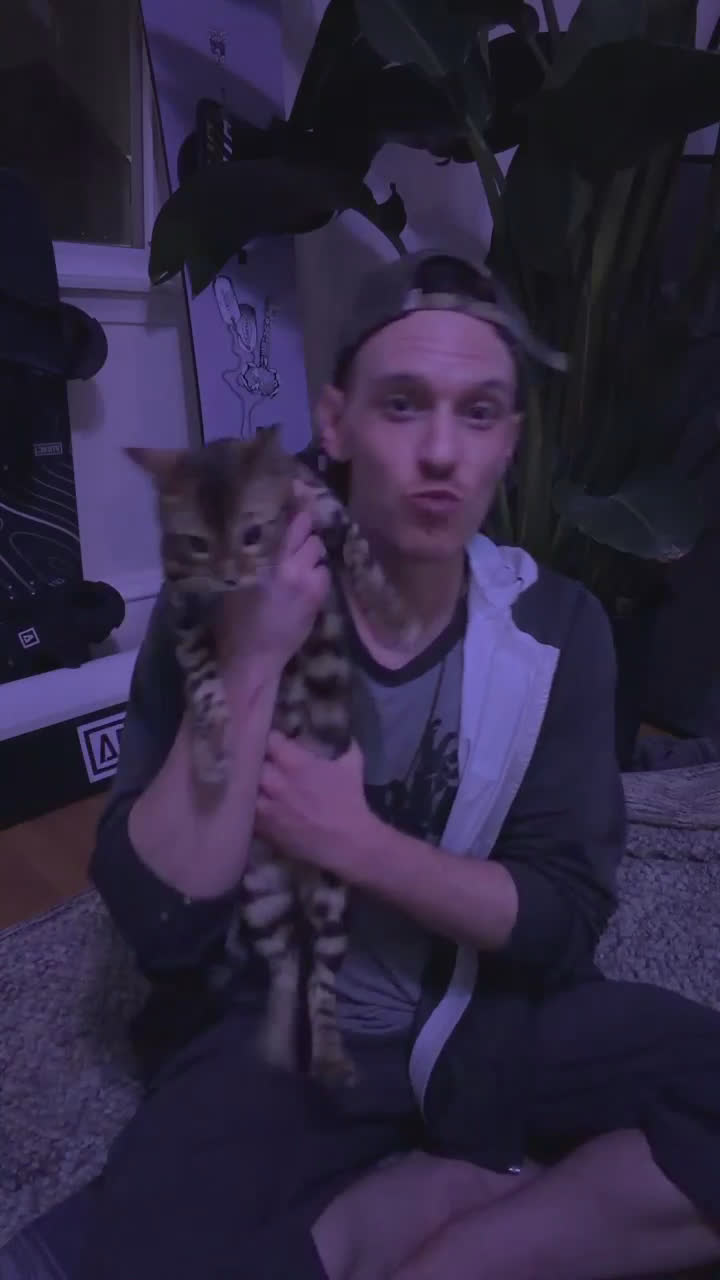
And this is what we're gonna be talking about, because the ironic thing about living life with ADHD is that often the actual achievements, my cat's bouncing all over the chair here. So often the actual achievements create a sort of a paradox in that I'm able to do these things while failing consistently at these other things, and then I'm expected to be able to achieve similarly. And over time, not only can that be internalized by those around me, but it becomes internalized by myself. Why after having mentored U of M students or given this talk at Twin Cities Startup Week, am I unable to write the LinkedIn post that would actually get this documented on the record and promote my brand?
Why is it that I can work 20 hours straight designing the cadre system and then fail to order food before any of the stores close? And as that internalizes, you begin to expect yourself to be able to do this and that leads to the frustration and the shame and the self-criticism. And. That's what we're going to be talking about over the next few weeks. You may know me as my name is Davis. This is the first time I'm going live officially. I have been lurking in the shadows for the last year as the CTO of CADRE and the primary person who has built the CADRE system end to end.
And this is ADHD Awareness Month. And. I wanted to do a mini series. And so this is gonna be a series of four conversations over Speak Wonder. How's it going? Good to see you. Here from Minneapolis. I know you're out by Erie. So my hope here is to actually, as I decided, you know what, I'm gonna use the technology I've been building to ultimately explore my own mind and what it is that leads to this. Because the truth is that what people don't see, while they see the impressive achievements, the accomplishments, they don't see the elaborate systems that are built to compensate and to allow me to do these sorts of things.
And they don't see the struggle of using urgency and using deadlines and adrenaline in order to get these sorts of things done. And I'm 36 years old at this point. And so I look back at that last 35 years of my life and while I'm proud of the various things that I've done to get to where I am, I don't want to live that way any longer. I'm trying to move beyond that. And so I think to do that, I have to understand why it is that I do the things that I do. And so we're going to explore over the next two weeks, four conversations.
First one will be next Tuesday, and that is the art of, the art of, I just went blank on my own titles, the art of pulling it off. And that's where we'll be talking about the contradictions between high performance, extraordinary achievement, and then in the workplace, I'll be sharing about how I got into the startup world. Cole, what's going on, man? Good to see you, Carrie. Absolutely. No, thank you all for joining. We got a party here. And so, and so we're gonna be talking next Tuesday about ADHD in the workplace, about what it takes to often pull these sorts of things off.
And then, and then, and then what it, and what it costs ultimately and what it costs to myself and what it costs to my relationships. And then we're gonna, we're gonna take it up a notch the next Thursday. And we're gonna talk about love, lust and lost attention. And that's where we take ADHD and we bring it to romantic relationships. And ultimately, where in my experience, I found myself to feel often, and I'll share about this next week, but it was the first time that I had ever truly felt disabled and handicapped is when dealing with the various sort of intensities.
And so we're gonna talk about the contradictions between being able to give intense interest and hyper focus on someone you love, but then ultimately what happens when that's not consistent and that attention wavers between the different things you're focusing on. And then we're gonna, the next following Tuesday after that, we're gonna talk about everything all at once. And that's where we're gonna really look at the internal struggles that then happen throughout these sorts of things. We're gonna talk about emotional dysregulation.
We're gonna talk about rejection sensitivity dysphoria. And we're gonna talk about ultimately what it looks like when someone with ADHD finds themselves in a penthouse in North Loop, founded or founder of their own company, funded having a total spiraling meltdown in the middle of the day because they can't get their brain to stop going in loops and circles and circles. And then we're going to end it the following Thursday after that with born to hunt, made to farm. And that's where we're going to take a philosophical look at ADHD.
And we're going to do one of the things that in many ways I do best, which is to reframe the foundation and totally flip the perspective. And we're gonna look at what if we were to see ADHD as not necessarily dysfunction, but as a state of our environment. And with that, my hope here and what I invite everyone to join me on as we go through this journey is whether you have ADHD yourself or whether you love somebody or have a close friendship with somebody or have a child or a sibling with ADHD that you're trying to understand why it is that they do these things.
I think that one of the things we won't be talking about is we aren't gonna be going into, you know, the over diagnosis of ADD or ADHD. We're not gonna be talking about, you know, prescriptions and all of that sort of thing. We're gonna really be talking about what it looks like to live through that. And my hope in that is twofold. One, I hope to use this to be able to do the work that I need to do to understand my own triggers and my own sorts of tendencies that lead me to hurt the people I love the most because I'm tired of hurting the people I love the most.
I'm tired of shooting my mouth off in that moment and betraying the trust in the vulnerability that's been entrusted to me when I can't withhold the impulsive urge to then spit out something that as I've said in this cadre team will know, you know, that I've called the shiv, where it's like I have a tendency to shiv people with my words. And I want to, the second thing I want to do in my hope coming out of this is that I can give anyone out there who is confused about why it is that certain things, certain people, and this isn't, I don't mean to say this is everybody's experience with ADHD.
I also, one of the things I wanted to call out was that I don't intend to romanticize it, and I also don't intend to use it to justify behavior for which I am ultimately responsible. But if you do love somebody with ADHD, It can be helpful for that person for you to understand the difference between their intentions and sometimes how their actions lead. And to understand that those of us who are neurodivergent don't always don't always have the same intentions as we like to think about in pop culture in terms of, the abusive sort of like situations you hear of.
Often it's just a desire to be understood and ultimately the more you can do to help and to be just patient and empathic with that and ultimately forgiving to be willing to offer that sort of grace, the better the person is able to actually begin to work through these sorts of things. And the last thing is that I used to think that I had to conform. I had to figure out why it is I struggle with routine, why it is I struggle to do things in this sort of consistent way. And ultimately, I I thought that my job was to fix and change myself.
But what I've really begun to wonder, and one of the questions we'll be exploring throughout this, is Warlord, by the way, he's my cat, is one of the things that we'll be questioning is whether that's even the right approach. If one can set up their environment ultimately to allow their particular mind a different kind of mind to thrive. The truth is, that when I'm in my flow and I'm driven through my life based on inspiration and in the moment, and I'm not only one of the most productive and one of the most productive states that I can be in, but I'm in a state of pure just joy and euphoria.
And when I'm there, I'm able to build creative things for those around me, I find myself. And so the question I have then is maybe the goal isn't here to force myself into some box, into some pre-made, but it's more to establish the structure and the situation and that environment to build those relationships with those who are willing to understand and who can, who love me for who I am and the strength that I do have. And ultimately, That's the question. That's the question we're going to be having.
So I appreciate everybody here. This was crazy. This was a lot of fun already. Like, you know, now I know and I understand why you guys all do this. And no, I really thank you all for showing up and showing out and let's go. So I'll see you all next Tuesday.